A paved road lined with dark-painted cabins with metal roofs among tall pine trees, with a weathered split-rail wooden fence and gravel shoulder in the foreground.

Furnace Repair in Castle Rock, CO

Tell us about the job

Takes about a minute. No obligation.

Step 1 of 3: Equipment

Nine months of work a year

A furnace in Castle Rock runs from September through May. That is most of the year carrying the load, not just a few cold snaps. Parts that cycle on and off that much wear down sooner than the same furnace would somewhere milder.
What that means for your repair

Whatever your furnace is doing wrong probably traces back to that long run. Douglas County saw 92 winter storms between 2015 and 2024, and a furnace pushed hard through stretches like that shows problems earlier than the manual would suggest. Worth having someone diagnose it properly instead of guessing at the fix.

9 months
September through May, your furnace is on duty
17°F
the average winter night it heats against
73%
of homes here heat with gas, so most furnaces here burn gas
92 winter storms
in ten years, the nights a failure hurts most
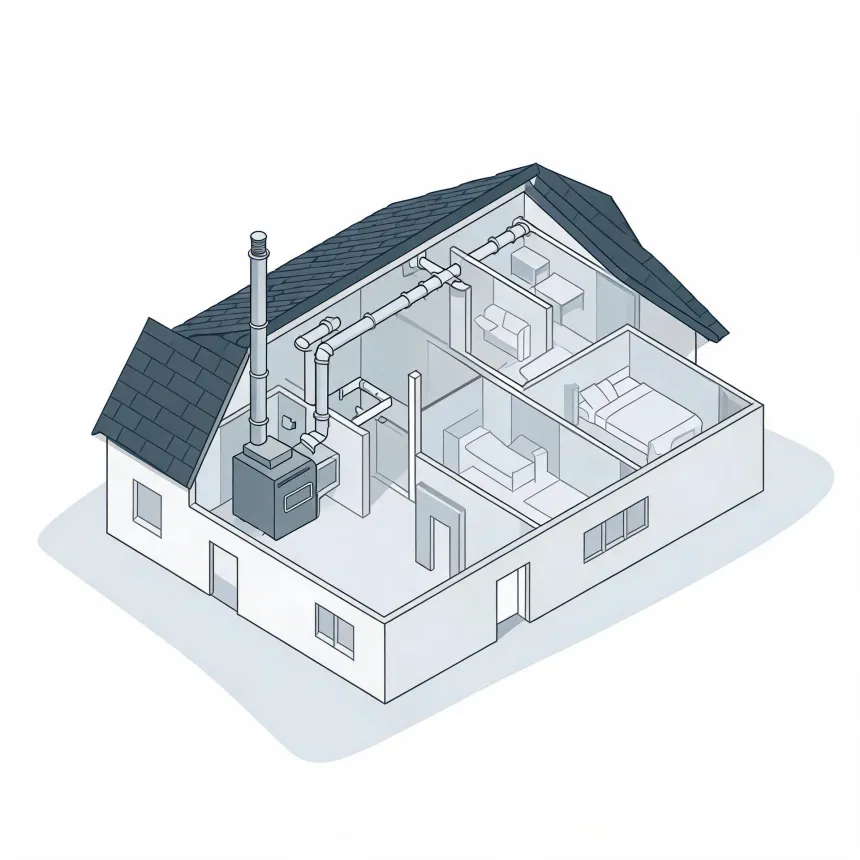
Isometric line illustration of a cutaway house showing interior rooms with furniture and a furnace with ducting and a flue pipe extending through the roof.
Your furnace works hardest from November through April.

NOAA nClimDiv, 1991–2020 normals

Douglas County saw 158 hail events and 97 damaging wind events between 2015 and 2024.

If your outdoor unit took a hit, the furnace side of the system is worth a look too.

Half the homes here were built by 2002, so your furnace may be newer than the work it's doing

Half the homes here were built by 2002
Heat runs September through May
Winter nights average 17°F

Furnaces in Castle Rock start running in September. August is the month to get a furnace looked at, before it has to carry the load. A unit that was limping along in the spring doesn't get better sitting unused all summer, and the first cold nights in September ask more of it than anything in months. Weak parts usually fail right at that point, not gradually. Getting ahead of it means a repair instead of a breakdown on one of the first cold mornings.

Nine months a year wears parts down. Get it looked at.

Whatever your furnace is doing, a long run of hard use is probably part of why. Have someone diagnose it properly so the fix holds instead of guessing and finding out partway through winter.

Find a contractor
A man in a dark work shirt, tan cargo pants and boots, seen from behind, climbs porch steps toward a navy front door while carrying a worn leather tool bag.
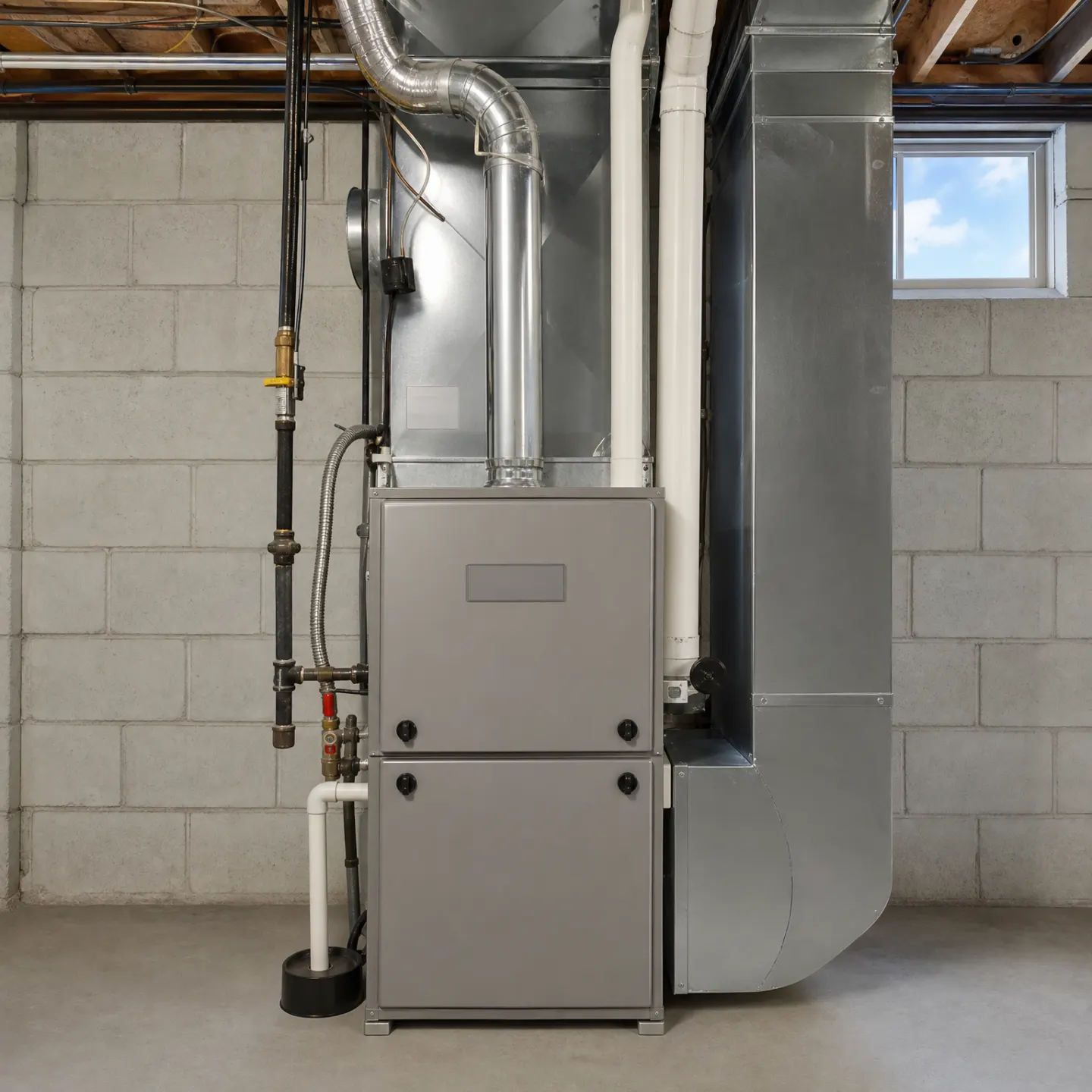
A gray high-efficiency gas furnace installed in an unfinished basement, surrounded by gas lines, a condensate drain, and sheet-metal ductwork.

Running it while it's failing

A cracked igniter still lights, some days, so it's easy to let it ride. But a part that's failing does its job worse each time it's asked, not better. A blower motor with a bad bearing runs hotter and louder every cycle until it seizes. A flame sensor coated in a little more residue each run eventually can't hold a signal at all, and what started as the furnace shutting off early becomes the furnace not starting. Heat exchangers crack along existing stress lines, and more cycles means more stress on a line that's already there. None of that reverses itself by running the furnace less hard or giving it a break. The part that's going bad only gets asked to work again, and again, until it can't.

Check these before you call

Look at the thermostat first. Make sure it's set to heat and the set temperature is actually above room temperature. Check the breaker or the furnace switch, the one that looks like a light switch near the unit, and make sure it hasn't been bumped off. Pull the filter and hold it up to a light. If you can't see light through it, that's enough to choke airflow and cause real problems. Look at the furnace door too. It has a safety switch behind it, and if the door isn't seated right, the furnace won't fire at all.

What these checks tell you

A dead thermostat display or a tripped breaker usually means a quick fix, sometimes one you can handle yourself. A dirty filter causing short cycling or weak heat is something you can fix on the spot by swapping it. But if the furnace runs and still won't put out warm air, or it shuts off on its own after a few minutes, that's a part failing inside the unit, not something to keep testing. Flames that look yellow instead of blue, or a burning smell that doesn't fade after the first run of the season, mean stop and call someone rather than keep troubleshooting.

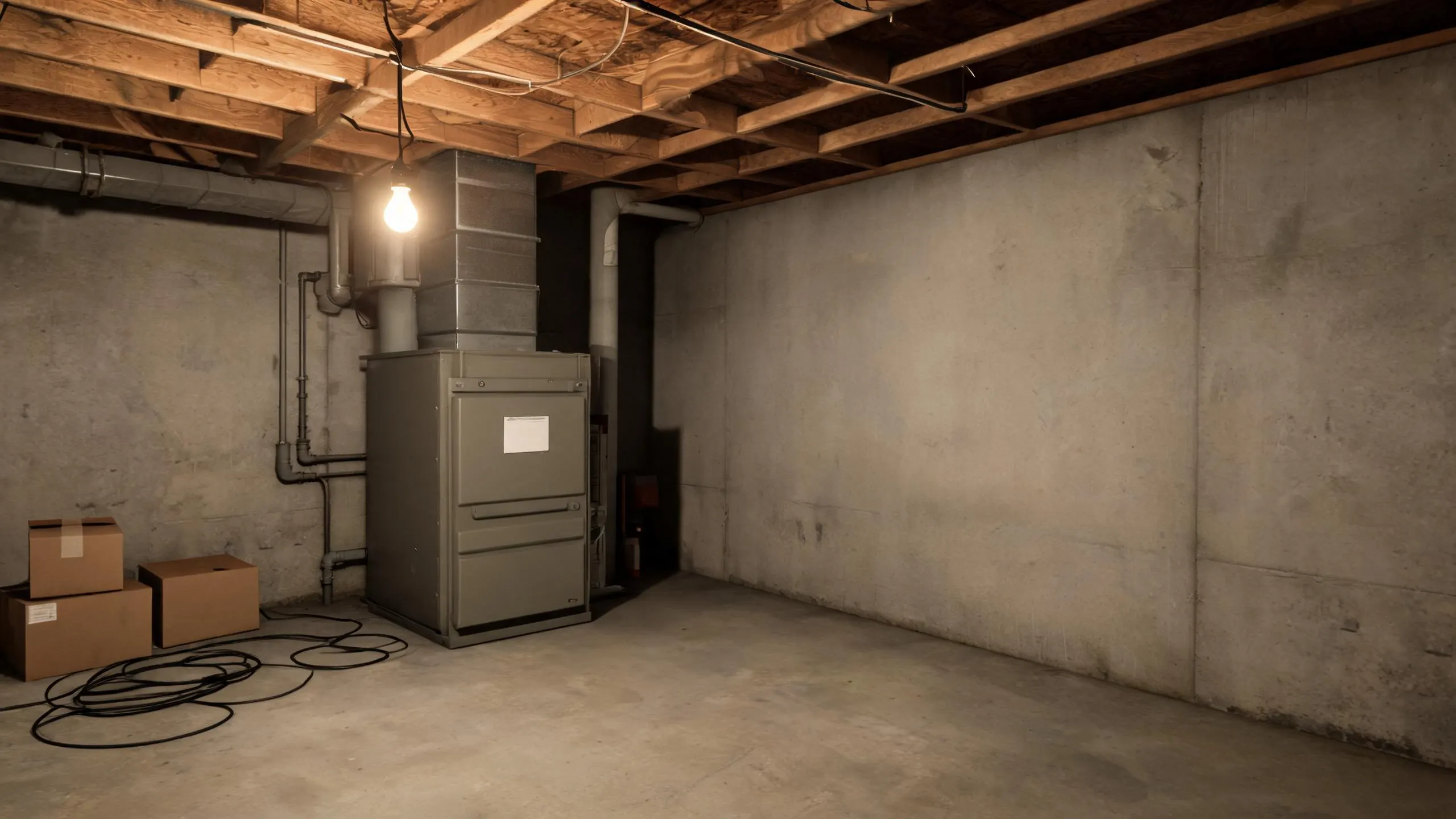
An unfinished basement containing a metal furnace with ductwork, exposed wooden joists on the ceiling, cardboard boxes, a coiled cable, and a single hanging incandescent bulb.

A new furnace would cut about $100 a year off heating for a typical Douglas County home.

  • A new high-efficiency furnace$430 a year
  • An older furnace$530 a year

Estimates for a typical Douglas County home, compared with an older unit built to the previous federal minimum, from EIA household energy data, Colorado fuel prices and NOAA climate normals. Your home will differ.

Repair makes sense when one part has failed and the heat exchanger is sound.

Replacement makes sense when the heat exchanger is cracked or the furnace keeps needing parts.

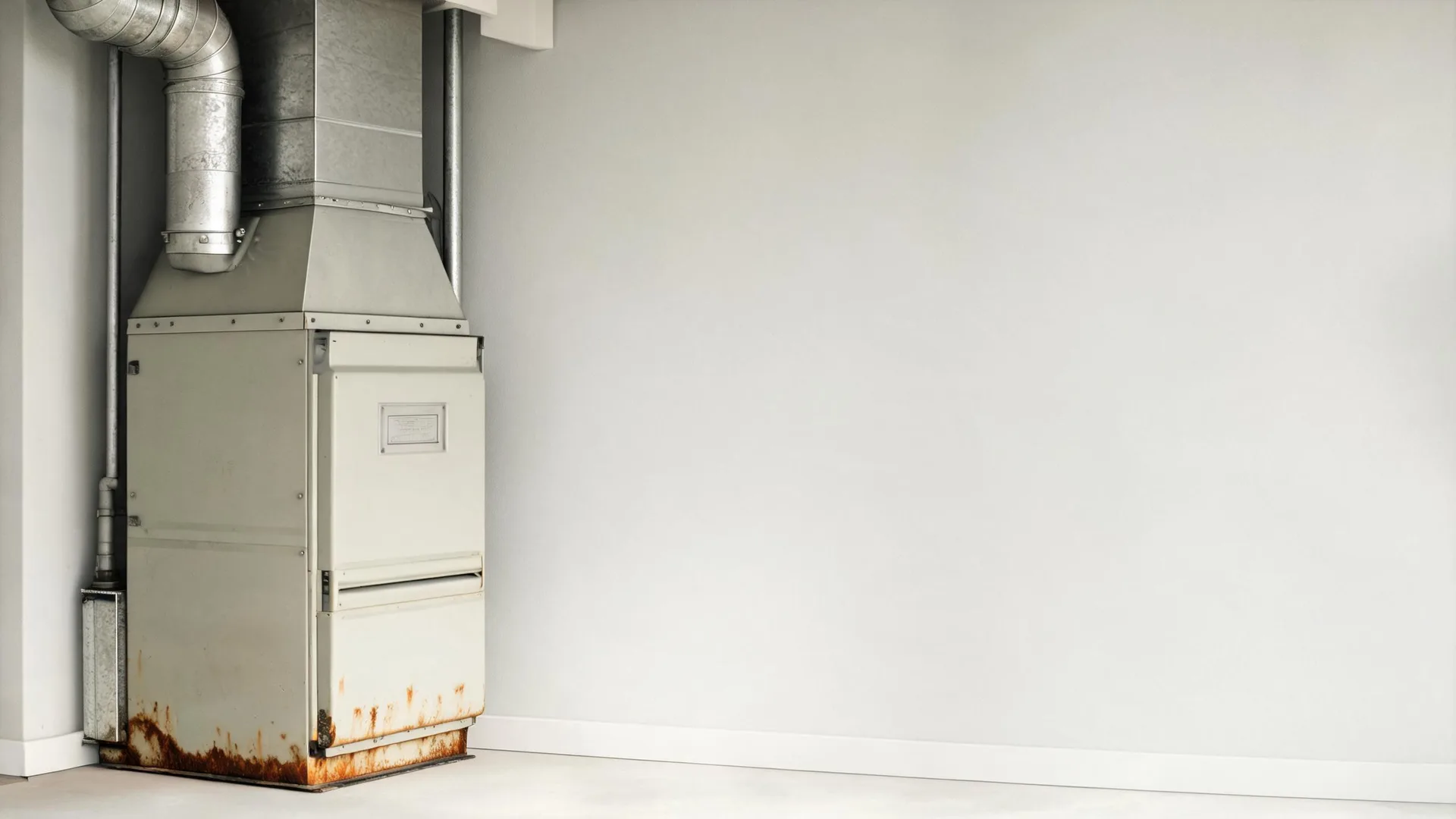
A repair makes sense when one part has failed but the rest of the furnace is doing its job, things like an igniter that won't glow, a flame sensor too dirty to hold a signal, or a blower motor that's seized. Those are specific failures with a specific fix. Replacement starts to make more sense when the heat exchanger is cracked, since that part isn't safe to patch and isn't sold on its own for most units. It also makes sense when the same furnace keeps coming back with a new problem every season, because that pattern usually means things are wearing out together, not one at a time. Age on its own doesn't decide it. A furnace that gets yearly attention can outlast one that's barely been touched, even if the second one is newer. What matters more is whether a technician can point to the one thing that failed, or whether they're finding a little wrong everywhere they look.