



A stack of split firewood sits against the black vertical wood siding of a house, with a gravel strip, dry grass, and pine trees under an overcast sky.

Furnace Installation in Castle Rock, CO

Tell us about the job

Takes about a minute. No obligation.

Step 1 of 3: Equipment

Gas heats 73.4% of homes in Douglas County, and that's why a gas furnace is still the standard install here. If your old furnace ran on gas, the line, the vent and the meter capacity are usually already sized for it, which keeps the job a straight swap rather than a redesign. Electric heat covers 22.8% of homes here, and a smaller share run on bottled or LP gas. Either of those can still make sense for a given house, but they're not what most installers here are doing week to week. Worth asking which fuel your installer works with most.

9 months
September through May, your furnace is on duty
17°F
the average winter night it heats against
73%
of homes here heat with gas, so most furnaces here burn gas
80% AFUE
the federal minimum any new unit must meet
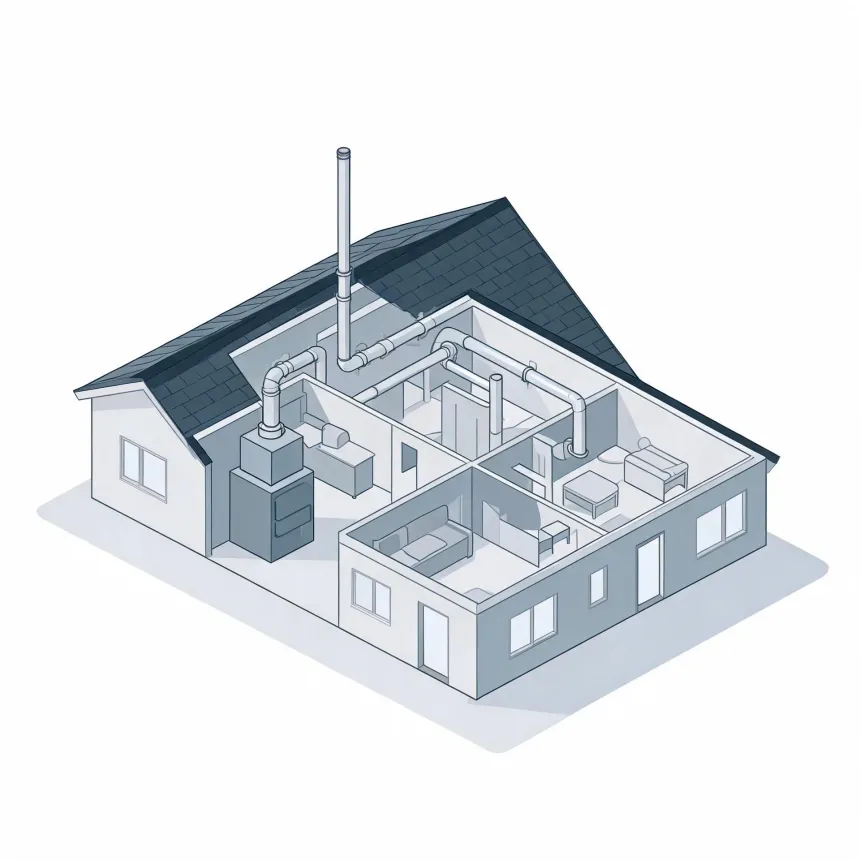
Isometric cutaway illustration of a single-story house showing interior rooms with furniture, a furnace unit connected to ductwork and a tall flue pipe extending through the roof.
Your furnace works hardest from November through April.

NOAA nClimDiv, 1991–2020 normals

Furnaces here run nine months a year, September through May, with overnight lows averaging 17°F in December and January.

A furnace sized for a milder climate will fall behind in a Douglas County winter, so getting the size right matters more here than in most places.

What tests a furnace here isn't the furnace, it's the power

353 severe weather events from 2015 to 2024
13% of homes statewide lost power a day or more in 2024
97 damaging wind events from 2015 to 2024
A standard furnace, sized right, is all this job needsNatural gas runs $10.09 per million Btu in Colorado, so a standard-efficiency furnace sized right is the one that makes sense here.

Heat starts here in September, so August is the month to have a new furnace in. Wait until the first cold snap and you're choosing from whatever unit is on the truck, installed in a rush between other jobs. Done in August, the installer has time to size it right for your house and schedule the work around you, not around the weather. Once it's in, it runs nine months straight through May, so a job done carelessly in a hurry is one you live with all winter.

Size it for how hard it works here

A new system here will work harder than most, every year. Size it right and don't buy on price alone.

Find a contractor
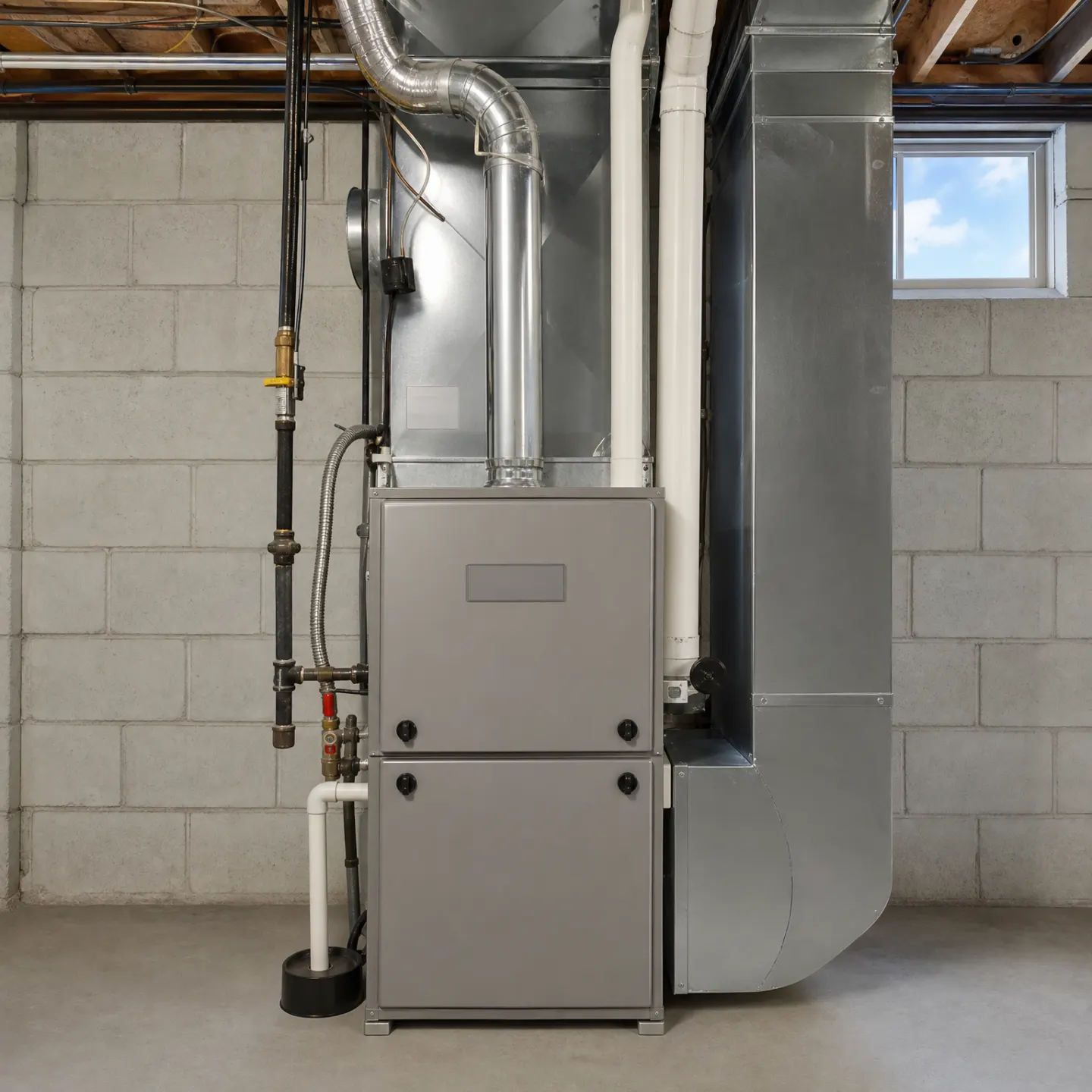
A gray high-efficiency gas furnace installed in an unfinished basement, surrounded by gas lines, a condensate drain, and sheet-metal ductwork.

Nine months of runtime, no room for a wrong guess

Get the load calculation done, room by room, instead of letting an installer eyeball it off the old unit's size. Nine months of runtime means an undersized furnace never gets a break to catch up, and an oversized one short cycles the whole season. Ask what heat loss numbers your house came out to, and have the installer walk you through how they got there.

AFUE tells you what's lost up the vent

The AFUE rating on the label is the share of gas that turns into heat in your house instead of escaping out the flue. A higher rating means less gas wasted as exhaust, not a bigger or stronger furnace. Furnaces can heat the same house to the same temperature and still burn a different amount of gas doing it.
The rating doesn't replace the load calculation

A high-efficiency furnace still needs the same room-by-room load calculation as a standard one. The rating on the label changes what it burns, not how it should be sized. Buying a higher-rated unit doesn't make up for guessing on size, and an installer who skips the calculation is leaving the more important number out.

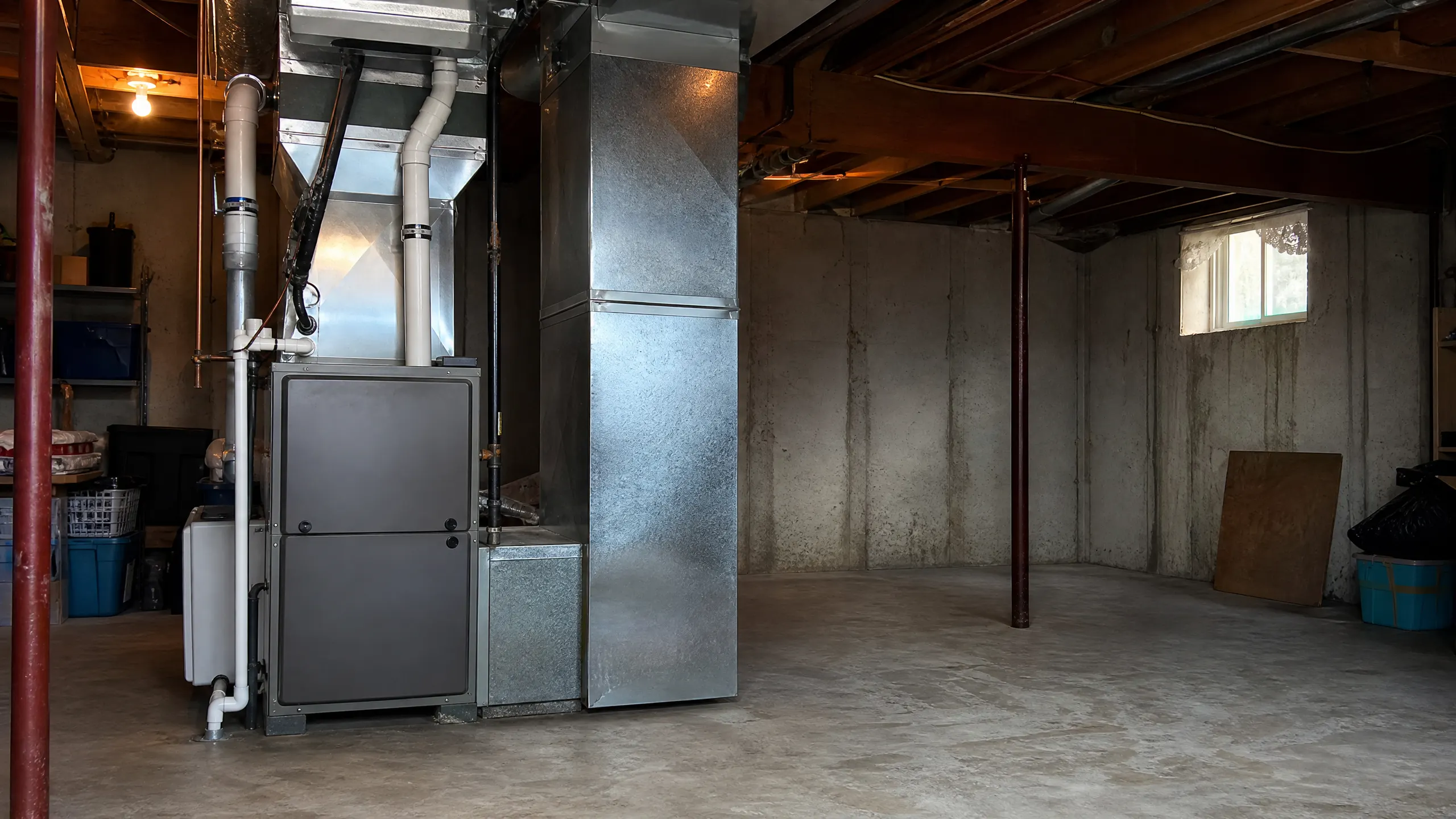
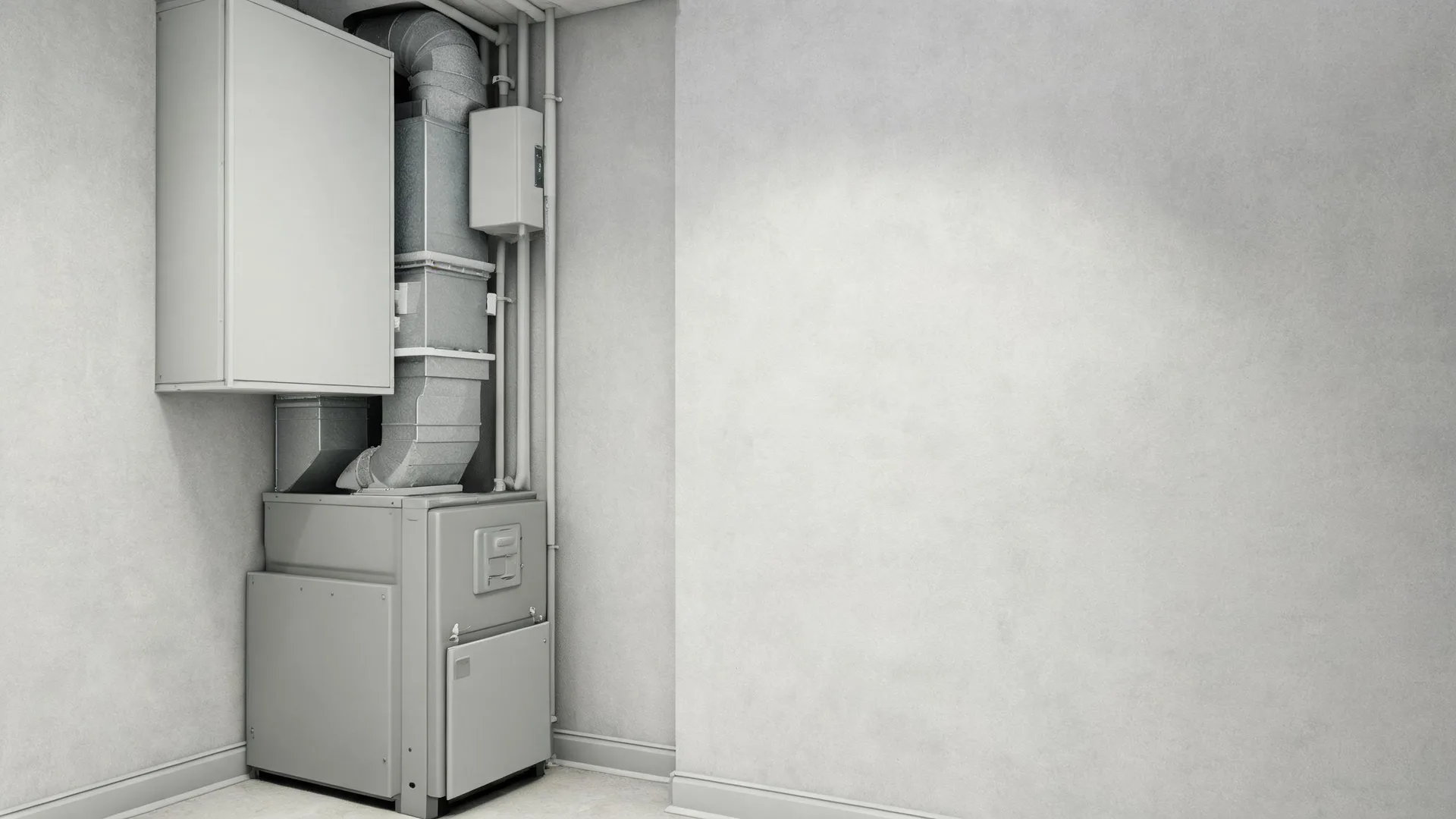
A gas furnace and sheet-metal air handler unit installed in an unfinished concrete basement.

A high-efficiency gas furnace would save about $90 a year to run in Douglas County compared with a gas furnace.

  • A high-efficiency gas furnace$430 a year
  • A gas furnace$520 a year

Estimates for a typical Douglas County home, from EIA household energy data, Colorado fuel prices and NOAA climate normals. Your home will differ.

The old furnace comes out first. The installer shuts off the gas, disconnects the vent, and pulls the unit, along with the coil above it if the AC shares that plenum. What's left is a hole in the ductwork and a gas line capped off. Setting the new furnace is the fast part. What takes the time is the venting, the gas connection, and the duct transitions, since the new unit is rarely the exact same dimensions as the old one. Each of those has to be sealed and supported right, not just reconnected. Once it's set, the installer checks gas pressure, airflow, and the temperature rise across the furnace before calling it done. That last check is how they confirm the unit is actually running the way it was sized to, not just that it turns on.