


Does a heat pump keep up on a Douglas County winter night
Your heat runs nine months a year here, September through May, so this is mostly a winter question. The average overnight low across December, January and February is 17°F. That matters because a standard heat pump has two different weak points, and 17°F is past both of them. Below 40°F it puts out less heat than its rating says. Below about 35°F it often needs backup heat to make up the difference. Every one of the roughly 165 nights a year here that drop to freezing or below is past both marks.
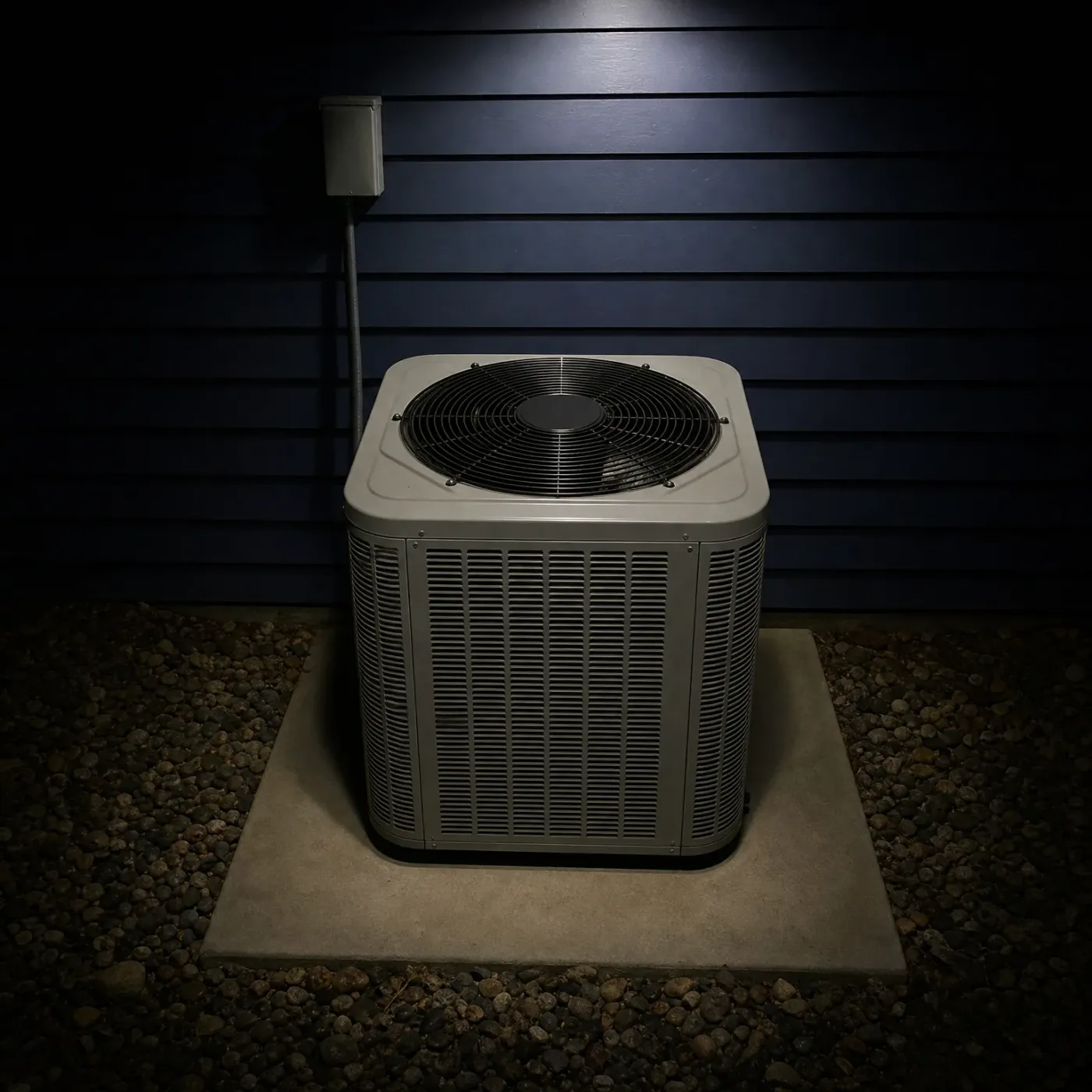
That doesn't mean a heat pump leaves you cold. It means a standard one is leaning on backup heat for more of the winter than it would in a milder place, and that backup heat is usually electric resistance, the most expensive way to heat a house. A heat pump built to the ENERGY STAR Cold Climate spec is a different machine at that point: it's tested to hold at least 70 percent of its rated output and still make 1.75 units of heat per unit of electricity at 5°F, which is below every one of the roughly 7 nights a year here that reach 0°F. Field tests of cold climate models back this up. Backup heat covered only a small share of the heat needed between 0°F and 35°F, and running on backup alone was rare even above 0°F.
So the honest answer splits on which heat pump you mean. A standard heat pump is working below its rating on more than half the nights of a Douglas County winter. A cold climate one is built for exactly this range and tested to prove it.