



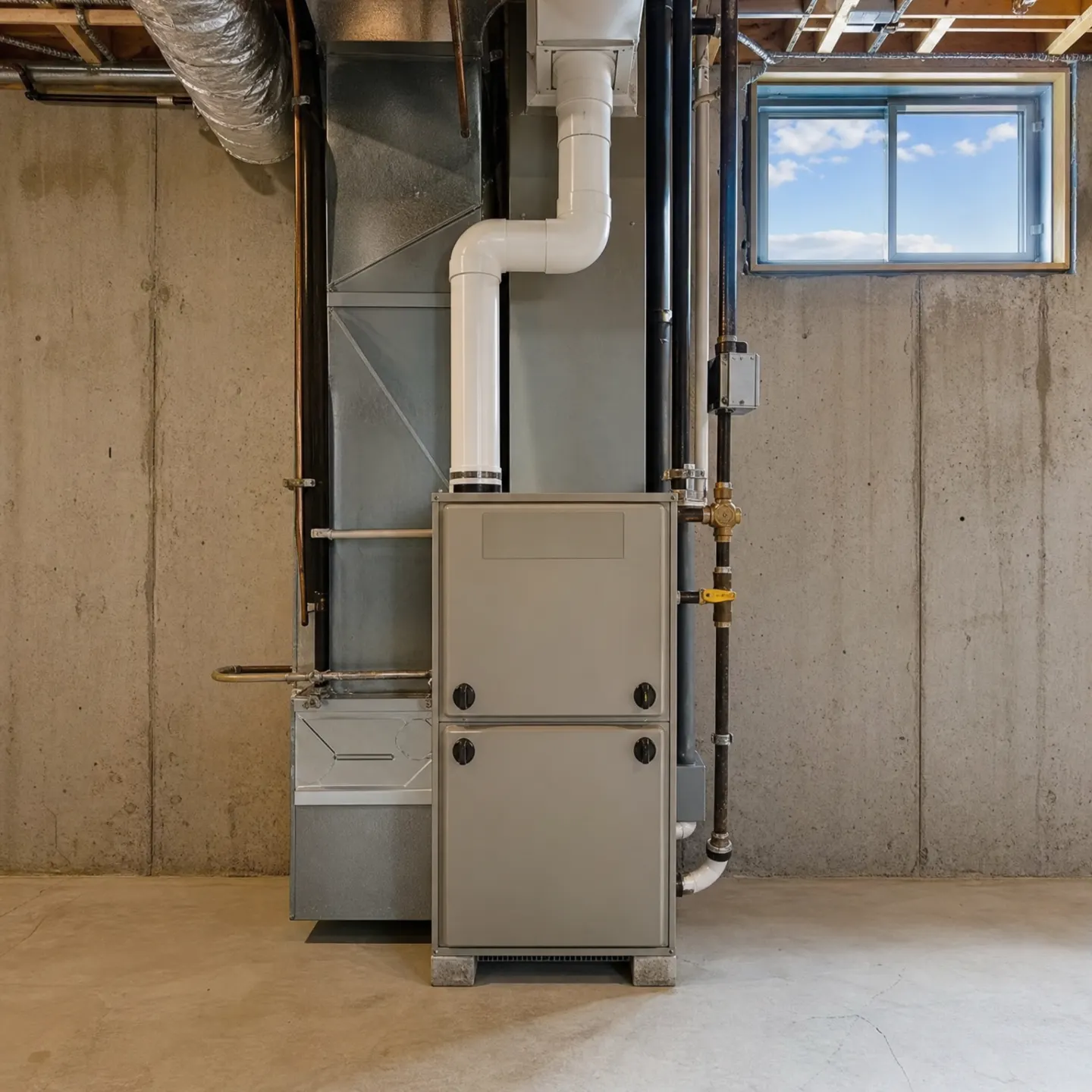
An unfinished basement featuring a grey forced-air furnace with metal ductwork, concrete block walls, exposed wooden joists, and a single hanging bare bulb.

Furnace Installation in Idaho Springs, CO

Tell us about the job

Takes about a minute. No obligation.

Step 1 of 3: Equipment

Colorado homes paid $10.09 per million Btu of natural gas in 2024. That is the rate every furnace in Clear Creek County burns against, all winter long. A furnace that sends heat up the flue instead of into the house is wasting it at that price. The efficiency rating on the unit you install matters more here than it would somewhere the gas bill barely registers. Two furnaces can heat the same house and cost noticeably different amounts to run, and the difference shows up on every bill until the weather turns.

12°F
the average winter night it heats against
56%
of homes here heat with gas, so most furnaces here burn gas
80% AFUE
the federal minimum any new unit must meet
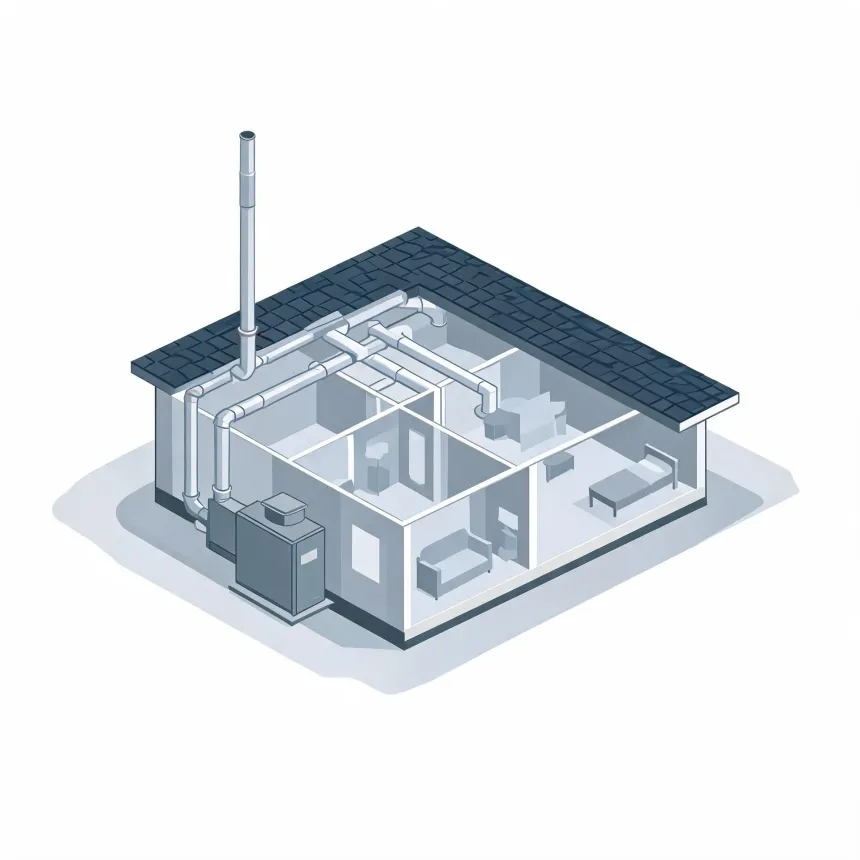
Isometric cutaway illustration of a single-story house with a dark shingled roof, showing interior rooms with furniture, a ducted air distribution system, a tall vertical flue pipe, and a gray furnace unit outside the wall.
Your furnace works hardest from October through May.

NOAA nClimDiv, 1991–2020 normals

Gas heats more homes in Clear Creek County than anything else, 55.5% of them.

A gas furnace is the known quantity here, and that makes it the straightforward choice for this installation.

A furnace here never really gets a break

Winter nights average 12°F
Climate zone 7
Half the homes here were built by 1976
Sized Wrong, It Pays for That Every MonthFurnaces in Clear Creek County run heat in every month of the year.

Clear Creek County sits in climate zone 7, rated for very cold winters where heating runs most of the year. That rating sets a floor on what can go into this house. Any furnace built since November 2015 has to turn at least 80 percent of the gas it burns into heat, and that is the minimum allowed here, not a target. Furnaces built from December 2028 on have to hit 95 percent. Until then, 80 percent is the legal baseline, and nothing with a lower rating can be installed.

The Furnace You Install Sets Your Gas Bill for Years

You already know what the gas rate does to a winter's worth of furnace runs. When you pick the unit, the efficiency rating on the spec sheet is the number that decides what this winter costs you, and every winter after it.

Find a contractor
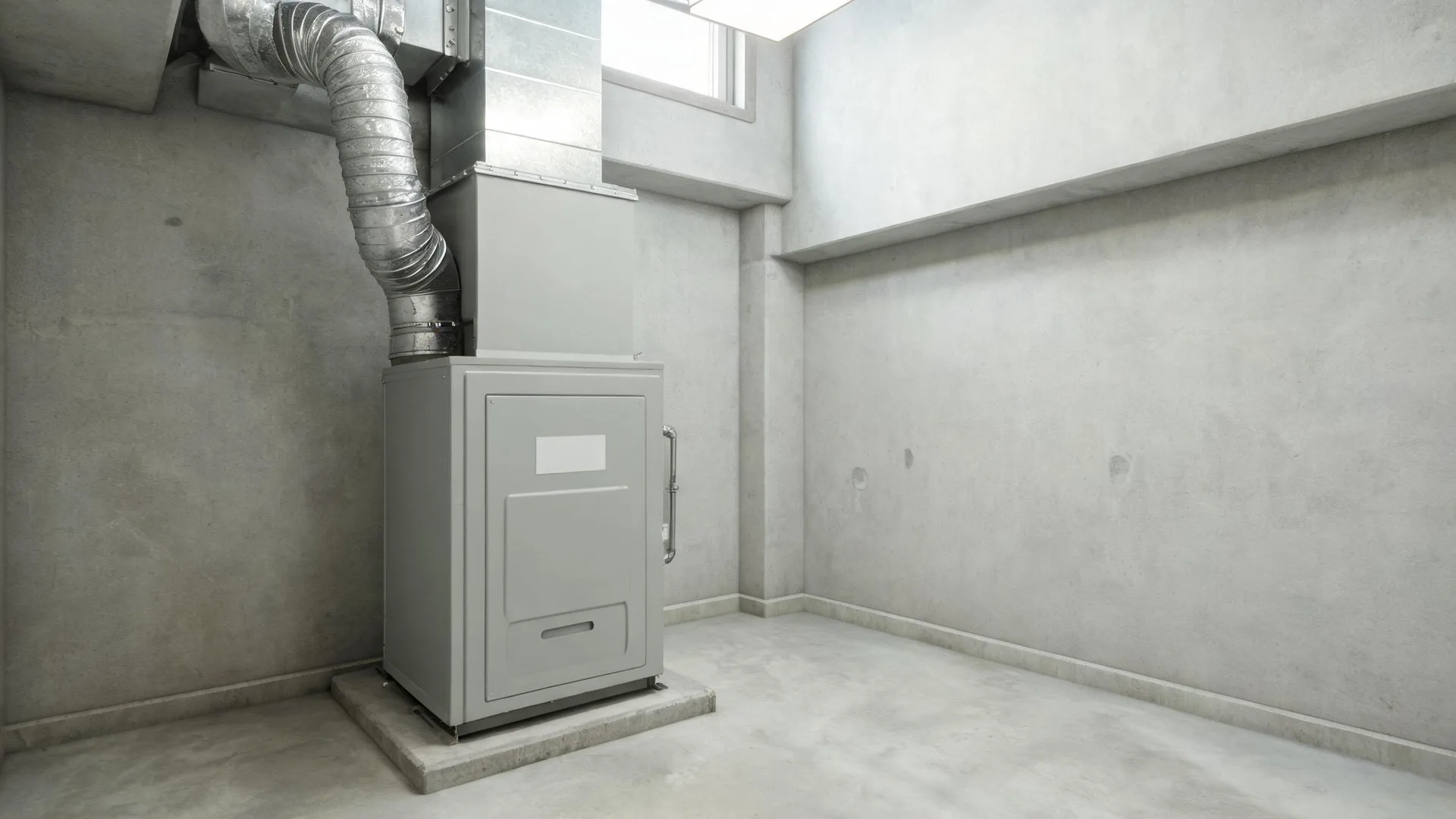
A gray gas furnace with attached ductwork and piping installed in an unfinished concrete basement.

The Right Size Isn't a Guess

A furnace that's too big short-cycles. It heats the house fast, shuts off, and starts again a few minutes later, never running long enough to warm the place evenly or pull the moisture out of the air it does move. Short bursts also mean the heat exchanger goes through more heating and cooling cycles over its life, and that stress is what eventually cracks one. A furnace that's too small just runs and runs, straining to hold the temperature on the coldest days and never quite getting there. Either way the equipment wears against its own size, not against the weather. Getting the size right means a contractor works out the heat loss of the house itself: the square footage, the ceiling height, how many windows and what they're made of, how the walls and attic are insulated, which direction the house faces. That calculation is what tells you the output a furnace needs, and it has nothing to do with guessing or going with whatever size was there before. A unit sized off the old one, or picked because it's what fit the budget, can be wrong in either direction.

The Furnace Is the Smaller Line Item

The unit itself is only part of what goes into an installation. Running new gas piping, upsizing the vent or flue, adding a dedicated electrical circuit, or correcting ductwork that was never sized for the new unit all add to the job. A straight swap into an existing setup is a different project than one that needs any of that work done first.

What the Contractor Does Before the Quote

A contractor has to run a load calculation on the house before pricing anything, because that number decides what size furnace goes in and what the ductwork needs to carry. Skipping that step is how a house ends up with a furnace that's wrong for it. The quote should reflect what that calculation found, not just what the old furnace happened to be.

An unfinished basement containing a metal furnace with ductwork, exposed wooden joists on the ceiling, cardboard boxes, a coiled cable, and a single hanging incandescent bulb.

A high-efficiency gas furnace would save about $140 a year to run in Clear Creek County compared with a gas furnace.

  • A high-efficiency gas furnace$630 a year
  • A gas furnace$770 a year

Estimates for a typical Clear Creek County home, from EIA household energy data, Colorado fuel prices and NOAA climate normals. Your home will differ.

Installation day starts with the old furnace coming out, and that alone takes a few hours once the gas line, vent connection and ductwork are disconnected. The contractor sets the new unit, then the work shifts to connecting it: gas line, venting, the return and supply plenums, and the electrical. Each connection gets tested before the next one starts. Once it's hooked up, the contractor fires the furnace and checks the gas pressure, the temperature rise across the heat exchanger, and the airflow at the registers, because a furnace running outside its rated specs wears out faster and heats less evenly no matter how good the equipment is. The last step is usually a check of the thermostat settings and a walk-through of what the furnace needs going forward, like filter changes and keeping the area around it clear. A straightforward swap can wrap up in a day. Anything that needs new ductwork, a bigger gas line or an upsized vent takes longer, because each of those is its own job before the furnace itself ever gets tested.