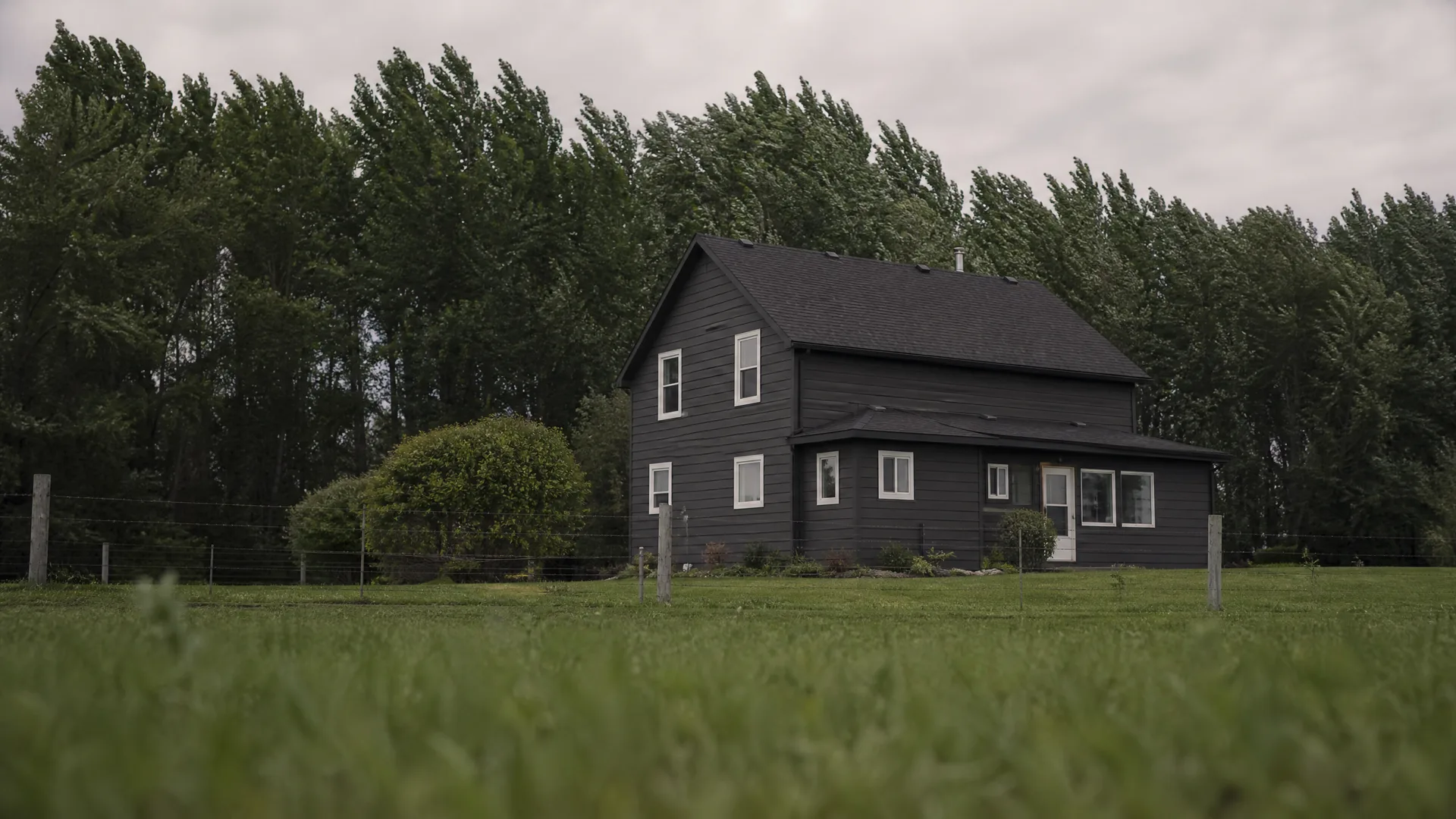



A dark-painted two-story house with white-trimmed windows and a gray shingled roof stands behind a wire fence in a grassy field, backed by tall deciduous trees under an overcast sky.

Heat Pump Installation in Sterling, CO

Tell us about the job

Takes about a minute. No obligation.

Step 1 of 3: Equipment

Logan County sees its share of rough weather. Between 2015 and 2024, the county recorded 289 severe weather events, including 153 hail storms, 104 damaging wind events, and 20 tornadoes. An outdoor heat pump unit sits outside year round, taking whatever comes through, so hail dents and wind-blown debris are real risks here, not hypothetical ones. Power loss is the other side of it. Across Colorado, 13% of households went at least a full day without power in 2024. A heat pump needs electricity to run in any season, so a long outage means no heat and no hot water until the power comes back.

8 months
October through May, your system heats
3 months
June through August, it cools
17°F
the average winter night it heats against
87°F
the average summer afternoon it cools against
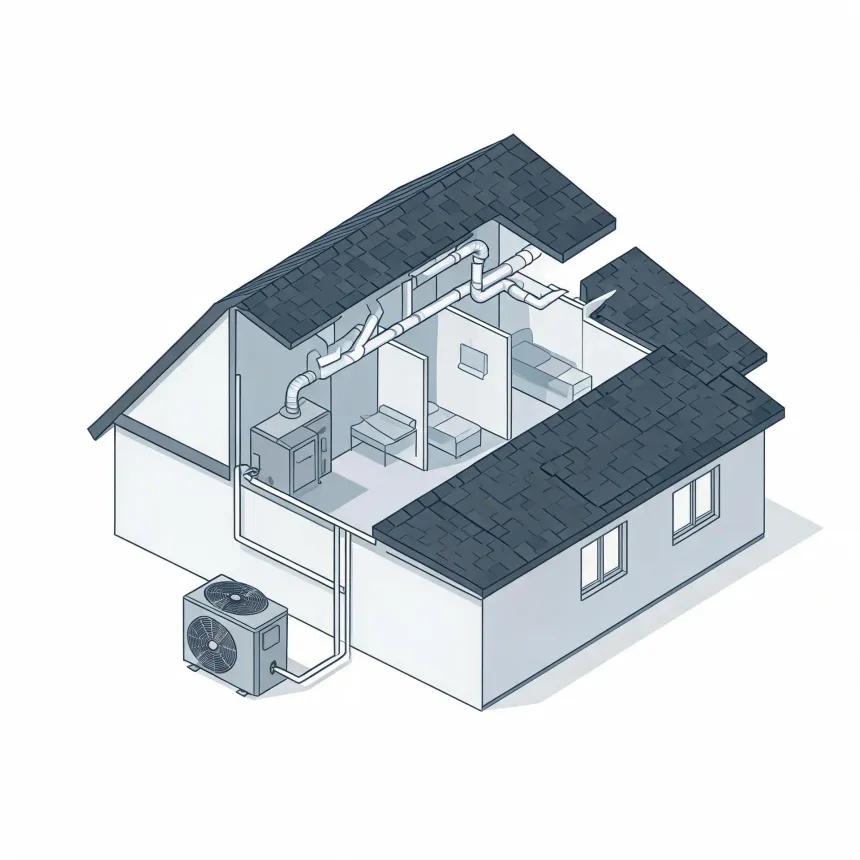
Isometric line illustration of a cutaway single-story house showing interior ductwork, an indoor air handler unit, and an outdoor condenser connected by refrigerant lines, with a dark shingled roof.
Your system heats October through May and cools June through August.

NOAA nClimDiv, 1991–2020 normals

Half the homes in Logan County were built in 1964 or earlier.

Installing a heat pump in one of these means sizing it to the house, not swapping in whatever the last system was.

Heat pump installs here work best ahead of October, not after the cold sets in

Cooling runs June through August
Heat runs October through May
104 damaging wind events from 2015 to 2024

Gas heats more homes in Logan County than anything else, 57.3% of them. Most of what's installed here already runs on a gas furnace paired with central air. A heat pump changes that pairing. It takes over both heating and cooling from one outdoor unit, so a lot of homeowners here are weighing it against simply replacing the furnace and AC they already have. Electric heat accounts for 22.2% of homes and propane another 17.1%, so a fully electric heat pump is still the less common setup here, not the default one.

Plan the install around the weather it has to survive

Where the installer sets the outdoor unit, and what's planned for an outage, matters as much as the equipment itself. Ask about mounting it where hail and wind-blown debris have less of a shot at it, and talk through backup for heat and hot water if the power goes down for a day or more.

Find a contractor
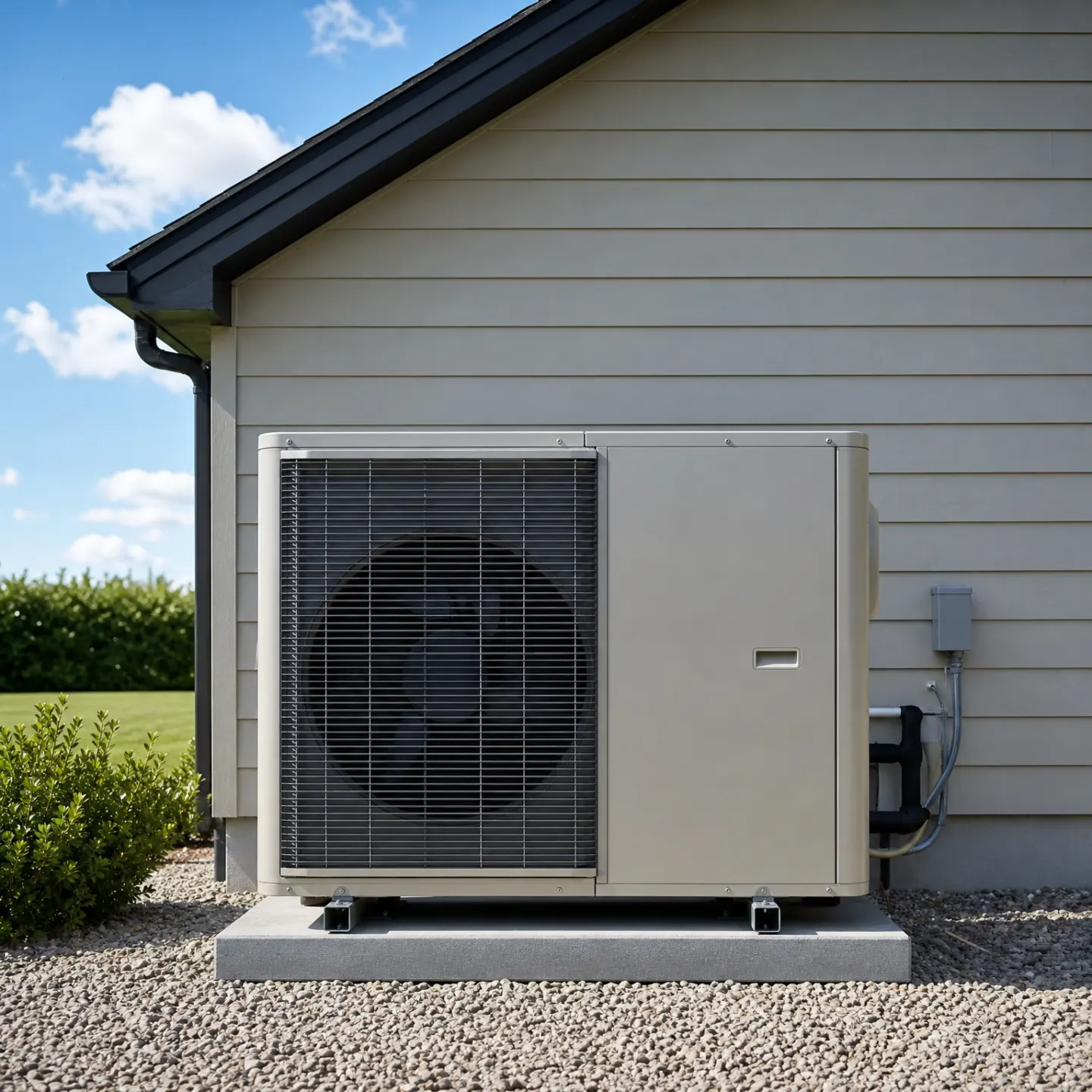
A residential heat pump outdoor unit mounted on a concrete pad next to a house with gray vinyl siding.

A machine that never gets a season off

A heat pump here runs most of the year, cooling through the warm months and carrying the heat load straight through the hard winters this county gets. That's more total run time than the gas furnace and AC pairing most homes here still have, since the furnace sits idle all summer. More run hours means the compressor, the coils and the outdoor fan all see more cycles per year, year after year. Add in what the outdoor unit has to sit through, hail some years, high wind most years, and parts that would otherwise wear slowly start wearing sooner. None of that means the equipment can't handle it. It means sizing it for this county's load, not the mildest version of the job, is what keeps it running the way it's supposed to.

The old equipment doesn't just get unplugged

A furnace removal means disconnecting the gas line and capping it off, pulling the flue venting, and taking the unit out whole or in pieces depending on where it sits. If there's a separate AC condenser outside, the refrigerant gets recovered from the lines before anything is disconnected. That refrigerant can't be vented into the air. It has to be captured and handled properly, which is part of why this isn't a job for swapping equipment on your own.
The ductwork usually stays, but it gets checked

Most of the time the existing supply and return ducts carry over to the new heat pump system rather than getting replaced. A heat pump moves a different volume of air than a furnace did, so the installer checks the duct sizing and the static pressure before assuming the old ductwork is a straight fit. Where the old furnace had its own dedicated return or odd transition pieces, those sometimes need rework even when the rest of the duct run is fine.

Comparing heat pumps means comparing a couple of different numbers, not just a price on a quote. Ask for the heating output at a low outdoor temperature, not just the rated capacity, since that's the number that tells you whether it can still carry the house when it's coldest out. Ask what happens below that point too. Some systems lean on electric resistance backup when the outdoor air gets too cold for the compressor alone to keep up, and that backup heat costs more to run than the compressor does. Ask how the system is staged, whether it runs at a single speed or modulates, since a modulating compressor holds steadier temperatures and cycles less than one that's only ever fully on or fully off. Ask about the sound rating too. An outdoor unit that runs most of the year sits right outside a window or a patio, and the difference between models is noticeable once it's installed. None of this shows up on a sticker price, but it's what decides whether the system actually keeps up once it's running.

Logan County falls under zone 5B in the 2021 energy code, a cool, dry climate where heating carries the bigger share of the load. Any split-system heat pump installed here now has to meet the federal minimums set for equipment built from 2023 onward: at least 14.3 Btu of cooling delivered for every watt-hour it draws over the summer, and at least 7.5 Btu of heating for every watt-hour over the winter. Those are floors, not targets, so they narrow down which models an installer can offer in the first place. A federal tax credit is available for qualifying heat pump installations, which offsets part of the cost of equipment that meets these standards. Ask the installer which models on their quote clear the minimum and which exceed it, since both numbers matter for a system that has to carry Logan County's winters.