




A snow-covered small-town street at dusk, lined with illuminated two-story houses and a grain elevator on the horizon.

Heat Pump Repair in Yuma, CO

Tell us about the job

Takes about a minute. No obligation.

Step 1 of 3: Equipment

Yuma County recorded 331 hail events and 172 damaging wind events between 2015 and 2024. Thirty tornadoes touched down in that same stretch. A heat pump keeps its coil and fan right outside, exposed to all of it, with nothing between the hail and the metal. A dented cabinet might still run fine. Bent fins or a cracked fan blade might not show up as a problem yet, but they put strain on the compressor every time the system cycles. If a storm has come through, it's worth having someone look at the outdoor unit even if it seems to be working.

8 months
October through May, your system heats
3 months
June through August, it cools
18°F
the average winter night it heats against
88°F
the average summer afternoon it cools against
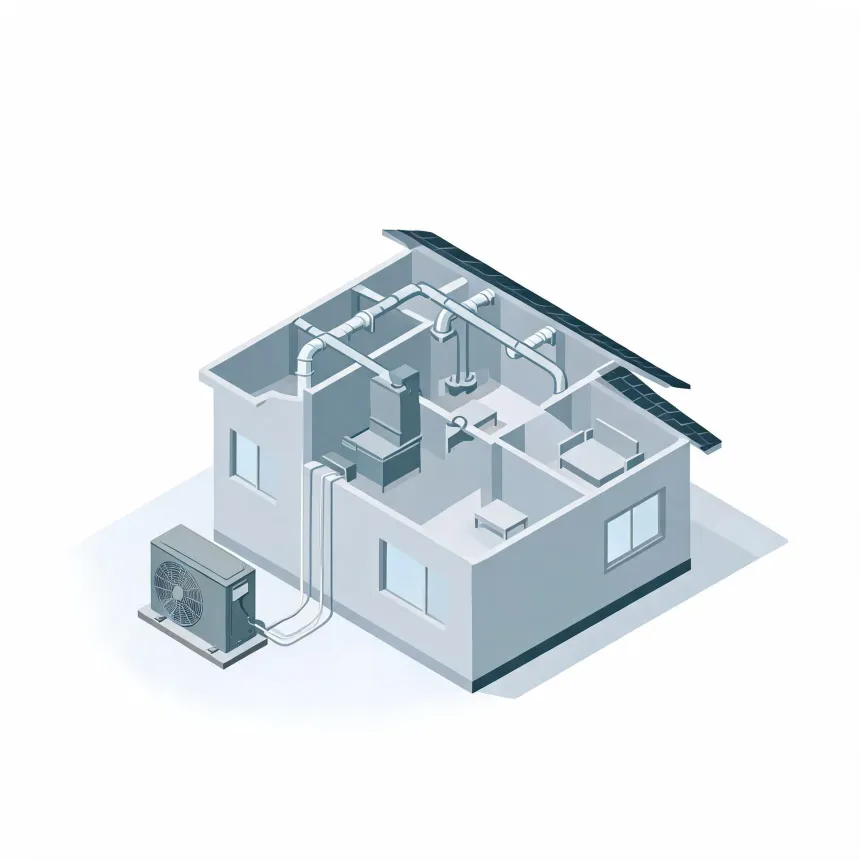
Isometric cutaway illustration of a single-story house showing interior ductwork, an air handler and rooms, with an outdoor condenser unit connected by refrigerant lines on a plain white background.
Your system heats October through May and cools June through August.

NOAA nClimDiv, 1991–2020 normals

Half the homes in Yuma County were built in 1968 or earlier.

A heat pump that came with a house that old is likely well past its own prime, even if it's been replaced once since.

The trouble starts right when the load does

Cooling runs June through August
Heat runs October through May
172 damaging wind events from 2015 to 2024

Your heat pump does not get a break here. Winter storms hit the county 27 times between 2015 and 2024, and the unit still has to pull heat out of that cold air every time one rolls through. The outdoor coil takes the brunt of it, caked in snow or ice while the system tries to keep cycling. Summer is easier on it only in how the air feels, not in how long it runs. If yours is struggling, that kind of year-round load is usually part of why. A proper diagnosis will tell you whether it is a worn part or something the weather has been chipping away at.

Had a storm come through lately? Get the outdoor unit checked.

If a storm came through recently and your heat pump hasn't been checked since, that's reason enough to get it looked at. A unit that still turns on isn't the same as one that's fine.

Find a contractor
A man in a cap, gray long-sleeve shirt and tan pants walks up stone steps toward a dark blue front door, carrying a waxed canvas tool bag in his right hand.
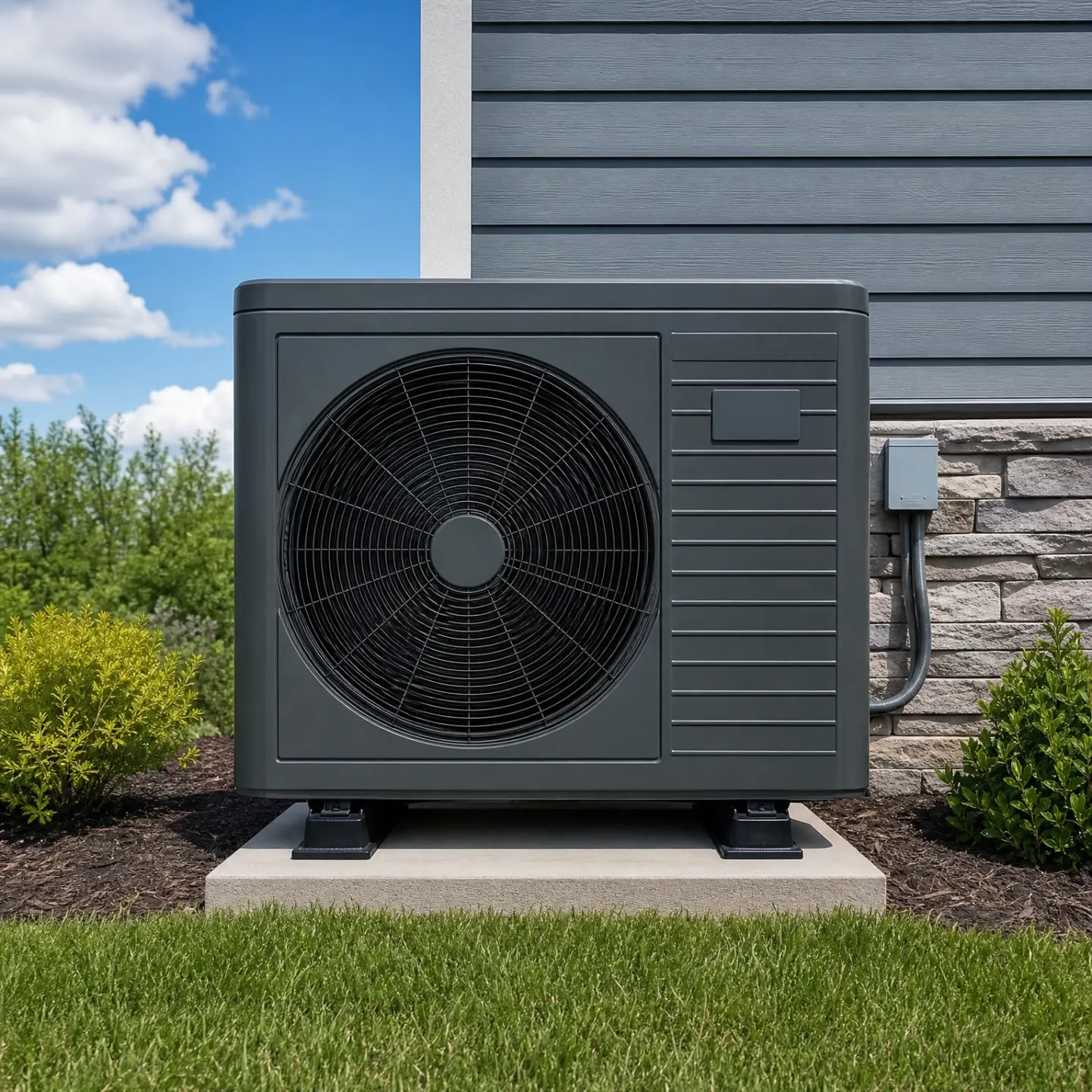
A dark gray heat pump unit mounted on a concrete pad next to a house with gray siding and a stone veneer wall.

It runs every day of the year here, not just the hard ones

The time-lapse makes the point plainer than any number can. This unit cycles day and night, through whichever kind of weather the county is handing it that week. A heat pump does not get the long rest a furnace gets in summer or an AC gets in winter. It runs both ends of the year, and here both ends bring their own punishment. When something in it finally gives out, it's rarely because one bad storm broke it. It's because it has been running this long under this kind of load, and a worn part picked a day to quit. That's the case for having it diagnosed rather than guessed at. Someone who can trace the complaint back to the part and the strain behind it will fix what's actually wrong instead of swapping something that was never the problem.

The reversing valve is the part unique to this machine

A heat pump switches between heating and cooling with a reversing valve, and that valve only exists because the system has to run both directions. It can stick in one position, or fail to shift when the thermostat calls for the other mode. When that happens the system still runs, but it blows the wrong temperature air or won't switch over at all.
The compressor rarely fails on its own

A compressor that burns out is almost always the last part to go, not the first. Low refrigerant charge from a slow leak makes it run hotter than it should for months before it quits. A failing capacitor makes it struggle to start over and over. By the time the compressor itself is the problem, something upstream of it usually caused the wear.

Most heat pump problems show up as a change the homeowner can feel before a tech ever gets there. Air coming out lukewarm instead of hot is one of the most common. It usually means the system is stuck trying to keep up, whether that is a refrigerant problem or a reversing valve not fully shifting. Short cycling, where the unit kicks on and off every few minutes instead of running a full cycle, wears the compressor down fast and is worth calling in right away. Ice building up on the outdoor coil that does not clear during the defrost cycle points to a defrost control or sensor issue, not just cold weather doing its thing. A unit that runs constantly without ever satisfying the thermostat is losing the fight somewhere, and waiting on it only adds strain to parts that are already struggling.

Half the homes in the county were built in 1968 or earlier, and a heat pump does not last as long as the house around it. If yours came with the place, or you are not sure when it was put in, that history matters more than how it sounds right now. A system near the end of its life can still run while costing more every month to do it, and a big repair on an old unit is money that may not carry it much further. Before paying for anything major, ask whoever comes out how much life is actually left in it. That answer should decide whether it is worth fixing or worth replacing, not the other way around.