


A snow-covered residential street at twilight with illuminated houses, bare trees, and an orange horizon glow beneath a deep blue sky.

Furnace Installation in Sterling, CO

Tell us about the job

Takes about a minute. No obligation.

Step 1 of 3: Equipment

Eight months of heat a year is most of the calendar, and Logan County asks for all eight. Overnight lows average 17°F through December, January and February, so the furnace going in this year needs to hold a house steady against real cold, not just take the edge off. That kind of run time wears on an igniter and a blower motor faster than it would somewhere milder. Size matters more here too, since a unit that's too small will run constantly trying to catch up, and one that's too big will cycle on and off and wear out its parts doing it. Get the sizing right for the house, not just the lowest bid on paper.

8 months
October through May, your furnace is on duty
17°F
the average winter night it heats against
57%
of homes here heat with gas, so most furnaces here burn gas
80% AFUE
the federal minimum any new unit must meet
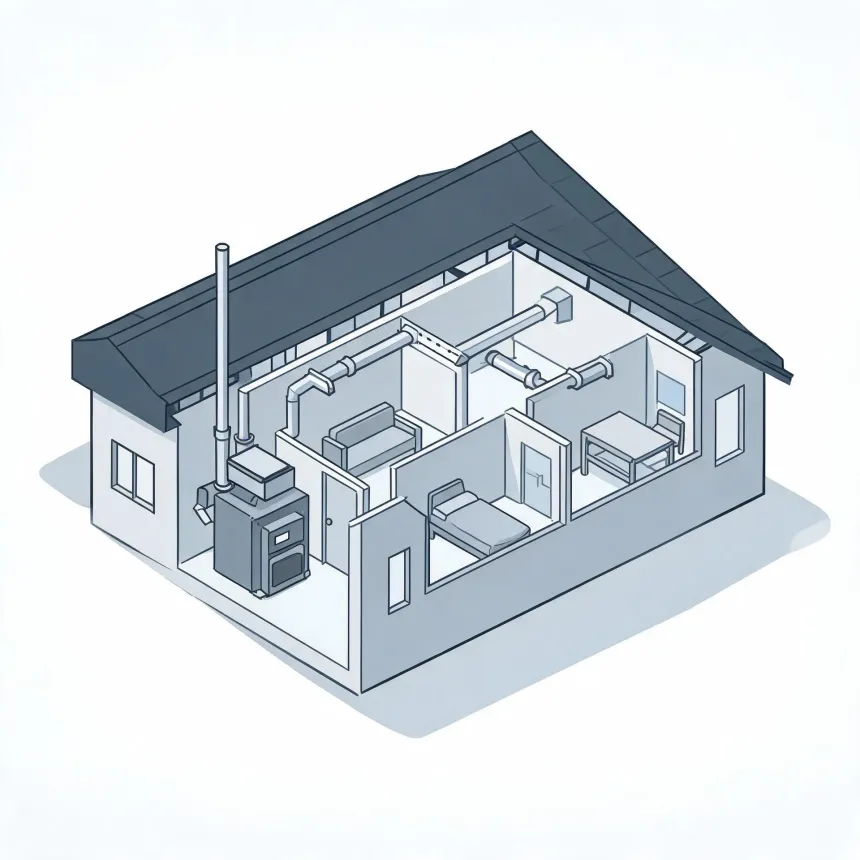
Isometric cutaway illustration of a single-story house showing interior rooms with furniture, overhead ducting, a flue pipe, and a furnace unit against an interior wall.
Your furnace works hardest from November through March.

NOAA nClimDiv, 1991–2020 normals

Half the homes in Logan County were built in 1964 or earlier.

A furnace going into a house that old needs sizing that matches the house, not the unit it's replacing.

Put the new furnace in before October, not after the first cold snap

Heat runs October through May
Winter nights average 17°F
Climate zone 5B

A contractor sizing a furnace for this county should run a load calculation on the house, not just match the number stamped on the old unit. That old unit may have been wrong from the start, or the house may have changed since it went in. Ask what the manufacturer's rating is for low-temperature performance, since a furnace that struggles at 17°F will run long and hard all winter trying to keep up. Ask about the warranty on the igniter and blower motor too, since those parts take the brunt of eight months of run time. A lower bid that skips the load calculation is not a better deal.

Gas heats most of Logan County, so that's the furnace most houses here should get

Utility gas heats 57.3% of homes in Logan County, more than any other fuel. If gas is already running to the house, putting in another gas furnace is the straightforward choice, and most installers here will have parts and experience matched to it.

Find a contractor
A man in a cap, gray shirt and brown work pants, seen from behind, carries a canvas tool bag up steps toward a dark navy front door beside a potted shrub.
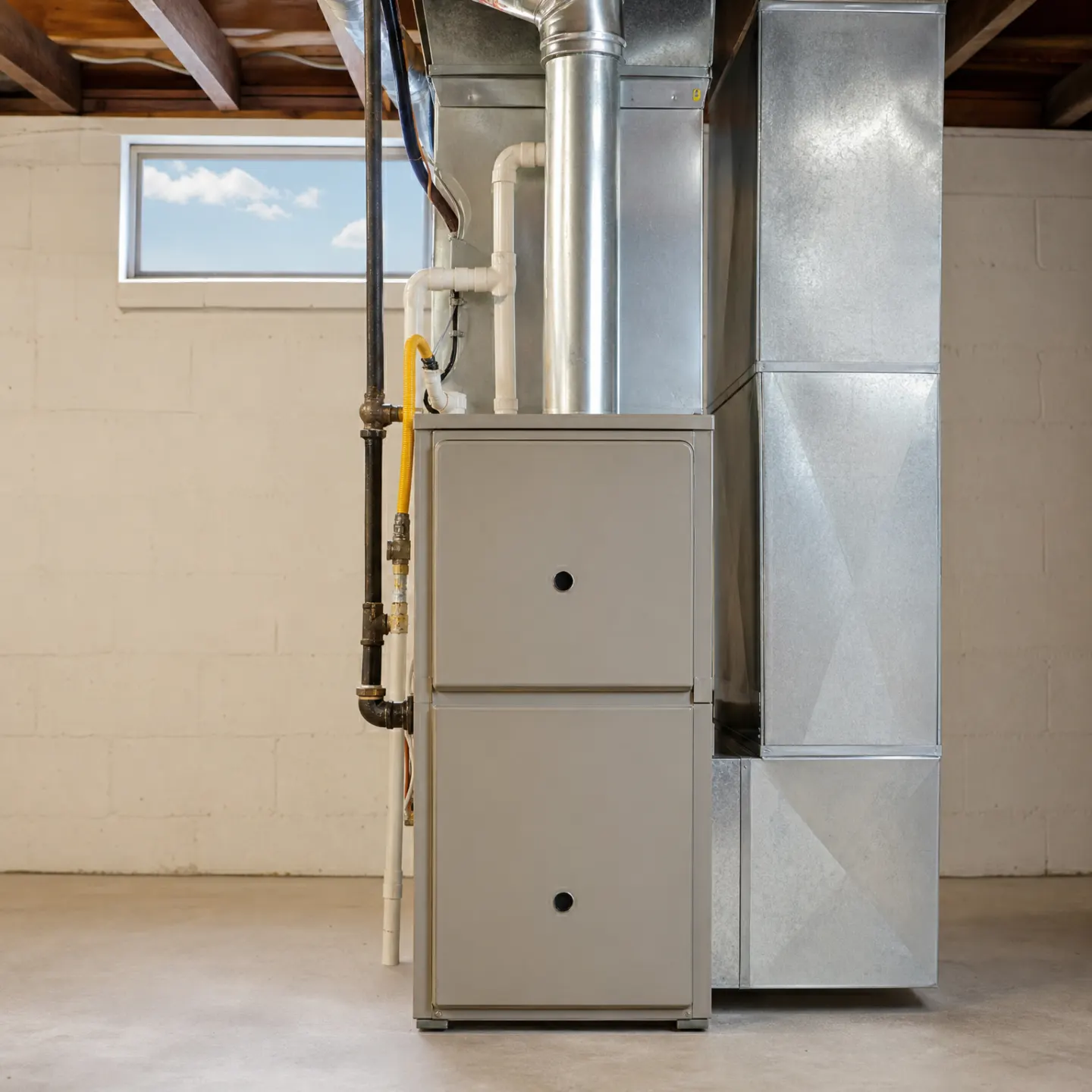
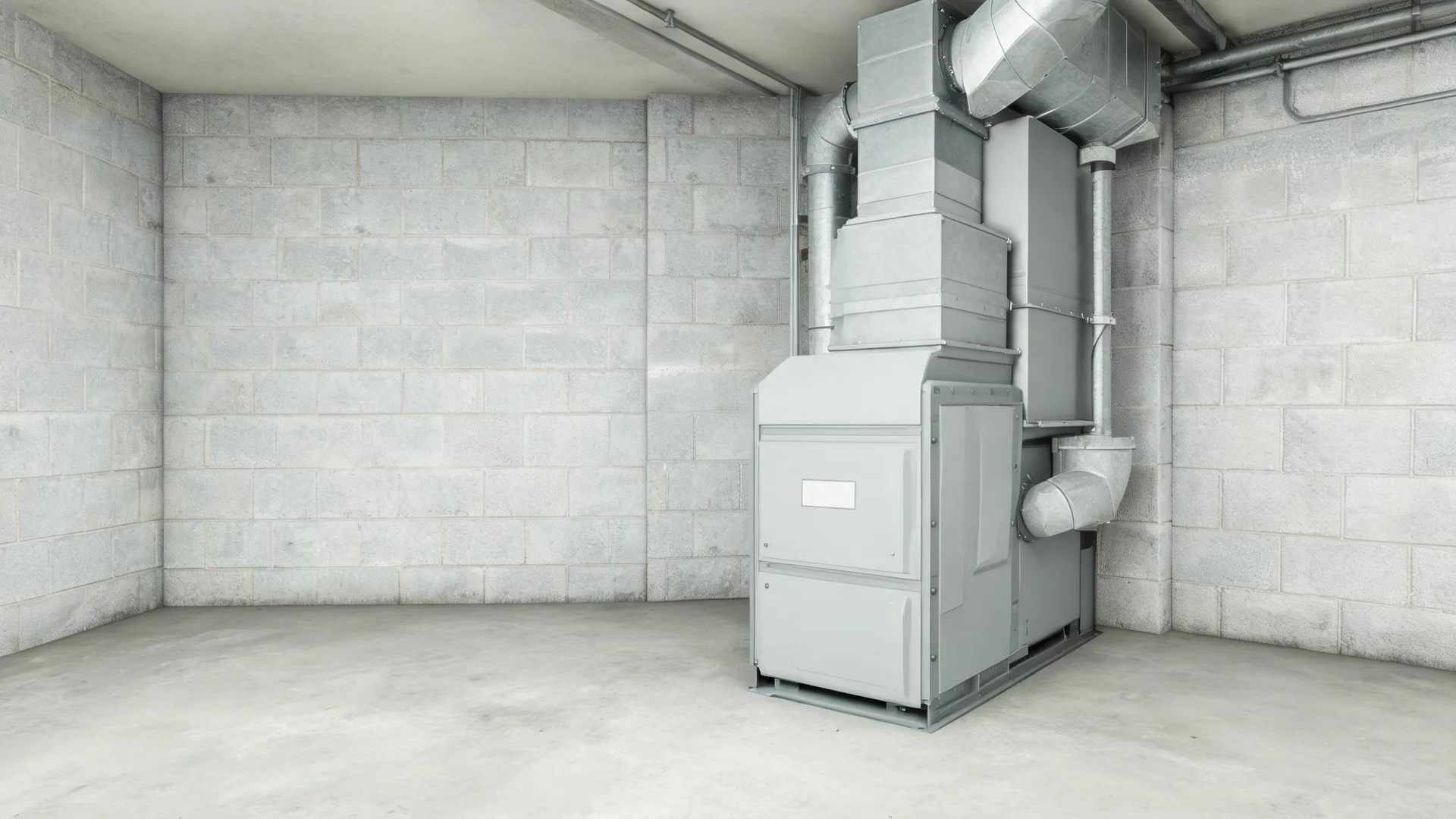
A gas furnace with attached ductwork, gas piping, and condensate lines installed in a concrete-block basement.

The sizing has to match the house as it is now

A load calculation looks at the house as it is now, the square footage, the windows, the insulation, not as it was when it was built. If the house is one of the older ones in the county, ask the contractor whether the sizing number comes from that calculation or from matching the furnace already in there. The old furnace is not proof of the right size, it is just what got installed last time.

A furnace sized by square footage alone is guessing

Square footage gives a rough starting point, but houses the same size can need different furnaces. Ceiling height, how many walls face the wind, how much glass is in them, all of it changes how fast the house loses heat. A load calculation accounts for this. A tape measure and a chart on the wall do not.

Oversized fails quieter, but it still fails

A furnace too big for the house reaches temperature fast and shuts off, then does it again soon after. Short cycles like that mean the heat exchanger never gets fully warm and the blower never settles into steady airflow. The house feels uneven, warm in gusts, and the ignition system wears out faster from all the extra starts.

An unfinished basement interior showing a gray furnace unit beneath a bare incandescent bulb, surrounded by exposed joists, concrete walls, cardboard boxes, and utility pipes.

A high-efficiency gas furnace would save about $80 a year to run in Logan County compared with a gas furnace.

  • A high-efficiency gas furnace$390 a year
  • A gas furnace$470 a year

Estimates for a typical Logan County home, from EIA household energy data, Colorado fuel prices and NOAA climate normals. Your home will differ.

The old furnace comes out first, along with the flue pipe and any ductwork that doesn't match the new unit. The gas line gets pressure tested before anything hooks up to it, and the vent gets checked too, since a furnace this size needs somewhere for exhaust to go that meets code. Electrical runs to the blower motor and control board, and a tech will check that the breaker matches what the new unit draws rather than assuming the old wiring is fine as is. Once it's set and connected, the furnace gets fired up and run through its cycles while the tech checks gas pressure, temperature rise across the heat exchanger, and airflow at the registers. That last check matters as much as the install itself, since a furnace that's wired right but tuned wrong will still run poorly.