

A snow-covered small-town street at dusk, lined with illuminated two-story houses and a grain elevator on the horizon.

Furnace Repair in Sterling, CO

Tell us about the job

Takes about a minute. No obligation.

Step 1 of 3: Equipment

Logan County saw 289 severe weather events between 2015 and 2024. That includes 153 hail events, 104 damaging wind events, and 20 tornadoes. A furnace shares the house with whatever else those storms touch, and ice or a power spike during a bad storm can affect how it runs even when nothing looks wrong from outside. Winter storms hit here too, 12 of them over that same stretch, which is exactly when a furnace can least afford to be out.

8 months
October through May, your furnace is on duty
17°F
the average winter night it heats against
57%
of homes here heat with gas, so most furnaces here burn gas
12 winter storms
in ten years, the nights a failure hurts most
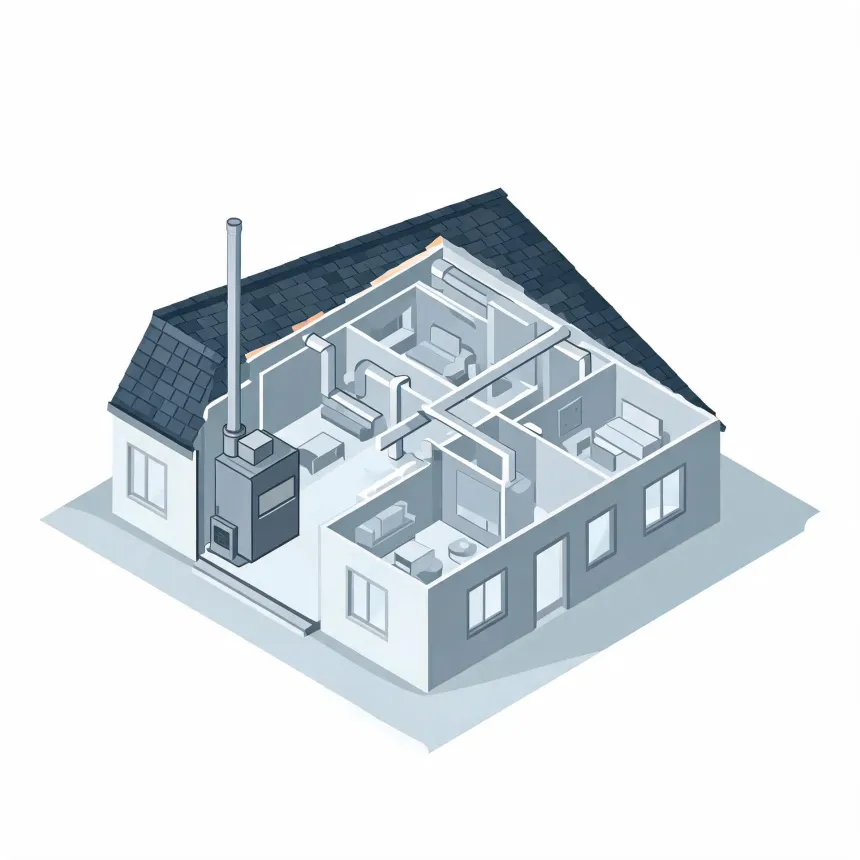
Isometric cutaway illustration of a single-story house showing interior rooms, ductwork, and a dark furnace unit with a tall flue pipe rising past the shingled roof.
Your furnace works hardest from November through March.

NOAA nClimDiv, 1991–2020 normals

Half the homes in Logan County were built in 1964 or earlier.

A furnace that old is running on borrowed time, and a hard freeze is a bad time to find out how much is left.

October asks the most of a furnace that sat idle since spring

Heat runs October through May
Winter nights average 17°F
Climate zone 5B

Eight months of heat a year is a long season to ask one machine to cover. Most of the country gets a break somewhere in there. Here, a furnace that starts in October is still working in May, which means more hours on the igniter, more cycles on the blower motor, more chances for a small issue to turn into a bigger one. A furnace that's struggling isn't failing for no reason. It's been carrying a heavier load than furnaces in most places ever have to. Getting the actual cause diagnosed, rather than just patching the symptom, is what makes a repair hold up for the rest of the season.

After a storm, a furnace that still runs is worth a second look

A power spike or a hit to the outdoor unit does not always show up right away. If Logan County has had a rough storm come through, get the furnace checked even if it seems fine. Catching it now beats finding out during the next cold stretch.

Find a contractor
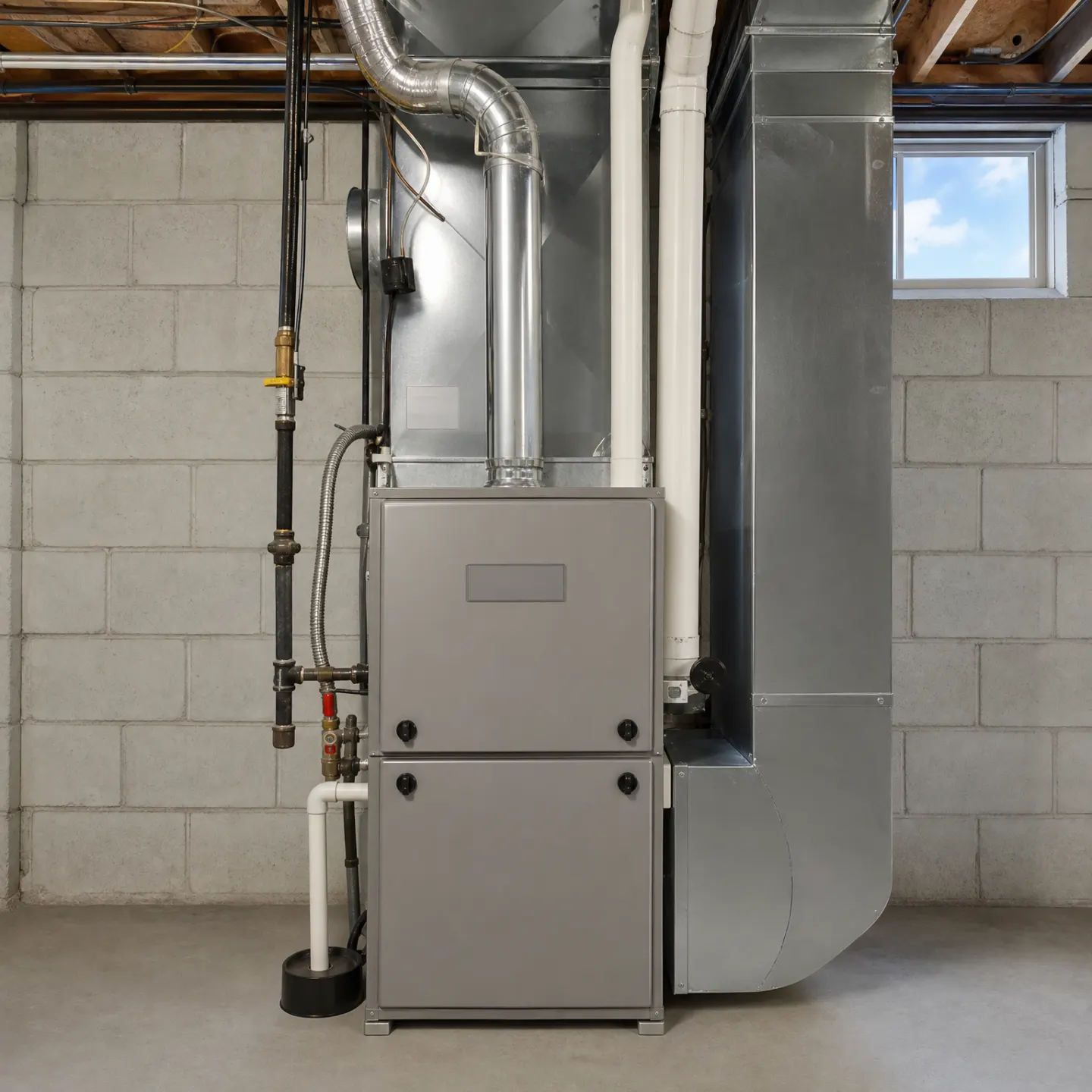
A gray high-efficiency gas furnace installed in an unfinished basement, surrounded by gas lines, a condensate drain, and sheet-metal ductwork.

Running since October, still going in May

Eight months of a furnace running is eight months of wear on the same igniter, the same blower motor, the same switches. When one part finally gives out, it's worth having a technician check the rest of the sequence while they're already in there, not just swap the one part that failed. A flame sensor with corrosion on it or an igniter barely holding continuity can be the next thing to quit. Catching that now, while the furnace is already open, costs less than a second visit in the middle of winter.

What you can check before anyone shows up

Check the thermostat first. Make sure it's set to heat and the set point is above room temperature, and swap the batteries if it uses them. Go to the breaker panel and look for a tripped breaker on the furnace circuit. Check the furnace switch, the one that looks like a light switch near the unit, and make sure it's on. If the furnace uses a standing pilot, see if the pilot light is actually lit. None of this requires opening the furnace itself.

What to leave alone

Don't pull the furnace panels off or go near the burners, the flame sensor, or the gas valve. Don't try to relight a pilot on a unit with electronic ignition, it doesn't work that way and there's nothing to light by hand. If you smell gas, don't flip switches or check anything at all. Leave the house and call the gas company from outside. A technician can sort out an ignition problem or a bad flame sensor once they're there, but gas smell isn't a homeowner job under any circumstances.

A gray forced-air furnace with sheet-metal ductwork stands in an unfinished basement with exposed wooden joists, concrete walls, and a hanging incandescent bulb.

A new furnace would cut about $100 a year off heating for a typical Logan County home.

  • A new high-efficiency furnace$390 a year
  • An older furnace$490 a year

Estimates for a typical Logan County home, compared with an older unit built to the previous federal minimum, from EIA household energy data, Colorado fuel prices and NOAA climate normals. Your home will differ.

Repair makes sense when one part has failed and the heat exchanger is sound.

Replacement makes sense when the heat exchanger is cracked or the furnace keeps needing parts.

A diagnostic starts before any panel comes off. The technician asks what the furnace was doing right before it quit, whether it was short cycling, blowing cold, or not turning on at all, because that narrows things down fast. Then they'll pull the panels and check the sequence of operation: does the thermostat call for heat, does the inducer motor start, does the igniter glow or the pilot light, does the gas valve open, does the burner light, does the blower kick on. Wherever that sequence breaks is usually where the problem is. They'll check the flame sensor for corrosion, test the igniter for continuity, and look at the heat exchanger for cracks or rust, since that's a safety issue and not just a repair one. Most of this is testing with a multimeter and watching the furnace actually try to run, not guesswork.