Illuminated stone-and-timber mountain homes line a quiet street at dusk, with evergreen trees and a mountain range in the background.

Heat Pump Repair in Monte Vista, CO

Tell us about the job

Takes about a minute. No obligation.

Step 1 of 3: Equipment

Cold mornings, same as anywhere else

Monte Vista sees overnight lows averaging 7°F in December, January and February. That's normal winter cold for a heat pump, not a strain that wears one out faster. A system that's maintained and sized right for the house handles it.

So look for the usual cause

A heat pump struggling here is most likely dealing with a problem techs see everywhere. Low refrigerant. A failing defrost control. A dirty coil. A worn contactor. Diagnosis should start there before anything gets blamed on the weather.

7°F
the average winter night it heats against
73°F
the average summer afternoon it cools against
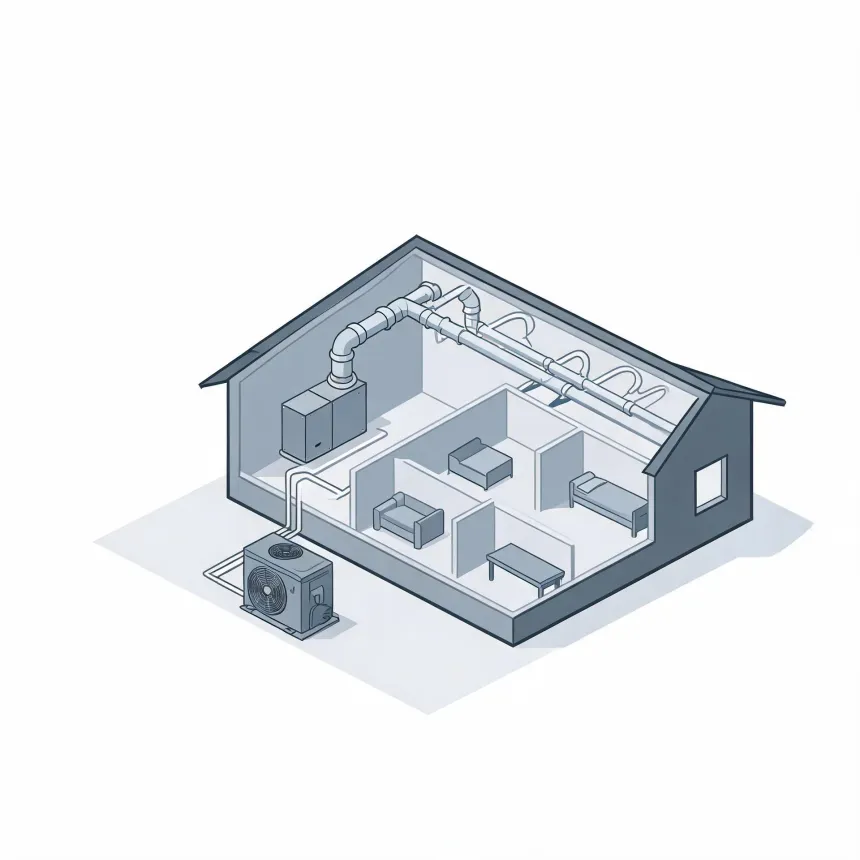
Isometric line illustration of a cutaway house showing interior rooms with furniture, a furnace or air handler with overhead ductwork, and an outdoor condenser unit connected by lines outside the wall.

Monte Vista gets winter storms most years, along with the usual share of wind.

None of that points to a harder job here. It points to checking the defrost board, the contactor, the charge, same as anywhere.

A heat pump running wrong costs more here every month it stays that way

Power costs 14.92 cents a kWh statewide
52 damaging wind events from 2015 to 2024
199 winter storms from 2015 to 2024

Half the homes in Rio Grande County were built in 1978 or earlier, and half in 1978 or later. That split doesn't point to the cause of a heat pump problem. An older house can have a system installed last year, and a newer one can still have what came with it. What matters is the equipment itself, not when the walls went up. Mobile homes make up 11.5% of the housing here, and those often run smaller heat pumps or different ductwork than a site-built house. That's worth telling a tech up front, since it can change where they look first.

A heat pump costs more here every month it runs wrong

Colorado power runs 14.92 cents a kilowatt-hour. A heat pump short cycling, low on charge, or stuck in the wrong mode pulls more of it than it should, and that shows up on the bill before anything else does. Getting the actual cause checked now stops the waste, whatever it turns out to be.

Find a contractor
A man in a cap, dark shirt and tan work pants walks up porch steps toward a navy blue front door, carrying a canvas tool bag beside a potted shrub.
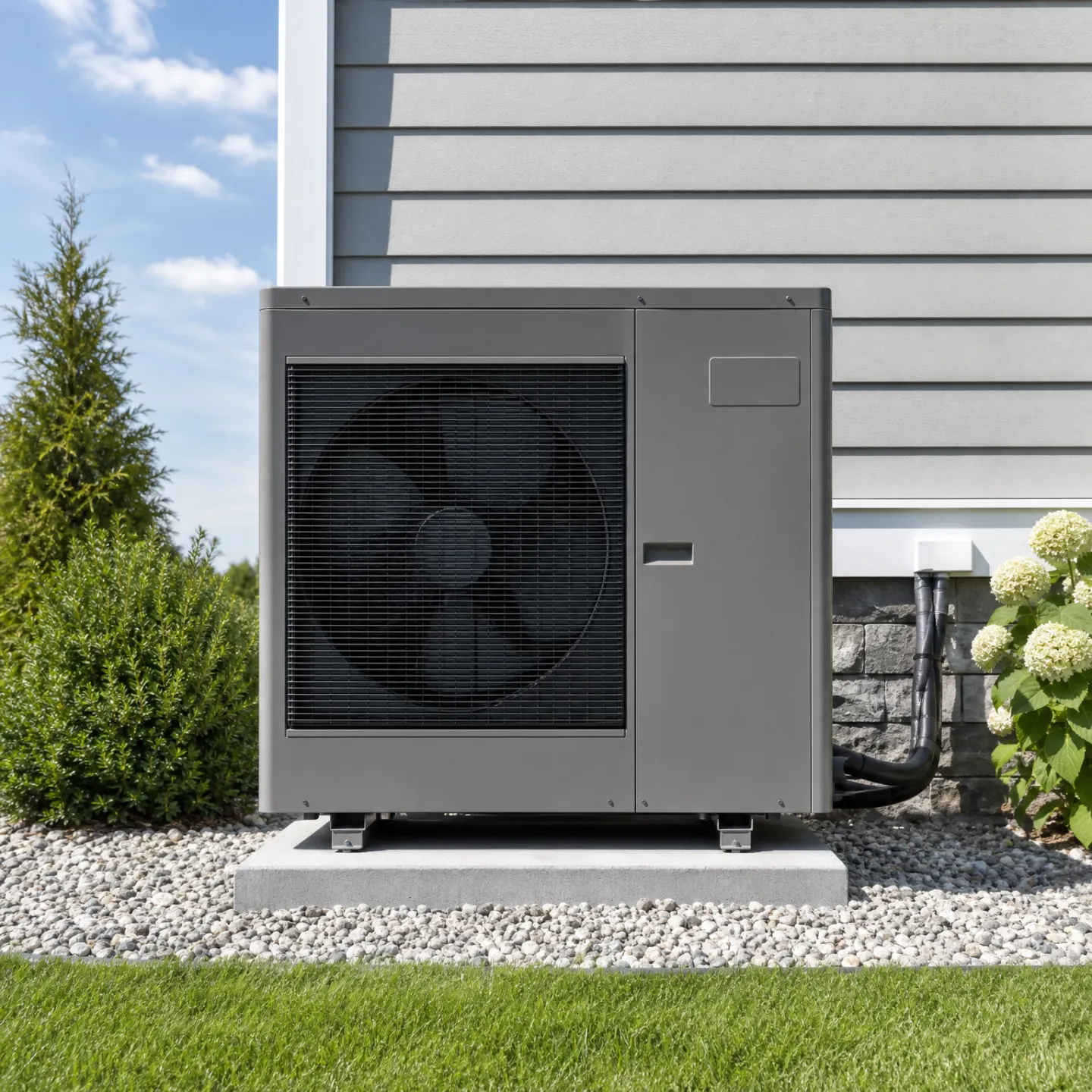
A gray air-source heat pump mounted on a concrete pad next to a house with gray vinyl siding, surrounded by gravel and flanked by green shrubs and white hydrangea flowers.

What to check before the tech shows up

Before anyone comes out, a few things are worth a look. Check the thermostat is set to heat and the setpoint is actually above room temperature. Check the outdoor unit for ice building up on the coil or snow packed against it, and check that nothing is blocking airflow around it. Pull the filter and hold it up to light. If you can't see through it, swap it or clean it. Check the breaker for the system hasn't tripped. Listen for the outdoor fan running. If the outdoor unit is iced over and never goes through a defrost cycle on its own, or if you smell something burning, turn it off at the thermostat and let a tech look at it rather than running it blind.

Parts that wear out the same way everywhere

A contactor pits from arcing every time it closes and eventually won't pull in. A capacitor weakens over time until the compressor or fan struggles to start. The reversing valve can stick partway, so the system runs backward or won't switch between heat and cool at all. None of these fail because a system is old. They fail from opening and closing over and over, which happens whether the unit is new or not.

What a failing part means for the job

A stuck reversing valve, a weak capacitor and a worn contactor all show up as the same complaint. The system runs but doesn't heat right. A tech has to test each part on its own to find which one quit, since the symptom on the thermostat doesn't say which part is bad. That's the diagnosis before any repair gets decided on.

A heat pump that needs attention usually tells you before it quits outright. Warm air turning cool at the register, or the system running long stretches without the house catching up to the setpoint, both point to it losing ground somewhere. Short cycling is another one. The unit kicks on, runs a couple minutes, shuts off, then starts again soon after, instead of running a normal cycle through. That pattern wears on a compressor fast. A hissing or bubbling sound near the lines usually means refrigerant escaping, and that's never something to wait on. Ice on the outdoor coil that doesn't clear on its own, or a unit that never seems to defrost, points to a stuck reversing valve or a failed defrost control. Any burning smell or a breaker that keeps tripping means it gets shut off and looked at, not run another day to see if it clears up.

A repair makes sense when one part quit and everything else still works. A new contactor or capacitor is a small job, and the rest of the system doesn't care how old it is. Replacement starts to make more sense when the compressor itself is the problem. That part isn't swapped on its own, since it's sealed into the system, and a failing compressor often means the refrigerant circuit was already under stress. The other thing worth asking is how often a tech has already been out for this same unit. One repair is just a repair. The third call for a different problem in a short span says the system is wearing down on multiple fronts at once, not failing in one spot. That pattern is worth naming to whoever comes out, since it changes the conversation from fixing a part to deciding if the unit's done.