Gas here runs $10.09 per million Btu
Colorado homes paid $10.09 per million Btu of natural gas in 2024. That number sets what every therm your furnace burns actually costs you, all winter long.
Takes about a minute. No obligation.
Colorado homes paid $10.09 per million Btu of natural gas in 2024. That number sets what every therm your furnace burns actually costs you, all winter long.
Two furnaces can heat the same house and burn different amounts of gas doing it. With gas priced the way it is here, that difference shows up on your bill every single month, not just when it's coldest.
NOAA nClimDiv, 1991–2020 normals
Winter storms hit Rio Grande County 199 times between 2015 and 2024.
A furnace that keeps running when the power doesn't is worth planning for before install day, not after.




Rio Grande County falls under zone 7 in the 2021 energy code, the coldest tier that code covers. That rating exists because heating runs most of the year here, and it narrows what can legally go into your house. Any gas furnace installed today, built after November 2015, already has to turn at least 80 percent of the gas it burns into heat. That floor goes up again for furnaces built on or after December 18, 2028, when the minimum rises to 95 percent. Where your new furnace lands on that range is worth asking about directly.
Gas at $10.09 per million Btu means the efficiency rating on the furnace you pick decides what this winter costs you, and every winter after it. That's worth settling at install, while you're still choosing which furnace goes in.
Find a contractorThis furnace runs in every month of the year, not just the cold stretch in the dead of winter. That is the load to size for. A unit sized too small keeps reaching for a temperature it can't hold, and one sized too big cycles on and off more than it should. Either way wears parts down sooner. Ask whoever bids the job what load calculation they ran, and make sure it accounts for a furnace that never really gets a season off here.
A contractor works out the right size by adding up the heat loss from every wall, window and door in the house, room by room. Matching the new furnace to whatever is already in the wall just copies a guess someone else made, maybe for a house before an addition or new windows went in. The output number should come from your house as it stands now.
A furnace too small runs long stretches trying to reach the temperature on the thermostat and still falls short on the coldest days. A furnace too big heats the house fast, shuts off, and starts again soon after, never running long enough to warm the place evenly. Both patterns put more wear on the ignition system and the blower than a furnace that's sized to run in steady, longer cycles.
Estimates for a typical Rio Grande County home, from EIA household energy data, Colorado fuel prices and NOAA climate normals. Your home will differ.
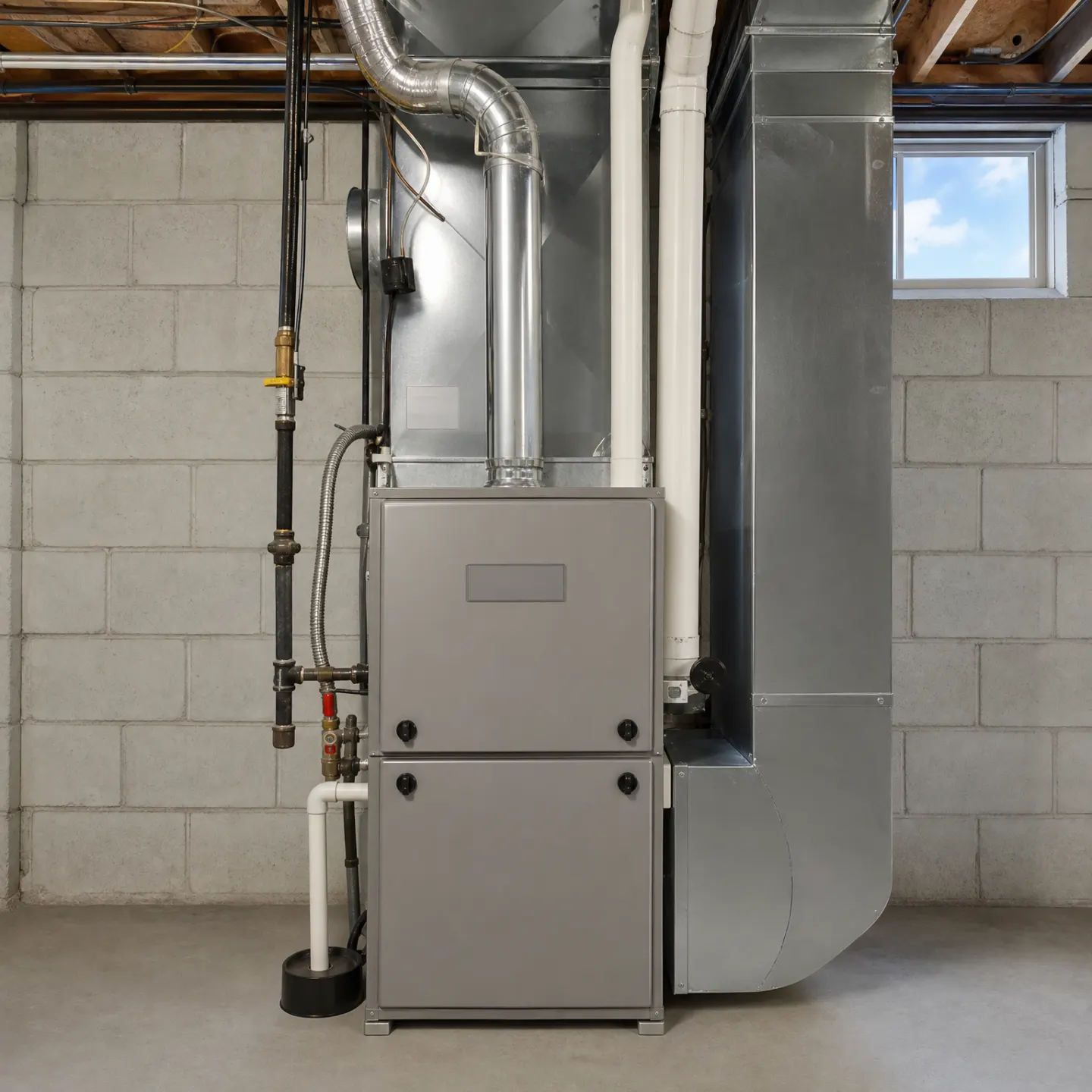
Install day starts with the old furnace coming out, along with the vent pipe and gas line running to it. If the new furnace is a different size or a different efficiency tier, the vent and the gas connection often have to change with it, not just get reused. A high efficiency furnace vents through PVC pipe run to the outside wall, not up through the old metal flue, so that's new pipe and a new wall penetration. The gas line gets pressure tested before anything is lit. Ductwork gets checked where it meets the furnace, since a cabinet of a different size doesn't always line up with the existing trunk line without some rework. Once it's set, connected and vented, the contractor runs it through a full heat cycle and checks the flame, the airflow and the gas pressure before calling it done.