

Heat pump vs furnace in Clear Creek County, Colorado

Request a Quote

Pros who install both

Which costs less to run in Clear Creek County?

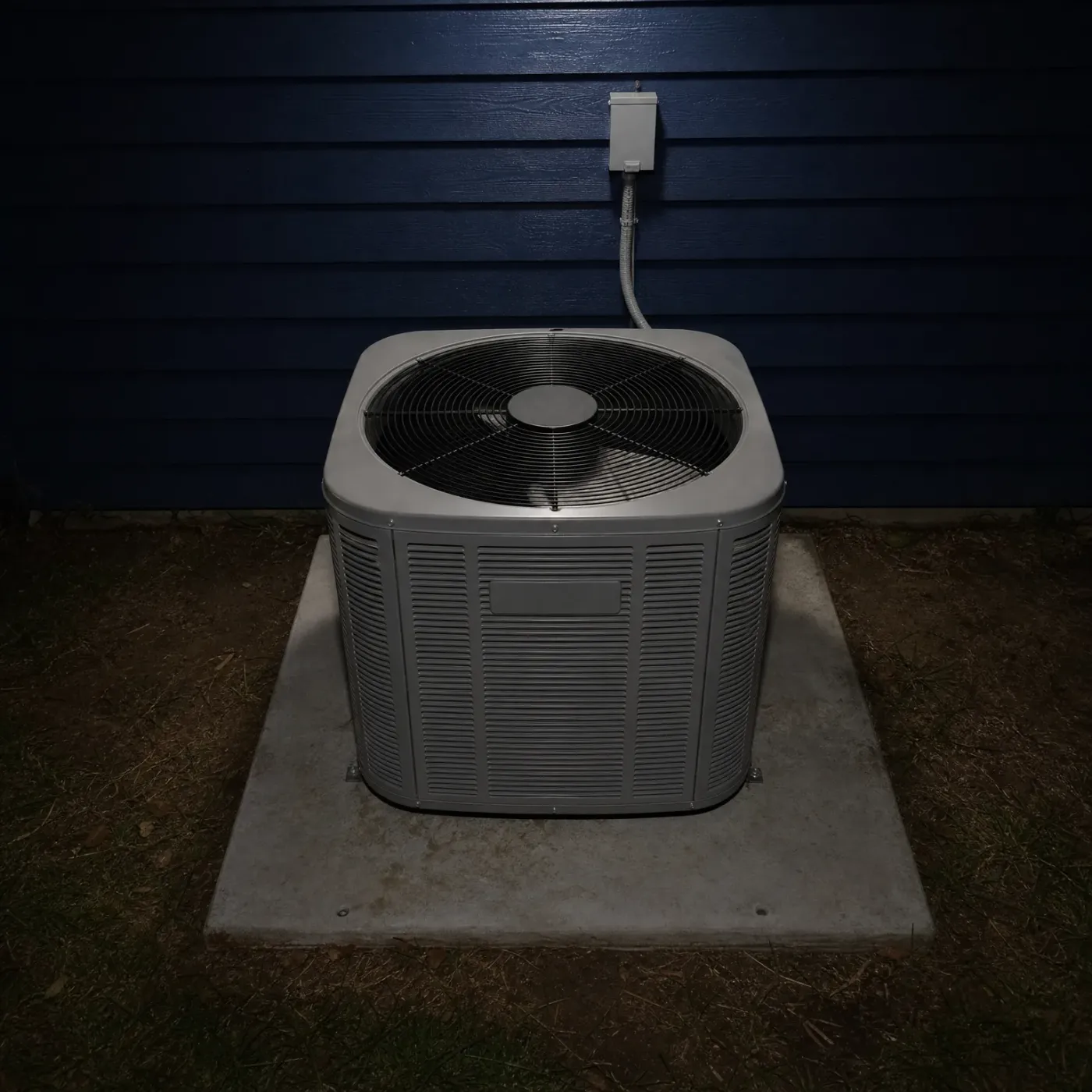
A gray outdoor condenser unit with a top-mounted fan grille sits on a concrete pad against dark blue lap siding, with a conduit running to a small wall-mounted disconnect box, photographed at night.

Heat pump

To heat your home here$1.99per 100,000 Btu

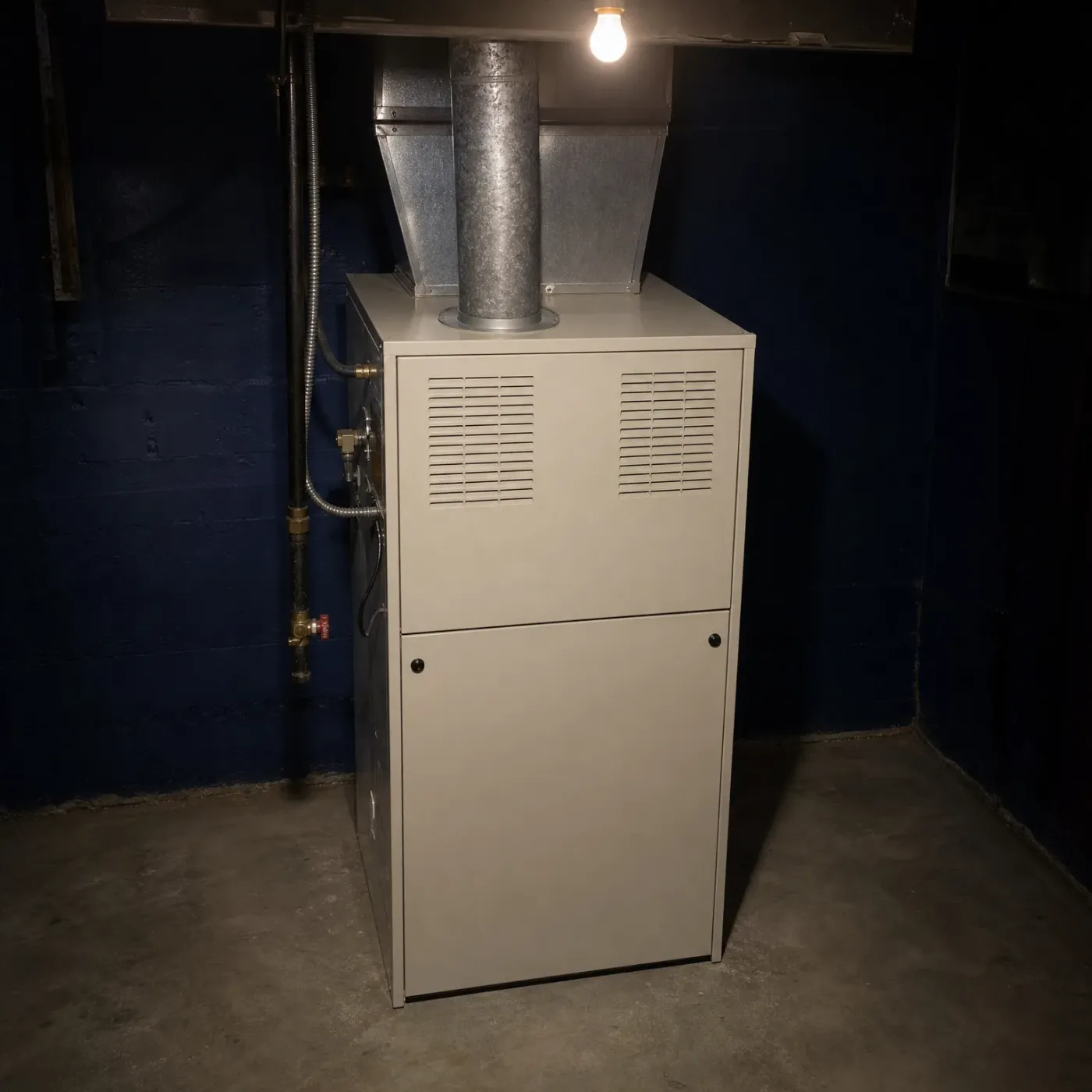
A beige furnace with louvered upper panel and metal flue duct stands against a dark blue painted block wall in a basement, with pipes at left and a bare light bulb overhead.

Furnace

To heat your home here$1.26per 100,000 Btu

At Colorado's gas and electricity prices, a gas furnace makes the same heat as a heat pump for at least 36% less.

Btu stands for British thermal unit, the standard measure of heat energy.

Where does a heat pump shine?

  • Steady, even comfort

    A heat pump runs long and low instead of blasting on and off. Rooms hold an even temperature all day.

    A navy upholstered armchair with ottoman, open book and throw blanket sits beside a lit fireplace and white built-in bookshelves, with a golden-colored dog lying on a gray rug and snow visible through the window.
  • Heats and cools in one system

    A heat pump runs the same way all year. It pulls heat into the house in winter and pushes it out in summer.

    Living room with a beige sofa holding navy and light blue cushions under a large window overlooking green trees and white hydrangeas, a wooden coffee table with a woven tray, potted plant and candle, a navy bookcase at right, and a striped armchair in the foreground.
  • No gas line, nothing burning in the house

    There's no gas line to the unit and no flame anywhere in it. Carbon monoxide isn't part of the picture.

    A kitchen with a white stone-topped island over navy cabinetry, a stainless kettle on a black cooktop, a wooden open shelf holding bowls, mugs and a potted plant, and a ceramic vase of green flowers beside a woven stool.

Where does a furnace shine?

  • Strong, steady heat in hard cold

    Winter nights here average 12°F. A furnace burns gas for heat instead of pulling it from outside air, so it keeps the same output on that cold a night as on a mild one.

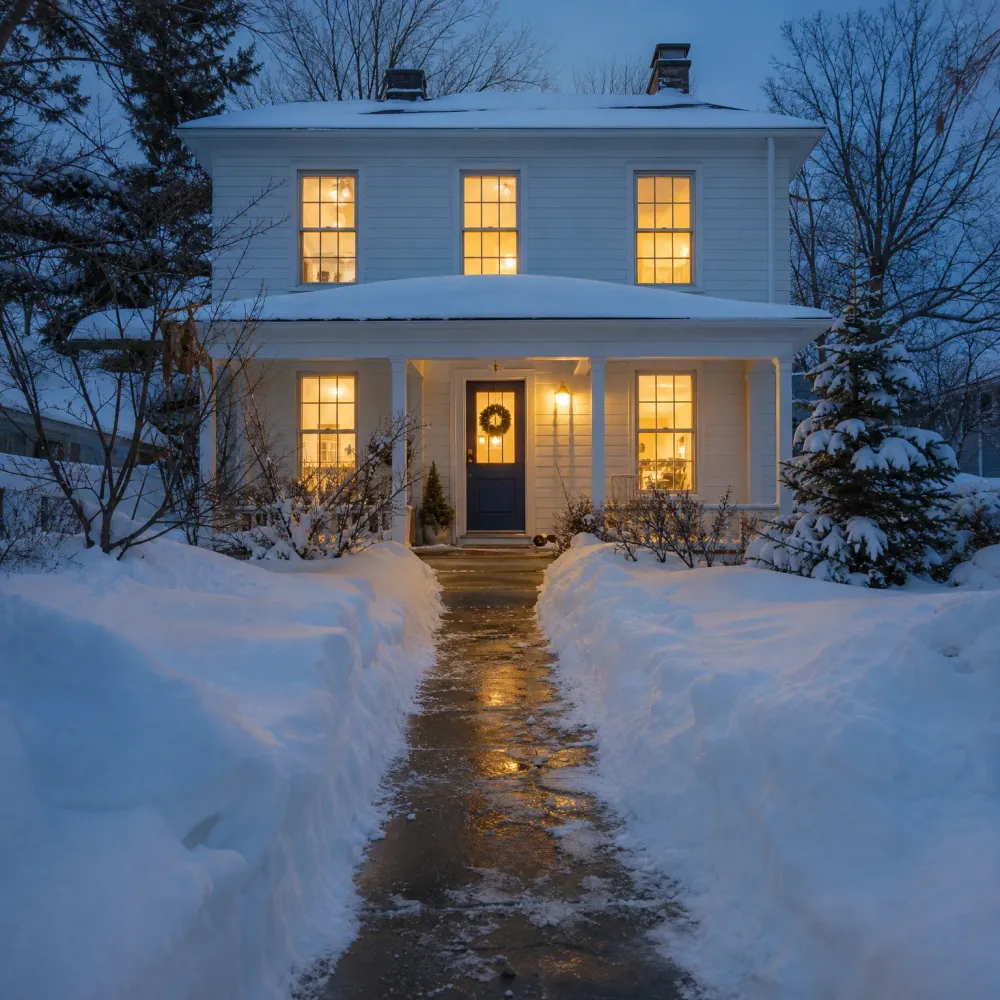
    A two-story white clapboard house with lit windows and a wreath on the front door at dusk, with a shoveled wet walkway between deep snowbanks leading to the porch.
  • Runs on the gas most homes here already use

    Most homes in Clear Creek County already heat with utility gas. If yours is one of them, a furnace means using the gas line already run to your house instead of switching to a different setup.

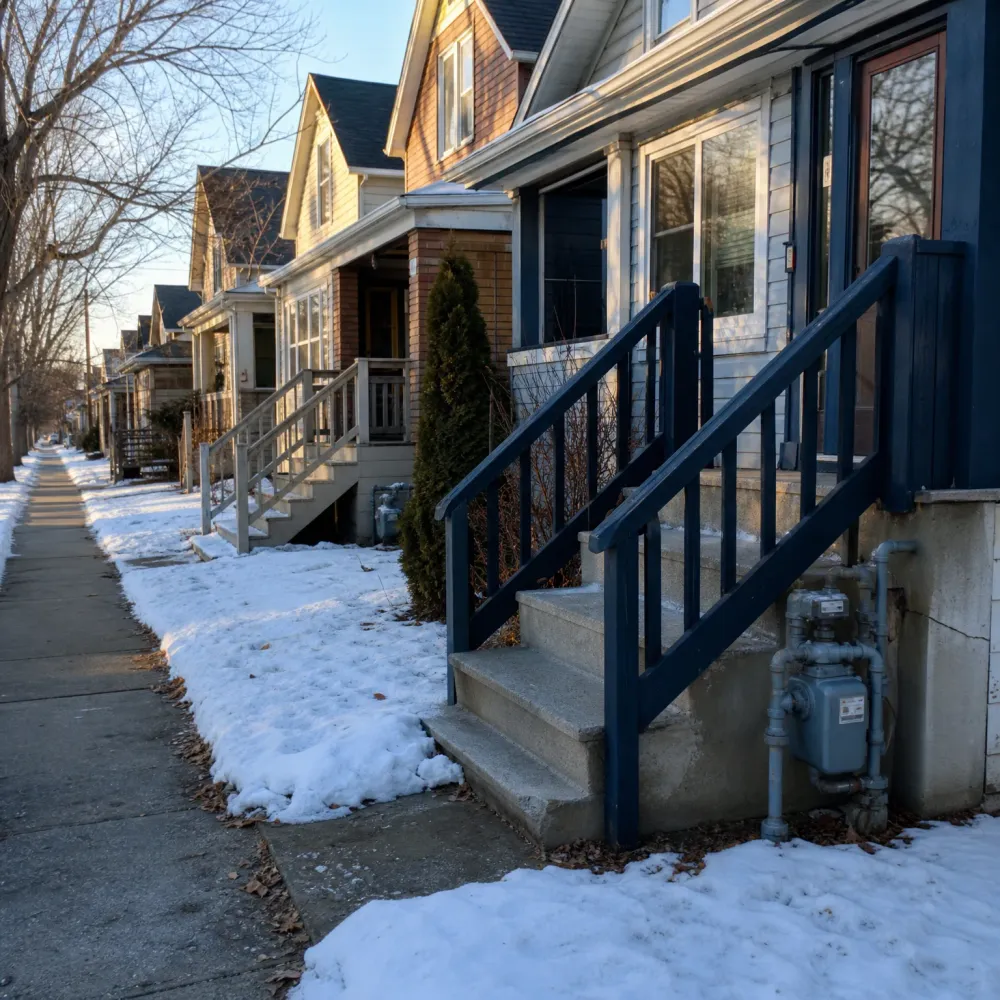
    A row of closely spaced two-story houses along a sidewalk with patchy snow, the nearest with concrete steps and dark blue wooden railings and a gas meter at the foundation.
  • Pairs with any central AC

    A furnace's blower and ducts carry cooled air too. Adding central AC uses the same system.

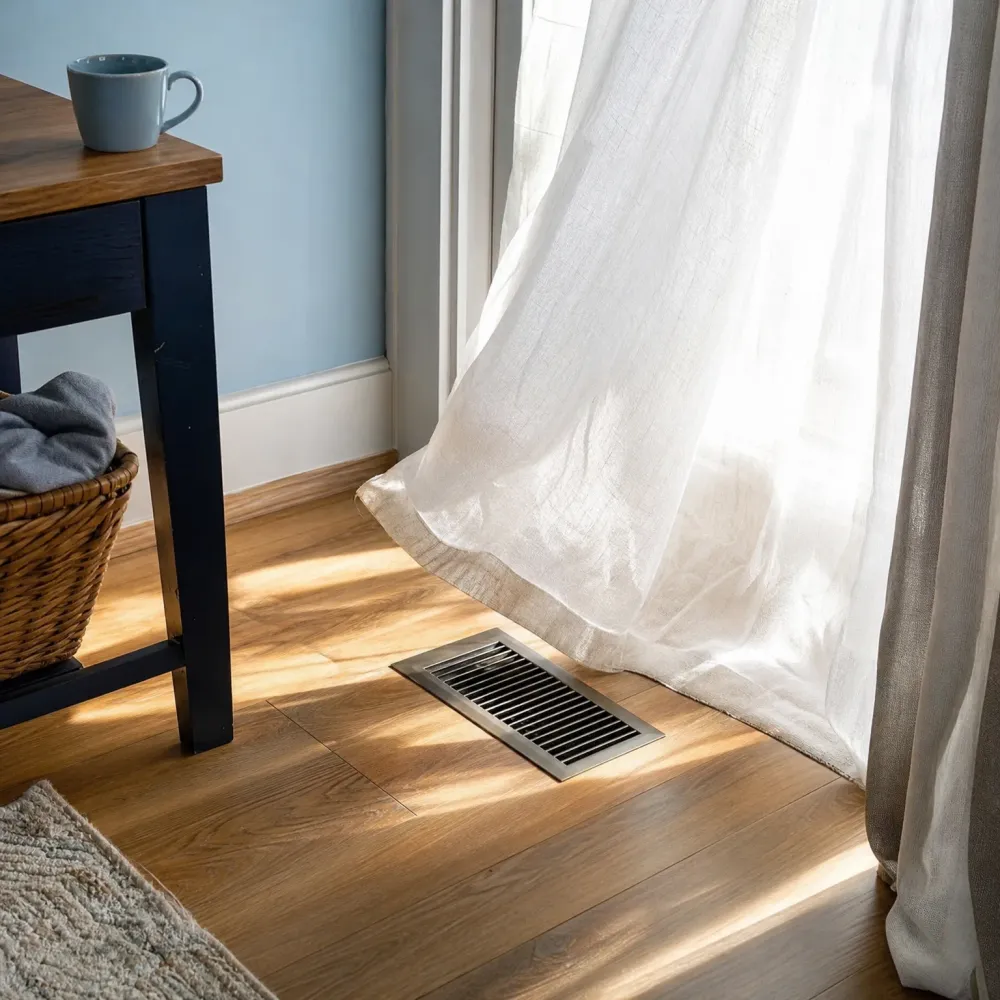
    A metal floor vent set in a wood-plank floor near a window with sheer white and gray curtains, beside a dark side table holding a mug and a wicker basket of folded cloth.

What the cold here does to a heat pump

Winters here settle the question before cost does. The average overnight low across December, January and February is 12°F, and a standard heat pump starts falling short of its rated heat output once it's below 40°F outside. Below about 35°F it often needs backup heat to keep up. Both marks sit well above what this county sees on a normal winter night.

Of the roughly 365 nights a year this county runs heat, about 205 drop to freezing or below, over half of them. Every one of those nights is already past both the 40°F and 35°F marks. About 12 nights a year reach 0°F, deep into the range where a standard heat pump is putting out only a fraction of its rated capacity. A furnace does not work this way. It burns gas to make heat, and the flame puts out the same heat on any of those nights.

None of this rules out a heat pump. The ones built and tested for cold climates are a different machine from the federal-minimum unit the running-cost band is based on, built to keep most of their capacity down at 5°F and verified for it by independent testing. In a two-winter study of these cold-climate models in occupied homes, backup heat carried only a small share of the load between 0°F and 35°F, and the homes rarely ran on backup alone even above 0°F. If a heat pump is going into a house here, this is the kind it should be.
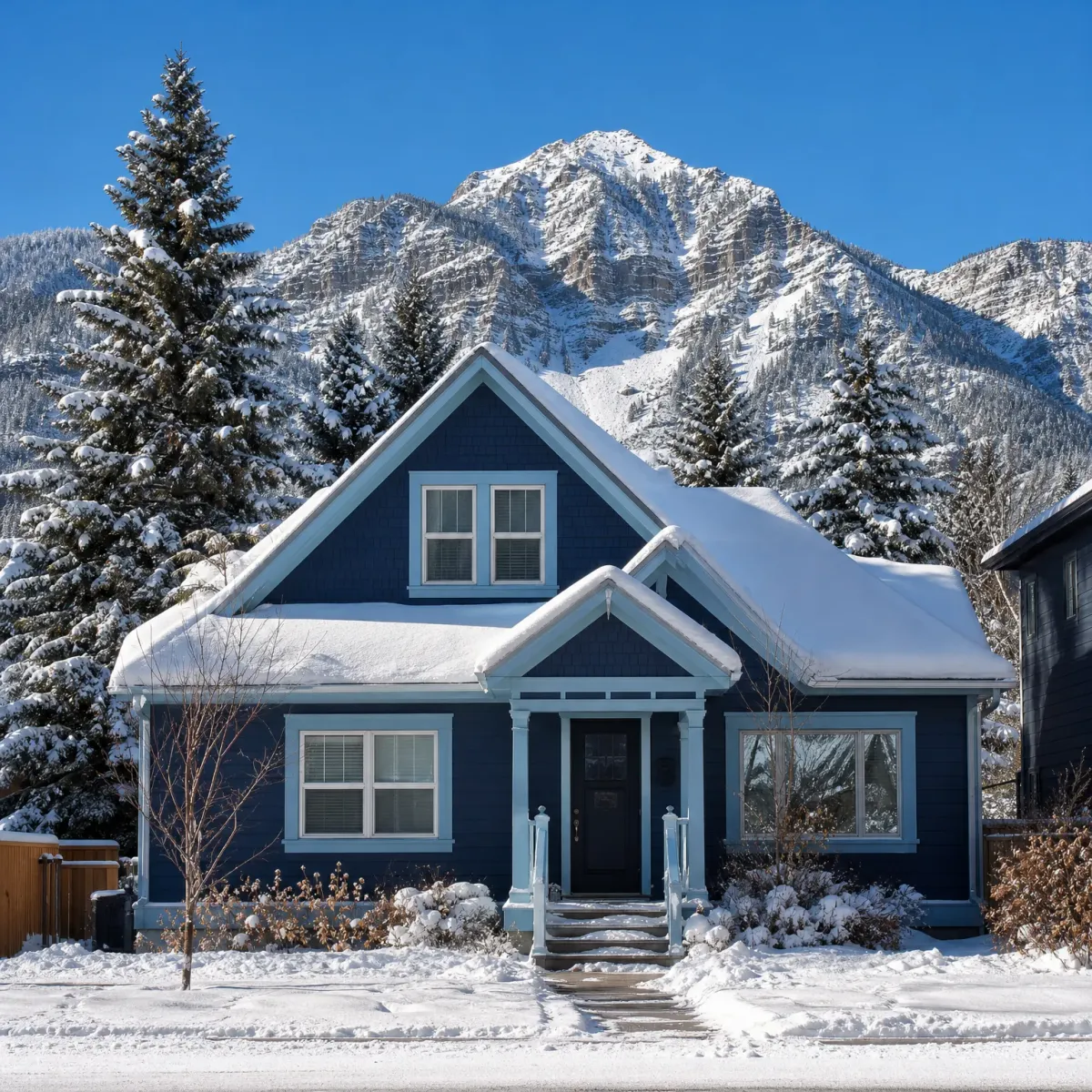
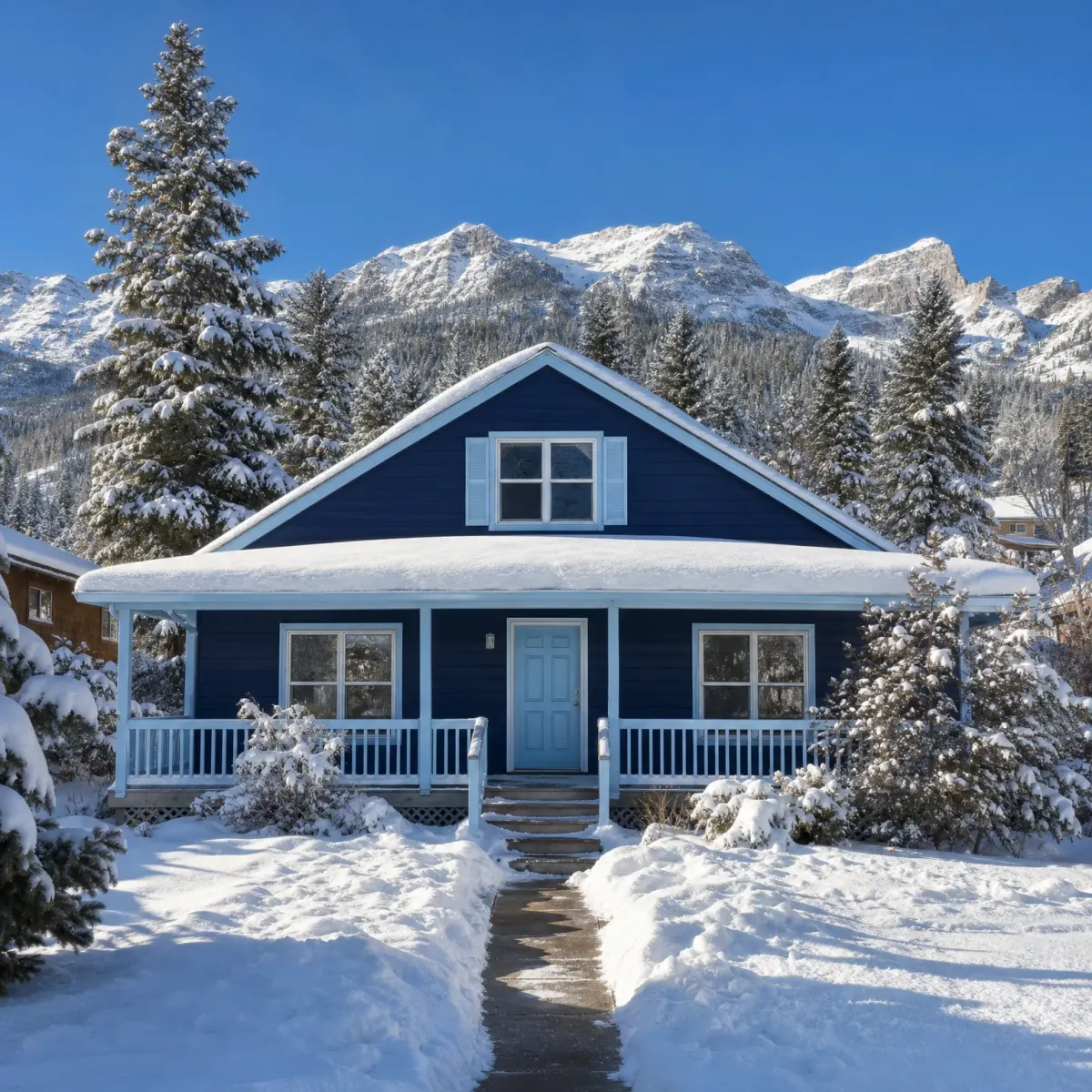
A navy blue single-family house with white trim and a snow-covered roof, flanked by snowy conifers, with a steep snow-covered mountain and clear blue sky behind it.

What it costs to run, and what the house is already set up for

Set the cold aside and the running cost still favors gas. At Colorado's current prices, a furnace makes the same heat for $1.26 per 100,000 Btu against $1.99 for a heat pump, at least 36% less. That gap is built on federal-minimum equipment for both and leaves out backup heat entirely, so it's the heat pump's best case, not its worst.

It also matches how this county already heats. Utility gas heats 55.5% of homes here, propane another 20.7%, and electricity 14.9%. Three out of every four homes here are already set up to burn gas for heat, not to run on electricity alone.

Cooling does not tip this. The county's summer afternoons average 68°F and homes here have essentially no cooling season, so the heat pump's ability to run air conditioning in the summer is answering a question this county rarely asks. A furnace pairs with a central AC unit for the few days a year it's wanted. For most houses here, a gas furnace is the cheaper, steadier choice. A heat pump only makes sense if it's a cold-climate model sized to carry the house near 0°F, and even then it's running against gas prices that favor the furnace.

Sources: NOAA nClimDiv · NOAA 1991–2020 seasonal normals · EIA SEDS 2024 · PNNL Building America guide · PNNL-37127 field study · ENERGY STAR product criteria · 10 CFR 430.32 · Census ACS 2020–2024

A dark blue single-story house with a light blue door, white trim and a covered porch, surrounded by deep snow, conifers and snow-covered mountains under a clear blue sky, with a shoveled path leading to the steps.

Common questions about heat pumps and furnaces

  • Can a heat pump heat a house through a Colorado winter?

    It can, but not on its own in this county. Below 40°F a standard heat pump puts out less than its rated heat, and below about 35°F it often needs backup heat to keep up. The average overnight low here runs 12°F across December, January and February, well past both marks, so a heat pump needs a backup heat source to get a house through the winter here.

  • Do I need backup heat with a heat pump here?

    Yes. The average winter night here is 12°F, and a standard heat pump starts falling short of its rated heat below 40°F and often needs backup below about 35°F. With about 205 nights a year at or below freezing, a house here would lean on that backup heat a lot, not just on the rare cold snap.

  • Can I keep my furnace and add a heat pump?

    Yes, and here that often makes more sense than relying on a heat pump alone. Your furnace would handle the cold nights, the 12 or so a year that hit 0°F and the roughly 205 that drop to freezing or below, while the heat pump covers the milder stretches. That split plays to what each machine does well.

  • Is a heat pump cheaper to run than a furnace in Clear Creek County?

    No, a gas furnace costs less to run here. A furnace built to the federal minimum makes heat for $1.26 per 100,000 Btu at Colorado gas prices, against $1.99 for a heat pump built to the federal minimum at Colorado electric prices, and the heat pump's figure does not even include the cost of its backup heat. That gap is why utility gas heats about three in five homes in the county and electricity heats about one in ten.

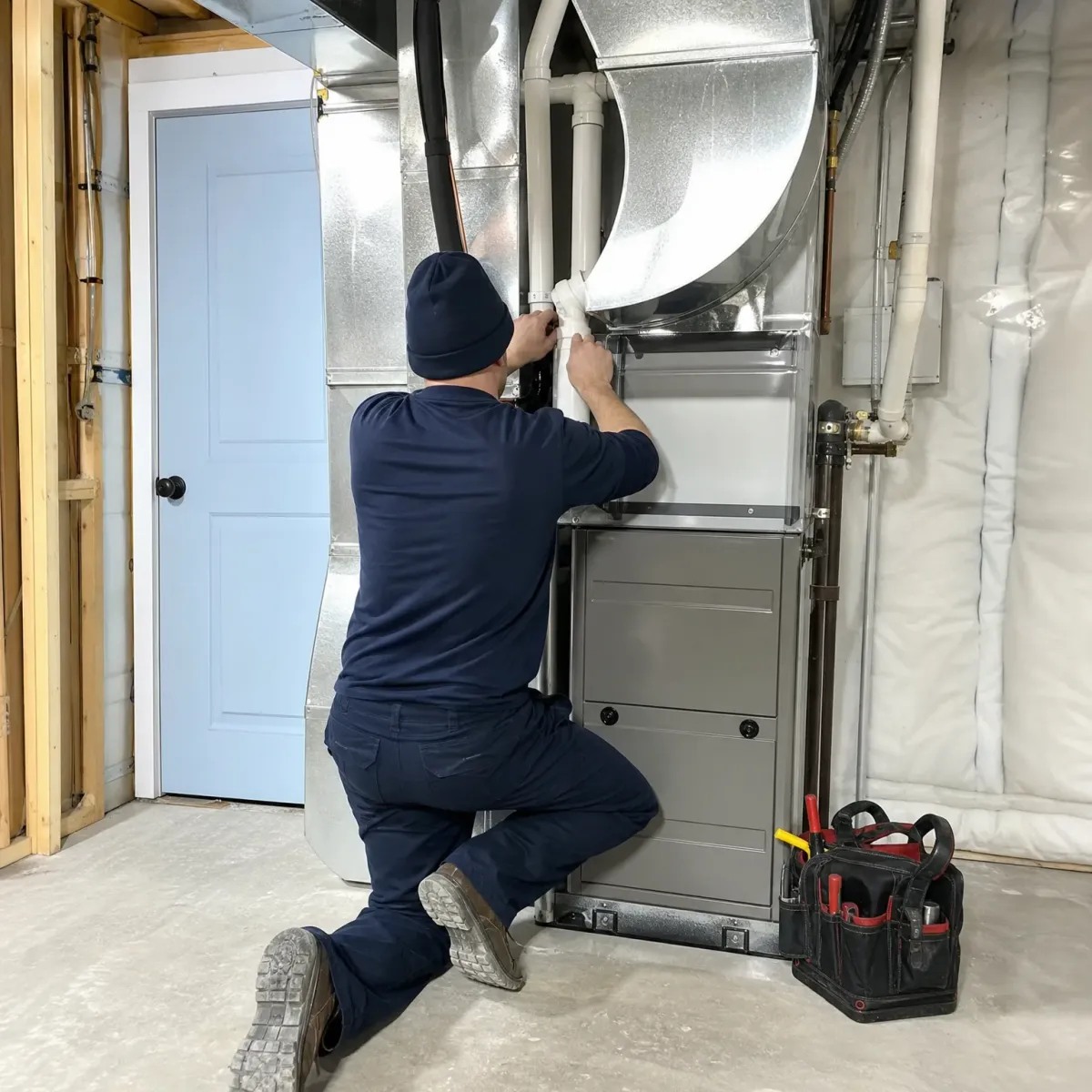
A person in dark clothing and a knit cap kneels on a concrete basement floor while working on piping at the top of a gray furnace, with ductwork, insulated walls, and a tool bag nearby.

Tell us about the job

Takes about a minute. No obligation.

Step 1 of 3: Equipment