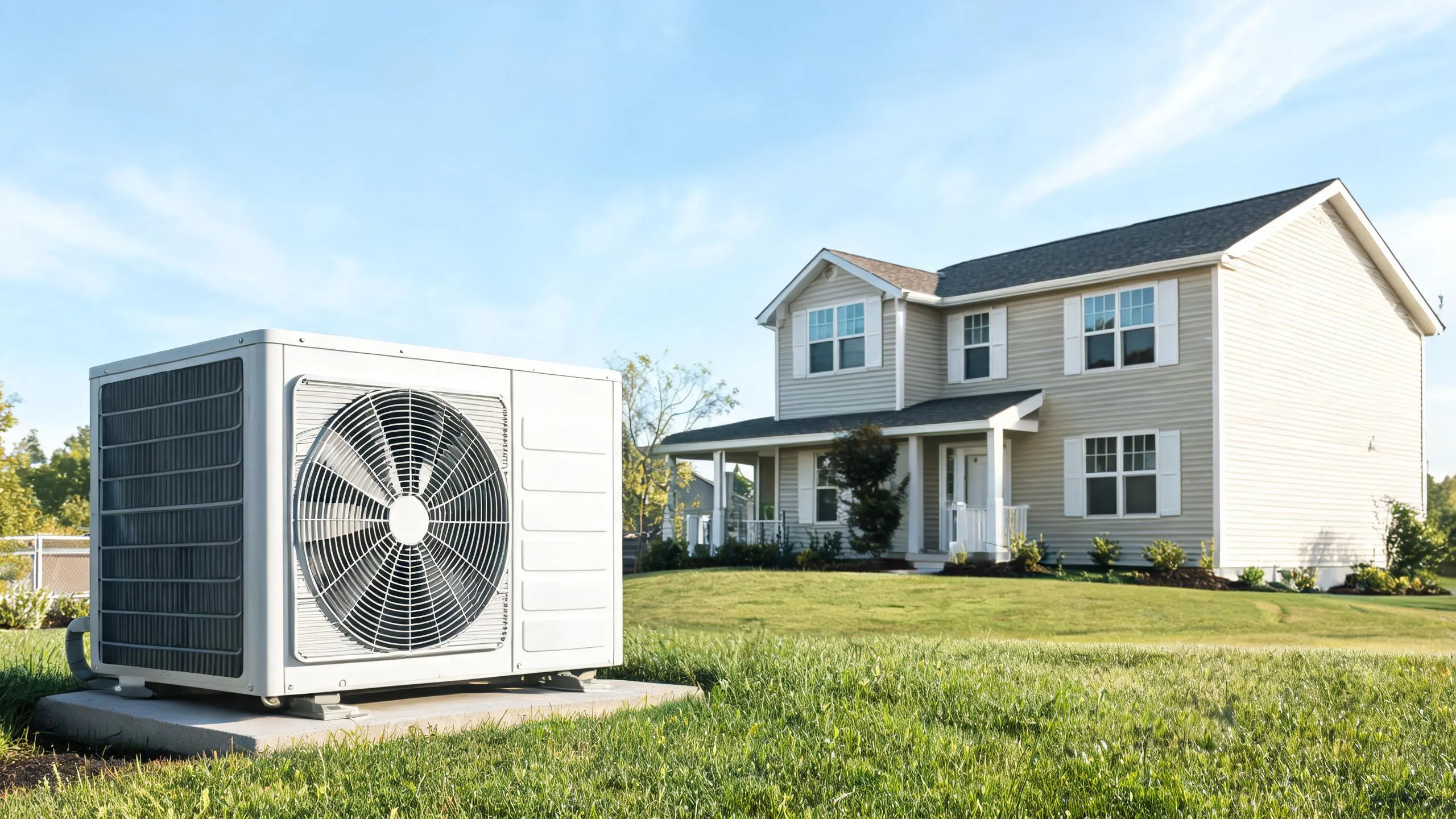





An outdoor heat pump unit mounted on a concrete pad in front of a two-story suburban house.

Heat Pump Repair in Delta, CO

Tell us about the job

Takes about a minute. No obligation.

Step 1 of 3: Equipment

Winter here brings plenty of snow and ice, but the cold itself isn't extreme. Overnight lows average 17°F across December, January and February, well within what a heat pump is built to handle. It isn't fighting the kind of deep, sustained cold that wears down a compressor or coil over time. So when one starts short cycling, blowing cold air, or struggling to keep up, the cause is usually something specific. A failing defrost control. Low refrigerant. A worn contactor. Not the unit giving out from years of strain.

9 months
September through May, your system heats
2 months
July through August, it cools
17°F
the average winter night it heats against
82°F
the average summer afternoon it cools against
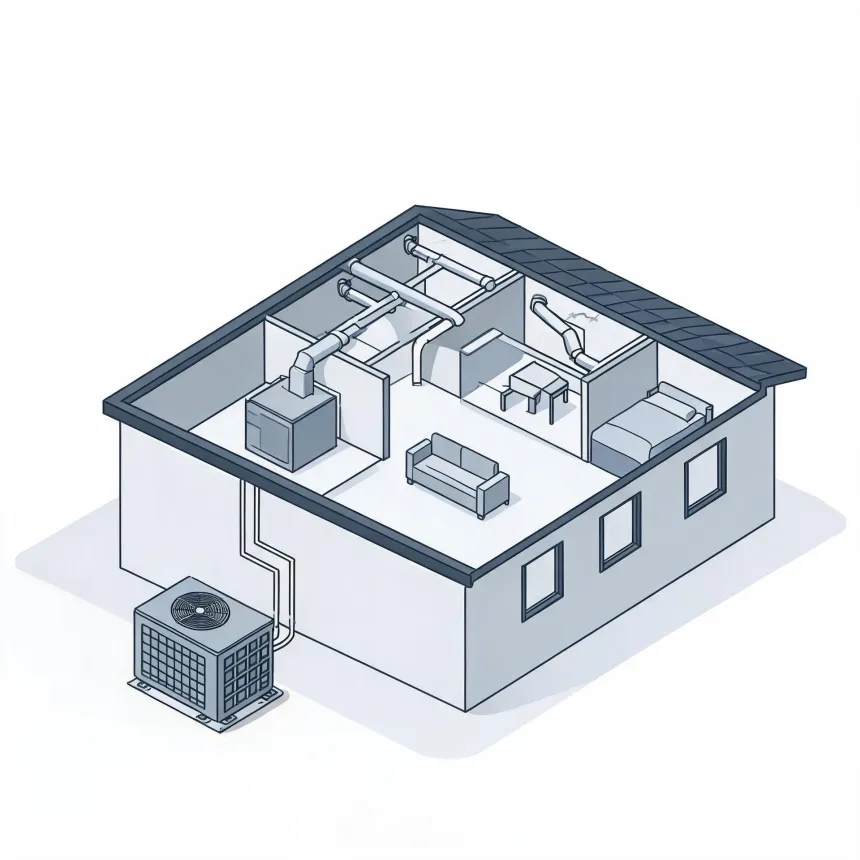
Isometric line illustration of a cutaway single-story house showing interior rooms with ducted air distribution, an indoor air handler, furniture, and an outdoor condenser unit connected by lines outside the wall.
Your system heats September through May and cools July through August.

NOAA nClimDiv, 1991–2020 normals

Heat pumps in Delta County run heat from September through May, nine months a year.

August is when a weak part shows up, right before the first real heat load of the season hits it.

At 14.92 cents a kilowatt-hour, a heat pump running wrong is costing you now

Power costs 14.92 cents a kWh statewide
42 damaging wind events from 2015 to 2024
192 winter storms from 2015 to 2024
Delta County weather isn't the problem192 winter storms hit Delta County between 2015 and 2024, and heat pumps are built for that

Half the homes in Delta County were built in 1979 or earlier, half in 1979 or later. Age alone doesn't tell you much about the heat pump in either one. What matters is whether the unit came with the house or got swapped in later, and that's worth checking before a tech shows up. Mobile homes make up 12.5% of the housing here, and they run heat pumps the same way site-built homes do. Nothing about a mobile home setup is harder on the equipment. If yours is acting up, the cause is the same handful of things it would be anywhere. A failing defrost board. A low charge. A worn contactor.

Worth fixing, not replacing

Find out what's actually wrong before you decide it needs replacing. A heat pump that hasn't been fighting extreme cold usually has a specific part behind the trouble, and most of the time that part is worth repairing.

Find a contractor
A man seen from behind in a dark shirt and tan pants climbs concrete steps toward a navy blue front door, carrying a canvas tool tote in his right hand, with a large blue planter and shrub to the left.
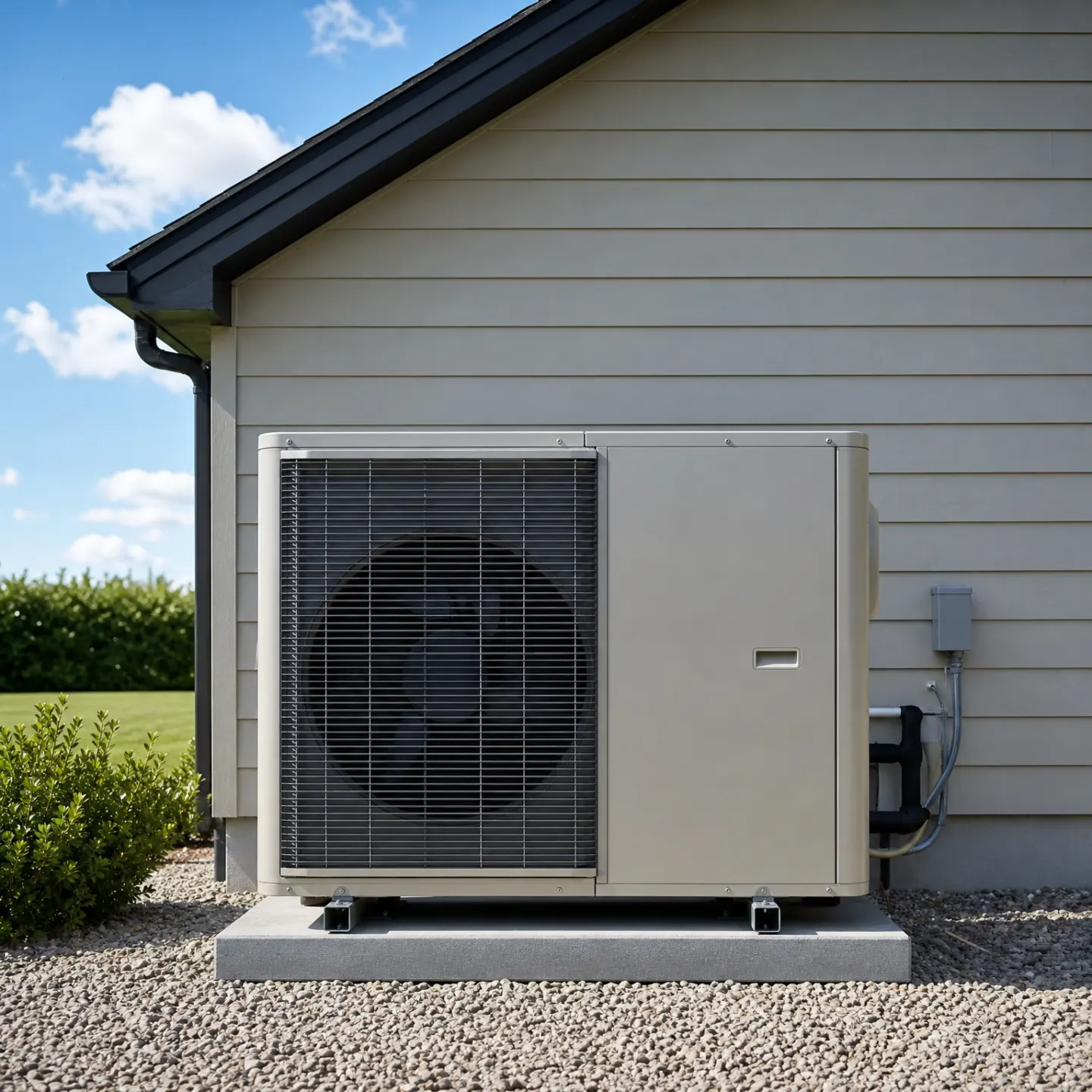
A residential heat pump outdoor unit mounted on a concrete pad next to a house with gray vinyl siding.

What to check before you call

Start outside. Look at the coil for ice that goes beyond a normal frost layer, or snow packed against the cabinet, and clear what you safely can. Check the air filter next. A clogged filter starves the system of airflow and can mimic a refrigerant problem that isn't actually there. Make sure the thermostat is set to heat, not emergency heat, and that the batteries are fresh. Check the breaker panel if the unit isn't running at all, outdoor units trip on their own breaker separate from the air handler. While it's running, listen to the outdoor unit. A hard clicking that repeats without the compressor starting, or a steady buzz, points to an electrical part rather than something a homeowner can clear. None of this fixes a failing defrost board or a low charge. Finding those takes gauges and a meter. But ruling out a dirty filter or a tripped breaker first means the tech starts on the actual problem instead of the obvious ones.

The reversing valve is usually the first to go

A heat pump asks this valve to switch direction every time it moves between heating and cooling, and every time defrost kicks in. That's a lot more cycles than a straight air conditioner ever sees. When the valve sticks, the system can get stuck in one mode, or blow warm air when it should be cold and cold air when it should be warm.
Most failures are electrical, not a refrigerant leak

A contactor with pitted contacts, a capacitor that has lost its charge, a defrost sensor that reads wrong. Parts like these cause a no-start or a short cycle far more often than a leak does. Swapping out a worn electrical part is quick, straightforward work for a tech. Tracking down a slow refrigerant leak takes a lot more time.

A heat pump in trouble usually tells you before it quits outright. Warm air blowing when it should be hot, or the outdoor unit running nonstop without ever satisfying the thermostat, points to the system losing its heating capacity rather than keeping up. Short cycling, where it kicks on and off in quick bursts, wears on the compressor and is worth catching early. Ice building up on the outdoor coil beyond what defrost normally clears means the defrost cycle itself isn't doing its job. A clicking that repeats without the compressor catching, or the unit humming but not starting, is almost always an electrical part giving out, not the refrigerant charge. And if the air coming from the vents has gone noticeably cooler over a few days rather than all at once, that gradual change is its own clue, different from a sudden failure.

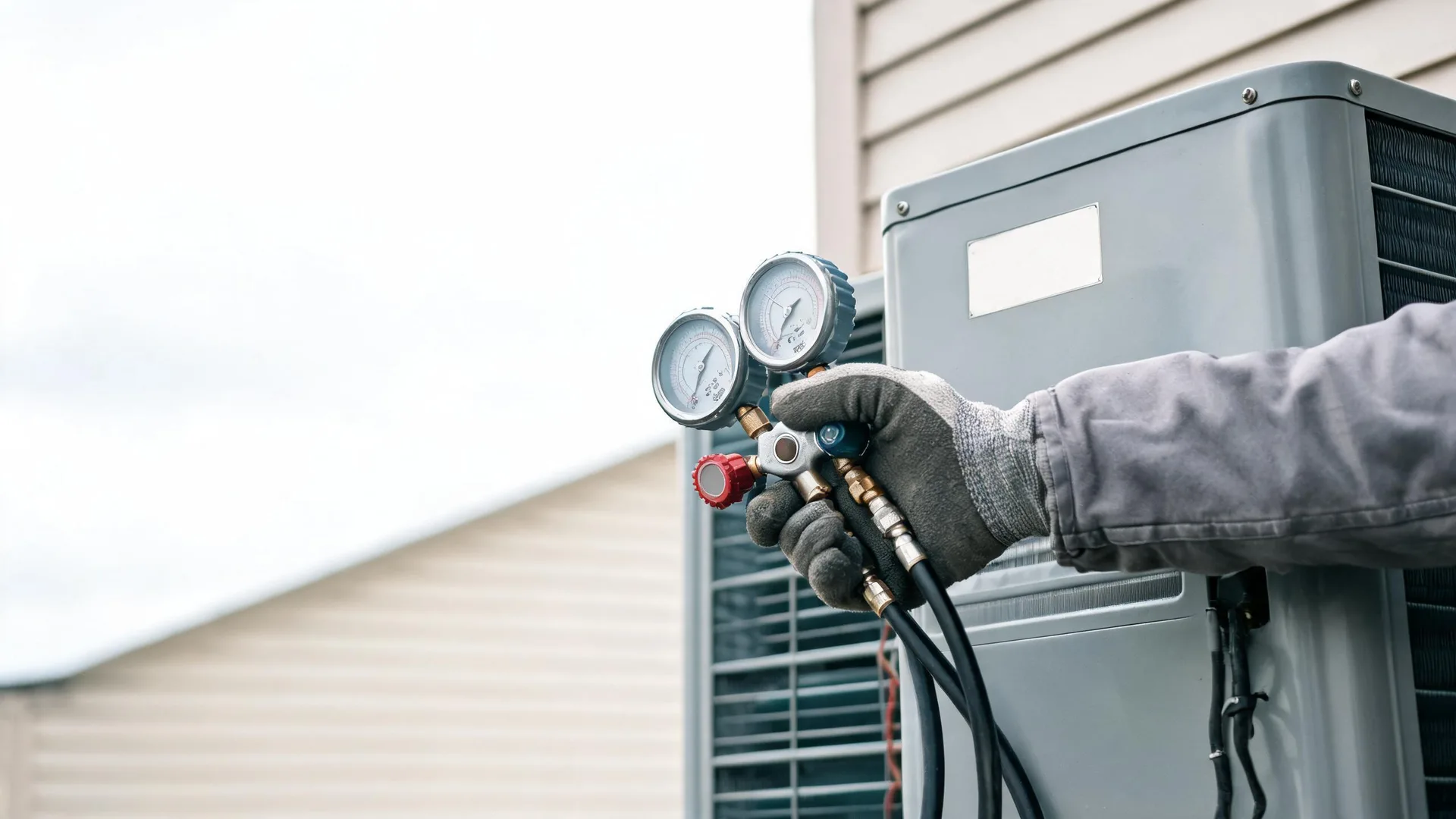
A diagnostic visit starts with questions, not tools. When did this start, has it happened before, is it worse at a certain time of day. Then the tech checks static pressure and the temperature split across the system before touching a single part, because those readings point to airflow, refrigerant or electrical before any gauge comes out. Gauges go on next to check the charge, and a meter checks the contactor, the capacitor and the defrost control for continuity and proper voltage. Outside, the reversing valve gets tested under power, since a valve that looks fine sitting still can still fail to shift when it's told to. The readings usually point somewhere specific fast. The slow part, when there is one, is a refrigerant leak that has to be traced rather than just topped off.