Stone and timber luxury homes with glowing windows line a mountain street at dusk, with evergreen trees and a rocky mountain range in the background.

Heat Pump Repair in Montrose, CO

Tell us about the job

Takes about a minute. No obligation.

Step 1 of 3: Equipment

Montrose County sees its share of severe weather

Montrose County recorded 260 severe weather events between 2015 and 2024, including 53 damaging wind events and 4 hail events. An outdoor heat pump unit sits exposed to all of it, with no wall or roof between it and the weather.

A unit can take a hit and keep running

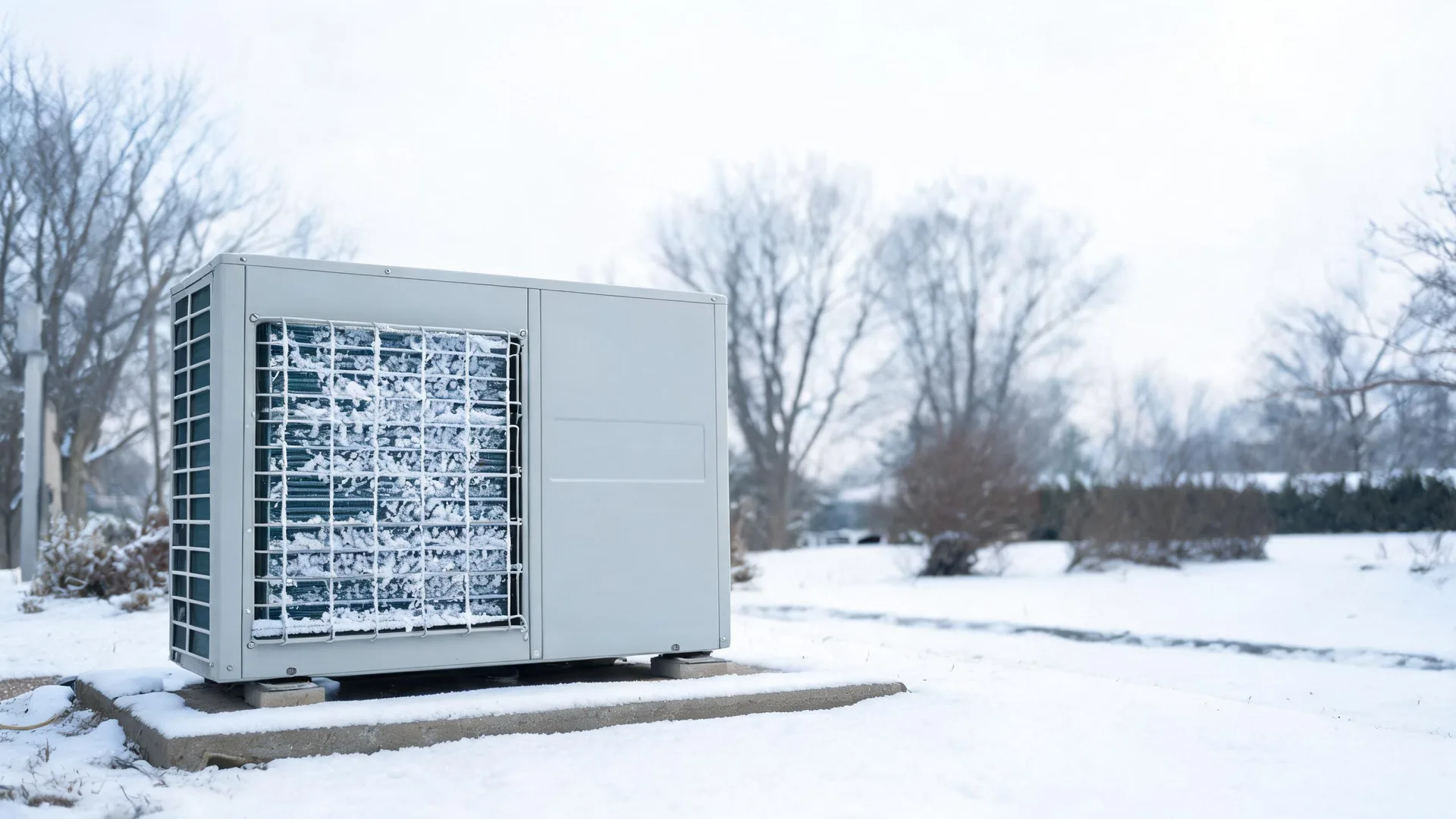
A dented coil or a bent fan blade will not always stop a heat pump from turning on. If the outdoor unit took wind or hail damage, running fine today does not mean it escaped unhurt. It is worth having someone look regardless.

8 months
October through May, your system heats
2 months
July through August, it cools
18°F
the average winter night it heats against
83°F
the average summer afternoon it cools against
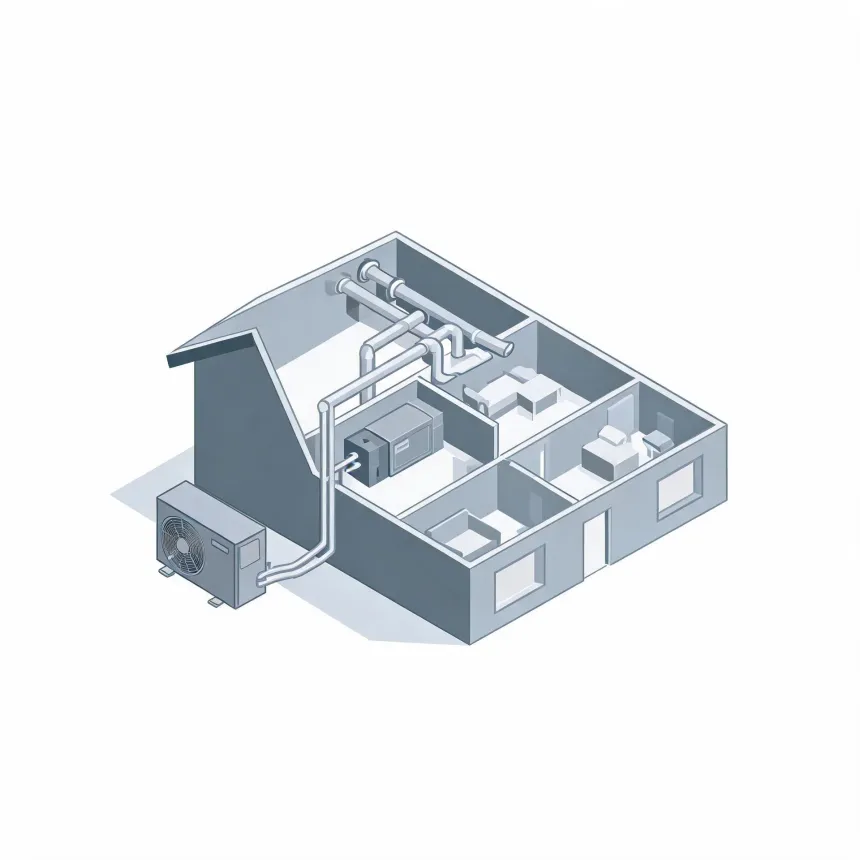
Isometric grayscale illustration of a cutaway house showing interior rooms, ducted air handler and duct runs, connected by pipes to an outdoor condenser unit beside the building.
Your system heats October through May and cools July through August.

NOAA nClimDiv, 1991–2020 normals

A heat pump that keeps running with a fault doesn't fix itself, it just spreads the damage further.

A compressor forced to work against a refrigerant leak or a bad start capacitor can fail completely, turning a repair into a replacement.

Half the heat pumps here are newer than the houses that came before them

Half the homes here were built by 1991
53 damaging wind events from 2015 to 2024
4 hail events from 2015 to 2024
October asks the most of a heat pump that limped through summerHeat here runs October through May, and whatever was already wrong tends to show itself in the first cold snap.

If a repair person tells you the unit is worth fixing rather than replacing, that fits what the numbers here suggest. Call a repair tech when something is off and let them tell you what they find, instead of assuming the worst because the unit is outdoors and takes a beating. Get a bent fan blade or a refrigerant leak looked at as soon as you notice it. Waiting costs you more as the compressor keeps working against the fault, and a system with years left in it deserves a fix, not a replacement, when it's still the house's original or close to it.

Get the outdoor unit checked before winter asks more of it

If the outdoor unit took wind or hail this year, get it looked at before the cold sets in. A technician can check the coil and fan blade now, while there's still time to fix a problem before the first freeze asks the system to work.

Find a contractor
A man in a cap, dark long-sleeve shirt and brown pants carries a canvas tool bag up wooden porch steps toward a navy front door beside a potted shrub.
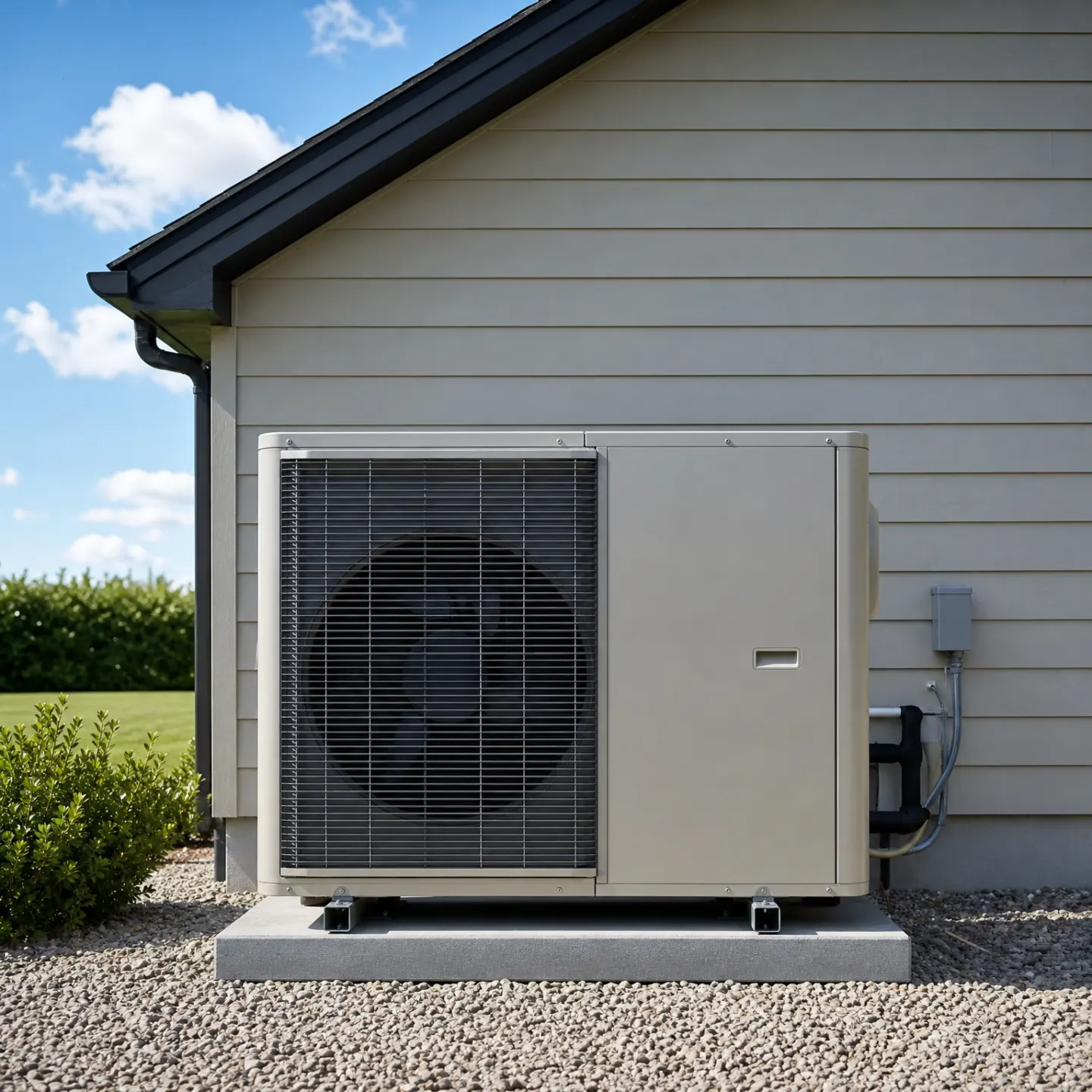
A residential heat pump outdoor unit mounted on a concrete pad next to a house with gray vinyl siding.

Every hour it runs is an hour something can wear out

A heat pump works year round, not just one season. It cools in summer and reverses to pull heat from the outside air all winter, so the compressor is running when a furnace-only system would be sitting idle. That means more hours on the compressor, more cycles through the reversing valve, and more time for the fan motor and capacitors to wear. A system that short cycles, where it turns on and shuts off again before finishing a full run, is putting extra strain on the compressor every time it restarts. The same goes for a unit that runs constantly without ever satisfying the thermostat. Both patterns point to a problem that gets worse the longer the unit keeps running that way. Frost that builds up on the outdoor coil and does not clear during the defrost cycle is another sign the system is working harder than it should to do the same job.

The reversing valve is a common point of failure

This is the part that switches a heat pump between heating and cooling, and it only exists on this kind of system. When it sticks, the unit gets stuck in one mode, blows cold air when it should heat, or stops responding to the thermostat's call to switch over. A valve that fails partway can also leak refrigerant past the seal even while it still shifts modes, which shows up as weak heating long before the valve quits outright.

A refrigerant leak rarely announces itself

Refrigerant doesn't get used up. If a heat pump is low, it is leaking from somewhere, usually a joint, a coil, or a fitting that has worked loose or corroded. A small leak lets the unit keep running while it slowly loses capacity, so the compressor works harder and longer to move the same amount of heat. Left alone, that extra strain is what burns out a compressor, which is the most expensive part in the system to replace.

Before calling anyone, check the thermostat batteries and make sure it's set to the right mode and a temperature that should trigger the system. Look at the outdoor unit and clear away leaves, mulch or anything stacked against it, since airflow in and out matters for a heat pump the way it doesn't for a furnace. Check the air filter and swap it if it's gray or clogged, because restricted airflow can make a heat pump freeze up or struggle to keep up. Walk outside and look at the coil and fan for ice. A light frost in winter during a defrost cycle is normal, but a thick coat of ice covering the whole coil is not. Check the breaker box too, since a tripped breaker will shut the whole system down without any other warning sign. None of this fixes a bad reversing valve or a refrigerant leak, but it rules out the simple stuff first.

A repair tech weighs a few things before saying fix it or replace it, not just the one thing that's broken today. Age against expected lifespan matters, but so does what's already failed before this. A unit on its second compressor or third capacitor in a few years is telling you something about where it's headed. The repair itself matters too. A capacitor or a contactor is a small, contained fix. A failed compressor or a coil leaking in more than one spot is a different conversation, because you're putting a lot of money into a system that may still have other original parts wearing out behind it. None of that makes the call for you by itself. A tech looks at the whole unit, not just the broken part, before telling you which way it leans.