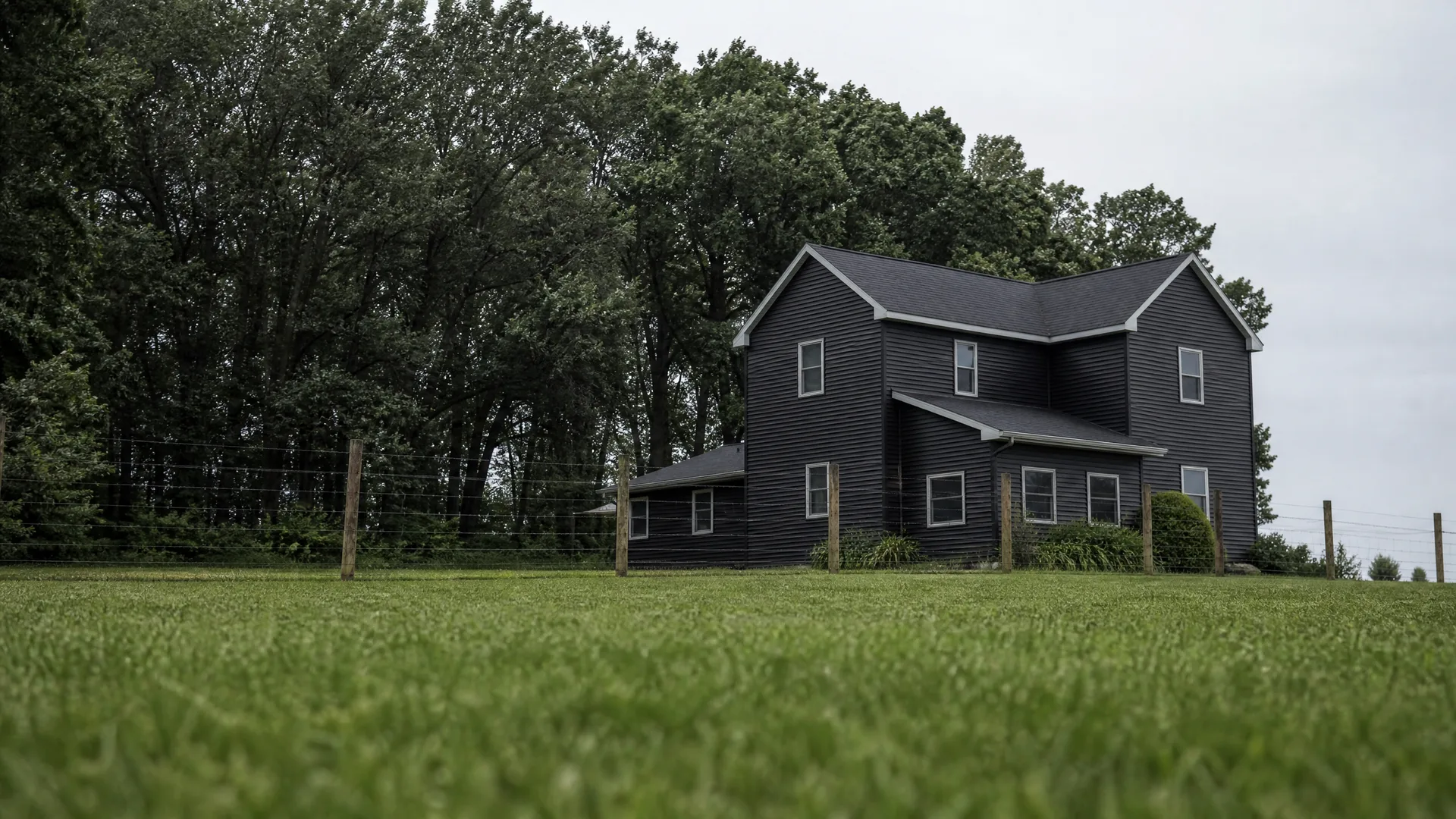




A two-story dark-painted wood-sided farmhouse with a gray shingled roof stands beside tall deciduous trees, behind a wire fence, with a mowed green lawn in the foreground under an overcast sky.

Furnace Repair in Fort Morgan, CO

Tell us about the job

Takes about a minute. No obligation.

Step 1 of 3: Equipment

Furnaces in Morgan County run from October through May. That's eight months of the year the burner and blower are cycling on and off, sometimes dozens of times a day once it gets cold. A furnace carrying eight months of heat is working a lot harder than one that only has to get through a short mild winter somewhere else. All that cycling wears on an igniter, a blower motor, a flame sensor, the same parts other furnaces have, just put through more starts and stops here. So when something acts up, it's rarely out of nowhere. Getting the actual cause found, instead of just quieting the symptom, is what keeps it from coming back.

8 months
October through May, your furnace is on duty
16°F
the average winter night it heats against
52%
of homes here heat with gas, so most furnaces here burn gas
10 winter storms
in ten years, the nights a failure hurts most
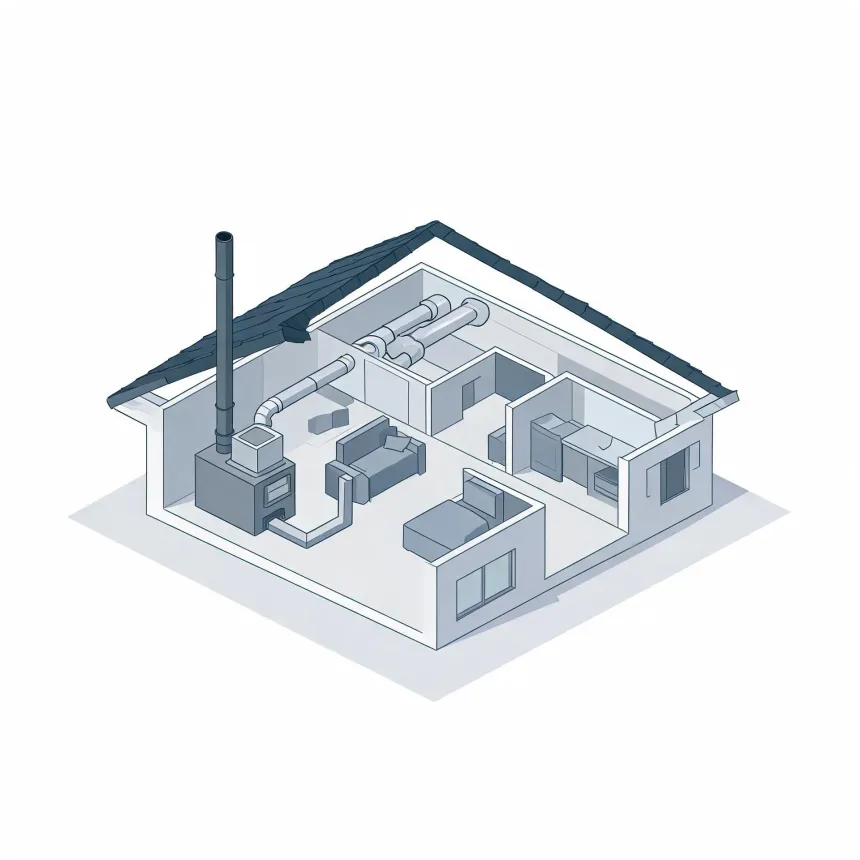
Isometric line illustration of a cutaway single-story house showing interior rooms with furniture, a furnace unit with a tall flue pipe, and connected ductwork running under the pitched roof.
Your furnace works hardest from November through March.

NOAA nClimDiv, 1991–2020 normals

A furnace fails at its weakest part first, not all at once.

Find the part showing wear, and the repair fixes the actual problem instead of just the symptom.

Eight months of heat finds the weak part fast

Heat runs October through May
Climate zone 5B
Winter nights average 16°F

Before calling anyone, check the thermostat is set to heat and the temperature is set above room temperature, not just on. Look at the filter. A filter packed with dust chokes airflow and can make a furnace short cycle or blow cool air. Check the breaker and the furnace switch, the one that looks like a light switch near the unit, since either one can trip or get bumped off without anyone noticing. If the furnace has a standing pilot, see if it's lit. If it uses an igniter instead, you won't be able to check that part yourself, but you can still listen for whether the blower runs without any heat behind it. Write down what you hear and when it happens. Knowing whether the burner tries to light and fails, or never tries at all, tells a technician a lot before they even open the cabinet.

Get the cause found while the furnace is still running

Eight months of heat a year does not leave much time for a worn part to announce itself quietly. Have the actual cause found now, while the furnace is still running, so the repair holds instead of calling for another visit partway through winter.

Find a contractor
A man in a dark shirt and work boots carries a canvas tool bag filled with tools up wooden porch steps toward a navy blue front door of a shingled house, with a potted shrub to the right.
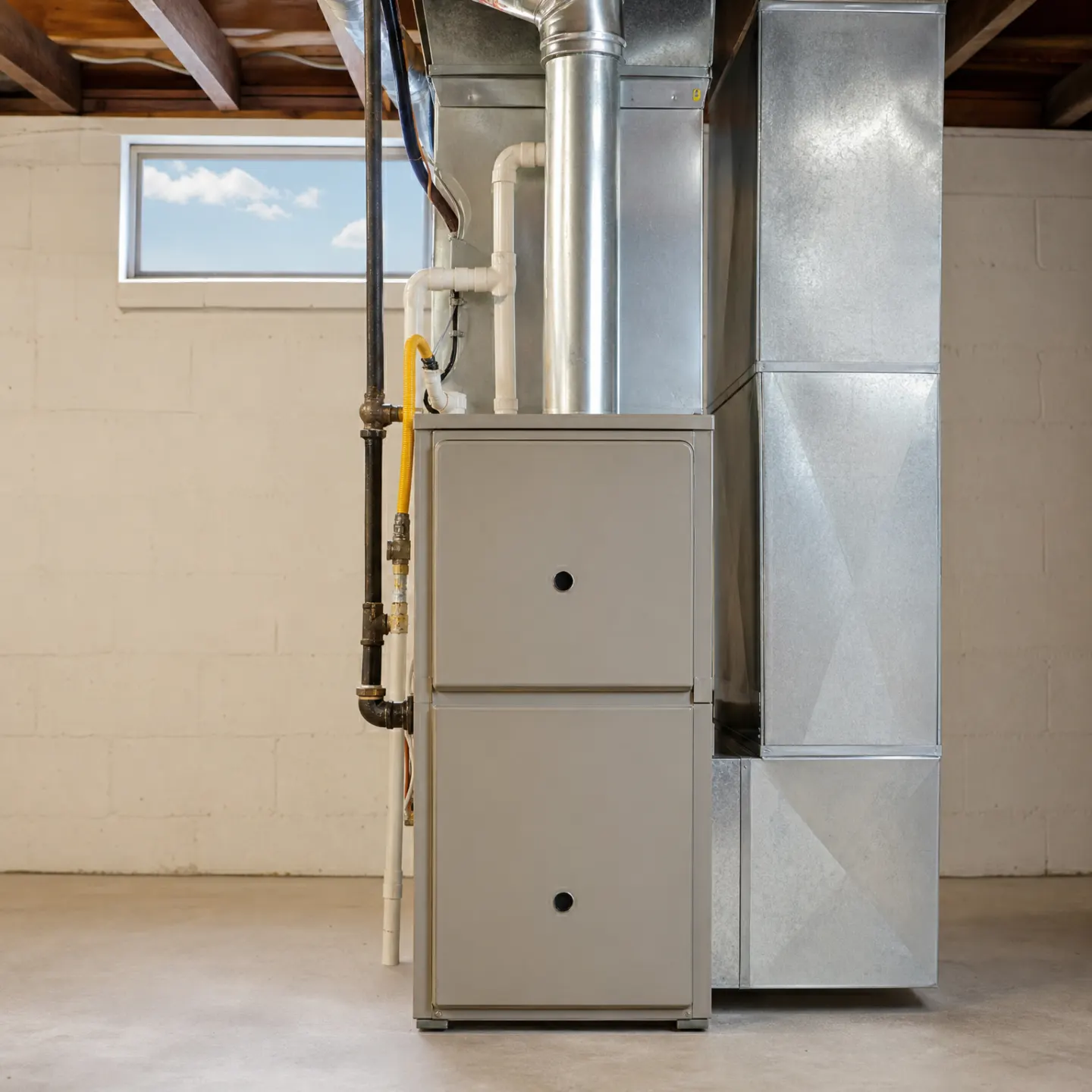
A gas furnace with attached ductwork, gas piping, and condensate lines installed in a concrete-block basement.

What the furnace tells you before it quits

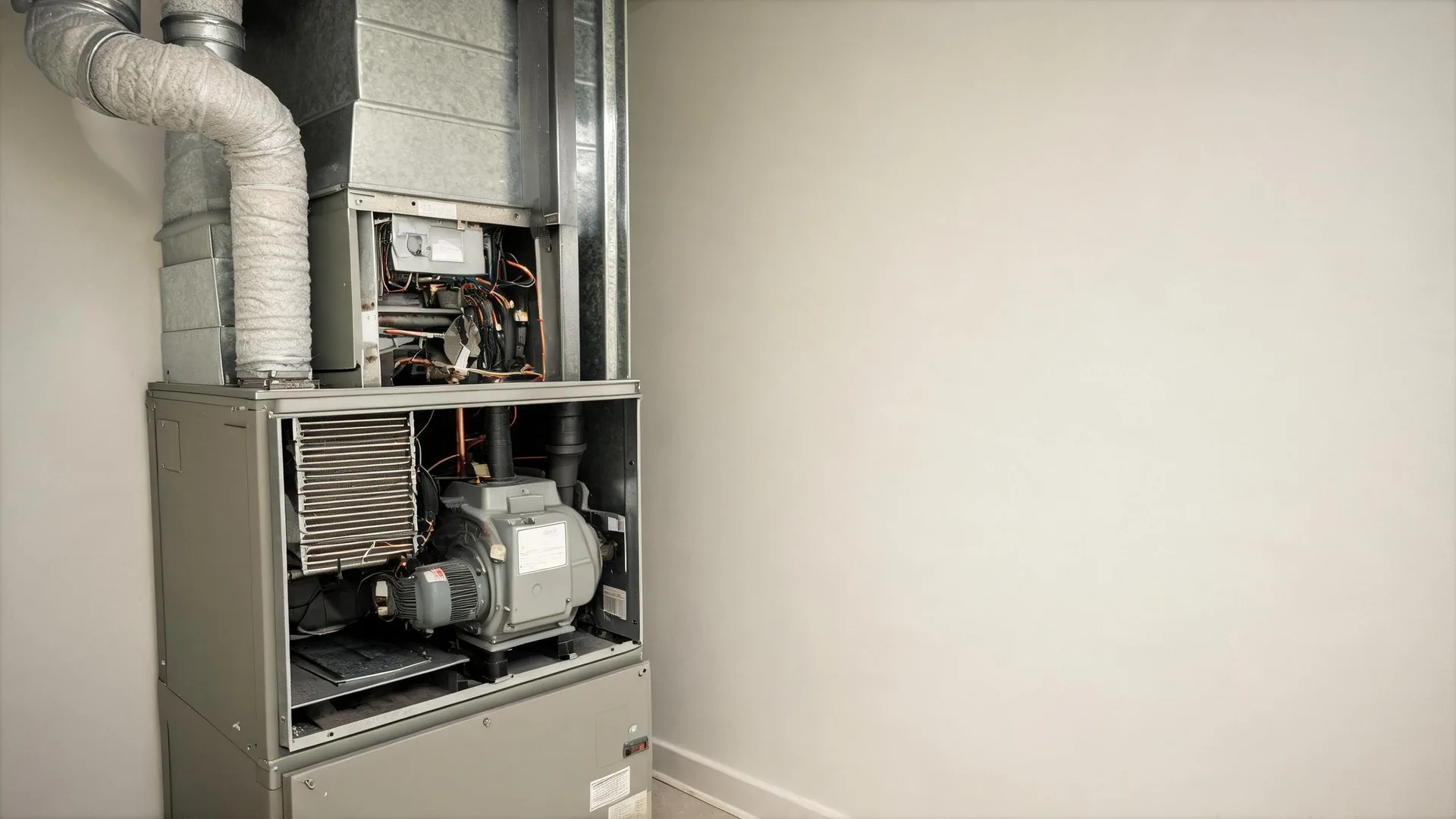
A furnace rarely goes from fine to broken. It moves through stages, and most of them make noise or show up in how the house feels before the burner quits outright. Short cycling is one of the first signs, the furnace firing up, running a couple minutes, then shutting off before the house warms. That points to a flame sensor coated with residue, or a limit switch tripping because airflow is restricted somewhere. A burner that delays before catching, or makes a soft thump when it does, usually means the igniter is weakening or the gas valve is slow to respond. Cold air coming out of the vents instead of warm means the burner isn't lighting at all, even though the blower still runs. A yellow or flickering flame instead of a steady blue one is worth paying attention to, since that can mean the burner isn't getting the air it needs to burn clean. Rattling, squealing or grinding from the cabinet points to the blower motor or its bearings, not something that fixes itself by waiting. Any smell of gas means shutting the furnace off and getting it looked at before doing anything else. None of these mean the whole furnace is done. They mean one part is wearing out faster than the rest, and catching it at the noise or the short cycle is a lot less trouble than catching it when the burner stops lighting on the coldest night of the year.

A small problem spreads to its neighbors

A dirty flame sensor doesn't just cause one bad cycle. Every time the furnace shuts down on it, the ignition sequence starts over, and that's more wear on the igniter and more strain on the gas valve. A blower motor with failing bearings keeps pulling current to fight the friction, and that heat has nowhere to go but into the motor windings. Left alone, a problem that started in one part starts loading the part next to it.

Running it anyway costs more than the visit

Shutting a furnace off at the first sign of trouble is the safe move, but most people keep it running because the house is cold and the part still technically works. A cracked heat exchanger can keep heating a house for a while before it's caught, and so can a blower motor that's starting to seize. The longer either one runs in that state, the more it can take out with it when it finally fails.

A bare concrete basement containing a gray gas furnace with metal ductwork and a vertical flue pipe, lit by a single hanging bulb.

A new furnace would cut about $90 a year off heating for a typical Morgan County home.

  • A new high-efficiency furnace$400 a year
  • An older furnace$490 a year

Estimates for a typical Morgan County home, compared with an older unit built to the previous federal minimum, from EIA household energy data, Colorado fuel prices and NOAA climate normals. Your home will differ.

Repair makes sense when one part has failed and the heat exchanger is sound.

Replacement makes sense when the heat exchanger is cracked or the furnace keeps needing parts.

At some point the question isn't what's wrong, it's whether fixing it makes sense. Age matters less than which part failed. A cracked heat exchanger means the furnace is done, no matter how new the blower is, because that part isn't something anyone should patch. A failed igniter or a bad blower motor is a different story. Those get replaced on their own all the time, and doing so brings the furnace back to where it was. The question worth asking isn't just what this repair costs, it's whether the furnace has already needed a few others like it. A furnace that keeps finding a new weak part every season is telling you something the current repair can't fix.