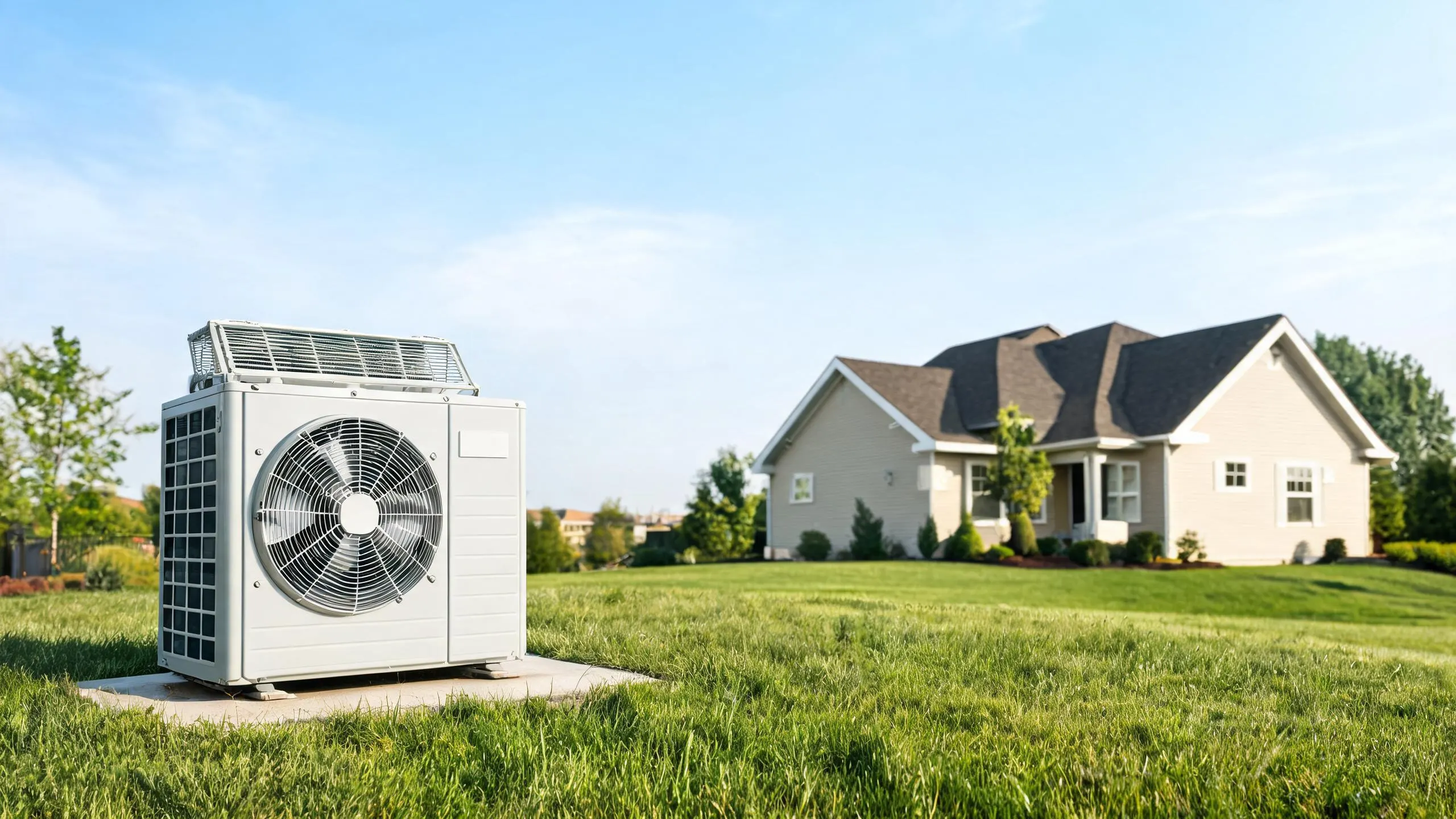

An outdoor air conditioning condenser unit mounted on a concrete pad in front of a single-story suburban house.

Heat Pump Repair in Elizabeth, CO

Tell us about the job

Takes about a minute. No obligation.

Step 1 of 3: Equipment

Winter nights in Elbert County average 15°F through December, January and February. That's cold, but it's well inside what a heat pump is built to run in, and the backup heat strip is there for the days it dips further. The county has seen its share of hail and wind over the years, and either one can bend fins on the outdoor unit or work a wire loose if something hits it. That's true for any home with an outdoor condenser, not just yours. So if your heat pump isn't keeping up, the cause is usually the ordinary one. A dirty coil. A low charge. A failed capacitor. A reversing valve stuck in one position. Worth a quick look at the outdoor unit for storm damage first, then go from there.

9 months
September through May, your system heats
2 months
July through August, it cools
15°F
the average winter night it heats against
84°F
the average summer afternoon it cools against
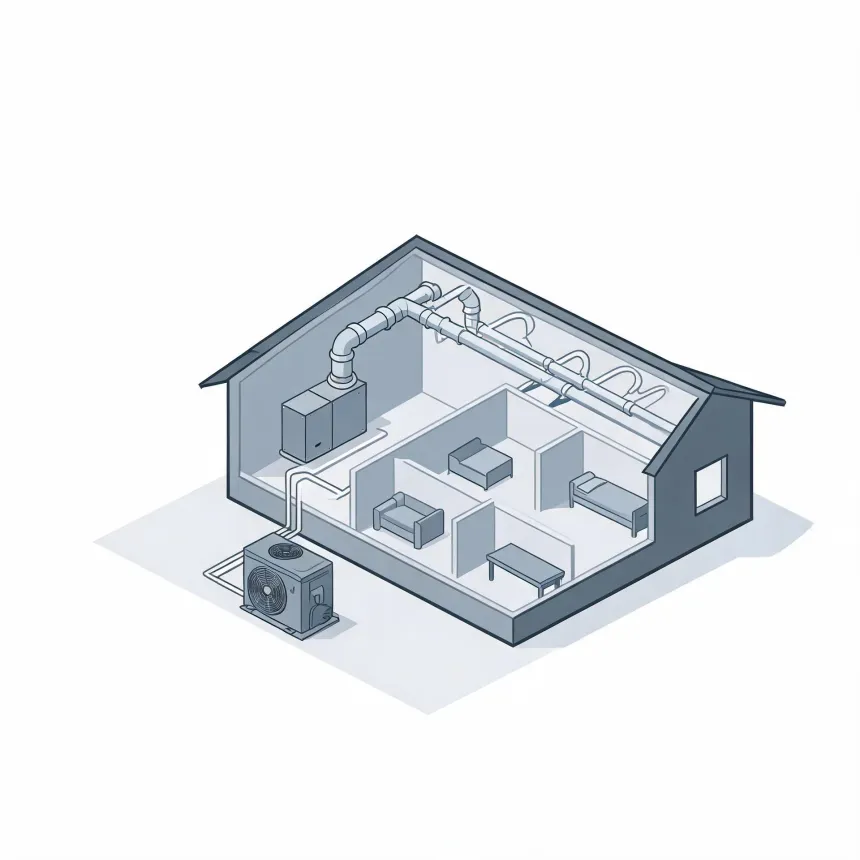
Isometric line illustration of a cutaway house showing interior rooms with furniture, a furnace or air handler with overhead ductwork, and an outdoor condenser unit connected by lines outside the wall.
Your system heats September through May and cools July through August.

NOAA nClimDiv, 1991–2020 normals

August is the last quiet month before heat runs here, from September through May.

A capacitor or charge that limped through two months of cooling often gives out once the heat pump switches over and starts working daily.

A heat pump running wrong costs you every day it's not fixedColorado electricity ran 14.92 cents per kilowatt-hour in 2024, and a struggling heat pump burns more of it every day.

A heat pump that's struggling will keep trying to hit the temperature on the thermostat, and that means the compressor keeps cycling on, straining against whatever's wrong instead of resting. A low charge makes it run longer to move the same heat, which stresses the compressor further and can turn a repair into a replacement. A dirty coil makes it work harder to pull heat from the air, and that extra strain shows up in worn parts sooner. If the reversing valve is stuck, the system may be fighting itself, heating and defrosting at the wrong times, which wastes energy and tires out the compressor faster. Ice on the outdoor unit that isn't clearing on its own is a sign the defrost cycle isn't working right, and running it that way lets the ice build further and block airflow entirely. None of this gets better by waiting. The part that's already struggling is the one doing all the extra work.

Fix it now, not after another month of bills

A heat pump burning extra power every day adds up fast at 14.92 cents a kilowatt-hour. The longer the capacitor, charge, or reversing valve goes unfixed, the more it costs you to keep running it that way.

Find a contractor
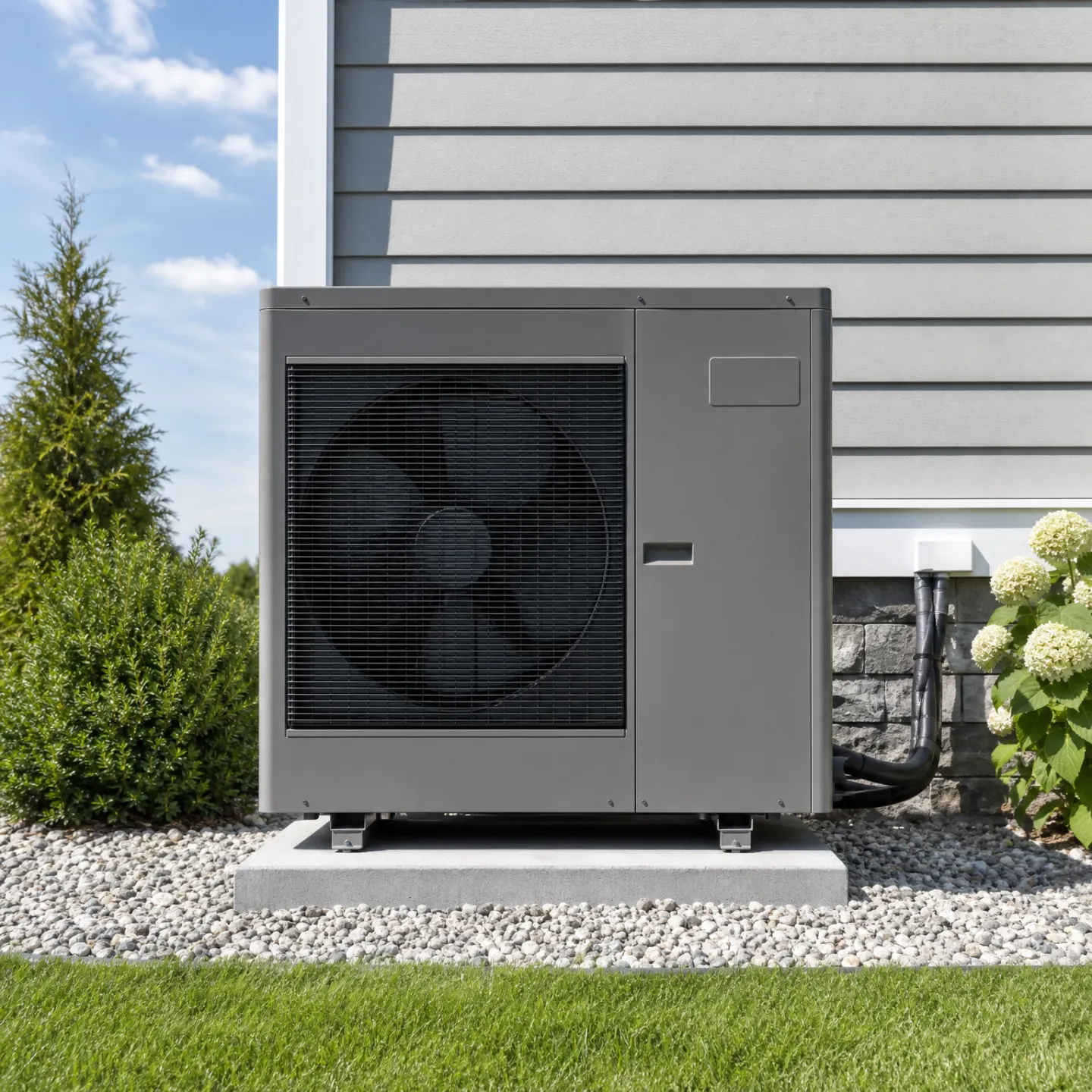
A gray air-source heat pump mounted on a concrete pad next to a house with gray vinyl siding, surrounded by gravel and flanked by green shrubs and white hydrangea flowers.

A newer system still has the life to fix

Half the homes in Elbert County were built in 1996 or later. If yours is one of them, the heat pump itself may be newer still, especially if it's been swapped out since the house was built. A system within its working life is almost always worth repairing. The failures that show up early, a bad capacitor, a low charge, a stuck reversing valve, are ordinary wear, not a sign the unit is done.

What the tech checks first

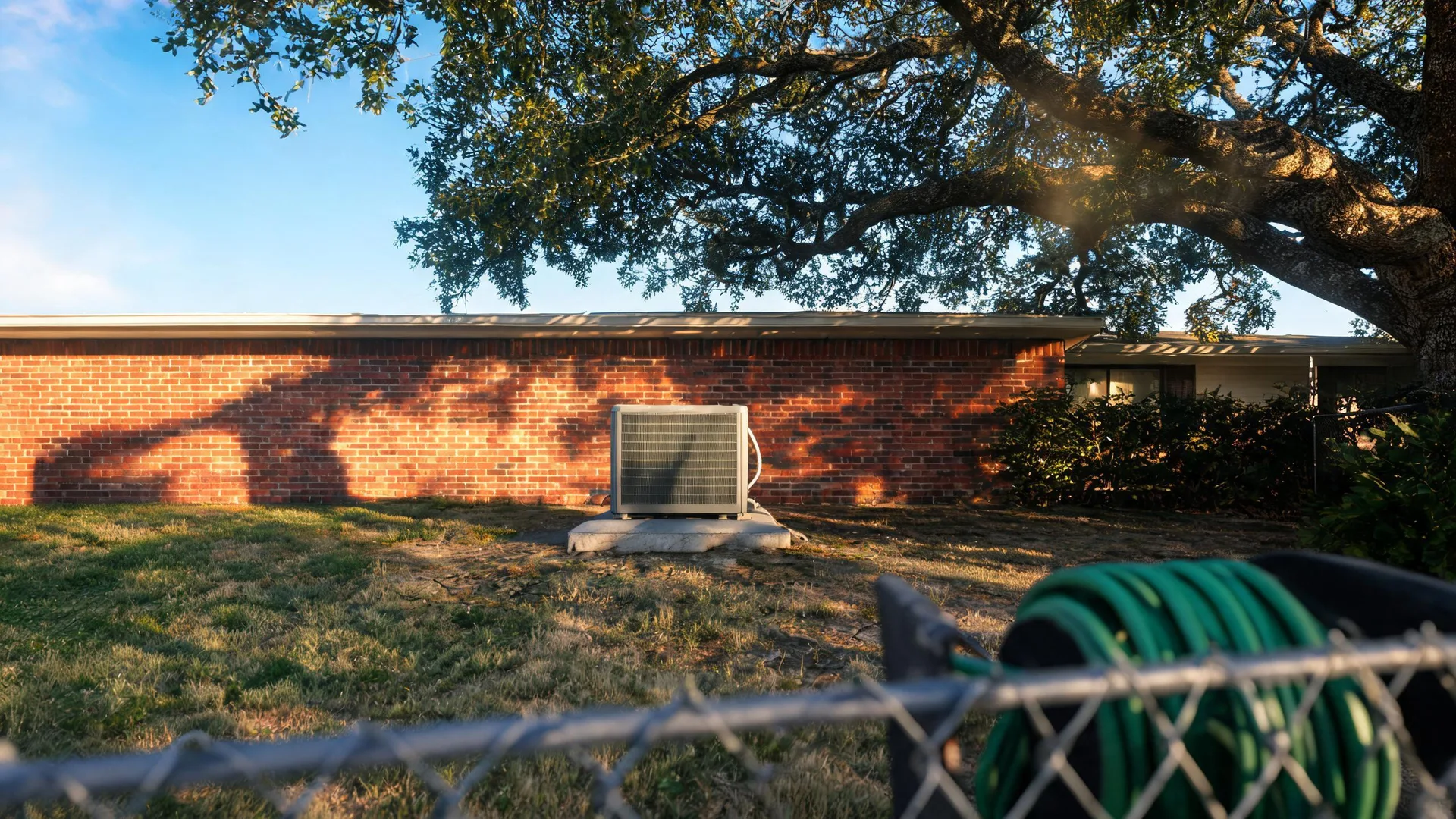
A diagnostic visit starts outside at the condenser, checking refrigerant pressure, the capacitor, and the reversing valve, then moves to the air handler to check airflow and the heat strips. Gauges on the lines tell the story of a low charge or a failing compressor faster than guessing ever could. Heat pump failures tend to follow a short list of usual suspects, so the cause almost always turns up in that first pass.
Why you get a straight answer, not a guess

A heat pump either holds its charge and cycles normally or it doesn't, and the gauges make that clear right away. A stuck reversing valve shows up as a system heating when it should defrost, or the other way around, and that's not something you have to take anyone's word for. The same goes for a coil caked with dirt or ice that isn't clearing. Once the tech can point to what's actually failing, you know whether you're looking at a part swap or something bigger.

A few things are worth a look before you pick up the phone. Check the thermostat first. Make sure it's set to heat and the set point is actually above room temperature, since a setting bumped by accident looks exactly like a system failure. Go outside and look at the unit itself. Clear away leaves, mulch or anything stacked against it, because blocked airflow around the coil will make a heat pump struggle even when nothing's broken. Check the air filter inside. A filter clogged with dust chokes airflow through the whole system and can show up as weak heat at the vents. Look at the outdoor coil for a heavy, solid sheet of ice that isn't melting off on its own, since that points to the defrost cycle, not something you can clear by hand. Check the breaker panel too. A tripped breaker will shut the whole system down, and flipping it back is simple enough to try yourself. If the outdoor fan isn't turning at all, or you hear a hard clicking without it starting, stop there. That one's electrical, and it's not a safe thing to poke at yourself.

Most heat pump trouble announces itself before anything quits outright. Weak heat at the vents, air that feels barely warm even though the system is running, usually means the charge is low or the coil outside is dirty. Short cycling, where it kicks on, runs a few minutes, then shuts off and starts again, points to a failing capacitor or a thermostat sensor gone bad. If the outdoor unit is running but no heat shows up inside at all, that can be the reversing valve stuck in the cooling position. A hissing or bubbling sound from the lines usually means refrigerant escaping somewhere it shouldn't. Grinding or a hard metallic rattle from the outdoor fan is a motor bearing going. And if the system runs constantly, never satisfying the thermostat, it's working against something, a leak, a bad valve, a coil so dirty it can't pull in enough heat. Any of these is worth a call before it takes the rest of the system down with it.