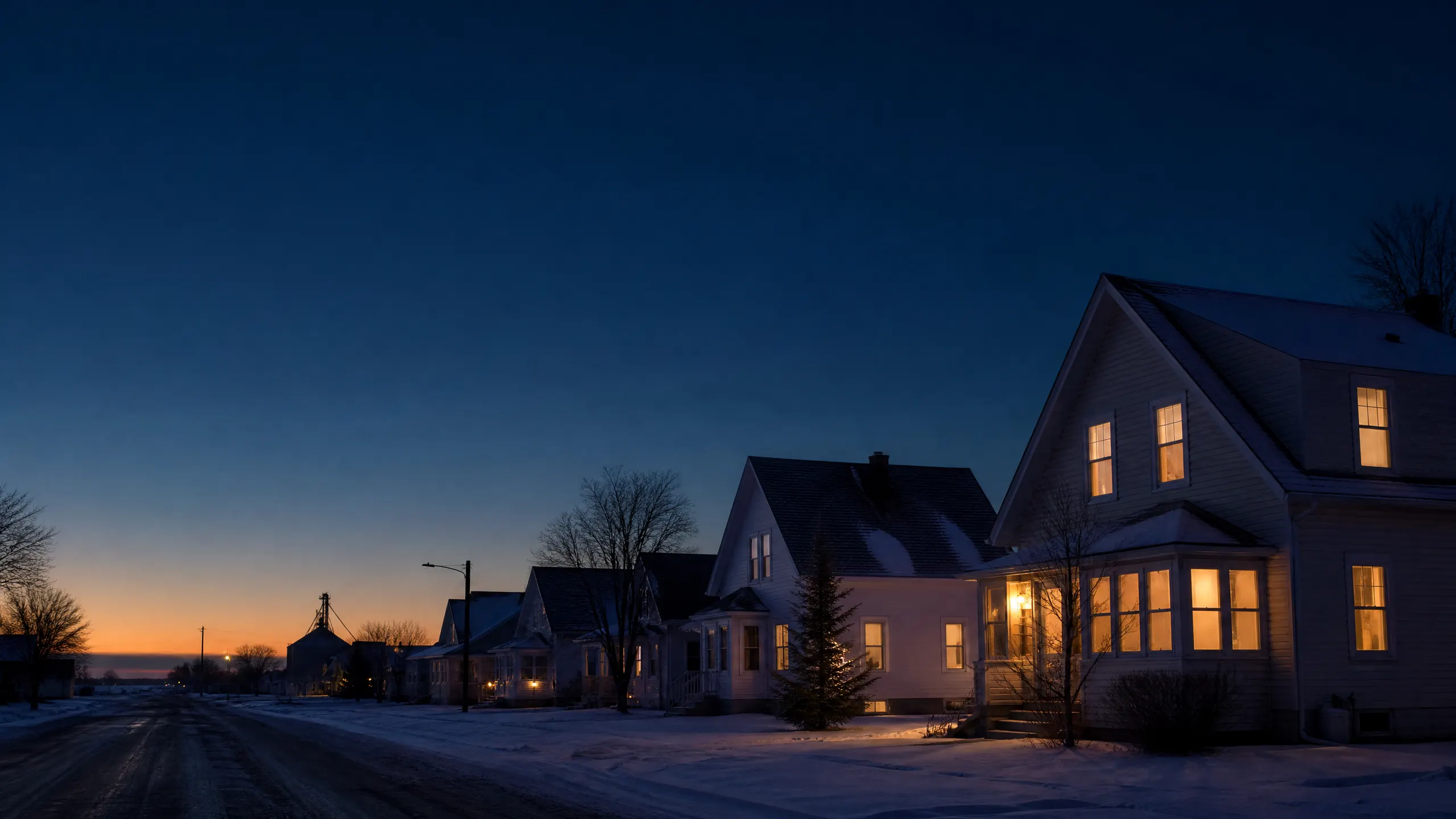





A snow-covered suburban street at dusk with lit houses and bare trees under a twilight sky.

Heat Pump Installation in Yuma, CO

Tell us about the job

Takes about a minute. No obligation.

Step 1 of 3: Equipment

Yuma County saw 560 severe weather events between 2015 and 2024. Most of that was wind and hail: 172 damaging wind events and 331 hail events over that same stretch, plus 30 tornadoes. Hail dents an outdoor unit's cabinet and can bend the fins on the coil, and wind carries debris that does worse. Statewide, 13% of households went at least a full day without power in 2024. A heat pump that's installed well can take weather like this, but where it sits and what stands between it and the next storm makes the difference.

8 months
October through May, your system heats
3 months
June through August, it cools
18°F
the average winter night it heats against
88°F
the average summer afternoon it cools against
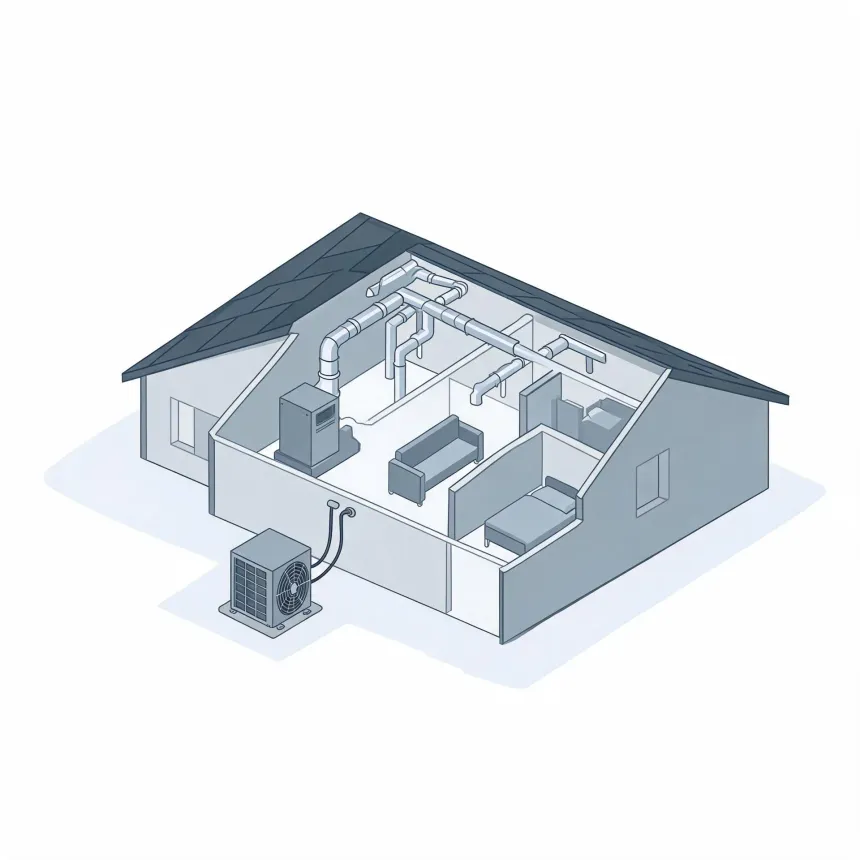
Isometric cutaway illustration of a single-story house showing interior rooms with furniture, an attic duct network connected to a furnace or air handler, and an outdoor condenser unit linked by lines outside the wall.
Your system heats October through May and cools June through August.

NOAA nClimDiv, 1991–2020 normals

Electricity in Yuma County runs about 12.75 cents per kilowatt-hour, cheaper than most of the country.

The payback on a premium efficiency model stretches out here, so picking a heat pump for how it handles wind, hail and outages matters more than chasing the highest efficiency number.

The weather here doesn't let equipment coast

172 damaging wind events from 2015 to 2024
331 hail events from 2015 to 2024
27 winter storms from 2015 to 2024
Built for gas countryGas heats 57.2% of homes in Yuma County, and a heat pump has to fit into that picture or replace it outright

Yuma County falls under zone 5B in the 2021 energy code, a cool, dry zone where heating carries the bigger share of the work over the year. A heat pump installed here has to clear a federal floor either way: at least 14.3 Btu of heat moved per watt-hour in summer, at least 7.5 in winter, for any split system built from 2023 on. That floor sets what a contractor can legally install, not a ceiling on what's available. Units above it exist, but given the payback math for this area, most homeowners have little reason to pay for more than the minimum requires. A federal tax credit is available toward the cost of a qualifying system, on top of whatever it meets on efficiency.

Plan for the next storm before the install, not after

Where the outdoor unit goes and what stands between it and the weather gets decided at installation. That's the point to walk through placement, guarding against hail and debris, and how the house holds heat and hot water if the power drops.

Find a contractor
A man in a dark work shirt, tan cargo pants and boots, seen from behind, climbs porch steps toward a navy front door while carrying a worn leather tool bag.
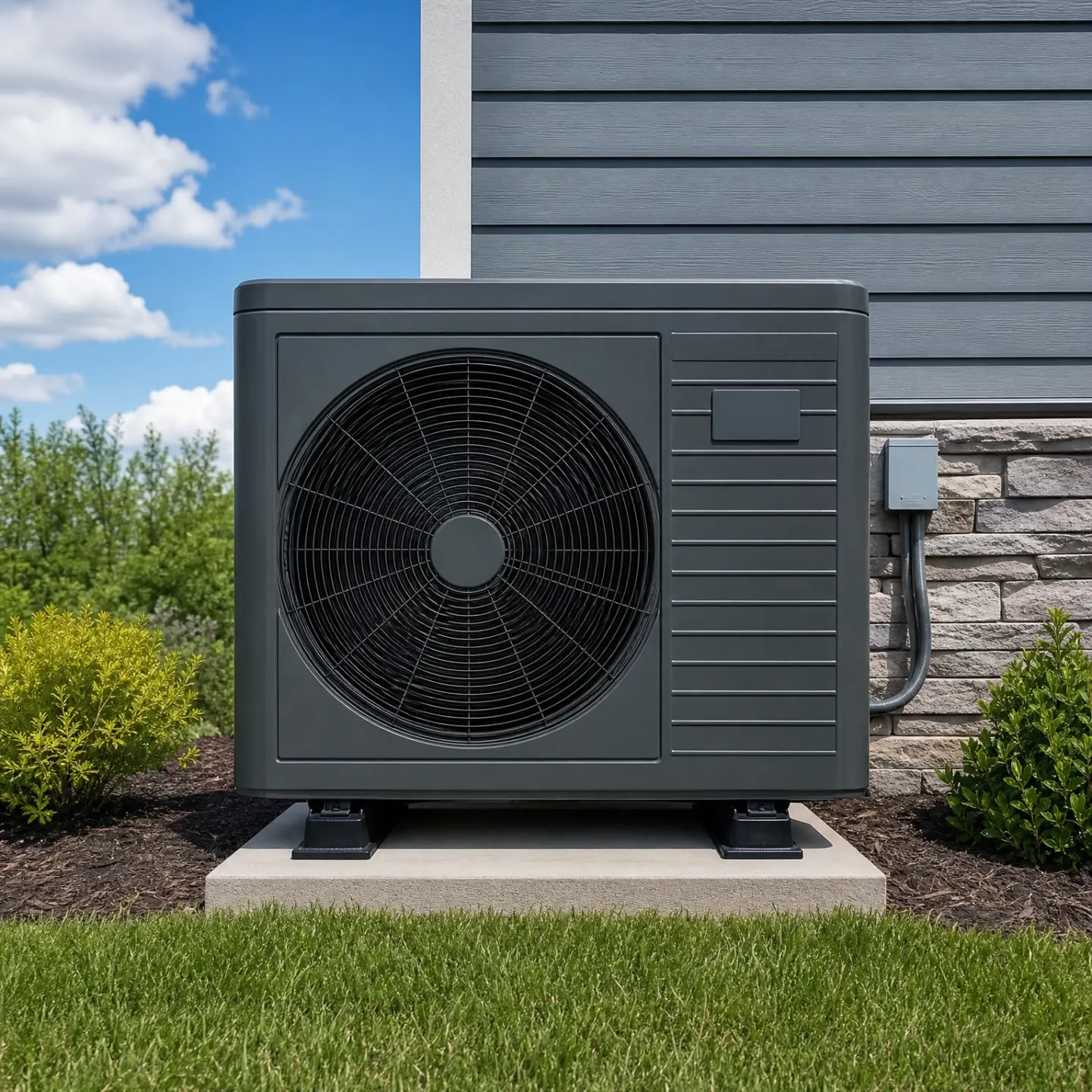
A dark gray heat pump unit mounted on a concrete pad next to a house with gray siding and a stone veneer wall.

Decades of running time, one installation day

Half the homes in Yuma County were built in 1968 or earlier. A house that age wasn't built with a heat pump in mind, and the ductwork or electrical panel may need a look before the new system goes in. That's a question for whoever does the install, not something to guess at here. What an older home does mean is more places for the installer to check: whether the return air can move enough volume for a heat pump to work efficiently, whether the panel has room for a new circuit. None of that shows up in the time-lapse, but it's part of the same job.

Ask what the compressor does in a defrost cycle

A heat pump running in cold weather has to reverse itself now and then to melt frost off the outdoor coil. Ask how each system handles that, whether it checks the coil on a timer or reads actual conditions to decide. A unit that defrosts only when it needs to spends less time sending cold air through the house and recovers heat faster once it switches back.
Ask how the backup heat is wired to take over

Every heat pump needs a second heat source for the coldest stretches, usually a gas furnace it pairs with or electric strip heat built into the air handler. Ask how the switchover is controlled and whether it can run in an emergency mode if the heat pump itself goes down. A system where the backup can carry the house alone is worth more than one where both have to work for you to stay warm.

The efficiency rating on a heat pump's label tells you how much heat it moves for the power it uses, not how much power it uses outright. A higher number means more heat moved per watt, so the unit can hit the same output while drawing less. That number gets tested under set conditions in a lab, so it's a way to compare one system against another, not a promise of what you'll see running in your own ductwork on your own thermostat settings. Two homes with the same rated system can see different results depending on how the ducts are sealed, how the house holds heat, and where the thermostat gets set. The rating also isn't a measure of capacity. A high-efficiency unit that's undersized for the house will run longer and harder to keep up, which can erase whatever the rating promised on paper.

Heat runs here from October through May, eight months out of twelve. That's most of the year riding on whatever gets installed, so September is the month to get it done, before the first cold snap and before every other homeowner in the county is calling for the same thing. Install in September and there's time to size it right, check the ductwork, and run it through a mild stretch before it has to carry the house through a January night. Wait until the system that's failing finally quits in December, and the choice gets made under pressure, with whatever unit and whatever installer can get there fastest. The same goes for summer, shorter and lower stakes here, but May is still better than June for the same reason.