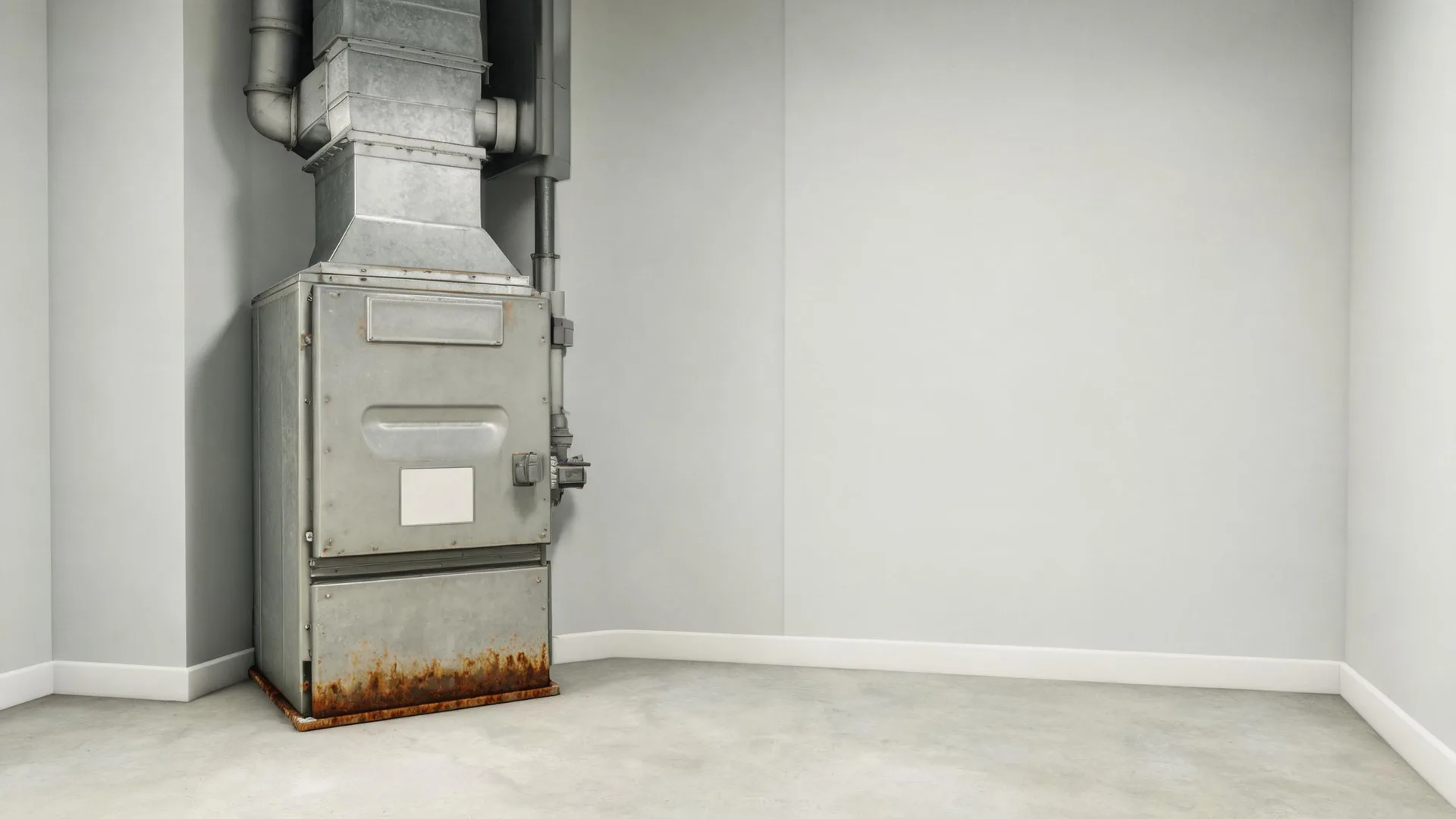
An unfinished basement containing a gray HVAC furnace with ductwork, exposed wooden joists, a concrete floor, and miscellaneous clutter in one corner.

Furnace Repair in Salida, CO

Tell us about the job

Takes about a minute. No obligation.

Step 1 of 3: Equipment

Your furnace doesn't get a season off

Furnaces in Chaffee County run every month of the year, not just December through February. Overnight lows average 9°F through the winter, and that cold settles in for months at a time. A furnace here is either running or about to be.
That changes what a breakdown means

A furnace carrying this kind of load wears parts down faster than one that gets to rest half the year. When something acts up, it's worth having a contractor look at what's actually failing rather than guessing. The fix holds longer when it's aimed at the right part.

9°F
the average winter night it heats against
160 winter storms
in ten years, the nights a failure hurts most
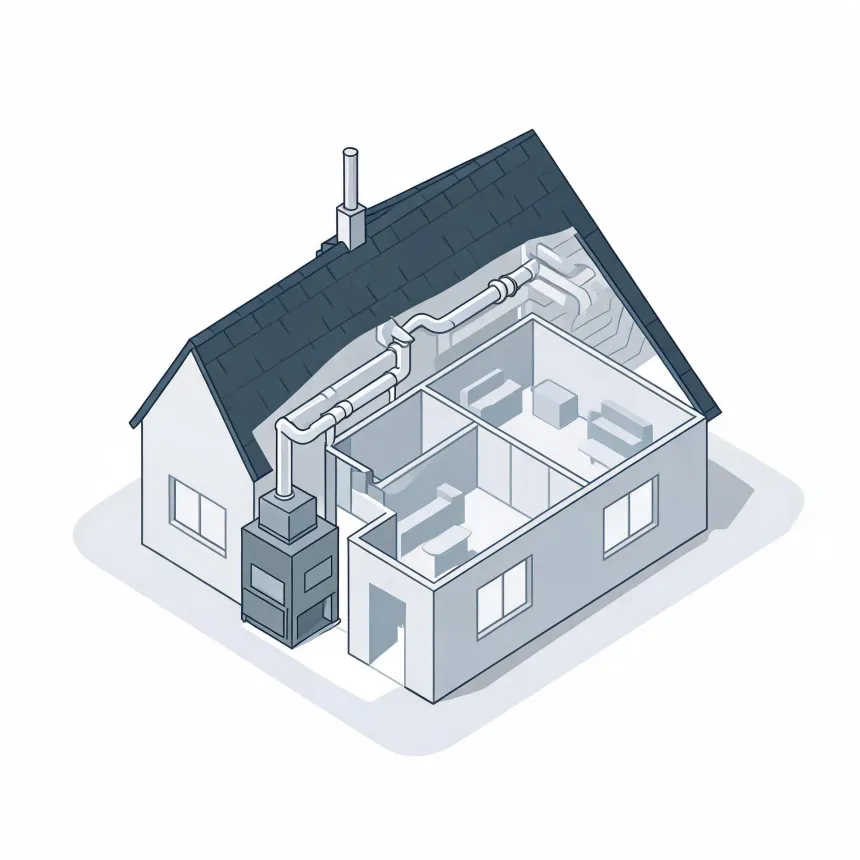
Isometric line illustration of a cutaway single-story house with a dark shingled roof, showing interior rooms and ductwork connected to a gray furnace unit with a flue pipe.
Your furnace works hardest from October through April.

NOAA nClimDiv, 1991–2020 normals

Half the homes in Chaffee County were built in 1993 or later.

A furnace that age still has working life in it, which makes repair worth a look before anything else.

Natural gas here runs $10.09 per million Btu, so a furnace running wrong wastes money every month it's ignored

Winter nights average 9°F
160 winter storms from 2015 to 2024
Climate zone 6B
Don't let it run wrongAt $10.09 per million Btu, a furnace burning gas and not heating right is worth calling in now, not next month.

If your furnace came with the house, worn parts are more likely than a worn-out system. A cracked heat exchanger or a unit on its last leg is a real reason to replace, but it's not the first thing to assume on a newer furnace. More often it's an igniter, a flame sensor, or a pressure switch, parts that fail on their own regardless of the furnace's age. A contractor can check what's actually wrong before anyone talks about replacement. That's a shorter job and a smaller bill than swapping the whole unit.

Have it looked at, not guessed at

A furnace that runs every month of the year gets more chances to fail than one that doesn't. That's what's likely going on when something acts up. Get the actual part diagnosed before deciding what it needs.

Find a contractor
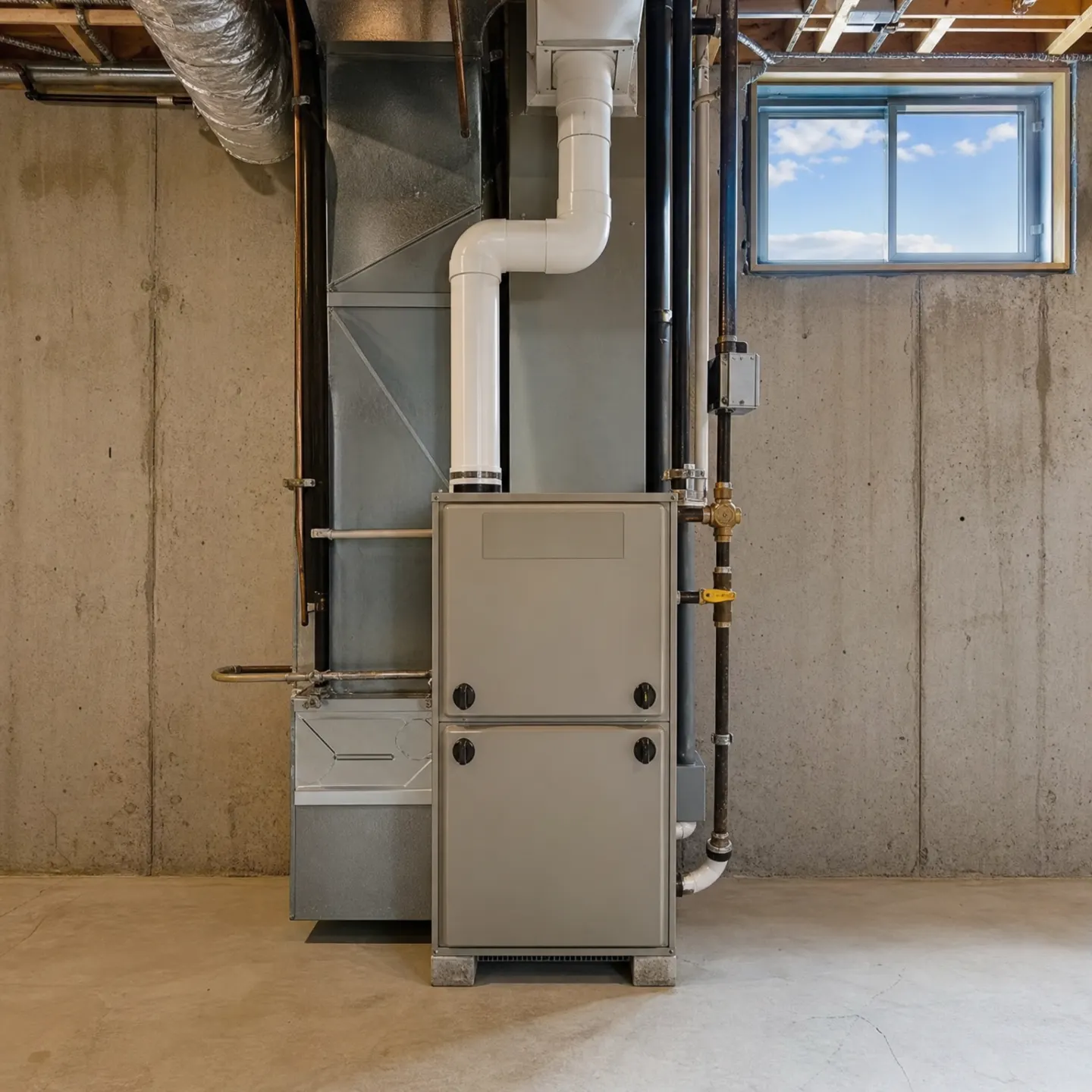
A gray gas furnace with attached ductwork and piping installed in an unfinished concrete basement.

What the furnace is telling you

A furnace losing its flame partway through a cycle is usually the flame sensor, coated enough that it can't tell the burner is lit. One that won't light at all more often points to the igniter, which weakens with age and eventually stops glowing hot enough to catch the gas. A burner that fires and shuts off again and again is cycling on a safety switch somewhere, often because airflow is restricted and something downstream is overheating. A furnace that runs but blows cool or lukewarm air may have a bad limit switch, or ductwork that was never the problem at all, just a thermostat set wrong. Rattling at startup or shutdown usually means a panel is loose or a blower wheel has worked itself off balance. A burner flame that burns yellow instead of blue is worth a call the same day, since that points to incomplete combustion. None of these wait well. A part that's struggling tends to fail the rest of the way on its own schedule, not a convenient one.

What you can check yourself

Look at the flame through the viewing window. It should burn steady and blue. Check the air filter and swap it if it's gray or clogged, since a blocked filter starves the burner of air and can trip a safety switch. Make sure supply vents and return grilles around the house are open and nothing is stacked in front of them. Check that the thermostat is set to heat and the batteries aren't dead. Look at the furnace switch, the one that looks like a light switch on or near the unit, and make sure it hasn't been bumped off.

What to leave alone

Don't open the burner compartment or touch the igniter. It's fragile and a fingerprint oil on it can cause it to fail sooner. Don't reset a switch that's tripped more than once, since that switch is doing its job telling you something downstream is wrong. If you smell gas, don't flip any switches at all, just get out and call the gas company from outside. Anything involving the gas valve, the flame sensor, or the pressure switch is a job for someone who can test it with a meter, not guess by eye.

An unfinished basement featuring concrete block walls, exposed floor joists, and a metal forced-air furnace with ductwork near a central pillar.

A new furnace would cut about $150 a year off heating for a typical Chaffee County home.

  • A new high-efficiency furnace$620 a year
  • An older furnace$770 a year

Estimates for a typical Chaffee County home, compared with an older unit built to the previous federal minimum, from EIA household energy data, Colorado fuel prices and NOAA climate normals. Your home will differ.

Repair makes sense when one part has failed and the heat exchanger is sound.

Replacement makes sense when the heat exchanger is cracked or the furnace keeps needing parts.

A diagnostic visit starts before any panel comes off. A contractor checks the thermostat call, the flame, and how the burner behaves through a full cycle, since that tells them whether the problem is ignition, airflow, or something shutting the system down partway through. Opening the cabinet comes next, with a look at the igniter, the flame sensor, and the wiring for anything loose or corroded. Pressure switches and safety switches get tested with a meter, not by eye, since a switch can look fine and still be reading wrong. Static pressure in the ductwork often gets checked too, because a furnace starved for airflow will trip safeties that have nothing wrong with them. By the end, the goal is a specific part named as the cause, not a guess at one.