


Warmly lit timber-frame and stone houses line a street at dusk, with evergreen trees and a snow-capped mountain range in the background.

Heat Pump Installation in Manassa, CO

Tell us about the job

Takes about a minute. No obligation.

Step 1 of 3: Equipment

Electricity in Conejos County runs 17.80 cents per kilowatt-hour on average, higher than most counties in the country pay. A heat pump runs on electricity alone, so every degree it moves comes out of that rate. Two systems rated for the same house can land on very different bills here, because the difference between a good one and a mediocre one happens on every single cycle. In a place where power already costs more, that gap matters more than it would somewhere with cheap electricity.

11 months
August through June, your system heats
9°F
the average winter night it heats against
73°F
the average summer afternoon it cools against
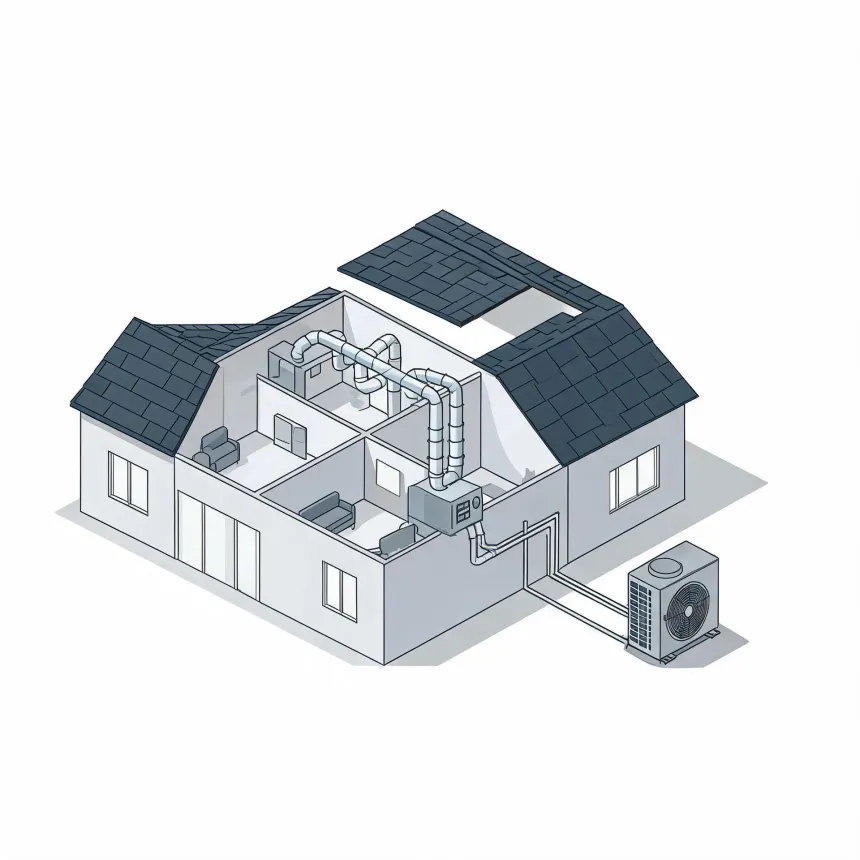
Isometric line illustration of a cutaway single-story house showing interior rooms, ceiling ductwork connected to an indoor air handler, and refrigerant lines running to an outdoor condenser unit on a pad.

Winter storms hit Conejos County 136 times between 2015 and 2024.

A heat pump installed here needs to hold up through weather like that, year after year.

Eleven months of heat a year leaves almost no slow season to work with

Heat runs August through June
24 damaging wind events from 2015 to 2024
136 winter storms from 2015 to 2024

Conejos County falls under zone 6B in the 2021 energy code, a cold, dry climate classification with a long heating season. Any split-system heat pump installed here has to clear a federal efficiency floor set for that kind of climate: at least 14.3 Btu of cooling delivered for every watt-hour of power it draws over the summer, and at least 7.5 Btu of heat for every watt-hour over the winter. That standard applies to units built from January 1, 2023 onward, so it already shapes what a contractor can offer. It sets a floor, not a ceiling. A system that only meets the minimum will run every day it's installed, in a county where each of those days costs more than it would somewhere else.

The system you pick now sets what every bill looks like later

At that rate, the difference between a system at the floor and one above it shows up on every bill, not just the big ones. Picking the right equipment now is what decides which one you get.

Find a contractor
A man in a cap, gray long-sleeve shirt and brown work pants walks up porch steps toward a dark blue front door, carrying a canvas tool bag, with gray horizontal siding and a potted flowering plant nearby.
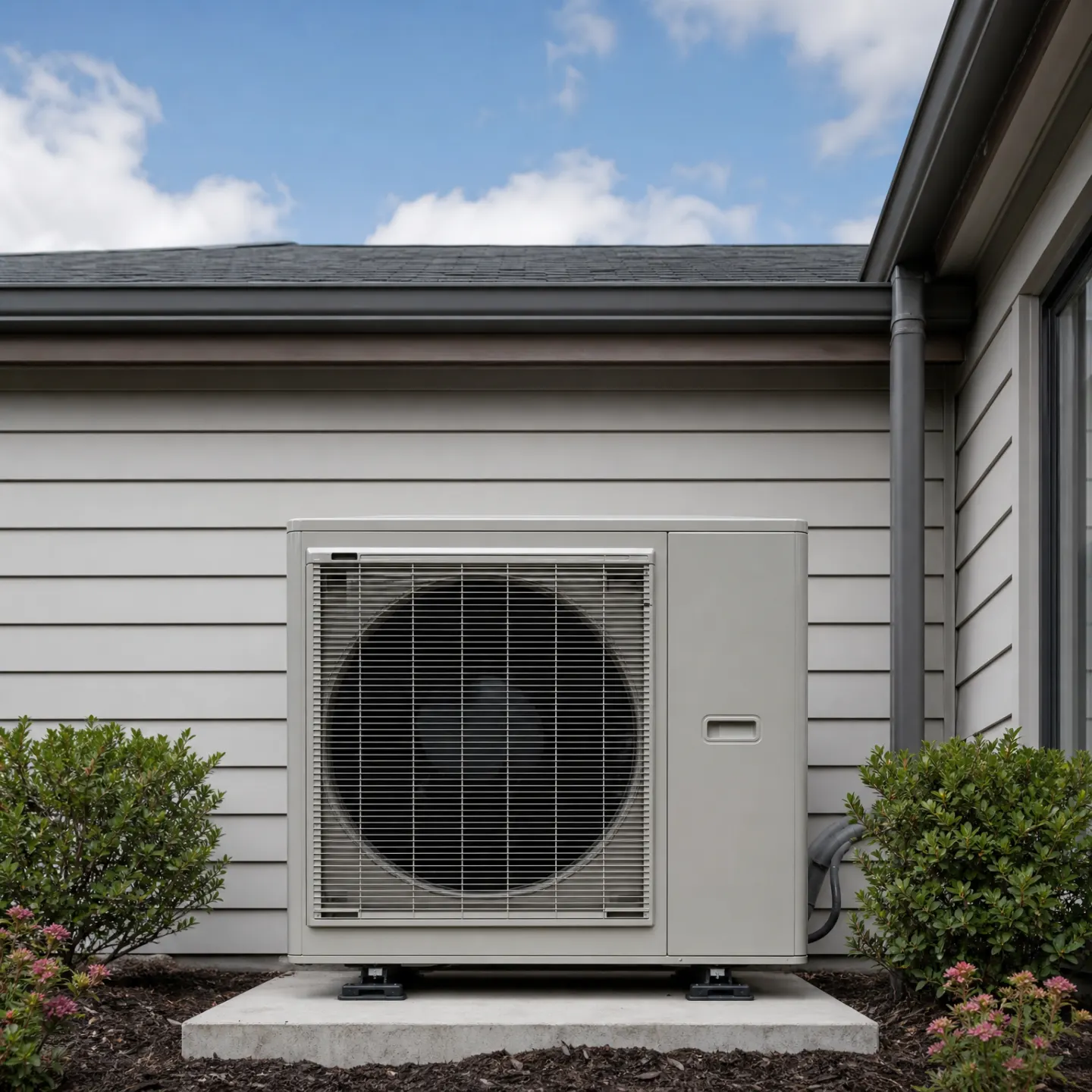
A gray heat pump condenser unit mounted on a concrete pad against the gray lap-siding exterior wall of a house.

No real break between seasons here

The time-lapse above runs light to dark because this machine doesn't get a dark half of the year to rest in. It runs through the hot, dry stretch of summer, then switches over and runs through winter storms that hit this county 136 times between 2015 and 2024. There's no real gap between the two. A heat pump sized for this house, not just rated for it on paper, is what keeps that pace from wearing it down early. One that's undersized or a loose fit ends up running harder than it was built to, every season, not just the bad ones.

Ask for the capacity at the low end, not just at rest

Every heat pump has a rating for how much heat it can still pull from outside air as the temperature drops. Some units fall off fast and lean hard on backup heat once it gets cold. Others hold most of their output much further down. Ask for that number at a low outdoor temperature, not just the standard rating, because that's what tells you how the system behaves on the coldest nights, not just the mild ones.
Ask what happens when the compressor can't keep up

Every heat pump has a backup heat source for when outdoor air gets too cold to pull enough heat from. How that backup is sized and controlled varies a lot between systems. Some switch over smoothly and only use backup heat sparingly. Others lean on it more than they should because the controls aren't tuned well or the backup element is oversized for the job. Ask how the switchover is handled and what triggers it, because that's what decides how much of your heat comes from the efficient side of the system and how much comes from the expensive side.

The efficiency rating on the label, the SEER2 and HSPF2 numbers, tells you how much heat or cooling the system moves for the power it draws. It's not a measure of size or capacity, two systems can heat the same house and pull very different amounts of power doing it. The rating is measured under set test conditions, so it won't match what you see on the coldest or hottest days, but it's still the most honest way to compare one system against another. A higher number almost always costs more upfront. Where that extra cost gets worth paying is in how much the system runs over its life, since a heat pump that runs most of the year earns back the difference in a way one that runs occasionally never will. The label won't tell you how well the installer matched the system to your house, and that matters as much as the rating does.

Utility gas heats more homes in Conejos County than anything else, close to four in ten. Bottled or LP gas heats another large share, and straight electric heat covers a small slice of the county. Most of what's running here now is a gas furnace, not a heat pump. That's worth knowing going in, because it means the ductwork is likely already sized for forced air, which a heat pump can often use too. What it doesn't have is a compatible outdoor condenser or the electrical capacity a heat pump draws on. A contractor still needs to check the panel and the duct sizing before calling it a straight swap, but starting from a forced-air system is a simpler path than starting from baseboard or radiant heat.