



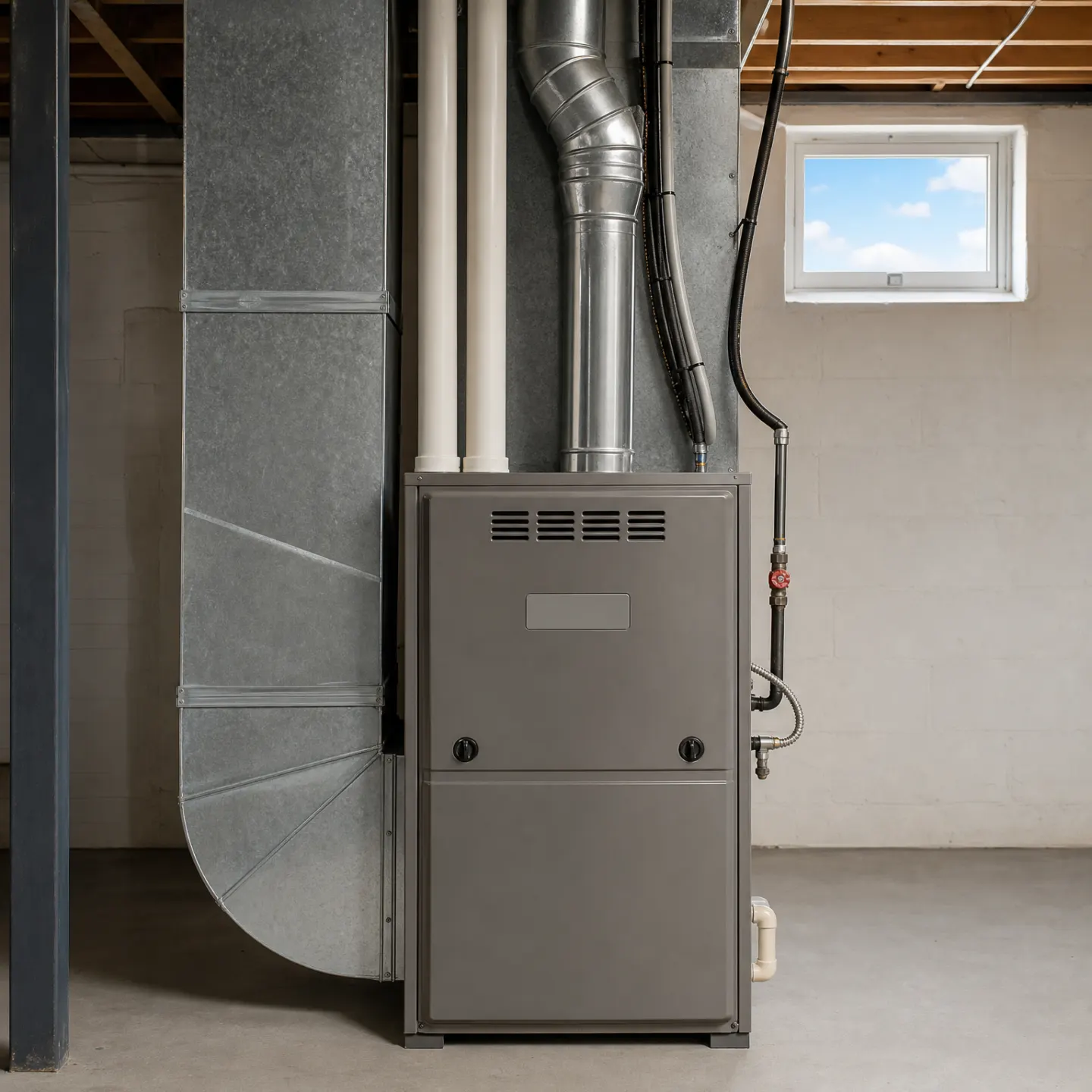
A gas furnace with sheet-metal ductwork and PVC pipes installed in an unfinished basement.

Furnace Maintenance in Manassa, CO

Tell us about the job

Takes about a minute. No obligation.

Step 1 of 3: Equipment

Colorado homes paid $10.09 per million Btu of natural gas in 2024. That is the fuel cost behind every furnace running in this state, and it is not cheap. A furnace that has to work harder to put out the same heat burns through more of that gas every time it fires. A dirty burner, a clogged filter, a flame sensor reading wrong, any of these make the furnace run longer to reach the temperature on the thermostat. Longer runtime at that price shows up on the bill.

Gas heats more homes in Conejos County than any other fuel.

A furnace tune-up here means checking the burner and venting, not swapping a filter.

Eleven months of heat a year does not leave a furnace much time to rest

Heat runs August through June
Winter nights average 9°F
136 winter storms from 2015 to 2024
Book it in July, before August asks everything of itFurnaces in Conejos County start their eleven-month run in August.

August is when that eleven month stretch of heat starts in Conejos County, and that is the window to get a furnace looked at before it is carrying the house day after day. A burner running a little dirty, a flame sensor giving a weak reading, airflow restricted somewhere in the system, those are small adjustments caught early. Found a few months into the run, with the furnace firing most of the day, the same problems mean it is working harder to do the same job, and that shows up on the gas bill. Winter storms hit Conejos County 136 times between 2015 and 2024. A furnace that fails during one of those is not something to be without while it gets fixed.

A tune-up gets the furnace burning only what the heat requires

A burner or flame sensor that is not reading right makes the furnace run longer to hit the same temperature. At $10.09 per million Btu, that extra runtime is not free. A tune-up gets the furnace back to burning only as much gas as the heat actually requires.

Find a contractor
A gray residential gas furnace installed in an unfinished basement, surrounded by ductwork, a metal flue pipe, and a gas supply line.

Between visits, the filter is yours. The rest is not.

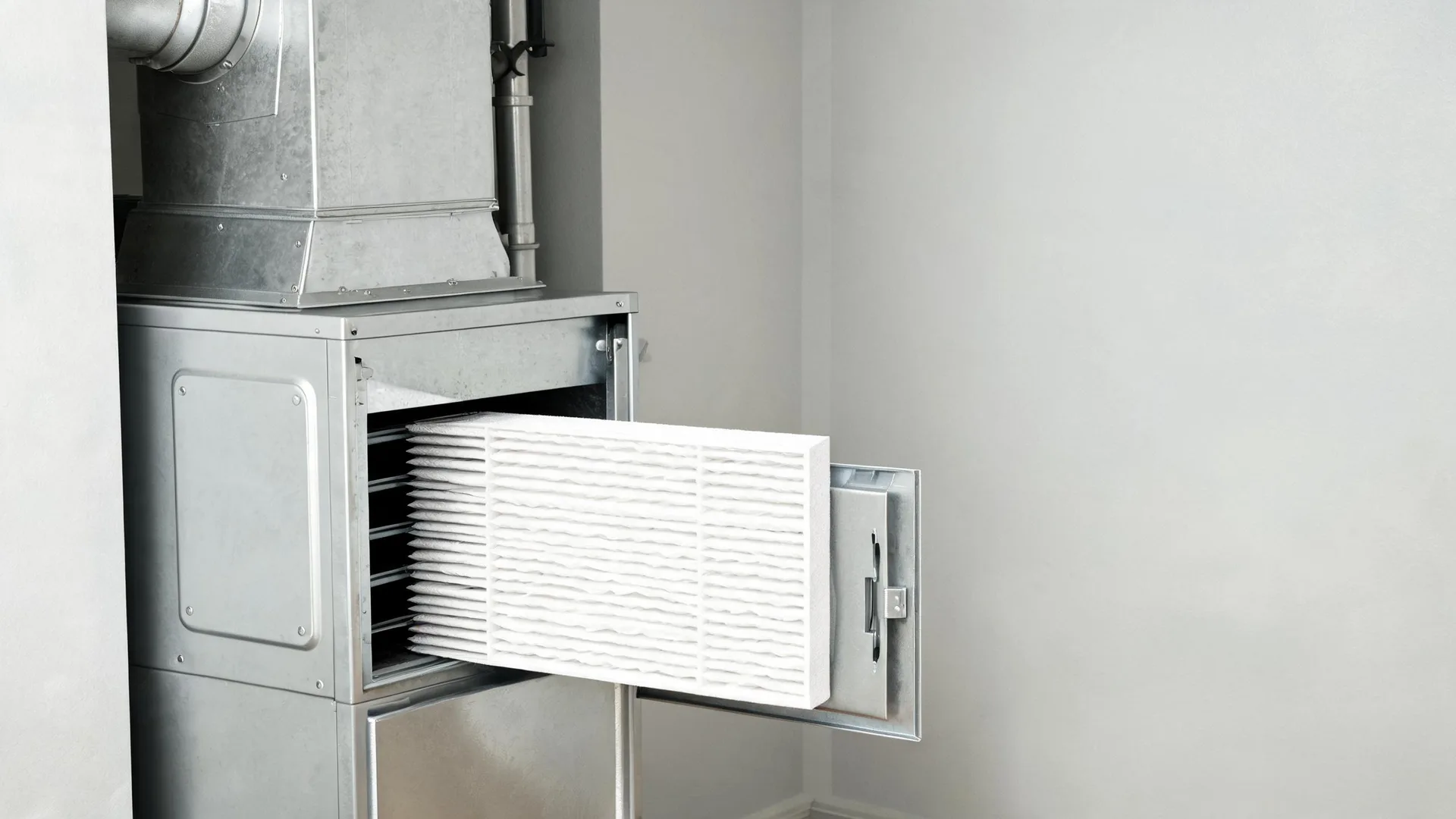
The filter is the one thing worth checking without calling anyone. Pull it out, hold it up to a light. If you can't see light through it, swap it. A dirty filter chokes the air moving across the heat exchanger, and the furnace runs longer to push the same heat through a restricted path. Keep the area around the unit clear too. Boxes, laundry, anything stacked near the cabinet blocks the airflow it needs to draw in. If the furnace has a standing pilot, you can check that the flame burns steady and blue. A flame that is yellow or flickering is not something to fix yourself, but it is worth noticing and mentioning when a tech comes out. Past that, leave the burner, the flame sensor and the venting alone. Those take a meter and a trained eye to check safely.

A furnace rarely fails without warning first

A burner that used to light with one clean click starts taking two or three tries. The blower kicks on louder than it used to, or keeps running after the house hits temperature. A room that used to heat fine now lags behind the rest. Short cycling, where the furnace fires, shuts off, and fires again within a few minutes, means something is telling it to stop before the job is done. None of these mean the furnace is about to quit. They mean something inside it is already working differently than it was.
Catching it early is a different job than fixing it late

A flame sensor reading weak or a burner running dirty is a five-minute adjustment when it is caught on its own. Left alone, the furnace compensates by running longer to reach the same setting, and that longer runtime puts wear on the igniter, the blower motor and the heat exchanger that were never the original problem. A tune-up looks at the furnace while it is still doing its job correctly, so the small thing gets fixed as a small thing instead of turning into the reason the furnace stops working on the coldest night of the year.

A tune-up gets inside the furnace in ways a homeowner never does. A tech pulls the burner assembly and looks at the flame itself, whether it burns even across every port or leans ragged on one side. The flame sensor gets cleaned and tested, not just looked at, because a sensor can look fine and still read weak. The heat exchanger gets checked for cracks that no amount of staring through the cabinet door will show you. Amp draw on the blower motor gets measured against what that motor is supposed to pull, which tells you if it is struggling before it ever makes a noise about it. None of this shows up from the living room. It shows up on a gas bill eventually, or it shows up as a breakdown, but by then it is too late to catch it as the small thing it started out as.

A tune-up also means taking the furnace apart enough to see things a visual check misses. The igniter gets tested under load, not just watched for a glow, because an igniter can still light the burner while it is on its way out. The inducer motor gets checked for the draw it pulls and the sound it makes, since a bearing starting to go will show up in both before it ever fails outright. Gas pressure gets measured at the manifold and set to what the furnace is built to run at, not just left wherever the last adjustment left it. The ductwork connections get checked too, because a joint that has worked loose lets heated air escape before it reaches the room it was meant for. Every one of these is a small thing on its own. Together they are the difference between a furnace that runs the way it was built to and one that is quietly working harder than it needs to.