Gas costs more to burn here
Colorado homes paid $10.09 per million Btu of natural gas in 2024. A furnace that wastes heat is burning money at that rate every time it runs.
Takes about a minute. No obligation.
Colorado homes paid $10.09 per million Btu of natural gas in 2024. A furnace that wastes heat is burning money at that rate every time it runs.
Two furnaces can heat the same house and cost different amounts to run all winter. The difference comes down to how much gas each one turns into actual heat instead of losing it up the flue.
NOAA nClimDiv, 1991–2020 normals
Furnaces in Conejos County run from August through June.
A new system here spends most of the year working, so installing the wrong size costs you for eleven months, not three.

Conejos County falls under zone 6B, the cold end of the 2021 energy code. Every furnace installed here has to meet the federal minimum for that rating, not some lower bar meant for milder places. Right now that means turning at least 80 percent of the gas it burns into heat over the winter. That floor is changing. Furnaces built on or after December 18, 2028 have to hit 95 percent, up from 80. A furnace installed before that date can still be the older standard. One installed after has to clear the new one.
Pick the furnace that burns gas well and this bill stays lower every winter it runs. That's the choice to make before installation, not after.
Find a contractor
Eleven months of heat means almost no slow season to work with. June is the only month this furnace gets to sit idle. Replace it in July, before heat season starts in August, and the work happens when nothing is riding on it. Wait for a January morning with the low near 9°F and the job happens under pressure, on whatever schedule a contractor can give you that week.
A furnace sized for this house years ago isn't automatically right today. Insulation gets added, windows get replaced, additions get built. A contractor should run a load calculation on the house as it stands now, not quote a replacement that matches the nameplate on the unit coming out. Too big and it short cycles, heating the house in bursts and wearing out its own parts faster. Too small and it runs constantly without catching up.
A furnace warranty usually splits into parts and labor, and they don't always run the same length. The heat exchanger might carry a longer term than the blower motor or the control board. Ask whether the warranty is registered to the house or tied to the original buyer, and whether a contractor has to do the install for the warranty to hold at all. Some manufacturers void coverage if an unlicensed install or the wrong venting was used.
Estimates for a typical Conejos County home, from EIA household energy data, Colorado fuel prices and NOAA climate normals. Your home will differ.
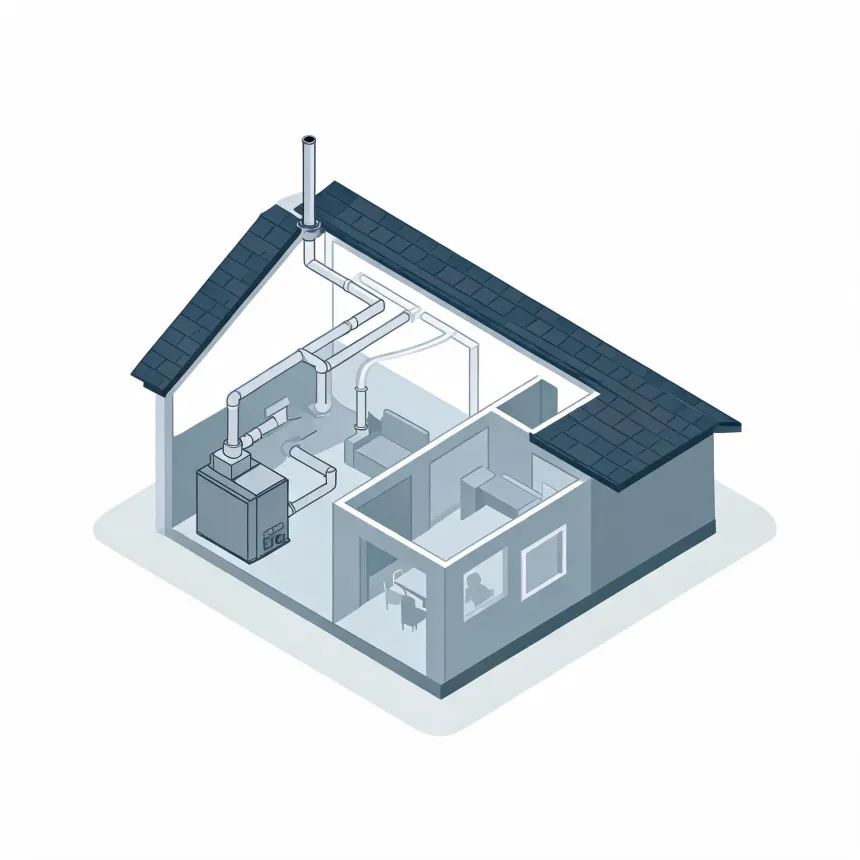
Installation starts with the old furnace coming out, and that part takes some care. The gas line gets shut off and disconnected, the old vent or flue gets pulled, and the ductwork connection gets inspected since it has to work with whatever goes in next. Setting the new furnace means getting it level and squared to the duct trunk before any permanent connections happen. Gas line, venting and electrical all get hooked up and tested separately. Once it's running, a tech checks the flame, sets the gas pressure, and measures the temperature rise across the heat exchanger to confirm it matches what the manufacturer specs for that model. Venting gets checked last, because a furnace that burns clean but vents wrong is still a problem.