Illuminated timber-frame and stone houses along a residential street at night, with snow-capped mountains visible in the background.

Furnace Repair in Manassa, CO

Tell us about the job

Takes about a minute. No obligation.

Step 1 of 3: Equipment

Eleven months of runtime

A furnace in Conejos County runs from August through June. That leaves almost no real break for the burner, the igniter or the blower motor to sit idle and cool down for good. With that little rest, parts wear against each other for most of the year instead of a few months of it.

What that means for a repair

A furnace that runs this much wears into problems instead of breaking all at once. A cracked heat exchanger, a dying igniter or a blower motor losing strength often started small months before anyone noticed. The fix needs to find what actually wore out, not just quiet the symptom for now.

11 months
August through June, your furnace is on duty
9°F
the average winter night it heats against
136 winter storms
in ten years, the nights a failure hurts most
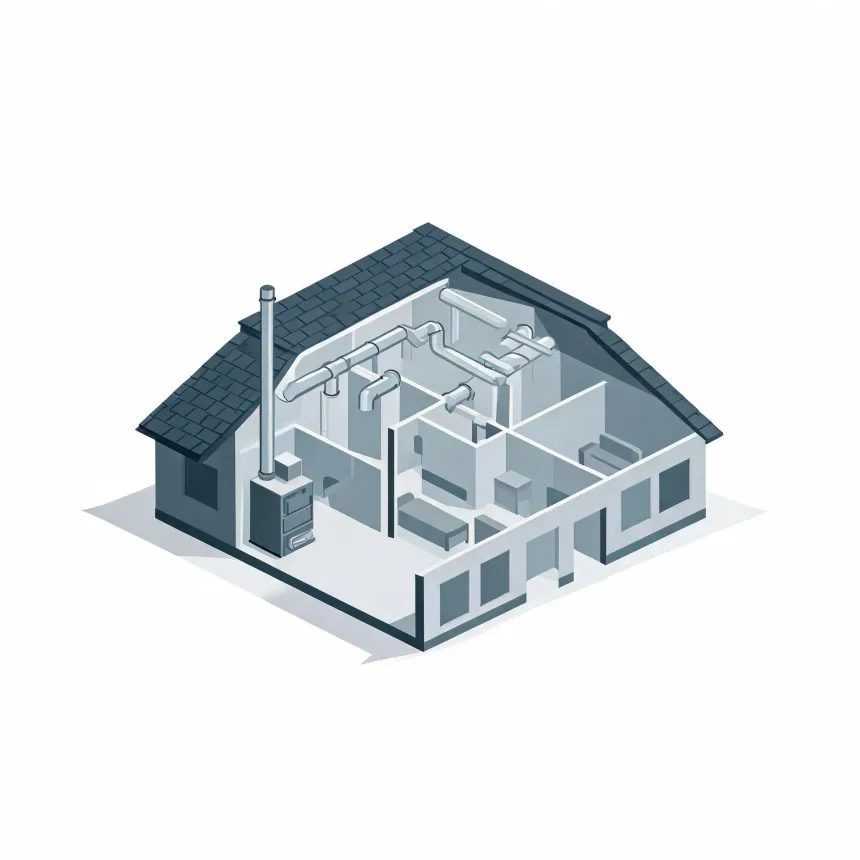
Isometric grayscale illustration of a cutaway house showing interior rooms, ceiling ductwork, a flue pipe, and a furnace unit on the left side.
Your furnace works hardest from October through April.

NOAA nClimDiv, 1991–2020 normals

A furnace that keeps running on a cracked heat exchanger pushes exhaust into the airflow instead of venting it outside.

Shutting it down when something smells or sounds wrong costs less than running it through the problem.

That bill is already high. A furnace working against itself makes it higher.

Climate zone 6B
Heat runs August through June
Winter nights average 9°F
August is when the weak parts start to failFurnace season here starts in August. The first cold nights find whatever was already worn.

Gas here runs $10.09 per million Btu, and a furnace that's short-cycling or struggling to hold a cycle burns more of it than one running right. A cracked heat exchanger or a clogged burner doesn't fail clean. It makes the furnace work longer to push out the same heat, month after month, on a bill that's already higher than most states pay. Waiting on a repair doesn't just risk a bigger failure later. It costs you now, every time the burner kicks on.

Find what wore out, not just what's acting up

Almost a full year of runtime means a furnace here rarely gets a real break, and that's usually what's behind a repair call, not a one-off fault. Have the actual cause found, not just the symptom quieted.

Find a contractor
A man in a dark shirt, tan pants and cap walks up porch steps toward a navy blue front door, carrying a canvas tool bag filled with hand tools, beside a potted shrub in a blue planter.
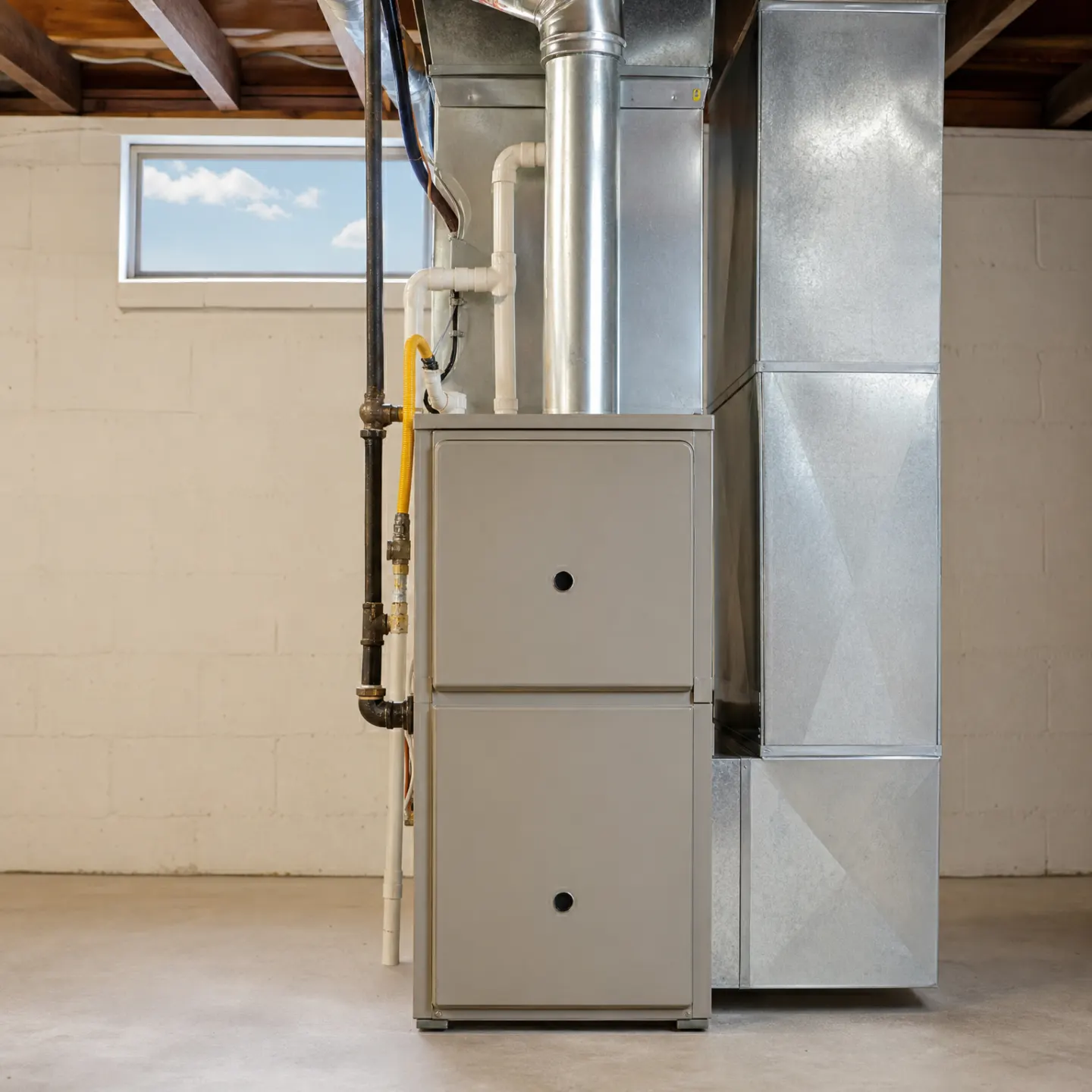
A gas furnace with attached ductwork, gas piping, and condensate lines installed in a concrete-block basement.

What the furnace tells you before it quits

A furnace gives warning before it quits. It just rarely gets listened to. Short cycling is one of the first: the burner fires, runs a few minutes, shuts off, then starts again before the house has really warmed up. That's usually a sign the heat exchanger is overheating and tripping a safety switch, or the flame sensor isn't reading the flame right. A burner that's gone from a steady blue flame to one that's yellow or flickering is burning dirty, and that's worth a look before it fouls the igniter. Banging or popping from the ductwork when the system starts usually means the ducts are expanding against something, but if the noise is coming from inside the cabinet, that's often a blower wheel or motor bearing on its way out. Warm air that feels weaker than it used to, even though the furnace is running longer to deliver it, points to a blower motor losing strength or a restriction somewhere in the airflow. None of these mean the furnace is done. They mean something specific wore out, and finding that part before it takes others down with it is the whole job.

Check the simple things first

Look at the thermostat before anything else. Make sure it's set to heat and the set temperature is actually above room temperature, and check the batteries if it uses them. Then find the furnace switch, it looks like a light switch near the unit, and make sure nobody bumped it off. Check the breaker too. After that, look at the air filter. A filter that's packed with dust chokes the airflow, and some furnaces will shut themselves down rather than run against that kind of restriction.

Know what not to touch

The blower door usually has a safety switch behind it, and the furnace won't run with that door off or loose, so if it's been serviced recently, check that it's seated right. Past that, leave it alone. Opening the burner compartment, resetting a flame sensor, or clearing a flue by hand are jobs that involve gas and flame, and getting them wrong is a bigger problem than the one you started with. If you smell gas at any point, that's not a troubleshooting step, that's a reason to leave the house and call from outside.

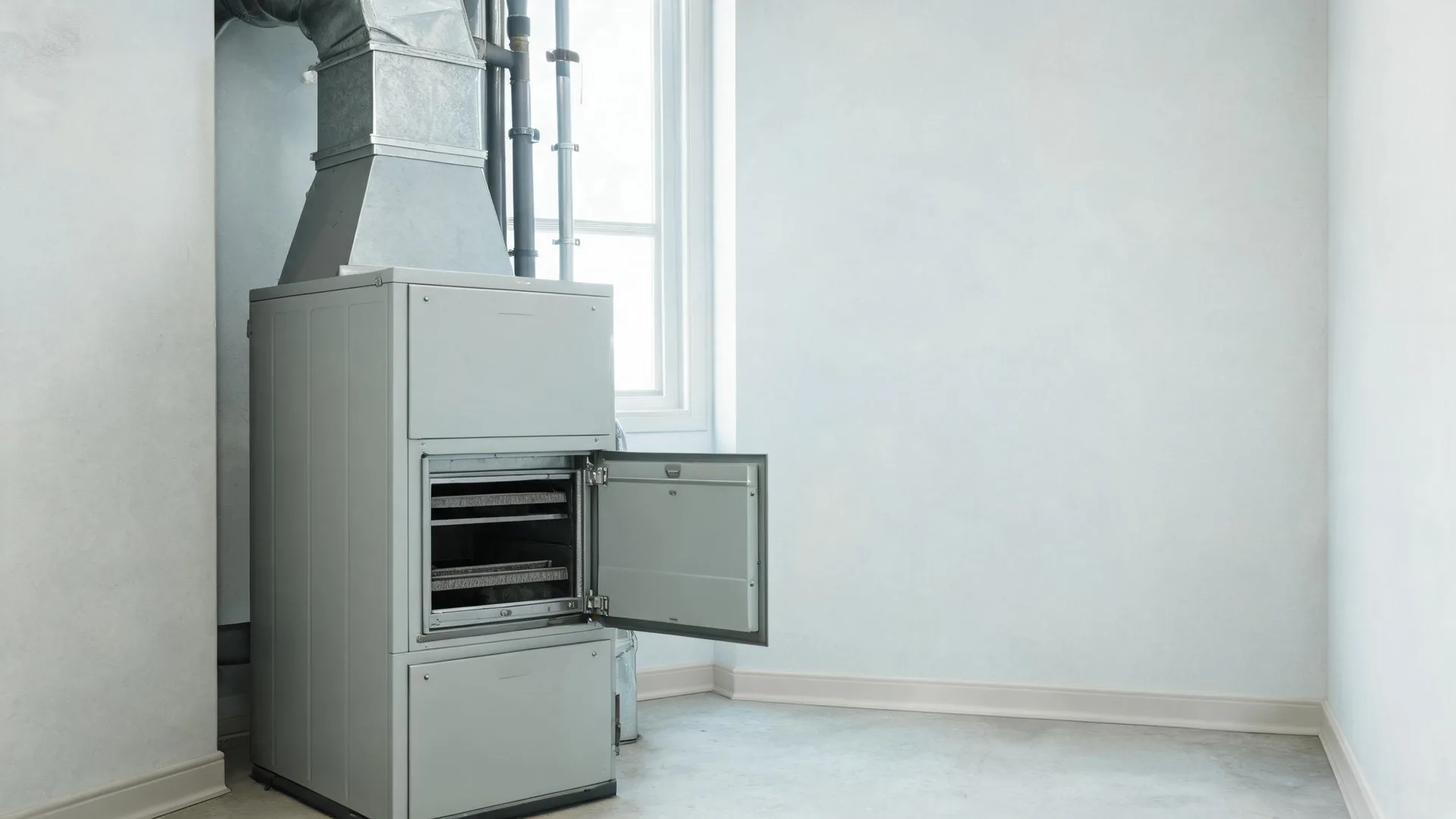
A bare concrete basement containing a gray gas furnace with metal ductwork and a vertical flue pipe, lit by a single hanging bulb.

A new furnace would cut about $130 a year off heating for a typical Conejos County home.

  • A new high-efficiency furnace$570 a year
  • An older furnace$700 a year

Estimates for a typical Conejos County home, compared with an older unit built to the previous federal minimum, from EIA household energy data, Colorado fuel prices and NOAA climate normals. Your home will differ.

Repair makes sense when one part has failed and the heat exchanger is sound.

Replacement makes sense when the heat exchanger is cracked or the furnace keeps needing parts.

A repair is worth it when the problem is one part failing on a furnace that's otherwise sound: an igniter, a flame sensor, a capacitor. Swap the part and the furnace runs like it did before. Replacement starts making more sense once the heat exchanger is the thing that's cracked, because that's the part the rest of the furnace is built around, and it isn't a simple swap. Age matters too, not as a number but as a pattern: a furnace that's needed a few different repairs in a few different years is telling you it's wearing out generally, not failing at one spot. The other thing worth weighing is what the repair actually fixes. Patching a symptom on a furnace that keeps tripping the same safety switch means the real cause is still in there, and it'll be back. A tech who can point to the worn part and explain why it failed is giving you something to decide with. One who can only say the furnace is old isn't.