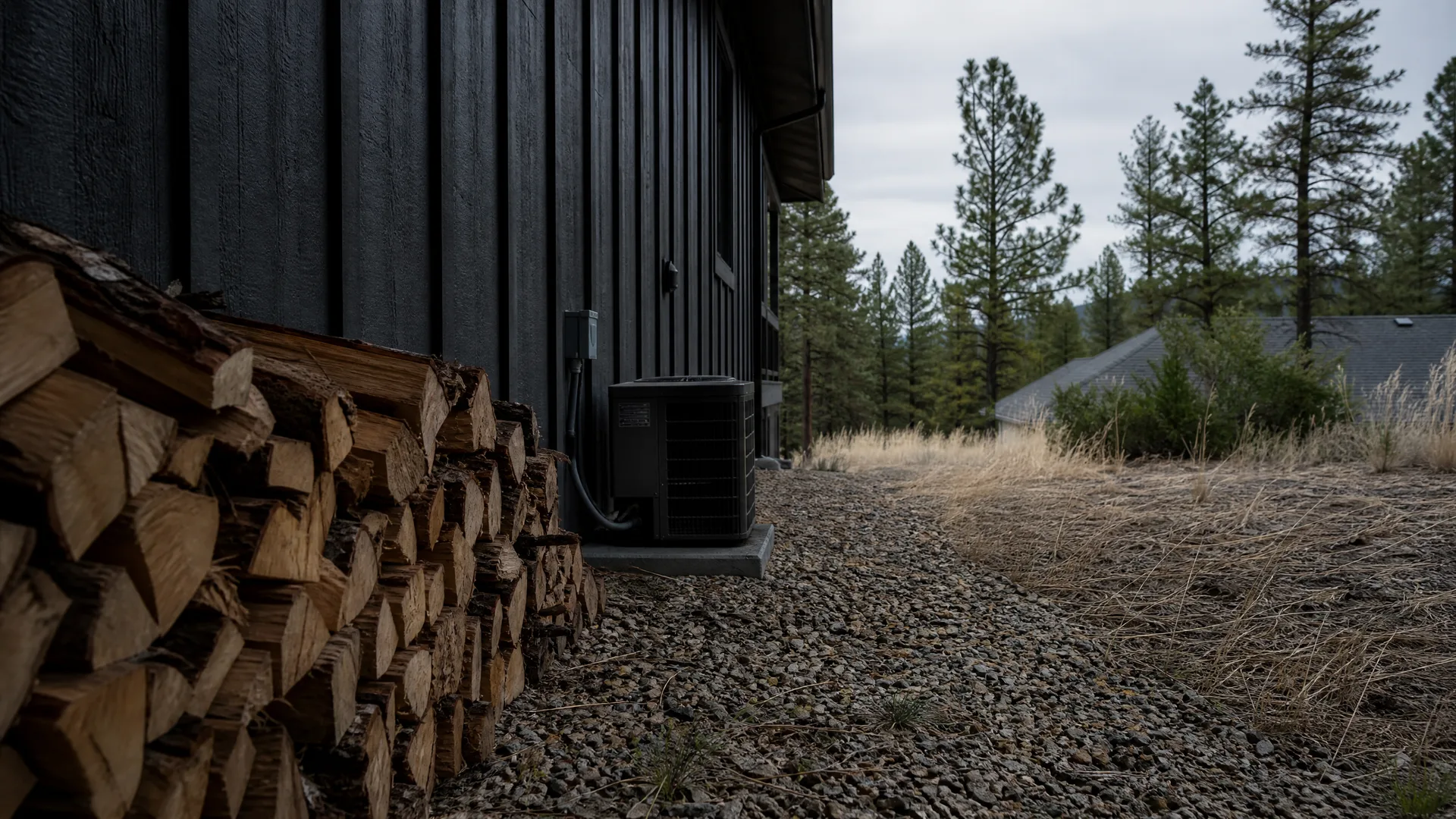




A stacked woodpile beside a dark vertical-board house exterior with an outdoor air conditioning condenser unit on a concrete pad, gravel ground, dry grass and conifer trees under an overcast sky.

Furnace Installation in Aspen, CO

Tell us about the job

Takes about a minute. No obligation.

Step 1 of 3: Equipment

Natural gas ran $10.09 per million Btu across Colorado homes in 2024. A furnace that wastes less of that gas shows up on every bill you pay through an Aspen winter. The difference between a mid-efficiency unit and a high-efficiency one is gas that goes out the flue instead of into your house. At that price per Btu, what the furnace wastes is not a small line item.

10°F
the average winter night it heats against
80% AFUE
the federal minimum any new unit must meet
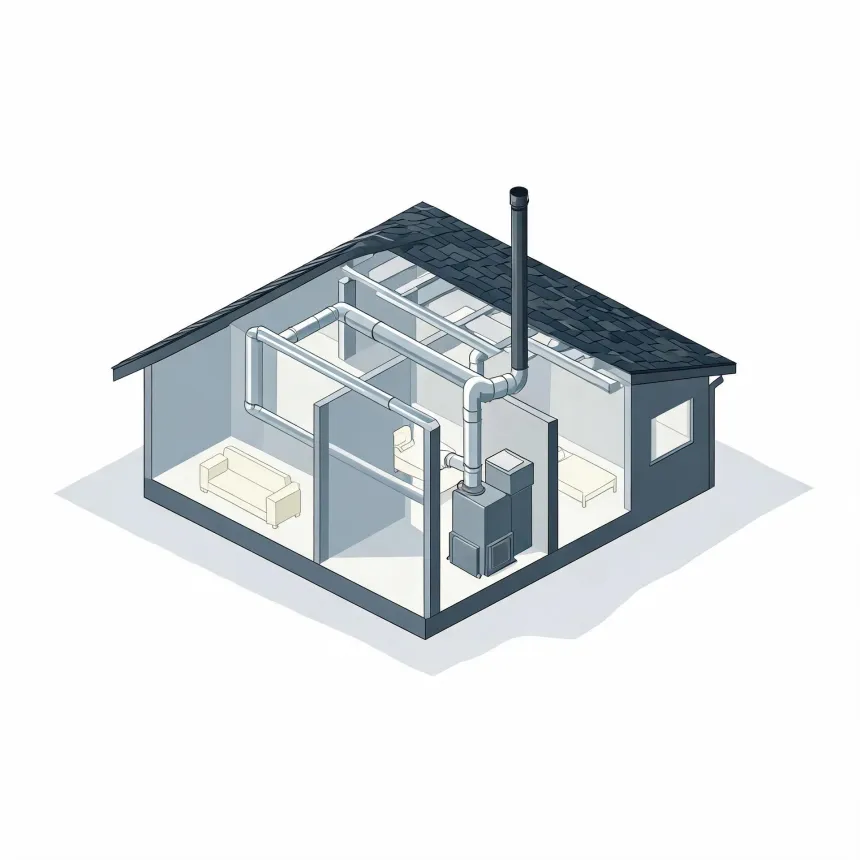
Isometric cutaway illustration of a small single-story house showing a furnace with a flue pipe through the roof and ducting running to rooms containing a sofa, chair and bed.
Your furnace works hardest from October through April.

NOAA nClimDiv, 1991–2020 normals

Furnaces here run every month of the year, not just in winter.

A furnace sized for an average climate will fall short in a place where it never really gets to rest.

Half of Pitkin County heats with gas, so a gas furnace is the safe bet here

50% of homes heat with gas
Winter nights average 10°F
Climate zone 7

The AFUE rating on the label tells you how much of the fuel becomes heat in your house, and how much goes out the flue as exhaust. A furnace with a low rating burns fuel it never gets credit for. A furnace with a high rating wrings most of that fuel into heat before anything escapes. That gap is built into the equipment itself, in how the burner and heat exchanger are designed, not in how carefully it gets installed or used. A high-efficiency furnace also vents through plastic pipe out a wall instead of a metal flue through the roof, so the installation looks different depending on which you choose. Once the furnace is in, the rating does not change and it does not drift with age. It is the one number on that label that tells you what the furnace will cost to run for as long as you own it.

Check the AFUE number before you choose

Ask about AFUE when you compare furnaces. The gap between a mid-efficiency and a high-efficiency model is gas that either heats your house or goes out the flue, and at $10.09 per million Btu that gap is worth asking about before you decide, not after.

Find a contractor
A man in a cap, dark shirt and tan work pants, seen from behind, carries a worn canvas tool bag up steps toward a dark blue front door beside a tall planter of flowers.
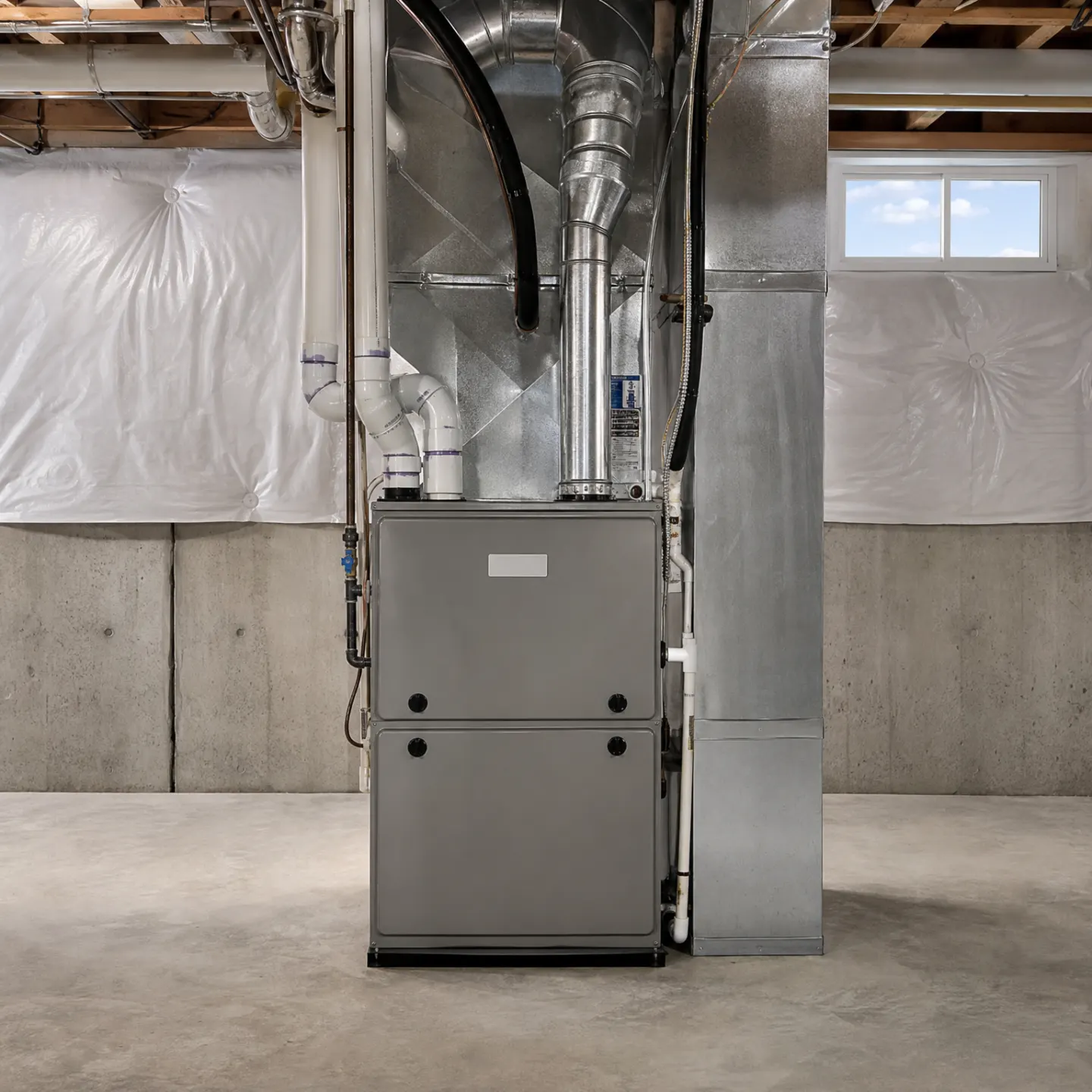
A gray residential gas furnace installed in an unfinished basement, connected to sheet-metal ductwork and PVC pipes.

This furnace doesn't get a season off

Overnight lows average 10°F across December, January and February, and the furnace runs every month of the year here. That is the load it has to be sized for, not the mild stretch between cold snaps. Get a load calculation done for this house instead of matching the unit you're replacing. A furnace undersized for Pitkin County runs close to flat out all winter trying to keep up, and that strain shows up early in the parts that work hardest, the blower motor and the heat exchanger.

The old furnace gets disconnected, not left in place

Whoever installs the new furnace also deals with the gas line, the flue, the ductwork connection and the old unit itself. It gets disconnected from the gas supply, the venting is capped or removed, and the furnace is hauled out of the house. None of that is left for you to sort out afterward.

The old venting may not work for the new furnace

A mid-efficiency furnace vents through a metal flue. A high-efficiency furnace vents through plastic pipe out a wall. If you're switching from one type to the other, the old venting doesn't carry over. That changes what the installation involves beyond just swapping the unit itself.

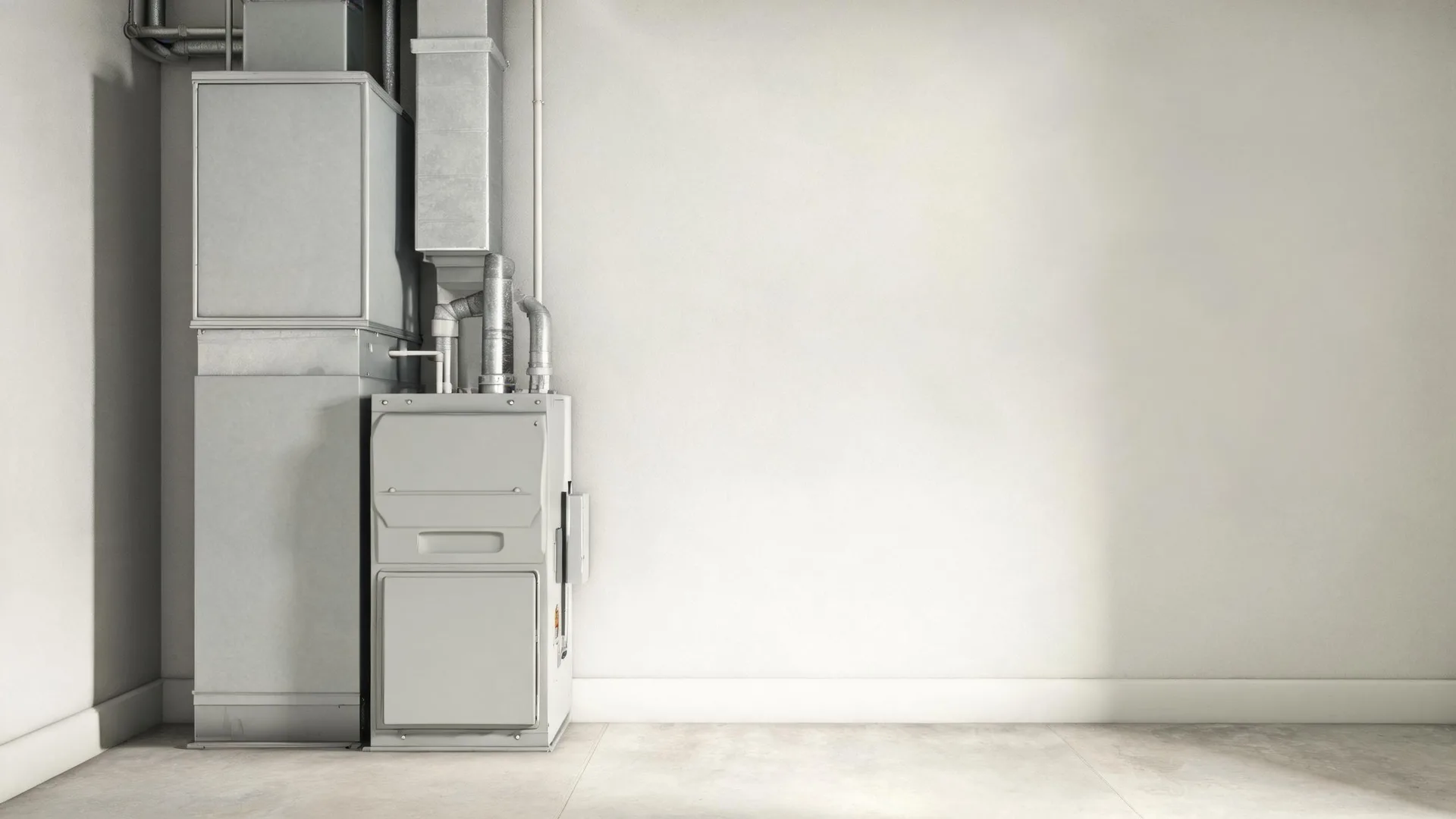
An unfinished basement featuring concrete block walls, exposed floor joists, and a metal forced-air furnace with ductwork near a central pillar.

A high-efficiency gas furnace would save about $130 a year to run in Pitkin County compared with a gas furnace.

  • A high-efficiency gas furnace$620 a year
  • A gas furnace$750 a year

Estimates for a typical Pitkin County home, from EIA household energy data, Colorado fuel prices and NOAA climate normals. Your home will differ.

The crew clears the old furnace out before anything new goes in. Gas gets shut off at the line while it's disconnected, and the old venting comes out too if it won't serve the new unit. Setting the furnace, squaring it up, connecting the ductwork trunk, running gas and venting to the right spec, that's most of the day. Once it's hooked up, the furnace gets fired and checked. Gas pressure, temperature rise across the heat exchanger, and whether every room is actually getting air through the ductwork as it sits. A furnace can be sized right and still heat unevenly if the duct connections aren't balanced to match it. That gets adjusted before the crew leaves, not left for you to notice the first cold week.