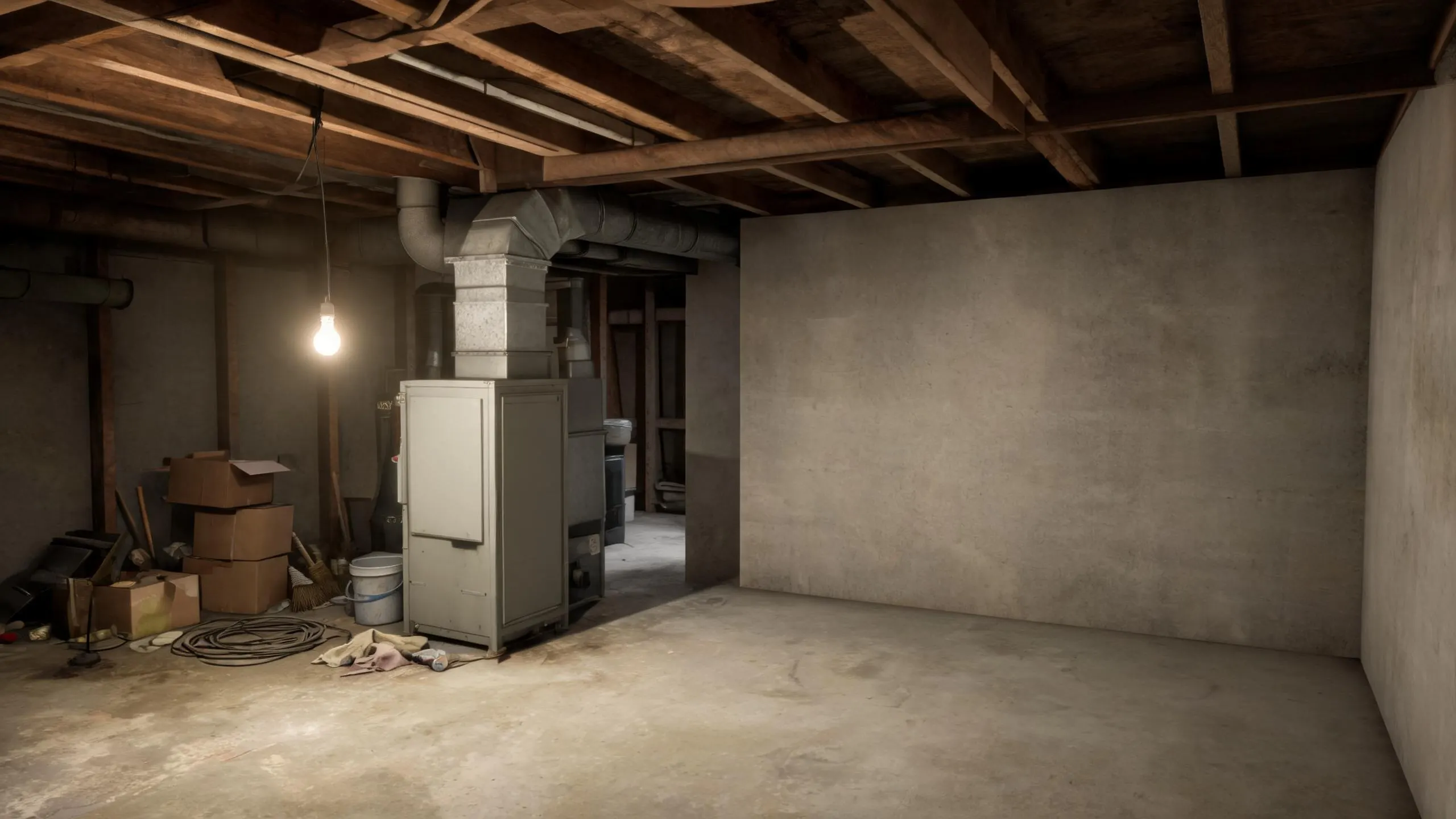
An unfinished basement featuring exposed ceiling joists, a metal HVAC unit with round ductwork, a hanging light bulb, and scattered boxes and debris along the left wall.

Furnace Repair in Pagosa Springs, CO

Tell us about the job

Takes about a minute. No obligation.

Step 1 of 3: Equipment

Ten months of runtime

A furnace in Archuleta County runs from September through June. That's ten months a year asking the igniter and the blower motor to cycle on and off. Over a stretch like that, wear adds up faster than it would somewhere that only needs heat for a few months.

What that means for a repair call

Winter storms hit Archuleta County 123 times between 2015 and 2024. A furnace that has been pushed through weather like that is more likely failing from the wear of all that use than from one bad part. That calls for a real diagnosis, not a guess, so whatever gets fixed actually holds.

10 months
September through June, your furnace is on duty
13°F
the average winter night it heats against
123 winter storms
in ten years, the nights a failure hurts most
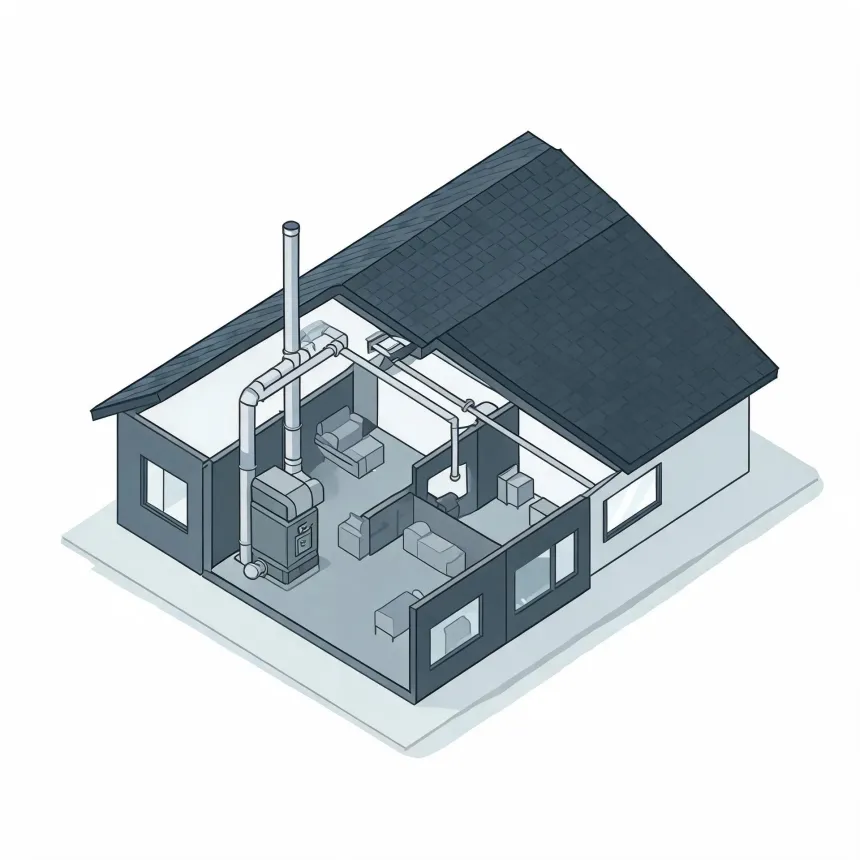
Isometric cutaway illustration of a single-story house showing interior rooms with furniture, a furnace unit connected to ducting and vertical flue pipes running through the roof.
Your furnace works hardest from November through April.

NOAA nClimDiv, 1991–2020 normals

A furnace that short cycles, turning on and off in quick bursts instead of running a full stretch, is telling you something before it quits altogether.

Short cycling strains the igniter and the blower motor every time it restarts, so the longer it goes unchecked, the more parts it can take down with it.

A newer furnace is worth repairing, not replacing

Half the homes here were built by 1996
Heat runs September through June
Winter nights average 13°F
Heat Starts in SeptemberFurnaces here run September through June, so a weak part gets found in the first cold snap.

If your furnace came with the house, check the paperwork before you assume the worst. A house built in 1996 or later likely still has its original furnace well within its working life. That makes repair the right first call, not replacement. Mobile homes are part of the mix here too, and a furnace in one of those gets swapped out on its own schedule, so the house's age is a starting point, not the answer. Either way, a technician can look at the unit itself and tell you where it actually stands.

A furnace that's been running this hard deserves a real look

A furnace here works through ten months of heat and whatever a few hundred winter storms a decade can throw at it. When something goes wrong, that's usually the wear behind it, not one random part. Get it looked at and fixed properly, so the repair holds.

Find a contractor
A man in a dark jacket, cap and tan work pants carries a canvas tool bag up stone steps toward a navy front door, with a potted shrub beside the entry.
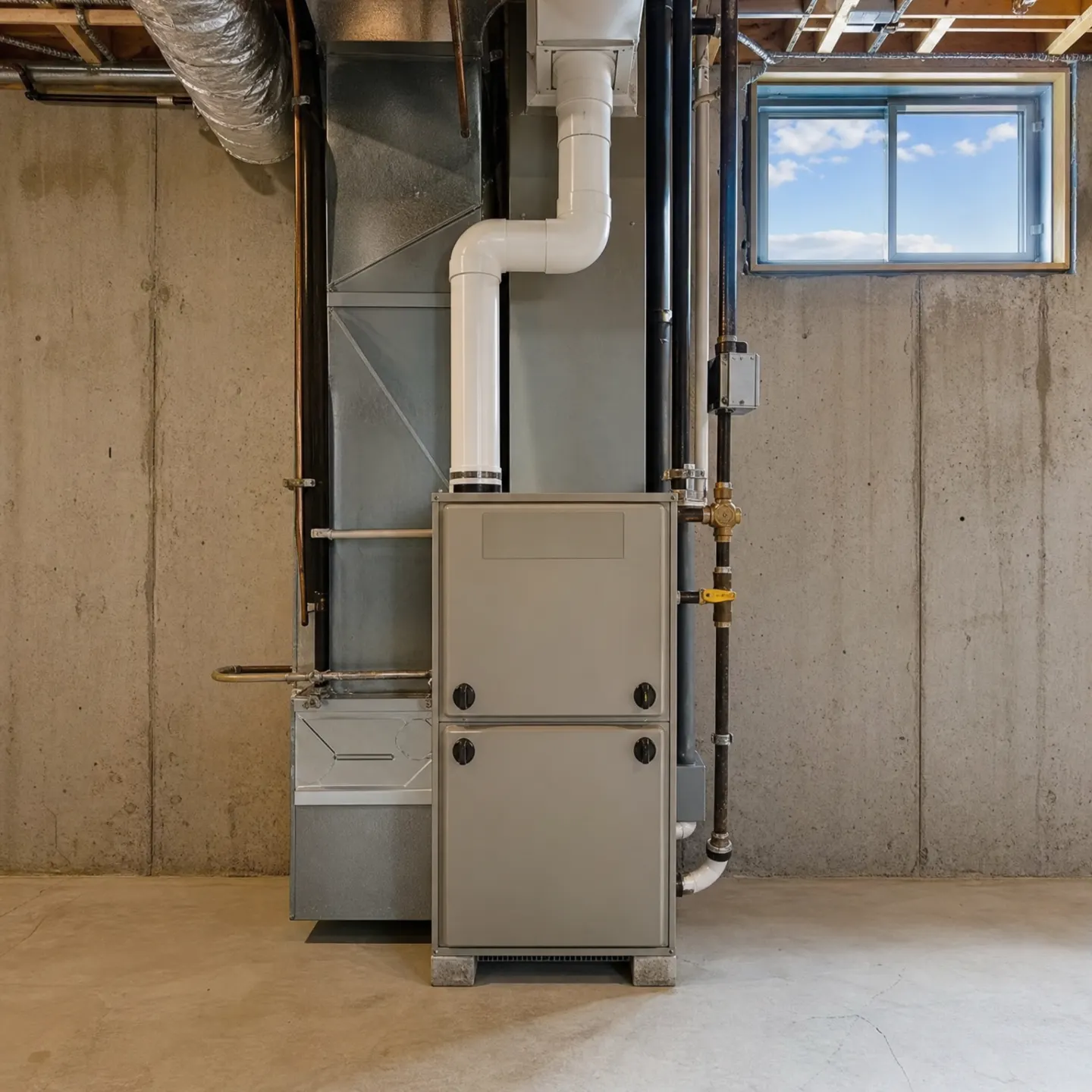
A gray gas furnace with attached ductwork and piping installed in an unfinished concrete basement.

What Actually Wears Out

A furnace fails the same way most of the time. The igniter cracks or weakens until it won't light the burners. The flame sensor coats with a film until it can't tell the burner is lit, so the system shuts itself down as a safety measure. The blower motor wears out after enough cycles, often announcing itself with a grinding or squealing sound before it quits. A clogged filter forces that motor to work harder than it should, which shortens its life and can overheat the heat exchanger behind it. Loose or corroded wiring at the control board causes the kind of intermittent fault that's hard to track down because the furnace seems fine, then doesn't start. Most of these are wear items. They give some warning before they fail outright, which is why a furnace acting strange is worth checking before it stops working altogether.

A Small Fault Can Spread

A cracked heat exchanger or a failing limit switch is a reason to shut the furnace down, not push it through another cycle. Running it anyway lets heat or exhaust go where it shouldn't, and that can damage parts nowhere near the original problem.

Running Rough Costs More Than Waiting

A blower motor losing strength still moves air, just not enough, so the heat exchanger behind it sits hotter than it should on every cycle. Left running, that kind of strain turns one worn part into a cracked one.

An unfinished basement interior showing a gray furnace unit beneath a bare incandescent bulb, surrounded by exposed joists, concrete walls, cardboard boxes, and utility pipes.

A new furnace would cut about $120 a year off heating for a typical Archuleta County home.

  • A new high-efficiency furnace$490 a year
  • An older furnace$610 a year

Estimates for a typical Archuleta County home, compared with an older unit built to the previous federal minimum, from EIA household energy data, Colorado fuel prices and NOAA climate normals. Your home will differ.

Repair makes sense when one part has failed and the heat exchanger is sound.

Replacement makes sense when the heat exchanger is cracked or the furnace keeps needing parts.

Age by itself doesn't tell you whether to repair or replace. What matters is which part failed and what it would take to fix it. A cracked heat exchanger means replacing the furnace, almost always, because that part isn't meant to be swapped on its own and a cracked one is a safety issue, not a repair job. An igniter, a flame sensor, a blower motor, a control board: those get replaced individually all the time, on furnaces of any age, and doing that brings the unit back to normal. The question worth asking isn't how old the furnace is. It's whether the failed part is one piece of a working system or a sign the whole system is going. A technician can tell you which one you're looking at once they've opened it up.