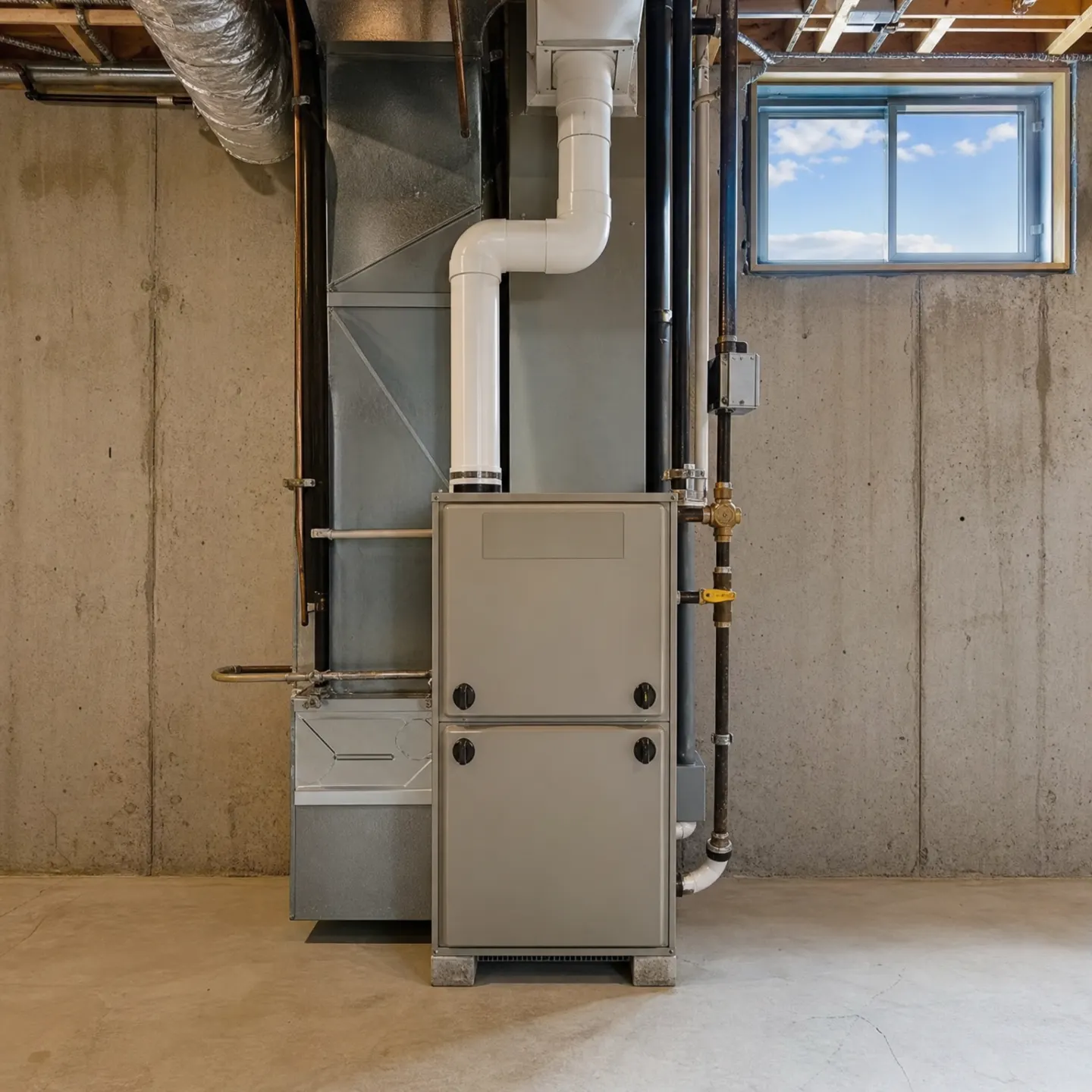
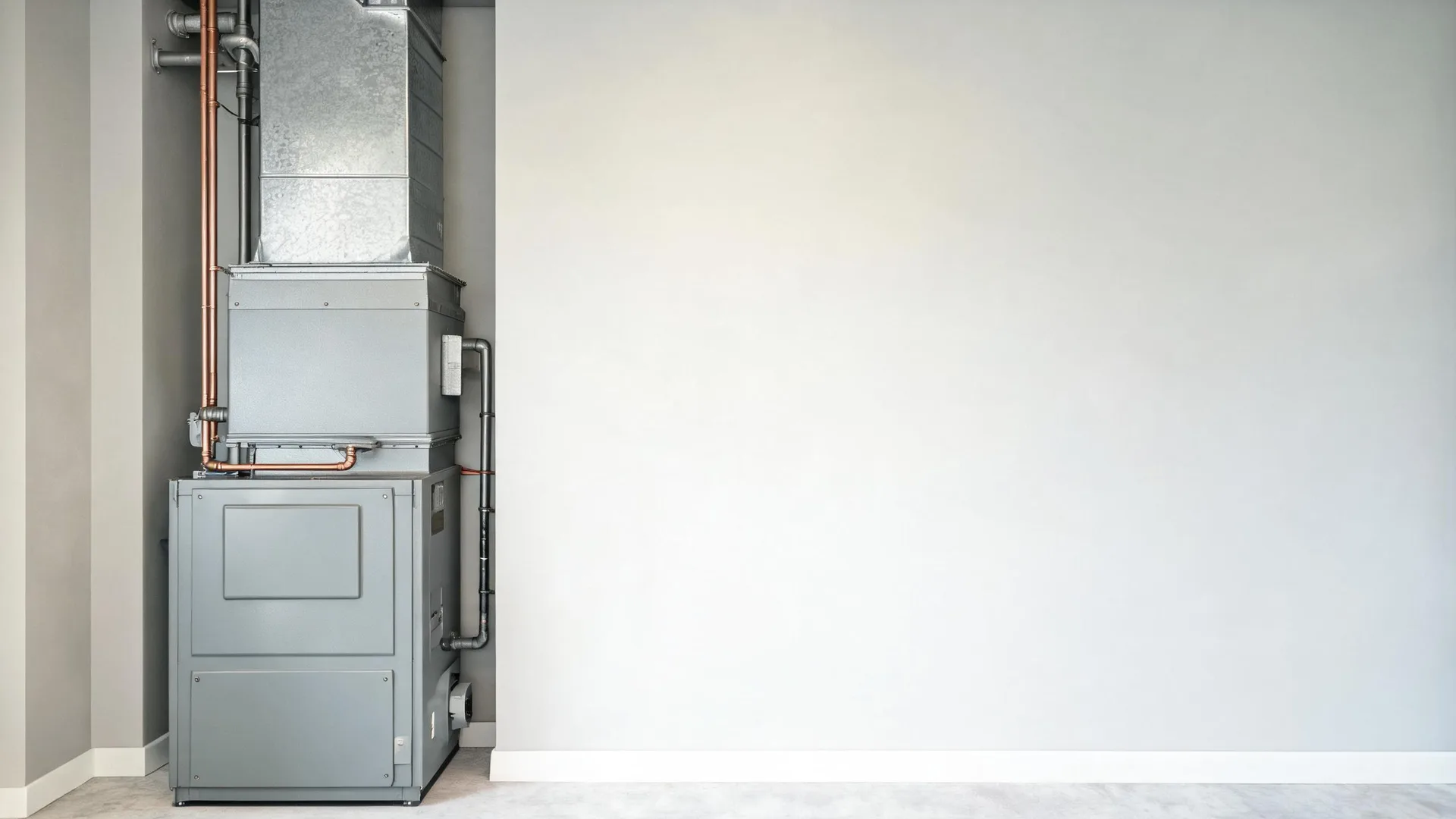
An unfinished basement containing a gray HVAC furnace with ductwork, exposed wooden joists, a concrete floor, and miscellaneous clutter in one corner.

Furnace Installation in Pagosa Springs, CO

Tell us about the job

Takes about a minute. No obligation.

Step 1 of 3: Equipment

Gas is the common fuel here

Utility gas heats 40.3% of homes in Archuleta County, more than any other fuel. Bottled or LP gas heats another 31.8%. A new furnace here is almost always replacing a gas furnace, not introducing something new to the house.
That makes the gas line the starting point

If your home already runs on gas, the gas line, the vent and the flue are sized for a furnace and likely stay as they are. Swapping in a new furnace that matches what's there is usually simpler than switching fuels, which would mean new venting or new supply lines.

10 months
September through June, your furnace is on duty
13°F
the average winter night it heats against
80% AFUE
the federal minimum any new unit must meet
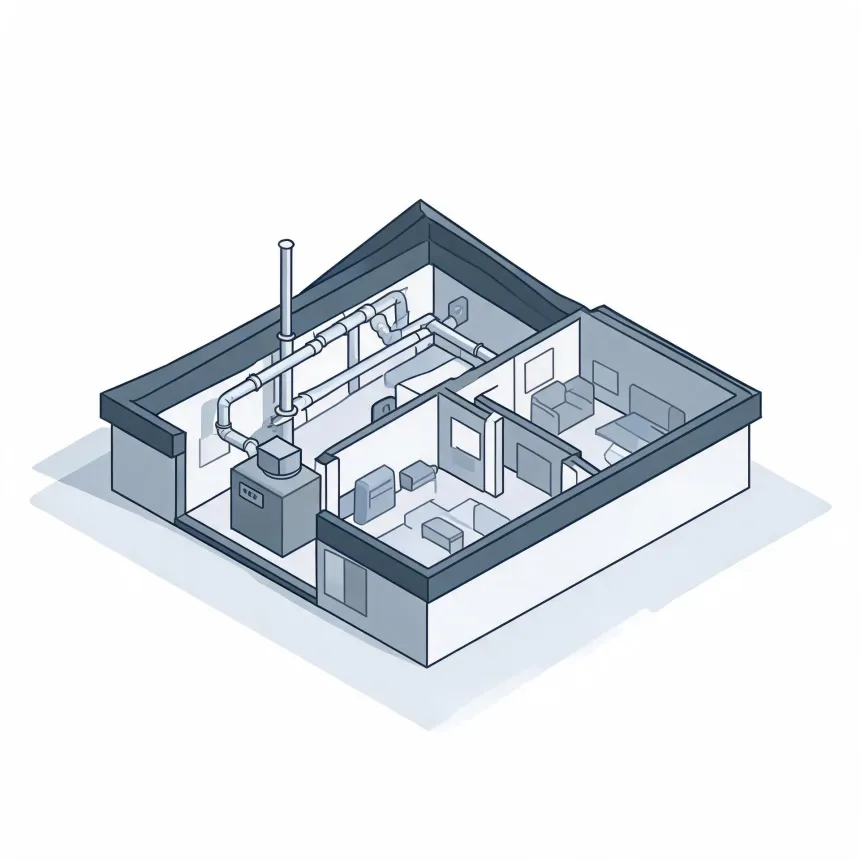
Isometric line illustration of a cutaway building interior showing a furnace unit with a flue pipe and ductwork running along the ceiling, plus adjacent rooms with simplified furniture.
Your furnace works hardest from November through April.

NOAA nClimDiv, 1991–2020 normals

A furnace that's too big for the house turns on and off more than it should.

Short cycling like that wears out parts faster and leaves rooms feeling uneven anyway.

Heat starts in September here. Have the new furnace in before then.

Heat runs September through June
Winter nights average 13°F
123 winter storms from 2015 to 2024
The right size, nothing moreNatural gas ran $10.09 per million Btu in Colorado in 2024. Sizing the furnace right is what keeps that bill in check.

Taking out the old furnace is part of the job, not an extra step tacked on. The installer disconnects the gas line, the venting and the ductwork, then removes the unit from the house. If it's in a closet or a tight mechanical space, sometimes it has to come apart to get out the door. The old venting gets checked too. A new furnace often burns gas more efficiently than what it's replacing, and a flue sized for the old unit isn't automatically right for the new one. Whatever gets hauled away, the gas line and duct connections left behind need to be sealed and tested before the new furnace goes in.

A furnace built for ten months of heat a year

Heat is on here about ten months of the year, and overnight lows average 13°F through December, January and February. Winter storms have hit the county 123 times in the last ten years. A furnace installed here runs harder and longer than one in most places. Get the sizing right and the house stays even, winter after winter.

Find a contractor
A gray gas furnace with attached ductwork and piping installed in an unfinished concrete basement.

What to ask when the furnace runs nearly all year

Ask what the furnace is staged for. A single-stage furnace fires at full output every time it kicks on, then shuts off completely. A furnace that stages down can hold a lower flame for a longer stretch instead, which means fewer full starts over a season of hard use. Ask about the blower motor too. One that ramps up and down with demand puts less strain on itself than one that only knows on and off. Ask what the heat exchanger is made of and how it's warrantied, since that part takes the most heat over the life of the furnace and is the expensive one to replace. None of this shows up on the price tag, but it's what decides whether the furnace is still running easily a decade from now or straining to keep up.

Size and stage set the equipment cost

A bigger furnace costs more, but bigger isn't the goal, matched is. A furnace that stages its flame or ramps its blower costs more than a single-stage unit with a fixed-speed motor, because there's more built into it to control. That difference shows up in the equipment price before anyone touches the house.

The venting decides the labor

If the new furnace burns more efficiently than the old one, the flue that served the old unit may not be correct for the new one. That can mean new venting material, not just a reconnect. Whether the furnace sits in a closet, an attic or a basement changes how much the installer has to work around to get the old one out and the new one in.

A gray forced-air furnace with sheet-metal ductwork stands in an unfinished basement with exposed wooden joists, concrete walls, and a hanging incandescent bulb.

A high-efficiency gas furnace would save about $100 a year to run in Archuleta County compared with a gas furnace.

  • A high-efficiency gas furnace$490 a year
  • A gas furnace$590 a year

Estimates for a typical Archuleta County home, from EIA household energy data, Colorado fuel prices and NOAA climate normals. Your home will differ.

Installation day starts with the house going cold for a while. The old furnace has to come out before the new one goes in, and until the new one is connected and tested, there's no heat running. A good installer plans around that instead of leaving it to chance, working the disconnect and the new hookup in the same visit so the gap is short. Expect some noise and some doors propped open while equipment moves in and out. Before anyone leaves, the furnace gets fired up and run through its paces, checked for the right gas pressure, the right airflow, and a clean flame, not just switched on and left. The last step is usually a walkthrough, where the installer shows what the thermostat does now and what to watch for in the first few weeks.