

A row of illuminated timber-frame and stone houses photographed at dusk, with evergreen trees and a mountain range in the background.

Furnace Installation in Delta, CO

Tell us about the job

Takes about a minute. No obligation.

Step 1 of 3: Equipment

Gas heats just over half the homes in Delta County, more than any other fuel. Electricity and propane split most of what's left, at 17.0 and 16.2 percent. If your house already has a gas line run to it, a gas furnace is usually the straightforward replacement, since the venting and fuel supply are already worked out. Swapping in the same fuel type means the contractor is working with a known setup instead of adding gas service or rewiring for electric. If you're not sure which fuel your current system runs on, check the furnace itself or the meter outside before you start comparing quotes.

9 months
September through May, your furnace is on duty
17°F
the average winter night it heats against
51%
of homes here heat with gas, so most furnaces here burn gas
80% AFUE
the federal minimum any new unit must meet
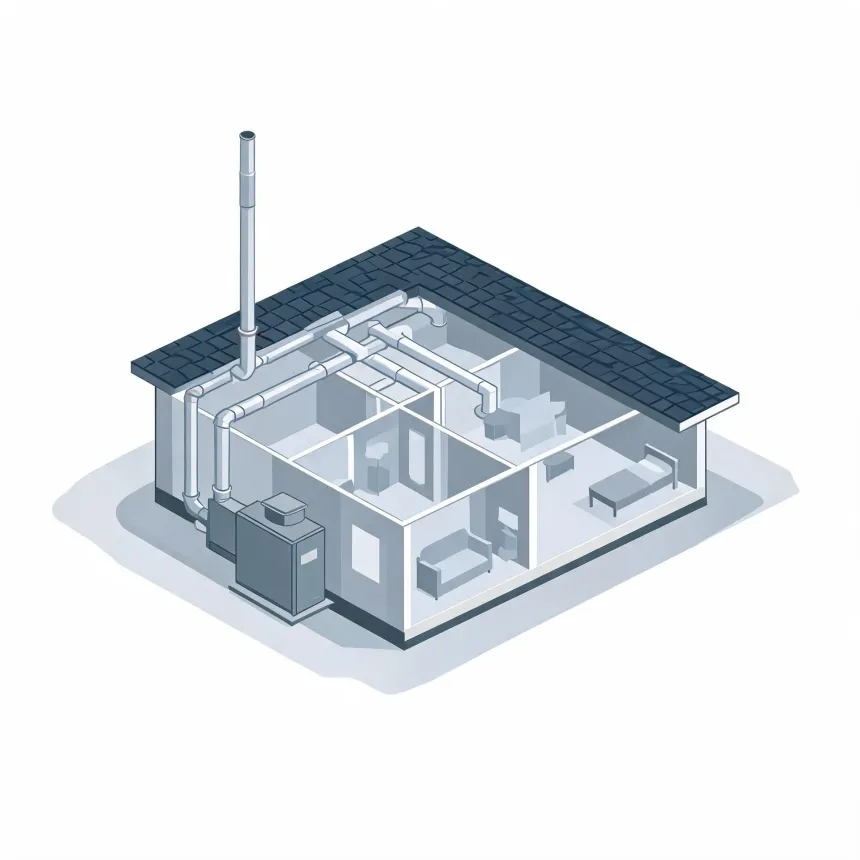
Isometric cutaway illustration of a single-story house with a dark shingled roof, showing interior rooms with furniture, a ducted air distribution system, a tall vertical flue pipe, and a gray furnace unit outside the wall.
Your furnace works hardest from November through April.

NOAA nClimDiv, 1991–2020 normals

Delta County sees winter storms almost every month of the year, 192 of them between 2015 and 2024.

A correctly sized furnace handles that without needing to be oversized for the occasional bad stretch.

Nine months of heat, down to 17 below zero, through 192 winter storms

Heat runs September through May
Winter nights average 17°F
192 winter storms from 2015 to 2024

A furnace sized to Delta's winters doesn't need to be bigger than that. Once it's matched to your house, going up a size won't heat it faster, it just cycles on and off more and wears parts sooner. Efficiency is worth getting right too, since gas ran $10.09 per million Btu across Colorado in 2024, and that cost doesn't change based on where in the state you live. A mid-efficiency and a high-efficiency furnace both heat the house fine here. The difference shows up over years of gas bills, not on the worst night of the year.

The right size, nothing more

Half the homes in Delta County were built in 1979 or earlier, half in 1979 or later, and that split doesn't change what a furnace here needs to do. Mobile homes make up 12.5 percent of the county's housing, and the same rule holds for those too. Match the furnace to the house and the job is done right, no matter which kind of house it is.

Find a contractor
A man in a dark shirt and tan work pants, seen from behind, climbs stone steps toward a navy front door while carrying a waxed canvas tool tote, with a potted lavender plant beside the entry.
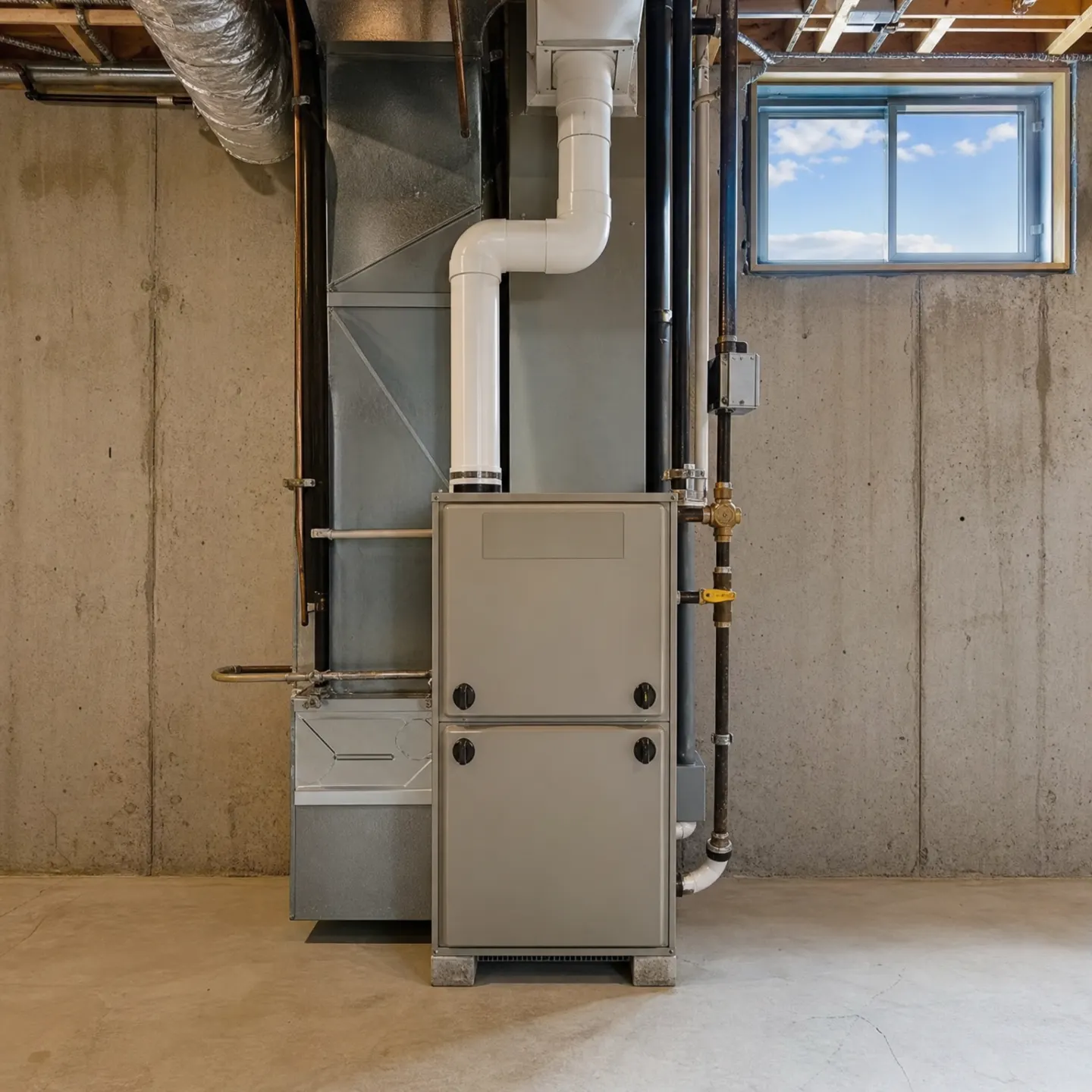
A gray gas furnace with attached ductwork and piping installed in an unfinished concrete basement.

Replace it in August, before the nine months start

Heat runs here from September through May, nine months of the year. August is the month before that starts, and it's the month to get a new furnace in. A contractor has room to size the job right and order the unit that fits your house, instead of fitting whatever's in stock into a furnace that quit in the middle of winter. Once September comes the old one is working every day until May.

The furnace is one part of the job

The unit itself is only part of what gets installed. The venting has to be run correctly for that furnace's exhaust, the ductwork has to connect and often gets modified or extended to match the new unit, and the gas line and electrical hookup have to suit what the furnace needs. A straightforward swap where the old ducts and vent already fit is a different job than one where something has to be rebuilt to make the new furnace work.

Efficiency changes what's involved

A high-efficiency furnace vents differently than a mid-efficiency one, usually through a wall or sidewall vent instead of a chimney, and that means new venting material and sometimes a new path to the outside. It also produces condensation that has to drain somewhere. None of that makes the furnace harder to run once it's in, but it does add steps to putting it in that a straight swap doesn't need.

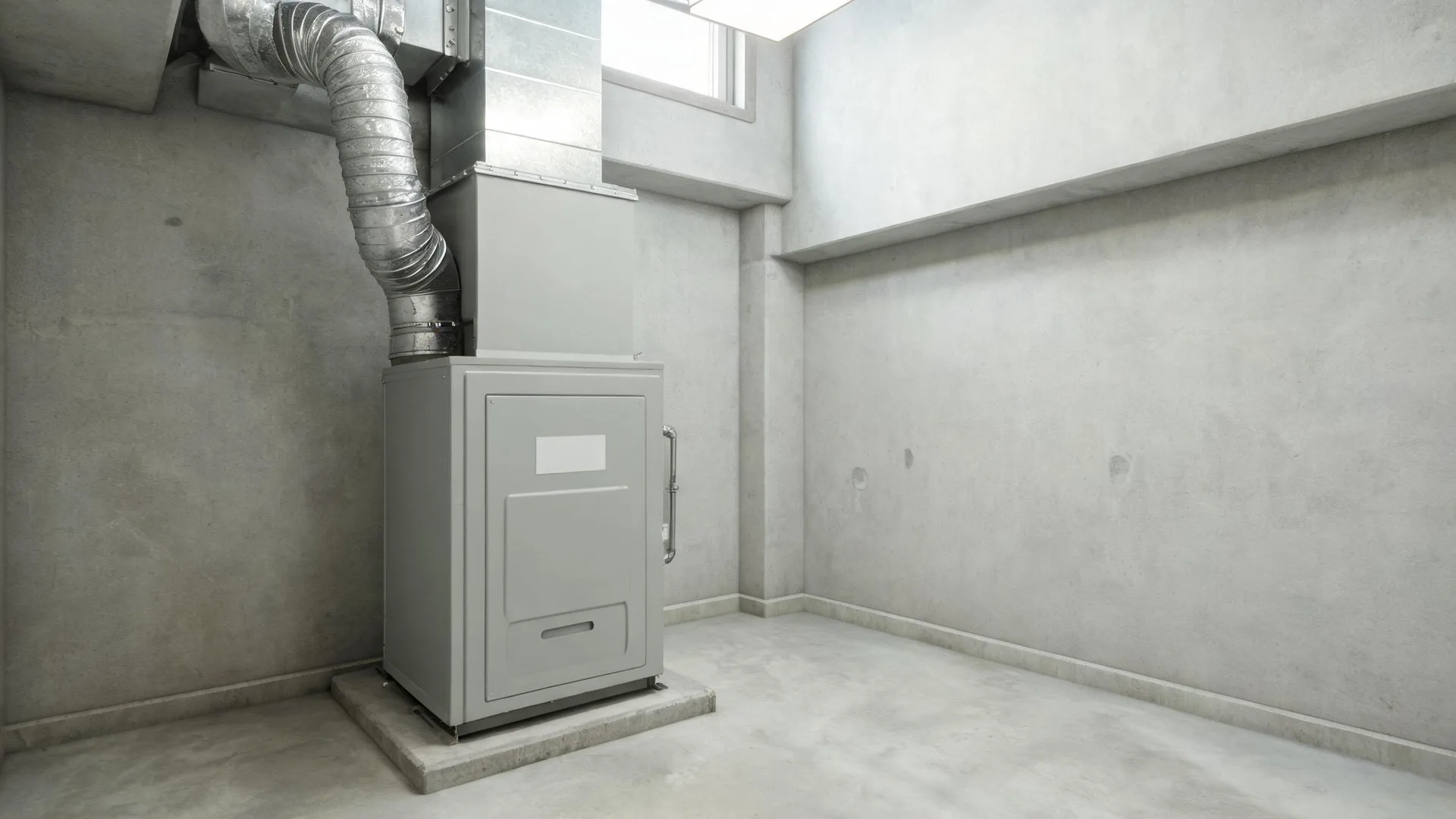
An unfinished basement featuring a grey forced-air furnace with metal ductwork, concrete block walls, exposed wooden joists, and a single hanging bare bulb.

A high-efficiency gas furnace would save about $90 a year to run in Delta County compared with a gas furnace.

  • A high-efficiency gas furnace$430 a year
  • A gas furnace$520 a year

Estimates for a typical Delta County home, from EIA household energy data, Colorado fuel prices and NOAA climate normals. Your home will differ.

Installation day starts with the old furnace coming out, then the new one gets set in place and leveled before anything is connected. The gas line, vent, ductwork and electrical hookup all get tied in one at a time, and each connection gets checked as it's made rather than all at once at the end. Once it's running, a good installer checks the gas pressure, checks the temperature rise through the furnace, and makes sure the airflow matches what that unit is built for. A furnace that's never had its gas pressure set correctly can run fine for years and still waste fuel or wear out early. The last step is testing the thermostat and running a full cycle, start to shutoff, before anyone calls it done. On a straightforward swap this is one day's work. If the venting or ductwork needs rebuilding to fit the new unit, expect it to run longer.