



A gravel road lined by a split-rail log fence on the left and dark-sided cabins with metal roofs on the right, surrounded by tall conifers under an overcast sky.

Heat Pump Installation in Delta, CO

Tell us about the job

Takes about a minute. No obligation.

Step 1 of 3: Equipment

Gas heats just over half the homes in Delta County, with electricity and propane splitting most of the rest. A heat pump going into a gas-heated house usually works alongside the furnace rather than replacing it, switching over to gas when the outdoor temperature drops low enough that the heat pump loses its edge. That setup, called a dual fuel system, lets the contractor size the heat pump for the shoulder seasons and summer cooling while the furnace carries the coldest stretches of winter. If your home already runs on electric heat, the install looks different, since the heat pump takes over the job the electric furnace or baseboards were doing. Either way, the existing ductwork and fuel line matter as much as the heat pump itself in deciding how the job gets done.

9 months
September through May, your system heats
2 months
July through August, it cools
17°F
the average winter night it heats against
82°F
the average summer afternoon it cools against
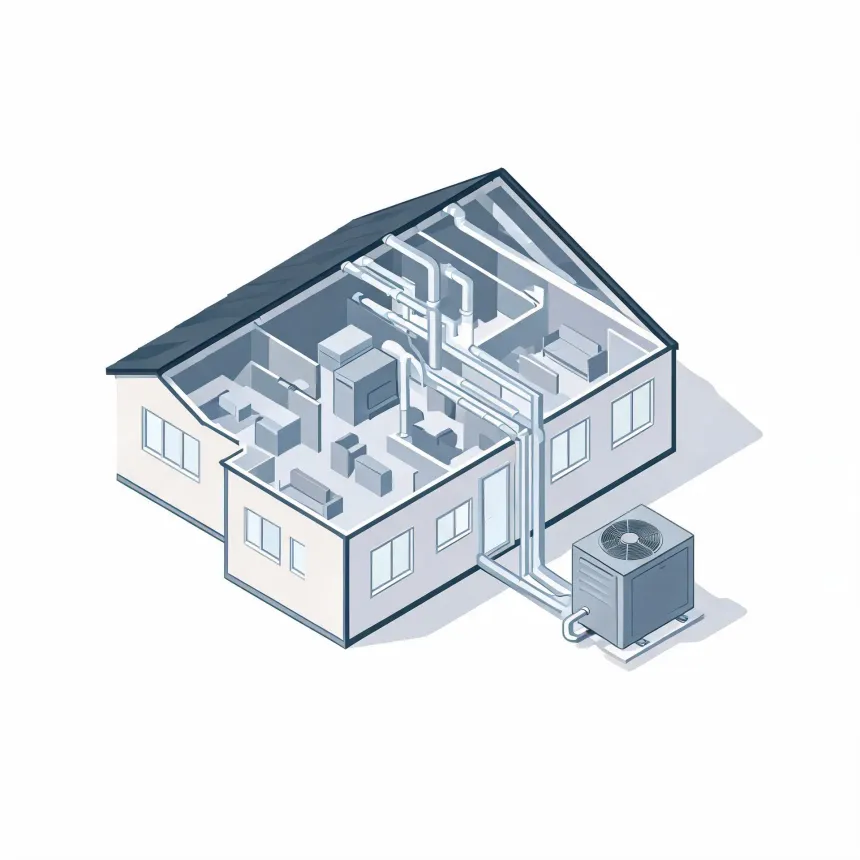
Isometric illustration of a cutaway single-story house showing interior ductwork and vents connected to an outdoor condenser unit beside the building, on a white background.
Your system heats September through May and cools July through August.

NOAA nClimDiv, 1991–2020 normals

Delta County doesn't need an oversized heat pump to earn its keep.

A correctly sized unit handles the summer heat and shoulder seasons here without a premium price tag.

Nine months of heat, two months of cooling, and a short window to get it in before either one starts

Cooling runs July through August
Heat runs September through May
42 damaging wind events from 2015 to 2024
Sized for what this county actually getsDry summer heat, hard winters, and no storm pattern here that calls for anything bigger than standard.

Delta County falls under zone 5B in the 2021 energy code, a cool, dry zone where the heating load matters more than the cooling load. Any split-system heat pump installed here has to meet the federal minimum for that climate: at least 14.3 Btu of heat moved per watt-hour of electricity over the summer, and at least 7.5 Btu per watt-hour over the winter. Those numbers set a floor, not a target, so a contractor sizing a system for this county is already working above them. The rating applies to equipment made from January 1, 2023 onward, so it covers what's currently on the market.

Go with the standard fit

A standard size and efficiency fit fine here. There's no local reason to go bigger or pricier.

Find a contractor
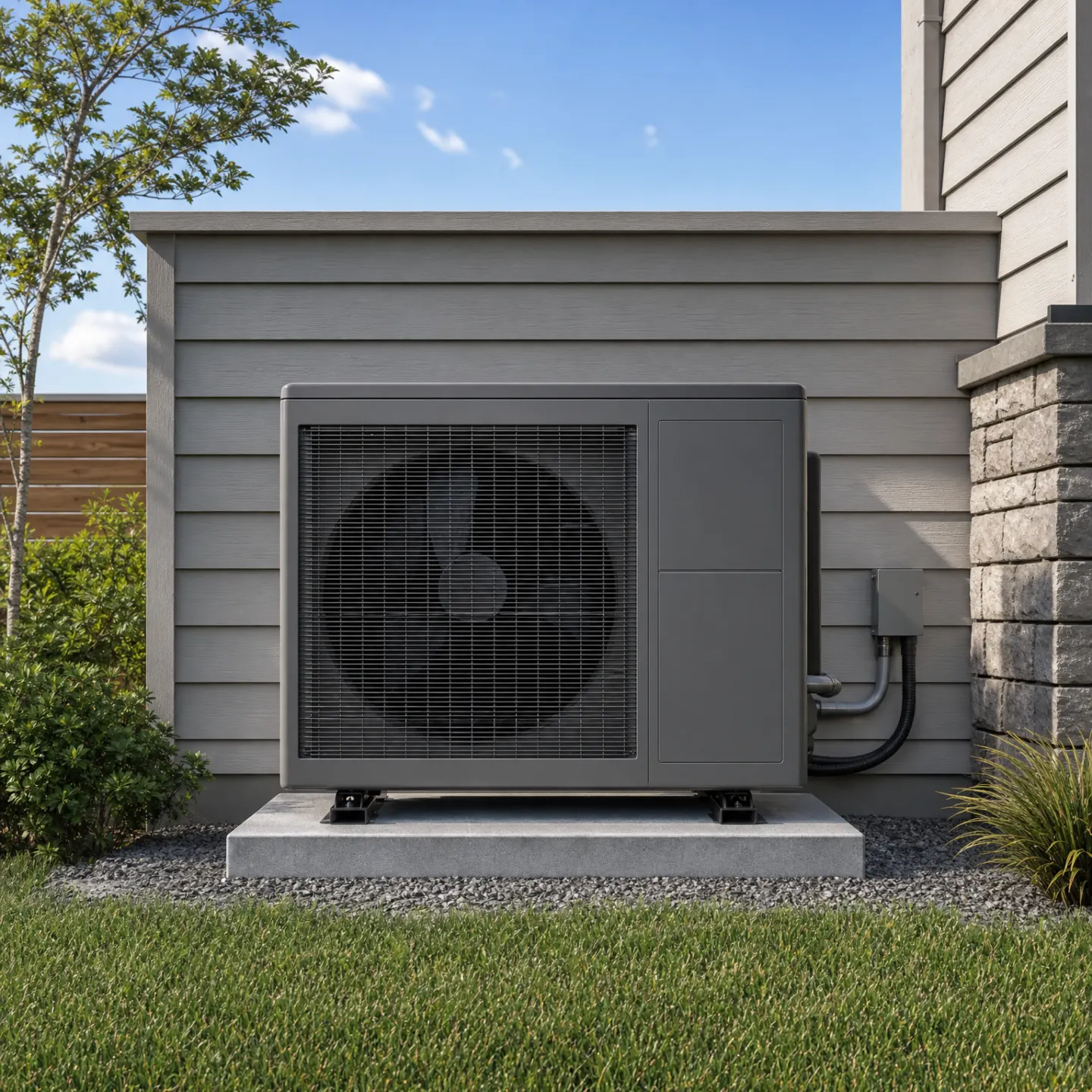
A gray heat pump outdoor unit mounted on a concrete pad next to a residential house with lap siding and stone accents.

Years of running add up, whatever the house is built on

A heat pump installed here runs most months of the year, not just a few weeks in summer. Once it's in, it's working through the cold months and the hot ones alike, year after year. Half the homes in Delta County were built in 1979 or earlier, and a house that age may still have the original ductwork or an older electrical panel, worth a contractor's look before the new unit gets sized. Mobile homes make up about one in eight homes in the county, and those call for a heat pump rated for mobile home installation rather than a standard split system. Outside of that, there's nothing about the age of the housing stock here that calls for a bigger unit, only for matching it to what the ducts and the panel can carry.

Ask what it can still deliver at the coldest point

Every heat pump loses capacity as the outdoor temperature drops, and the spec sheet will show output at a low-temperature rating point, not just at mild conditions. Ask to see that number, and ask how the contractor is accounting for it in the sizing. A unit that looks right on a summer cooling number can still come up short on the coldest night if nobody checked the other end of the curve.
Ask how the backup heat is set to take over

In a dual fuel setup, something has to decide when the furnace takes over from the heat pump, and that's a setting, not a guess. Ask where the switchover point is set and who sets it. Set too high, the furnace runs more than it needs to. Set too low, the heat pump keeps working past where it's actually efficient.

Installation cost comes down to what has to change to make the heat pump work, not just the unit itself. A contractor has to size the outdoor unit and the indoor coil to match, run new refrigerant lines if the old ones won't work for a heat pump, and check whether the existing ductwork can handle the airflow a heat pump needs to move. In a dual fuel setup, there's also the added work of tying the heat pump into the furnace's controls so the two hand off to each other correctly. If the electrical panel doesn't have the capacity for a new circuit, that's its own job before the heat pump goes in at all. None of this is optional or padding. Skipping it is how a system ends up underperforming no matter how good the equipment is.

Installation starts with a load calculation, not a truck full of equipment. The contractor measures the house, checks insulation and window area, and figures out how much heat has to move in and out to keep it comfortable. That number decides the size of the outdoor unit and indoor coil, not the size of the system being replaced. Once that's set, the crew places the outdoor unit on a pad or bracket, runs refrigerant lines to the indoor coil, and connects the electrical circuit the heat pump needs to run. If ductwork is already in place, they'll check it for leaks and airflow before tying the new coil into it. The system gets charged with refrigerant, tested under a run cycle, and checked for correct airflow and temperature split before anyone calls the job done.