



A snow-covered small-town street at dusk, with lit white clapboard houses, bare trees, and a grain elevator silhouetted against an orange and blue twilight sky.

Heat Pump Installation in La Junta, CO

Tell us about the job

Takes about a minute. No obligation.

Step 1 of 3: Equipment

Gas heats 77.6% of the homes in Otero County, and most of the rest run on electricity or bottled and tank propane. A heat pump going into a gas-heated home usually pairs with the furnace rather than replacing it, switching over to electric heat in milder weather and letting the furnace carry the coldest stretches of winter. How the two are wired together affects both comfort and the power bill, so it's worth asking a contractor to walk through that setup directly. A home already heating with electricity is a simpler case, since the heat pump takes over the job outright. Either way, what's already installed should drive the decision, not the other way around.

7 months
October through April, your system heats
4 months
June through September, it cools
19°F
the average winter night it heats against
91°F
the average summer afternoon it cools against
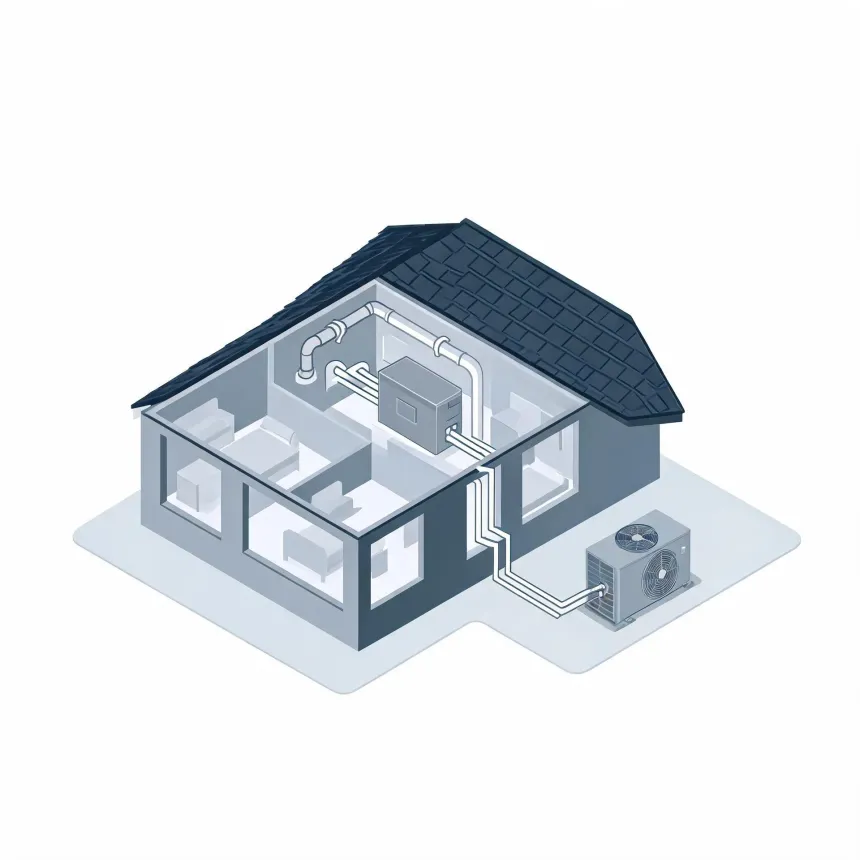
Isometric cutaway illustration of a gray house showing interior rooms, a central air handler with ducts in the attic, and refrigerant lines running to an outdoor condenser unit beside the building.
Your system heats October through April and cools June through September.

NOAA nClimDiv, 1991–2020 normals

Heat goes on here in October, seven months of the year.

Get a heat pump installed before September and it's running before that first cold morning, not during it.

Half these homes were built by 1958, and the new system has to work in the one that's actually there

Half the homes here were built by 1958
82 damaging wind events from 2015 to 2024
54 hail events from 2015 to 2024
A standard system meets this county fineElectricity here runs 16.78 cents a kilowatt-hour, nothing that calls for an oversized or premium unit.

A standard heat pump sized and rated for this climate holds up fine here. Otero County doesn't push equipment past what it's built for. Hail hit the county 54 times between 2015 and 2024, and damaging wind 82 times in that same stretch, so the outdoor unit should sit somewhere it won't take a direct hit from falling branches or debris. That's a placement question, not a reason to size up. Summers here aren't the issue. The dew point averages only 50°F through June, July and August, so the air doesn't carry much moisture for the system to pull out, and cooling load stays modest. There's no local condition here that calls for oversizing or paying for a higher tier than the house needs.

Any system going in here has to meet zone 4B's minimum

Otero County falls under zone 4B of the energy code, and any split-system heat pump installed here has to clear the federal minimum for that zone: 14.3 for cooling, 7.5 for heating. That's the floor, not a suggestion, and it narrows what a contractor can put in. A federal tax credit is available on qualifying equipment, which offsets part of the cost of meeting that standard.

Find a contractor
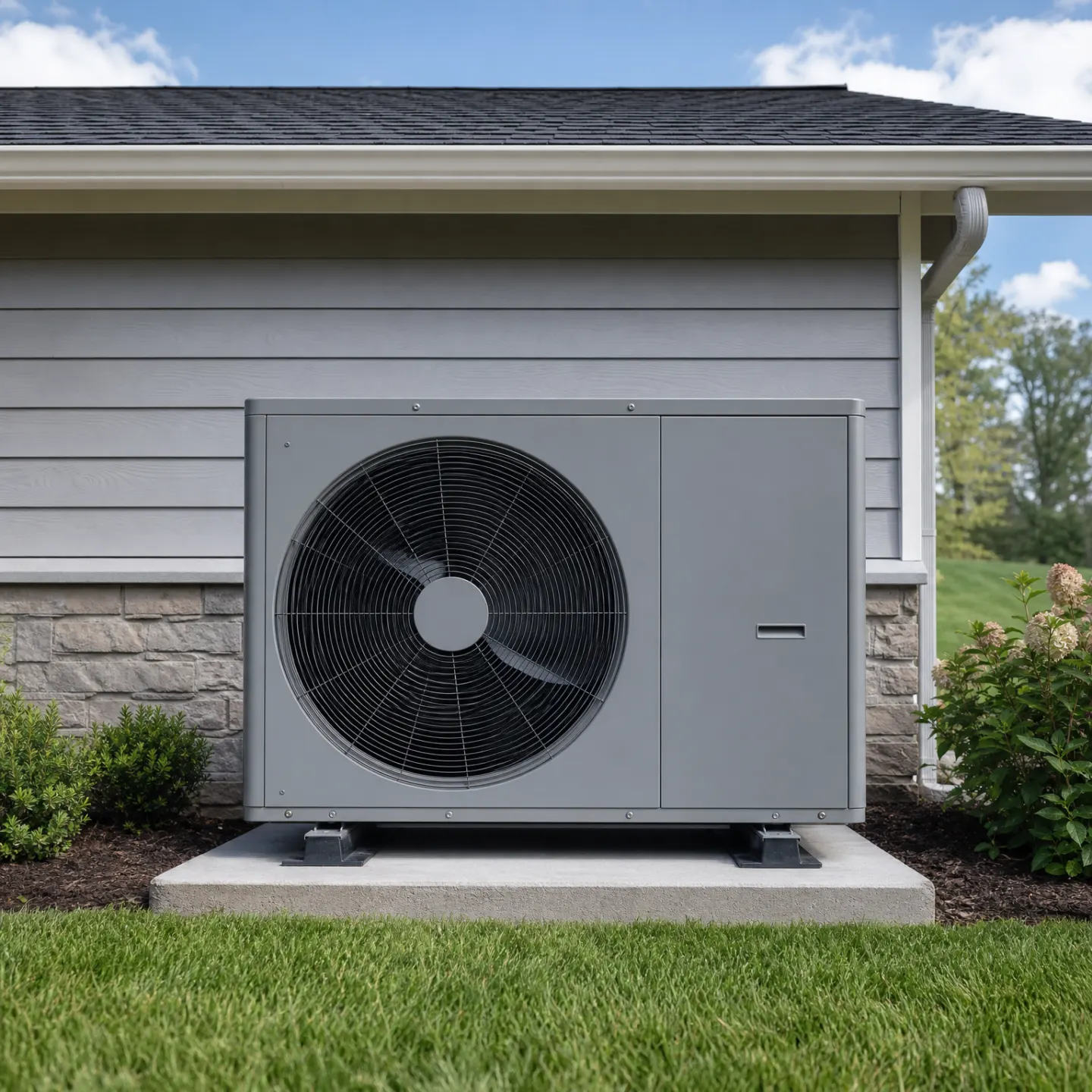
A gray outdoor HVAC unit mounted on a concrete pad beside a house with gray lap siding and a stone foundation.

Size it to the house, not the decade

Get a load calculation done on the actual house, not a stand-in for its age or size. In a home built around 1958 or earlier, the contractor sizing your heat pump needs to know what the ductwork can move and where the house loses heat, and the only way to know that is to look at this one. That number, not the year the house went up, is what tells the contractor which unit to put in.

Sizing comes from a load calculation, not a chart

A contractor works out the right size by measuring the house: the square footage, the insulation, the windows, how many walls face outside. That calculation says how much heat the house loses on the coldest day and how much it gains on the hottest, and the heat pump gets matched to that number. Going by square footage alone, or by what size the old system happened to be, skips the part that actually matters.
Wrong either direction causes real problems

A heat pump too small for the house runs constantly and still can't keep up when the temperature drops, leaning on backup heat more than it should. One too large cools the air fast without running long enough to pull moisture out of it, so the house feels clammy even though the thermostat reads satisfied. Matching output to the house is what makes the system work the way it's supposed to, in both directions.

Comparing quotes gets easier once you know what questions actually separate one system from another. Ask for the sizing numbers directly: the heating and cooling capacity, and the load calculation the contractor used to get there. Ask what happens at the coldest end, the point where a heat pump's output drops off and backup heat has to take over, because every system has that threshold and a contractor should be able to name it for the equipment they're proposing. Ask whether the quote includes a line set and whether the existing one can be reused or needs replacing, since that affects how the installation goes, not just what it costs. If ductwork is part of the job, ask whether they tested it or are going on a guess. Two quotes with the same equipment can still mean two very different installations.

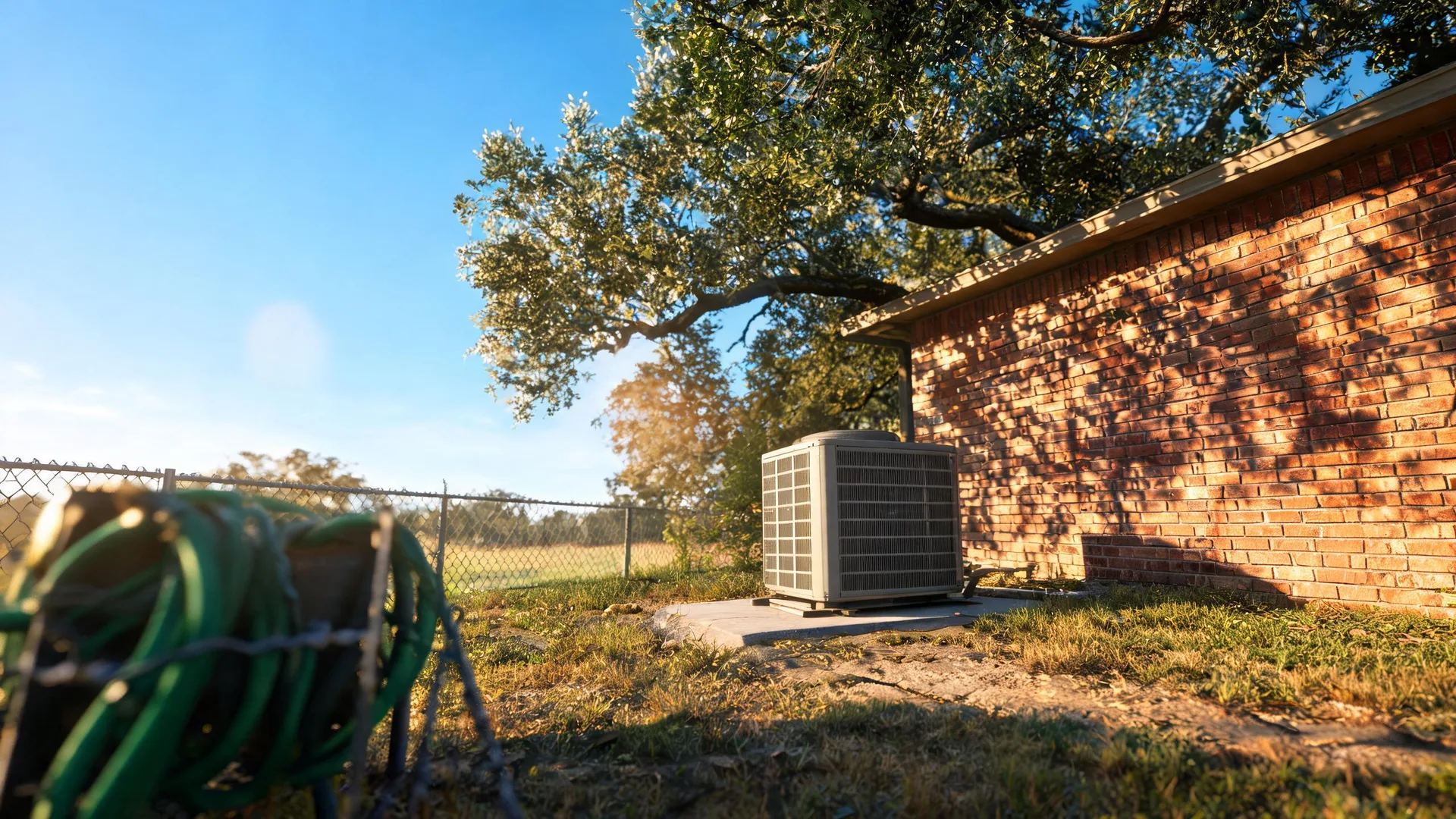
Severe weather here is more about the outdoor unit's placement and durability than its size. Otero County saw 160 severe weather events between 2015 and 2024, including 82 damaging wind events and 54 hail events. Seven tornadoes touched down in that same stretch, and winter storms hit the county 17 times. None of that changes what capacity the heat pump needs to be. It does mean the outdoor unit should go somewhere sheltered from wind-blown debris and falling ice, and that it should be secured the way any outdoor equipment in a place like this should be. A standard unit rated for zone 4B handles the temperature swings. What it needs from the installer is a solid mount and a spot that isn't exposed to the first branch that comes down.