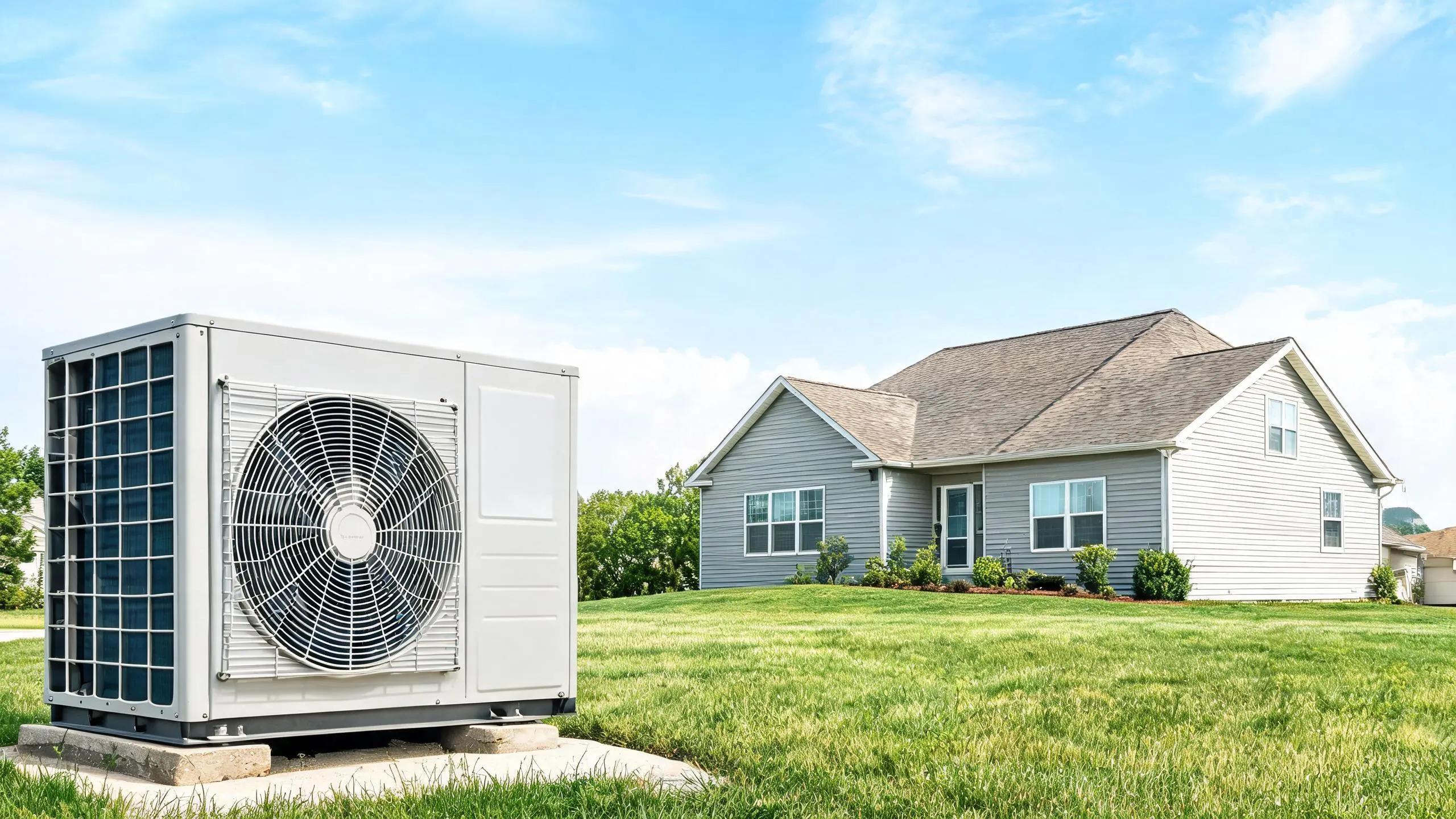




An outdoor HVAC condenser unit on a concrete pad in front of a single-story house with gray siding and a shingle roof.

Heat Pump Installation in Trinidad, CO

Tell us about the job

Takes about a minute. No obligation.

Step 1 of 3: Equipment

Las Animas County logged 390 severe weather events between 2015 and 2024. Most of that was wind and winter storms, 151 damaging wind events and 166 heavy snow, ice and blizzard events over that same stretch, with 65 hail events and 8 tornadoes mixed in. A heat pump's outdoor unit sits outside through all of it, taking wind-blown debris and hail same as anything else on your property. And statewide, 13% of Colorado households lost power for a day or more in 2024. A heat pump needs power to run, for heat as much as for cooling, so where the outdoor unit goes and what backs it up both matter before the ground freezes.

8 months
October through May, your system heats
3 months
June through August, it cools
20°F
the average winter night it heats against
86°F
the average summer afternoon it cools against
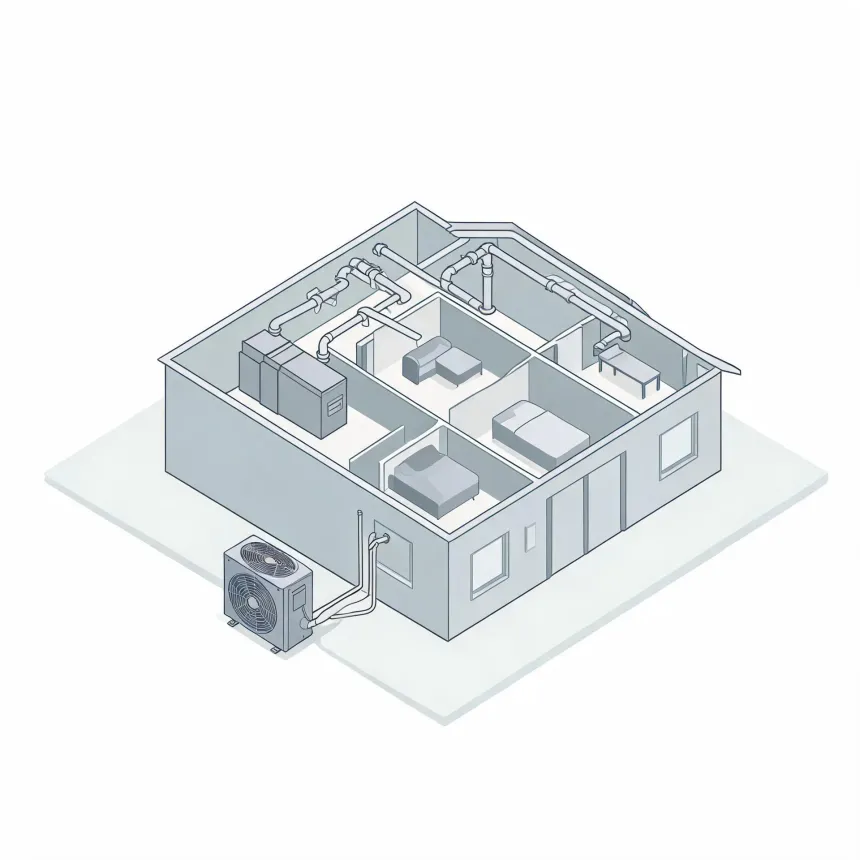
Isometric line illustration of a cutaway single-story house showing interior rooms with beds and furniture, ceiling ductwork connected to an indoor air handler, and an outdoor condenser unit linked by refrigerant lines.
Your system heats October through May and cools June through August.

NOAA nClimDiv, 1991–2020 normals

Electricity here runs 18.43 cents per kilowatt-hour, more than most of the country pays.

A heat pump that's sized and installed right earns back that difference every month it runs.

Wind, hail and winter storms, and the outdoor unit takes all of it

151 damaging wind events from 2015 to 2024
65 hail events from 2015 to 2024
166 winter storms from 2015 to 2024
Half These Homes Predate the Heat Pump ItselfHalf the houses in Las Animas County were built in 1972 or earlier, and a system going in now has to match the house that's already there.

Las Animas County falls in climate zone 4B, which asks real work of both your furnace and your air conditioning. Any split-system heat pump installed here has to meet a federal minimum: at least 14.3 Btu of cooling for every watt-hour it draws over the summer, and at least 7.5 Btu of heat for every watt-hour over the winter. That rule applies to equipment built from January 2023 on, so it already sets the floor for what a contractor can install. It also narrows the field. Not every unit on the market clears that bar, and the ones that do are built to hold their efficiency through a full range of temperatures, not just mild weather. A federal tax credit is available on qualifying installations, on top of meeting that standard.

Plan for the outage before you plan for the weather

Talk to your contractor about where the outdoor unit goes before it's installed, not after. A spot with some cover from wind and hail beats one that's exposed, and it still needs clearance on all sides to run right. Ask what happens to your heat and hot water if the power goes out, and what backup options exist for this installation. Both are easier to settle on paper now than to fix once the unit is in the ground.

Find a contractor
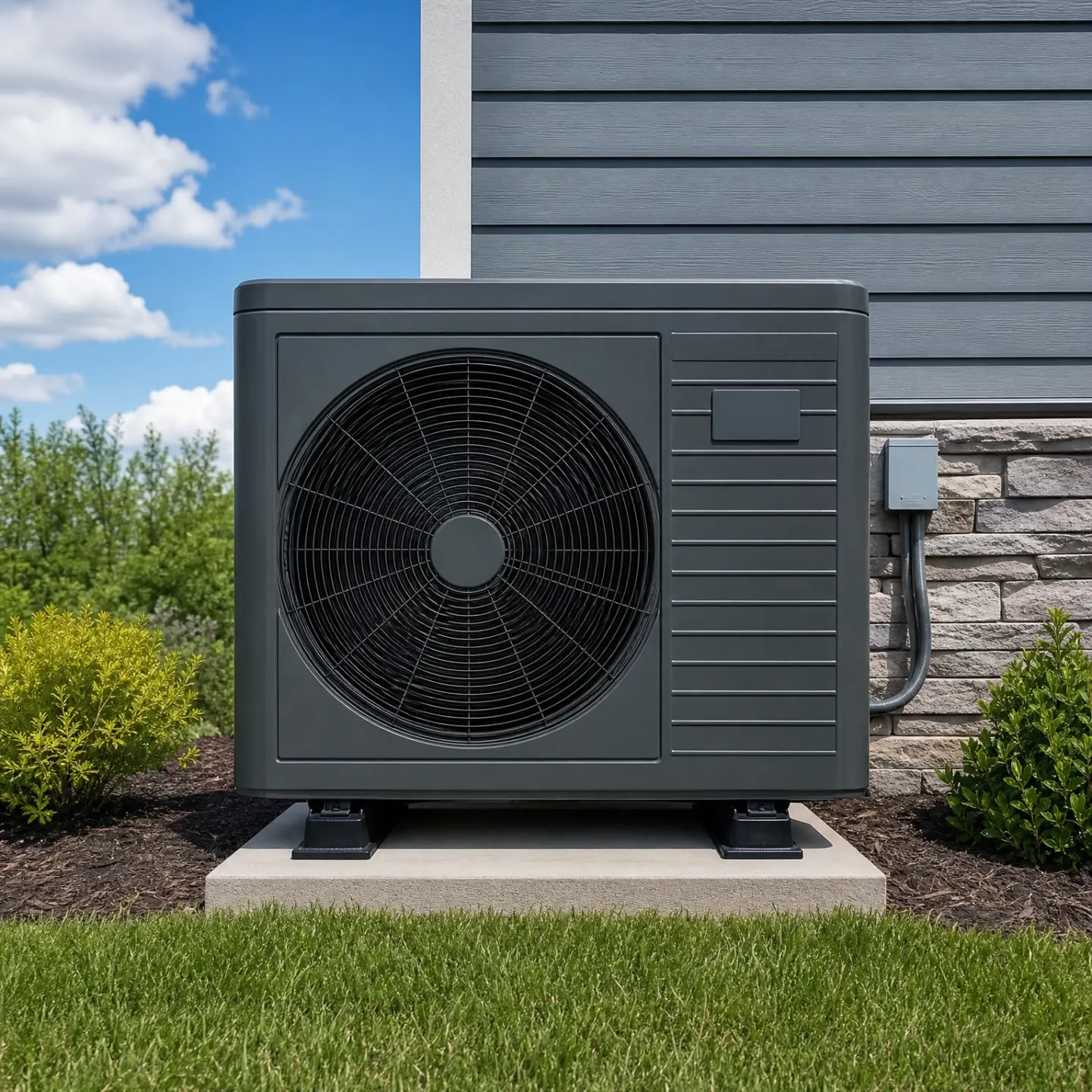
A dark gray heat pump unit mounted on a concrete pad next to a house with gray siding and a stone veneer wall.

Eight Months of Heat, Three of Cooling

Heat runs here from October through May, eight months out of twelve. Cooling is the short side of the year, June through August. An install finished in September beats the first cold night instead of chasing it, and a unit going in come May is ready before anyone needs it to cool the house down. Either way, getting it done the month before gives a contractor time to size it right and set the outdoor unit somewhere it can take the weather, instead of working around whatever's already failed.

The rating is measured over a season, not a moment

The efficiency number on the label comes from testing the unit across a range of outdoor temperatures, not at one ideal setting. A heat pump works harder for every degree of difference between outside air and the temperature you've set inside. The rating tells you how that unit performs on average over a full season of that swing, not what it does on the mildest day.
A higher rating only pays off if the unit is sized right

A heat pump that's too big for the house will short cycle, turning on and off before it finishes a full heating or cooling run. One that's too small will run constantly and still fall behind. Either way, the efficiency rating on the label stops meaning much, because the number assumes the equipment is matched to the space it's heating and cooling. Sizing the unit to the house is what lets that rating actually show up in how it runs.

If a gas furnace is coming out, the old ductwork usually stays and gets tied into the new system, so the contractor has to check it can handle what a heat pump needs to move. The furnace itself gets disconnected and hauled off, along with the gas line capped if nothing else in the house uses it. If the old setup was central air paired with a furnace, that outdoor condenser comes out too, along with the old refrigerant lines, and those lines often get replaced rather than reused since a heat pump runs refrigerant through them year-round instead of just in summer. Any old thermostat gets swapped for one that can run heat pump controls, since the staging is different from a straight gas furnace. Whatever refrigerant is left in the old system has to be recovered properly, not vented, and that's a licensed job, not a DIY step.

Gas heats close to half the homes in Las Animas County, 48.5%. Another 23.8% run on bottled or tank propane, so between the two, most houses here were built around a furnace and ductwork already in place. Electric heat sits at 15.6%, well behind both. A heat pump replacing a gas furnace fits into that same ductwork rather than starting from nothing, which is the simpler path when one is available. That's different from a straight swap, though. The furnace and its gas line come out, and the heat pump takes over both heating and cooling through the same ducts.