


A snow-covered small-town street at dusk, with lit white clapboard houses, bare trees, and a grain elevator silhouetted against an orange and blue twilight sky.

Furnace Repair in La Junta, CO

Tell us about the job

Takes about a minute. No obligation.

Step 1 of 3: Equipment

Furnaces in La Junta run from October through April, and overnight lows average 19°F in December and January. That's a normal winter workload, not an extreme one. A furnace that quits here is usually dealing with the same wear any furnace sees after years of regular cycling. A failing igniter, a dirty flame sensor, a clogged filter choking airflow. Winter storms roll through the county fairly often, 17 times over the last decade, but a storm doesn't break a furnace. It just means a furnace that was already due for a repair picks the worst night to show it.

7 months
October through April, your furnace is on duty
19°F
the average winter night it heats against
78%
of homes here heat with gas, so most furnaces here burn gas
17 winter storms
in ten years, the nights a failure hurts most
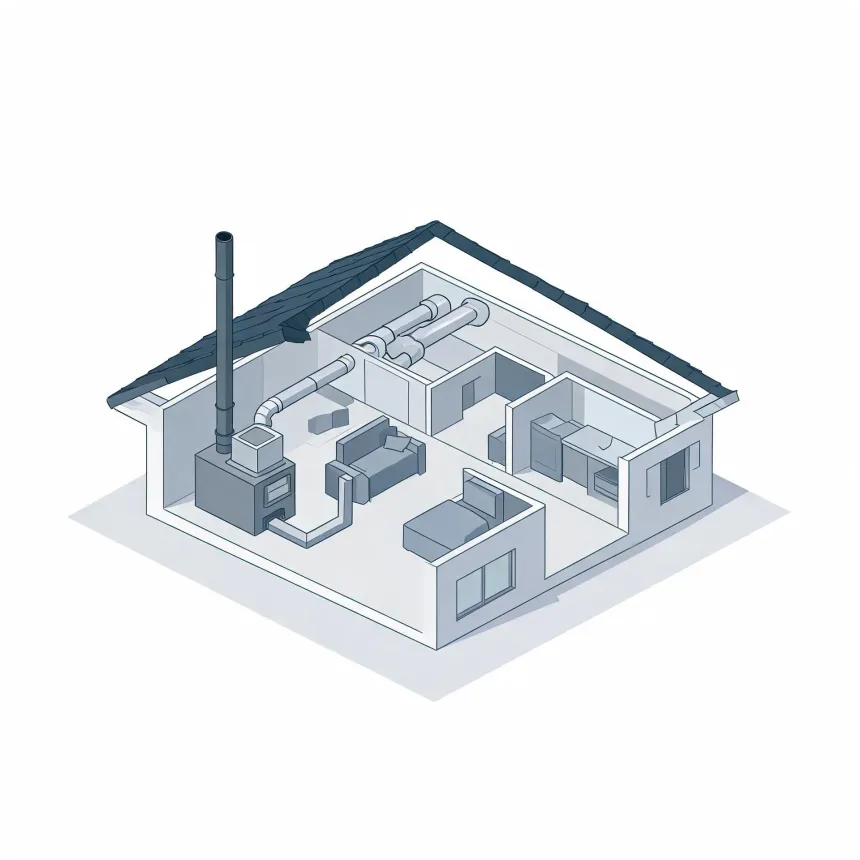
Isometric line illustration of a cutaway single-story house showing interior rooms with furniture, a furnace unit with a tall flue pipe, and connected ductwork running under the pitched roof.
Your furnace works hardest from November through March.

NOAA nClimDiv, 1991–2020 normals

September is the last quiet month before heat runs in La Junta.

A furnace with a weak igniter or a dirty flame sensor is still due for the same repair whether it gets done now or after it quits in October.

Half the furnaces here are working in houses built in 1958 or earlier

Half the homes here were built by 1958
Heat runs October through April
Winter nights average 19°F

La Junta gets its share of rough weather. Wind has hit the county 82 times over the past decade, hail 54 times. None of that reaches into the house and touches your furnace. Wind and hail wear on the roof and the siding, not on a gas valve or a heat exchanger sitting in a closet or a basement. Where weather does matter is the power. A furnace with no electricity won't fire no matter how sound the parts are, so check the breaker before anything else. If it's tripped and resets clean, the furnace itself was never the problem.

Know what you're repairing before you pay for it

If your furnace came with the house, ask the contractor straight out how much life it has left. A repair is worth paying for. A repair on a furnace that's already near the end isn't. Get the honest answer before you pay for the part.

Find a contractor
A man in a dark shirt and work boots carries a canvas tool bag filled with tools up wooden porch steps toward a navy blue front door of a shingled house, with a potted shrub to the right.
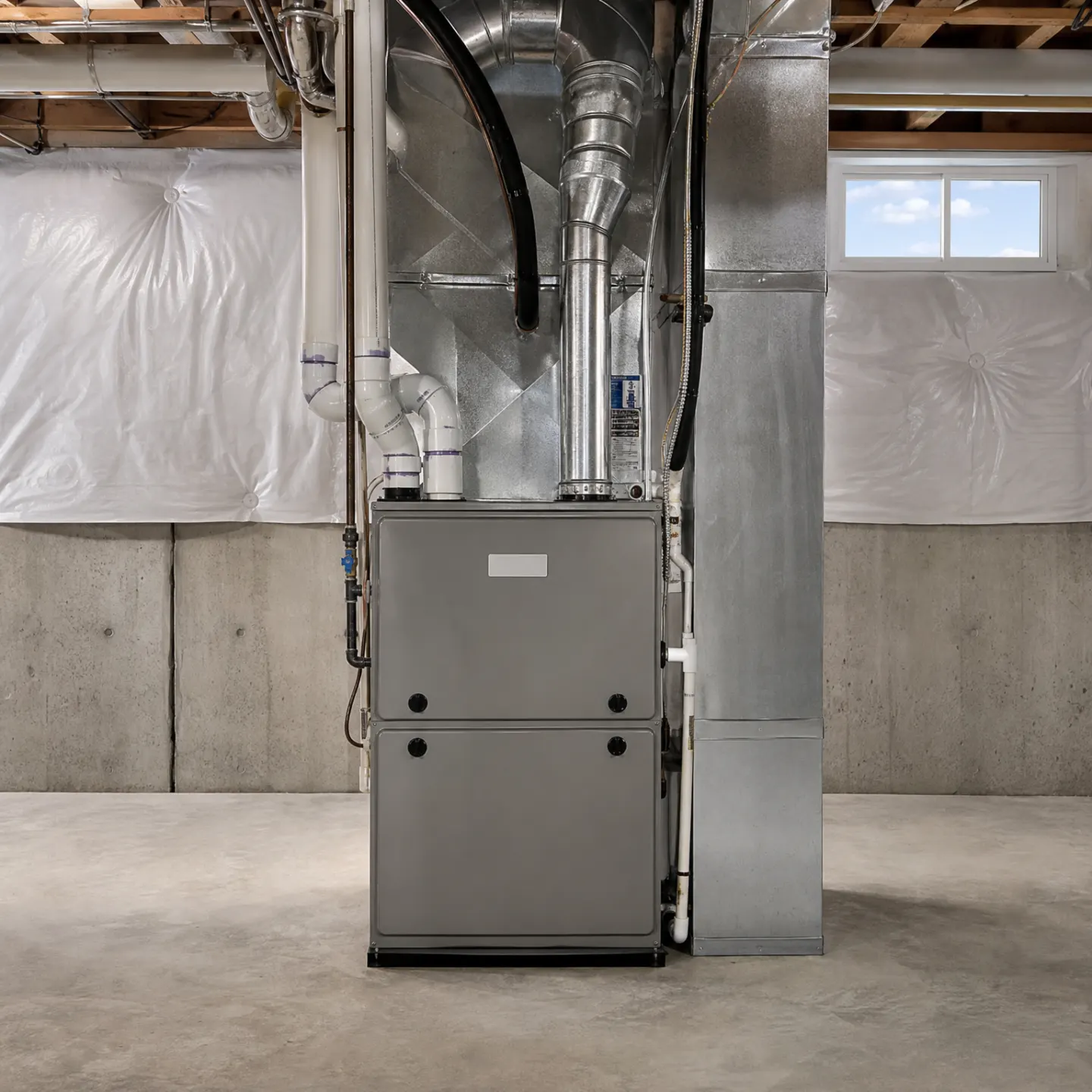
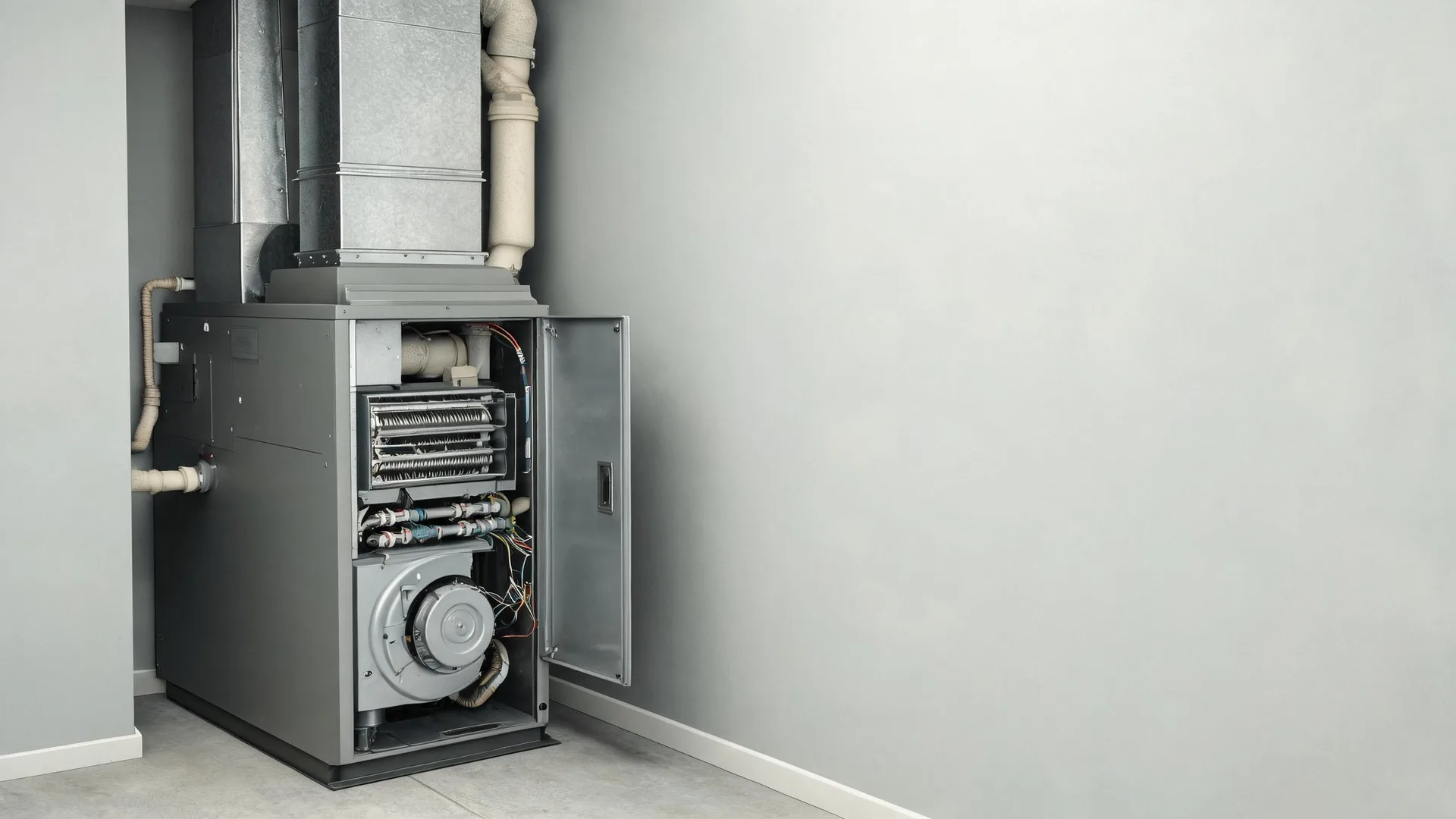
A gray residential gas furnace installed in an unfinished basement, connected to sheet-metal ductwork and PVC pipes.

What to check before you call anyone

Start with the thermostat. Set it to heat, not just on, and set it a few degrees above room temperature so it actually calls for heat. If the display is dark, that's batteries, not the furnace. Pull the filter and hold it up to a light. If no light comes through, airflow is choked and the furnace may be shutting itself off rather than overheating. Look for a switch near the furnace that looks like a light switch. It's easy to bump off without noticing. Check the control board for a light. Steady is normal. Blinking usually means a code, and the pattern is explained right on the panel or the inside of the door. If the furnace sits near a floor drain or a condensate line, look for water pooled nearby. That's worth mentioning to whoever comes out. None of this tells you what's actually wrong inside the furnace. It just rules out the easy things first.

A cracked heat exchanger gets worse every time it fires

Heat and cooling cycles flex the metal, and once a crack starts, each cycle opens it a little more. Run it long enough and exhaust can mix into the air the blower pushes through the house, which is why a furnace showing that problem should be shut down, not nursed along.

Ignoring a dirty flame sensor turns a cleaning into a part swap

A sensor coated with carbon starts misreading the flame and shutting the furnace off early. Keep running it in that state and the sensor tip can degrade to where cleaning no longer helps. What would have been a wipe with a scouring pad becomes a replacement.

An unfinished basement featuring concrete block walls, exposed floor joists, a bare concrete floor, and a forced-air furnace with a large metal exhaust duct in the corner.

A new furnace would cut about $80 a year off heating for a typical Otero County home.

  • A new high-efficiency furnace$320 a year
  • An older furnace$400 a year

Estimates for a typical Otero County home, compared with an older unit built to the previous federal minimum, from EIA household energy data, Colorado fuel prices and NOAA climate normals. Your home will differ.

Repair makes sense when one part has failed and the heat exchanger is sound.

Replacement makes sense when the heat exchanger is cracked or the furnace keeps needing parts.

A repair decision really comes down to what part failed and what it sits next to. A blower motor or an igniter is a contained job, it fails on its own and swapping it brings the furnace back to where it was. A heat exchanger is different, because by the time it's cracked or rusted through, the rest of the furnace has usually put in the same hours and is wearing toward the same end. Paying for a major part on an old furnace can mean paying again for the next part a year later. The age of the furnace matters more than how bad this particular breakdown looks. A furnace that's needed a service call every season is telling you something a single repair bill won't fix.