



Firewood stacked against the dark vertical wood siding of a building, with a gravel border strip, dry grass, and pine trees under an overcast sky.

Heat Pump Installation in Denver, CO

Tell us about the job

Takes about a minute. No obligation.

Step 1 of 3: Equipment

Most homes in Denver County heat with gas, 60.8% of them. Electricity comes next at 35.6%, and a small share run on bottled or LP gas. That gas majority matters here because a heat pump installed in a gas-heated home usually goes in alongside the existing gas furnace rather than replacing the gas line outright, with the heat pump handling cooling and most of the heating load and the furnace backing it up on the coldest days. A home already wired for electric heat has fewer pieces to coordinate. Either way, the installer sizes the equipment to the house itself, not to whatever was running there before.

8 months
October through May, your system heats
3 months
June through August, it cools
19°F
the average winter night it heats against
87°F
the average summer afternoon it cools against
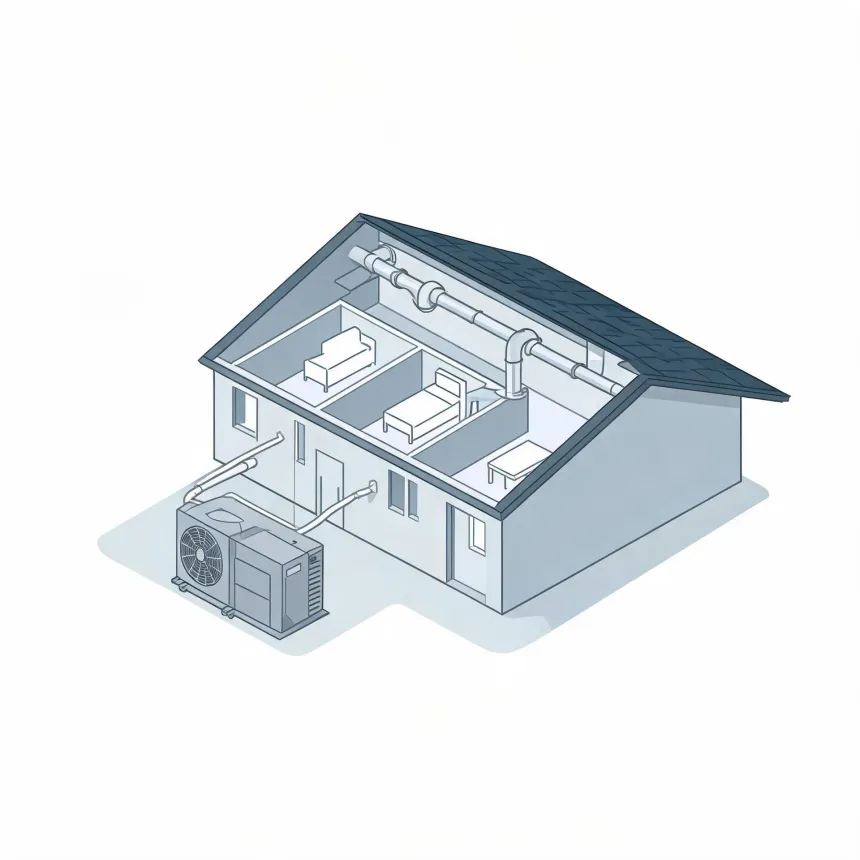
Isometric line illustration of a cutaway single-story house showing interior rooms with furniture and attic ductwork connected to an outdoor condenser unit beside the building.
Your system heats October through May and cools June through August.

NOAA nClimDiv, 1991–2020 normals

Heat here runs October through May, eight months out of the year.

Get the install done before September, so it's finished before you need it.

Weather here is rough on outdoor equipment, not just the climate

243 severe weather events from 2015 to 2024
13% of homes statewide lost power a day or more in 2024
64 damaging wind events from 2015 to 2024
A Standard System Fits This JobHalf of Denver County's homes were built in 1975 or earlier, half since, and none of that changes what size heat pump a house needs.

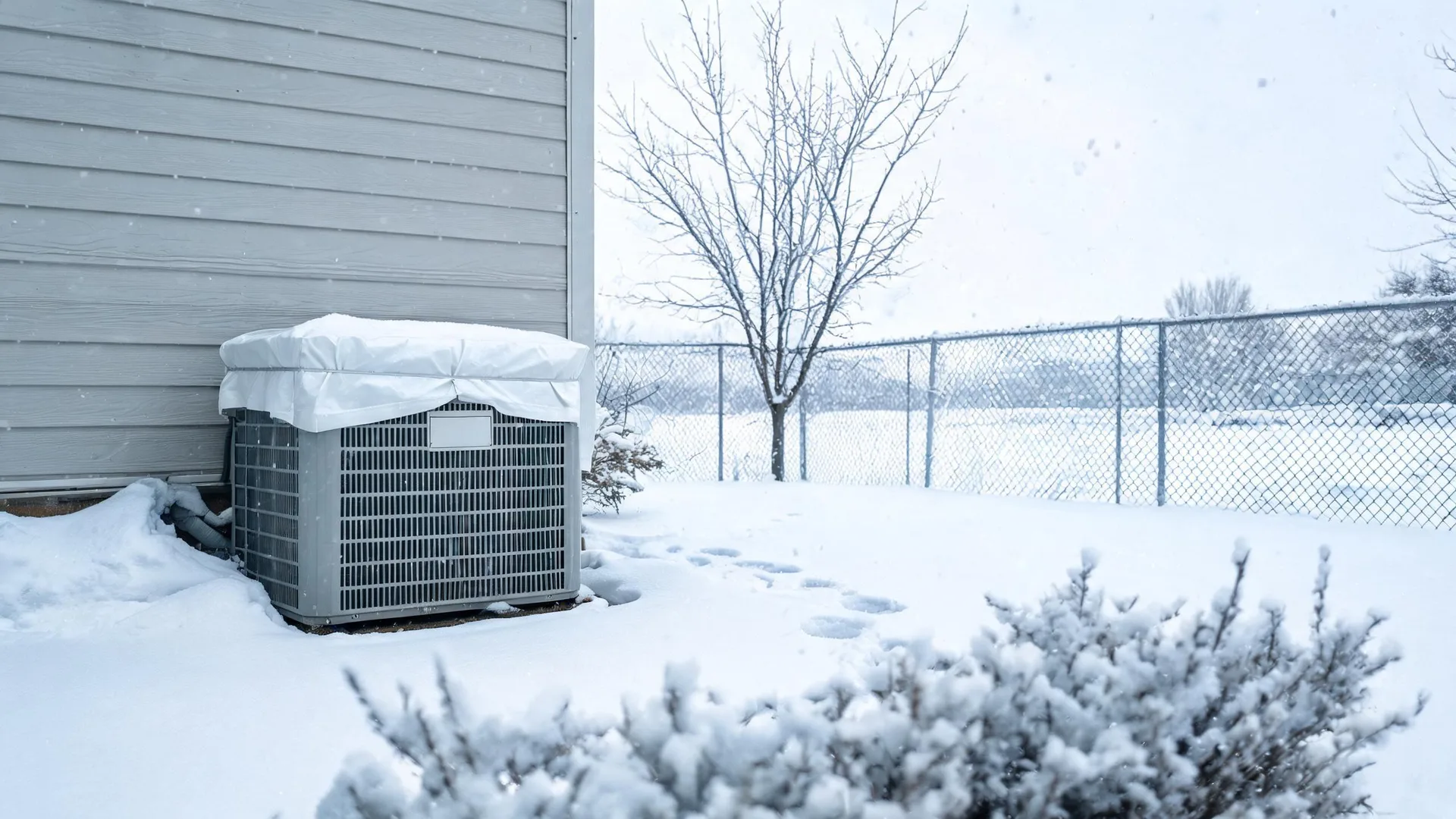
Denver County sees a lot of hail, 142 events between 2015 and 2024, plus 64 damaging wind events in that same stretch. An outdoor heat pump unit sits outside year round and takes that weather directly. None of this calls for an oversized or specialty system. It calls for a standard unit set on a pad clear of rooflines and gutters, away from where ice and runoff land, with nothing stacked or stored against it. Summers here run dry. The dew point averages 42°F across June, July and August, which is low, so the heat pump isn't working against heavy, humid air on top of the heat. A correctly sized system for the house handles both of those without being built bigger than the job calls for.

The Right Size, Not a Bigger One

A standard heat pump sized to the house handles what Denver asks of it, no upsizing needed. Electricity here runs 15.91 cents per kilowatt-hour, typical for the area, and that's the number the installer works with when sizing equipment to carry most of the heating load alongside the furnace. Get the sizing right and the unit runs the way it's supposed to, through the hail and the dry heat and the cold.

Find a contractor
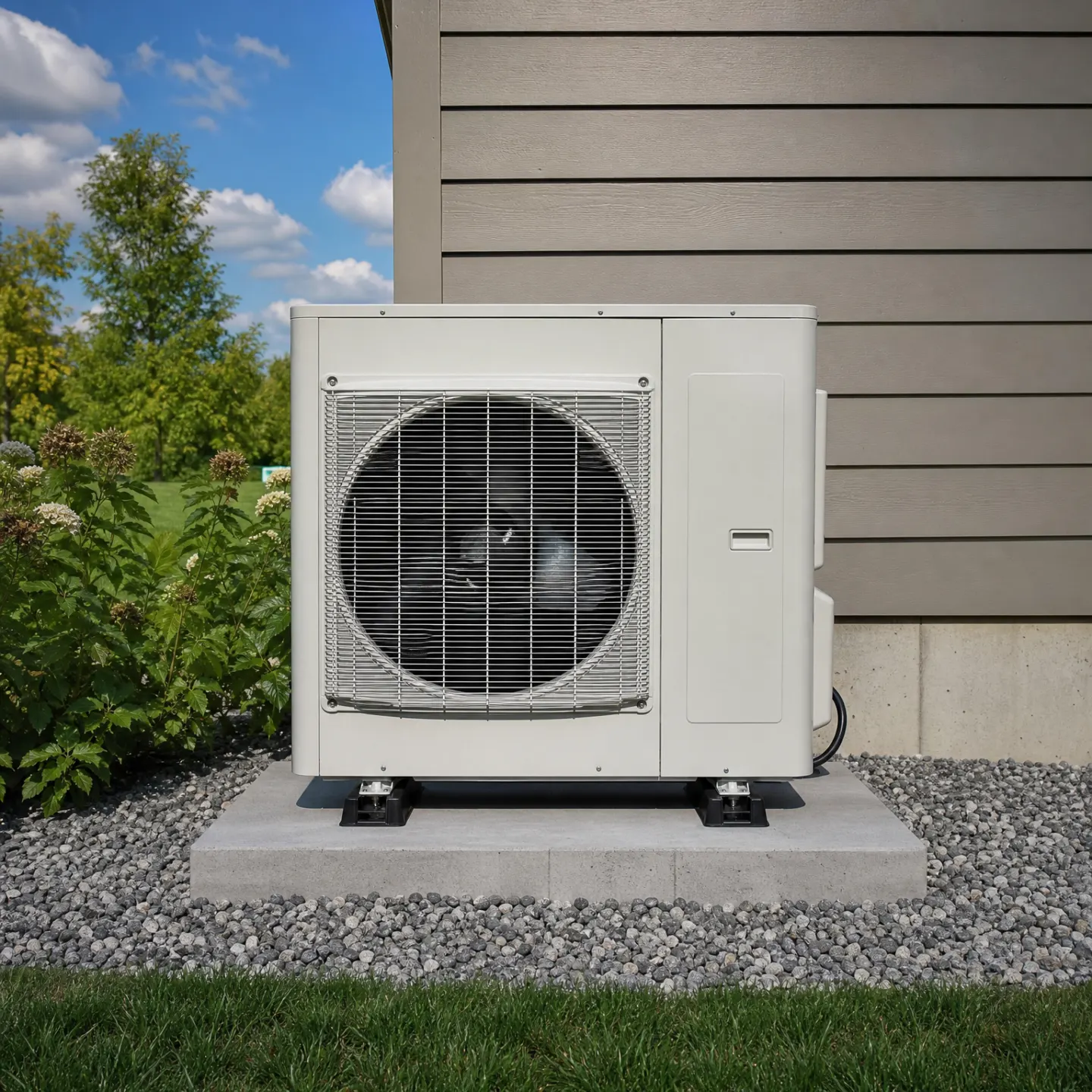
A white mini-split heat pump outdoor unit mounted on a concrete pad beside a gray-sided house, surrounded by gravel and green shrubs.

Sized to the House, Not the Old Unit

Sizing a heat pump starts with a load calculation on the house, room by room, not a guess based on square footage or what the old equipment was rated for. The calculation accounts for insulation, window area, ceiling height, air leakage, and how the rooms are laid out, and it produces a number for how much heat the house loses in winter and gains in summer. That number tells the installer what the equipment has to be able to move, no more and no less. Too big and the unit short cycles, reaching the thermostat setting fast and shutting off before it finishes a full heating or cooling cycle. A short cycling system doesn't run long enough to pull moisture out of the air in cooling mode, and it puts more wear on the compressor from the sheer number of starts and stops over a season. Too small and it runs constantly without catching up, which in winter means it leans harder and longer on backup heat than it should. A correctly sized system cycles on, runs a full cycle, and shuts off, holding steady temperatures without straining any one part of the system.

What the Rating Actually Measures

The efficiency rating on a heat pump's label describes how much heat it moves per unit of energy it uses, averaged over a full heating or cooling season rather than at one fixed moment. A higher number means the unit gets more heating and cooling out of the same energy input. It says nothing about capacity or how big a space the unit can handle. Two systems with the same rating can be sized completely differently, and a higher-rated unit sized wrong for the house still runs poorly.
Why the Number Matters at Install

The rating only holds up if the equipment is matched correctly, the ductwork moves enough air, and the refrigerant charge is set the way the manufacturer specifies. A high-efficiency unit connected to undersized ducts or installed with a bad charge won't perform anywhere near its rating. That's the installer's job to get right, not something a homeowner can check once the system is running. The rating on the label is what the unit is capable of, not a guarantee of what it will deliver in that house.

Denver County falls under zone 5B in the 2021 energy code, a cool, dry climate where the heating load is bigger than the cooling load over a year. Any split-system heat pump installed here, if it was built from 2023 onward, has to clear a federal minimum of 7.5 Btu of heat moved per watt-hour of electricity over a heating season, and 14.3 Btu per watt-hour over a cooling season. Those numbers set a floor, not a target. A unit can't legally go in below them, and most equipment sold today clears them by some margin. What that means for this install is narrower than it sounds: the rating is fixed by federal rule, so the real decision is sizing the unit correctly to the house, not shopping for a number below the minimum.

Install day starts with the equipment already sized from the load calculation, so the crew isn't making that decision on site. The outdoor unit goes on a pad or mounting bracket in the spot picked out ahead of time, and the indoor coil ties into the existing ductwork or air handler. Refrigerant lines run between the two, get connected, then pulled down to a vacuum to clear out air and moisture before any refrigerant moves through them. That vacuum step matters because any moisture left in the line reacts with the refrigerant over time and wears on the compressor. Once the lines are charged to the manufacturer's spec, the crew checks airflow at the vents, tests the system in both heating and cooling, and walks through the thermostat before leaving. A clean install leaves no shortcuts in that sequence, because the ones that don't show up are the ones that cause trouble a year or two in.