A snow-covered residential street at twilight with illuminated houses, bare trees, and an orange horizon glow beneath a deep blue sky.

Furnace Repair in Yuma, CO

Tell us about the job

Takes about a minute. No obligation.

Step 1 of 3: Equipment

Yuma County saw 560 severe weather events between 2015 and 2024. That includes 331 hail events, 172 days of damaging wind, and 30 tornadoes. A furnace doesn't sit in the open, but the outdoor equipment tied to a home's heating and cooling does, and hail or wind-blown debris can hit it without stopping it from running. A unit that still turns on isn't the same as one that came through clean. If a storm has come through, it's worth having someone look at what's outside, not just what's in the furnace room.

8 months
October through May, your furnace is on duty
18°F
the average winter night it heats against
57%
of homes here heat with gas, so most furnaces here burn gas
27 winter storms
in ten years, the nights a failure hurts most
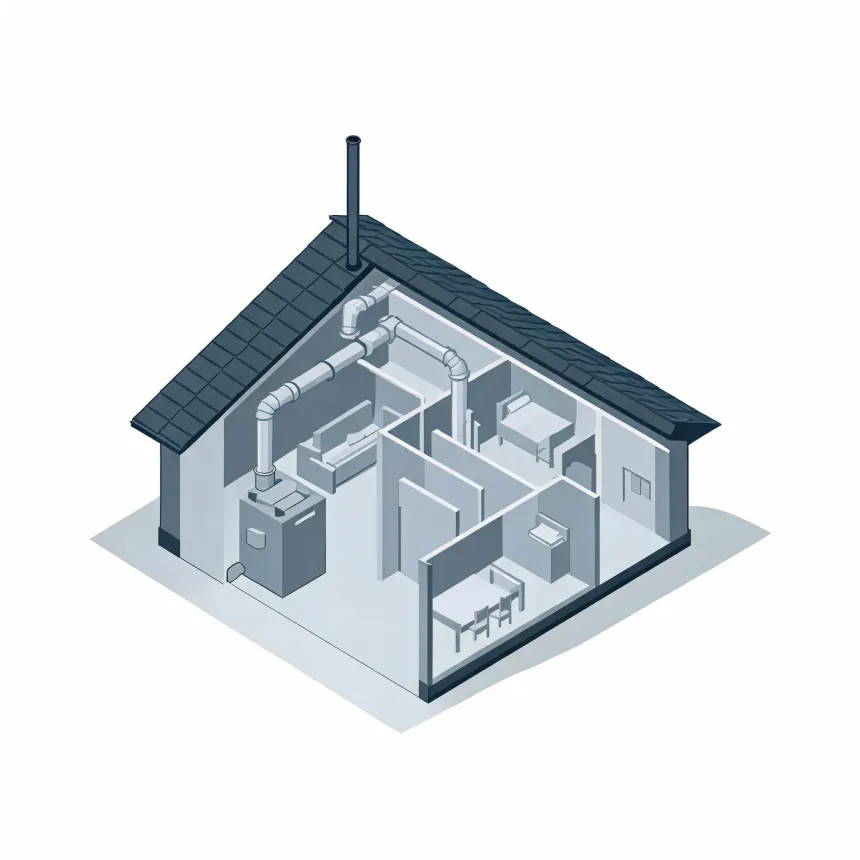
Isometric cutaway illustration of a small single-story house showing interior rooms with furniture, a furnace unit with attached ductwork running to a roof flue, and a dark shingled roof.
Your furnace works hardest from November through March.

NOAA nClimDiv, 1991–2020 normals

Your furnace runs eight months a year here, October through May.

That long a stretch gives small problems time to turn into breakdowns, so a repair needs to hold.

Half the furnaces here are older than the house's newest paint job

Half the homes here were built by 1968
Heat runs October through May
Winter nights average 18°F

October is when furnaces here start earning their keep, and it's also when a weak part finally gets tested. A furnace that sat quiet since spring doesn't show a cracked heat exchanger or a failing igniter until it has to run hard, and that first cold stretch is exactly when it has to. Wait until December to find out something's wrong and you're doing it with the overnight low near 18 degrees. September is the window to catch it instead, while the house doesn't yet depend on the furnace to keep that cold out.

If a storm came through, get it checked before winter does

A furnace with hail-damaged or debris-clogged outdoor equipment can still fire up and still fail you partway through a winter night. If a storm has come through this year, get the whole system looked at now, not just the parts that are obviously loud or broken.

Find a contractor
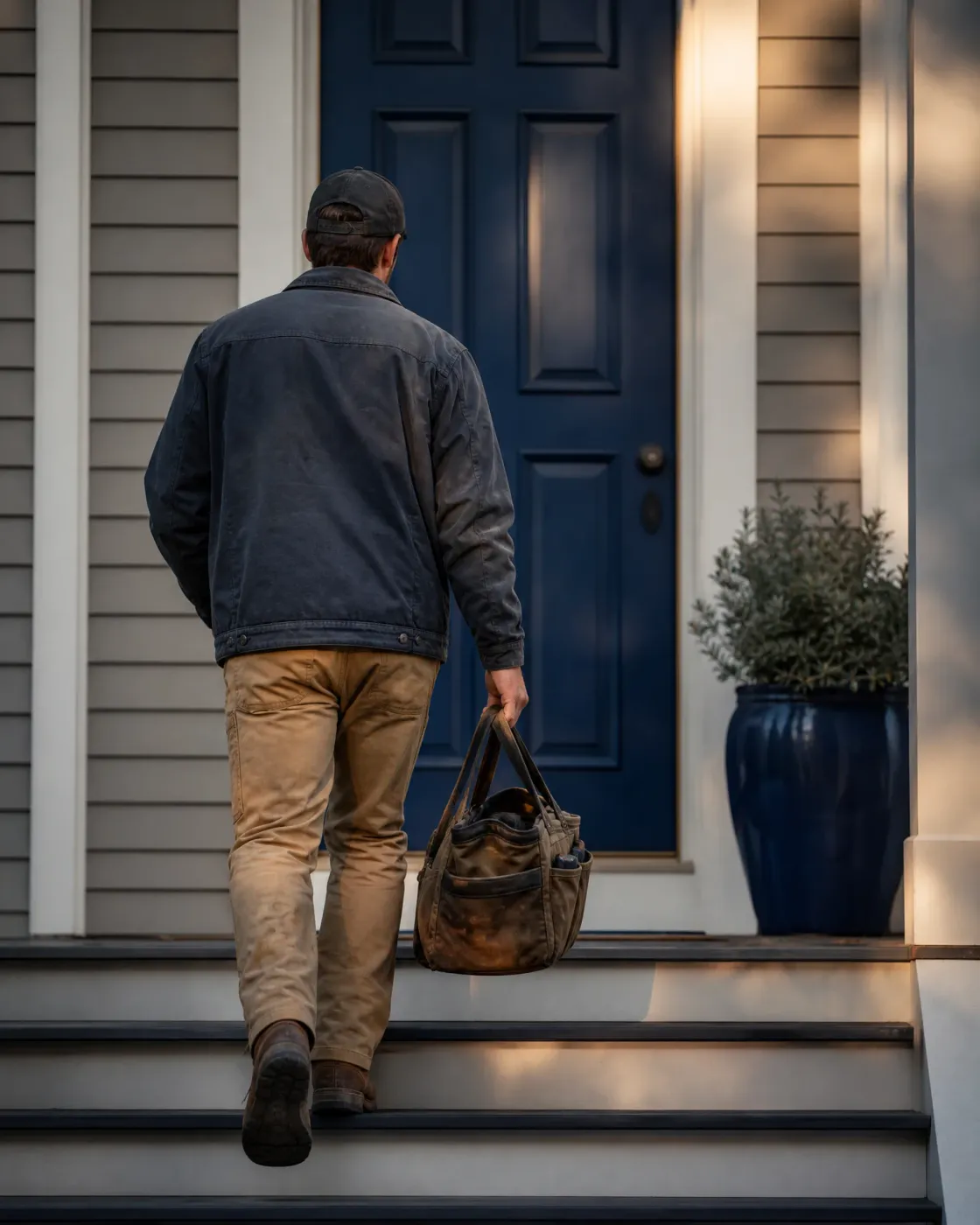
A man in a cap, dark jacket and tan pants carries a worn duffel bag as he climbs porch steps toward a dark blue front door beside a potted shrub.
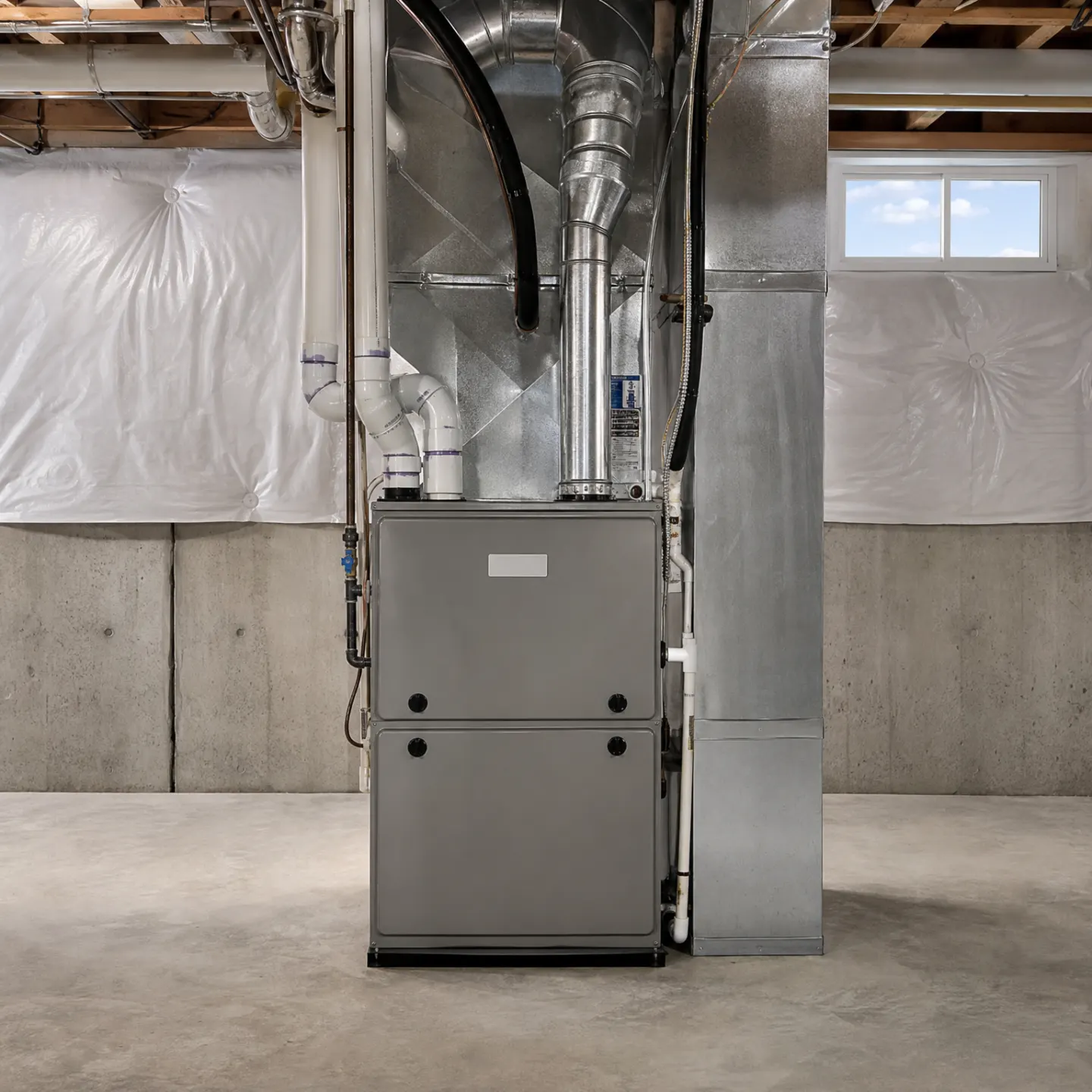
A gray residential gas furnace installed in an unfinished basement, connected to sheet-metal ductwork and PVC pipes.

Eight months of runtime, and winter doesn't give it a pass

Twenty-seven winter storms hit this county between 2015 and 2024. That's the kind of year where a furnace can't take a night off, and a repair that half-holds will find that out at the worst time. If something's off with yours now, before the hard cold sets in, get the actual cause found and fixed, not just the symptom quieted down.

A small problem doesn't stay small

A cracked heat exchanger starts as a hairline. A clogged burner starts as a little soot. Left alone, the furnace keeps firing through the flaw every single cycle, and each cycle makes it a little worse. What would have been a part swap turns into a cracked exchanger that has to be replaced, or a blower motor that seizes instead of just squealing.

Running on a fault stresses what's still good

A furnace with one bad part doesn't fail politely. A weak igniter means more failed ignition attempts, which stresses the gas valve. A dirty flame sensor means the control board keeps cycling power trying to get a clean reading. The parts around the fault end up working harder to cover for it, so waiting doesn't just risk the one part. It risks the ones next to it too.

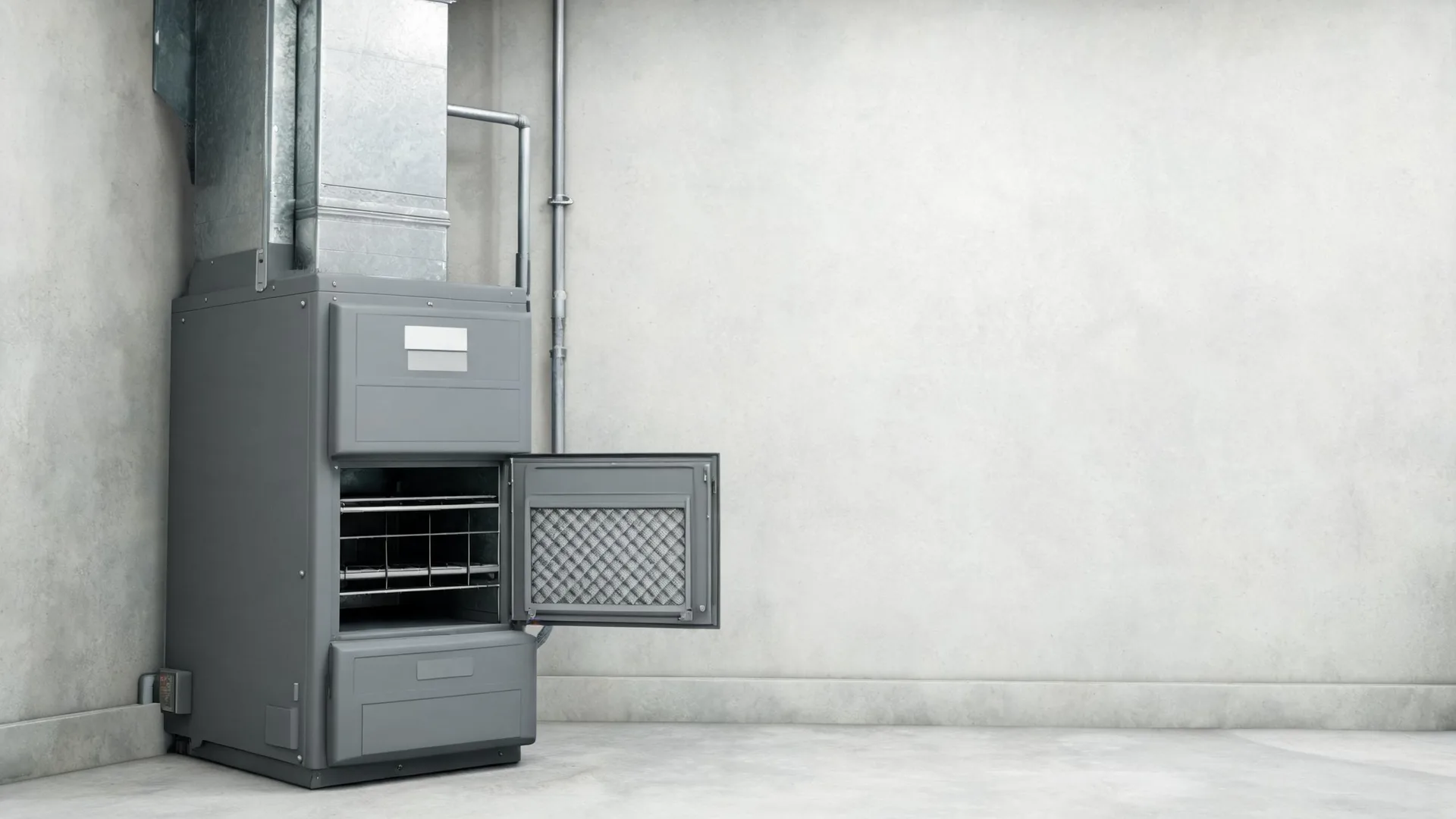
A gas furnace with sheet-metal ductwork and PVC pipes installed in an unfinished basement.

A new furnace would cut about $90 a year off heating for a typical Yuma County home.

  • A new high-efficiency furnace$370 a year
  • An older furnace$460 a year

Estimates for a typical Yuma County home, compared with an older unit built to the previous federal minimum, from EIA household energy data, Colorado fuel prices and NOAA climate normals. Your home will differ.

Repair makes sense when one part has failed and the heat exchanger is sound.

Replacement makes sense when the heat exchanger is cracked or the furnace keeps needing parts.

A diagnostic visit starts before any panel comes off. The tech asks what the furnace is doing: not firing, firing and shutting off, blowing cold, making a noise it didn't used to make. That narrows where to look. Then the cover comes off and the tech watches a full cycle start to finish, because some faults only show up at ignition and others only show up once the blower kicks in. Readings come next: the gas pressure, the temperature rise across the heat exchanger, the amp draw on the motor. Each one either matches what that furnace should be doing or it doesn't. The tech also checks the flame itself, since the color and shape say something about the burner and the fuel mix no gauge will tell you. By the end, the goal isn't a guess. It's knowing which part is out of spec and why, before anything gets replaced.