A twilight street scene featuring illuminated timber-frame and stone houses with a mountain range visible in the background.

Furnace Repair in Durango, CO

Tell us about the job

Takes about a minute. No obligation.

Step 1 of 3: Equipment

Furnaces in La Plata County run about ten months a year, September through June. That's most of the calendar, not a few cold weeks. A furnace runs that long almost constantly, and the burner, igniter and blower motor rack up hours most furnaces elsewhere never see. This county also saw 128 winter storms between 2015 and 2024, heavy snow, ice, blizzards. Weather like that pushes a furnace to run longer just to hold the temperature. All those hours catch up with the same parts sooner than you'd expect. When something starts acting up, it's worth having a contractor find the actual cause instead of guessing.

10 months
September through June, your furnace is on duty
16°F
the average winter night it heats against
128 winter storms
in ten years, the nights a failure hurts most
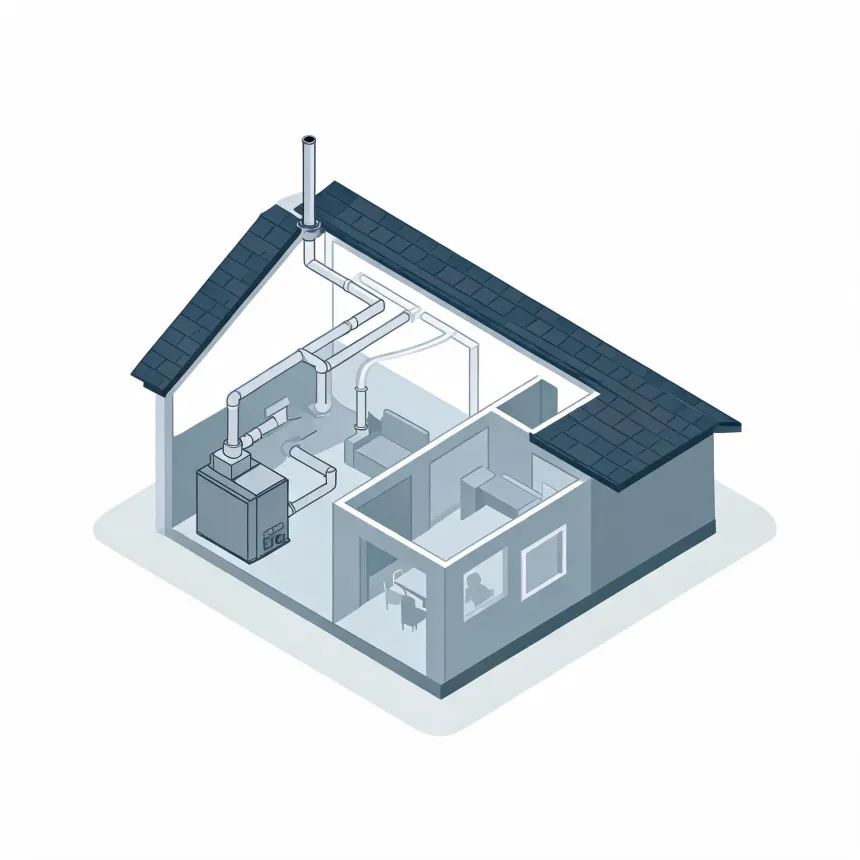
Isometric cutaway illustration of a single-story house showing interior rooms, a furnace unit with connected ductwork, and a flue pipe extending through the dark shingled roof.
Your furnace works hardest from November through April.

NOAA nClimDiv, 1991–2020 normals

A furnace that short cycles, turning on and off every few minutes, is wearing out its igniter or flame sensor faster than it should.

That kind of stop and start is worth a call before the igniter fails outright and leaves the house with no heat at all.

A Newer Furnace Is Worth Repairing, Not Replacing

Half the homes here were built by 1993
Heat runs September through June
Winter nights average 16°F
The First Cold Snap Finds the Weak PartHeat starts in September here. Whatever was already wearing out won't wait long to show it.

If your furnace came with the house and the house went up recently, the furnace itself is probably not that old either. That matters when you're deciding whether a repair is worth it. A furnace a few years into its life, with one part failing, is usually worth fixing. The cabinet, the heat exchanger, the rest of the system still has years in it. Ask the contractor what's failing and why, not just how much it costs to fix. If the part that's worn is one that takes this much use, replacing it and moving on is the right call.

Get the Cause, Not Just a Fix

A furnace that's run hard for years doesn't fail all at once. One part goes while the rest is fine, and that's the part worth finding. Have a contractor trace the problem to its cause before anything else gives out.

Find a contractor
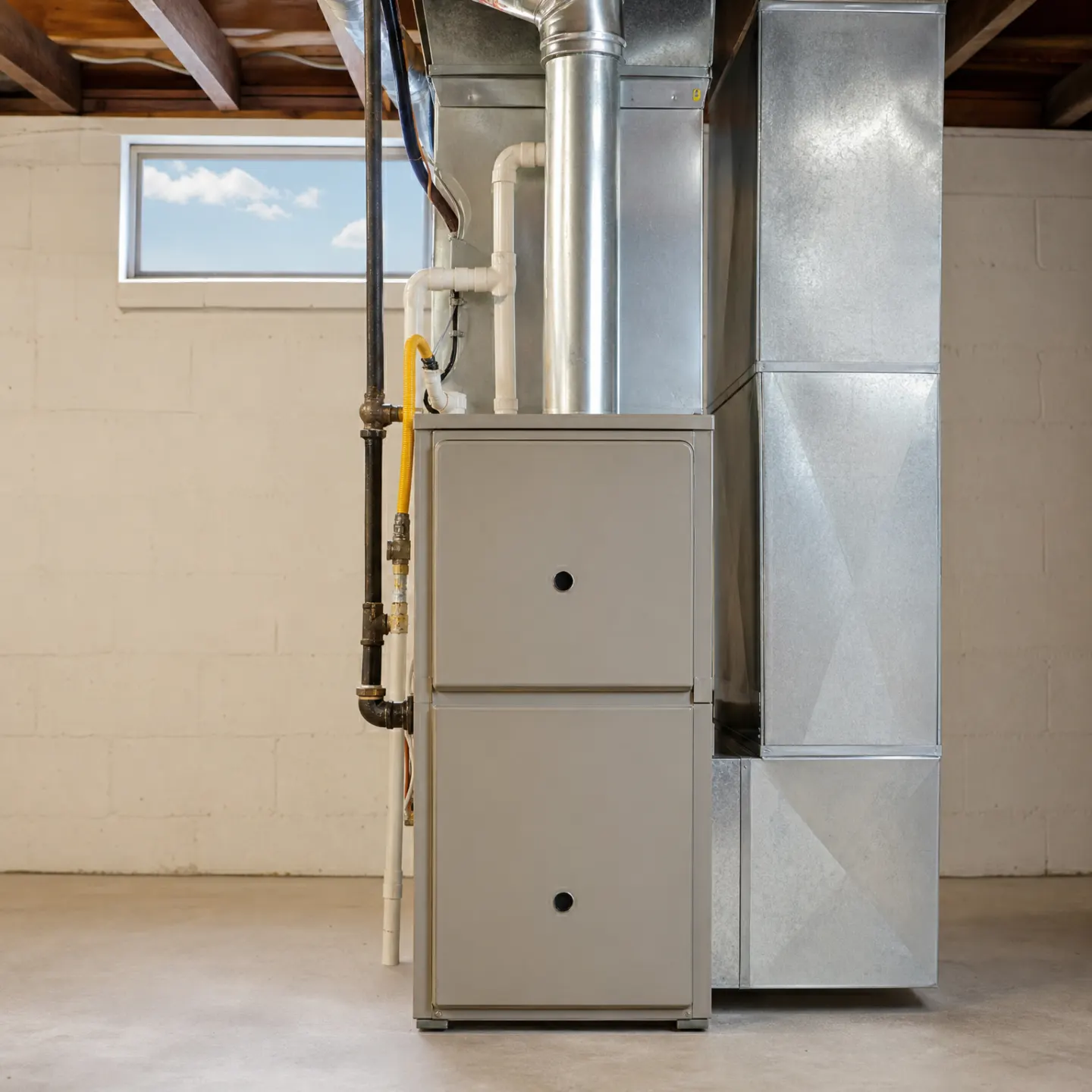
A gas furnace with attached ductwork, gas piping, and condensate lines installed in a concrete-block basement.

What You Can Check Before the Call

Before calling anyone, look at the filter. Pull it out and hold it up to a light. If you can't see through it, it's choking off airflow, and that alone can cause overheating, short cycling, or a furnace that blows cool air. Check the thermostat next. New batteries, and make sure it's set to heat, not just on. Go to the furnace itself and check the switch on the side of the unit, the one that looks like a light switch. It gets bumped off more than people think. Check the gas valve too, and make sure it's turned to open. If the furnace won't start at all, look for a reset button on the blower compartment and press it once. If it trips again right after, stop there, that's not something to keep resetting. Look at the flame through the viewing window if your furnace has one. It should burn steady and blue. A flame that's yellow, flickering, or lifting off the burner means something is off with combustion, and that's not a homeowner fix. Last thing: listen for it trying to start, clicking a few times without lighting. That usually means the igniter or flame sensor is failing, and it's worth a call before it stops lighting altogether.

A Cracked Heat Exchanger Gets Worse With Every Cycle

Once a heat exchanger cracks, running the furnace flexes that crack wider each time it heats up and cools down. It won't seal itself back up. A furnace left running on a cracked exchanger can start pushing exhaust where the return air is, which is a reason to shut it down rather than keep using it until a contractor looks at it.
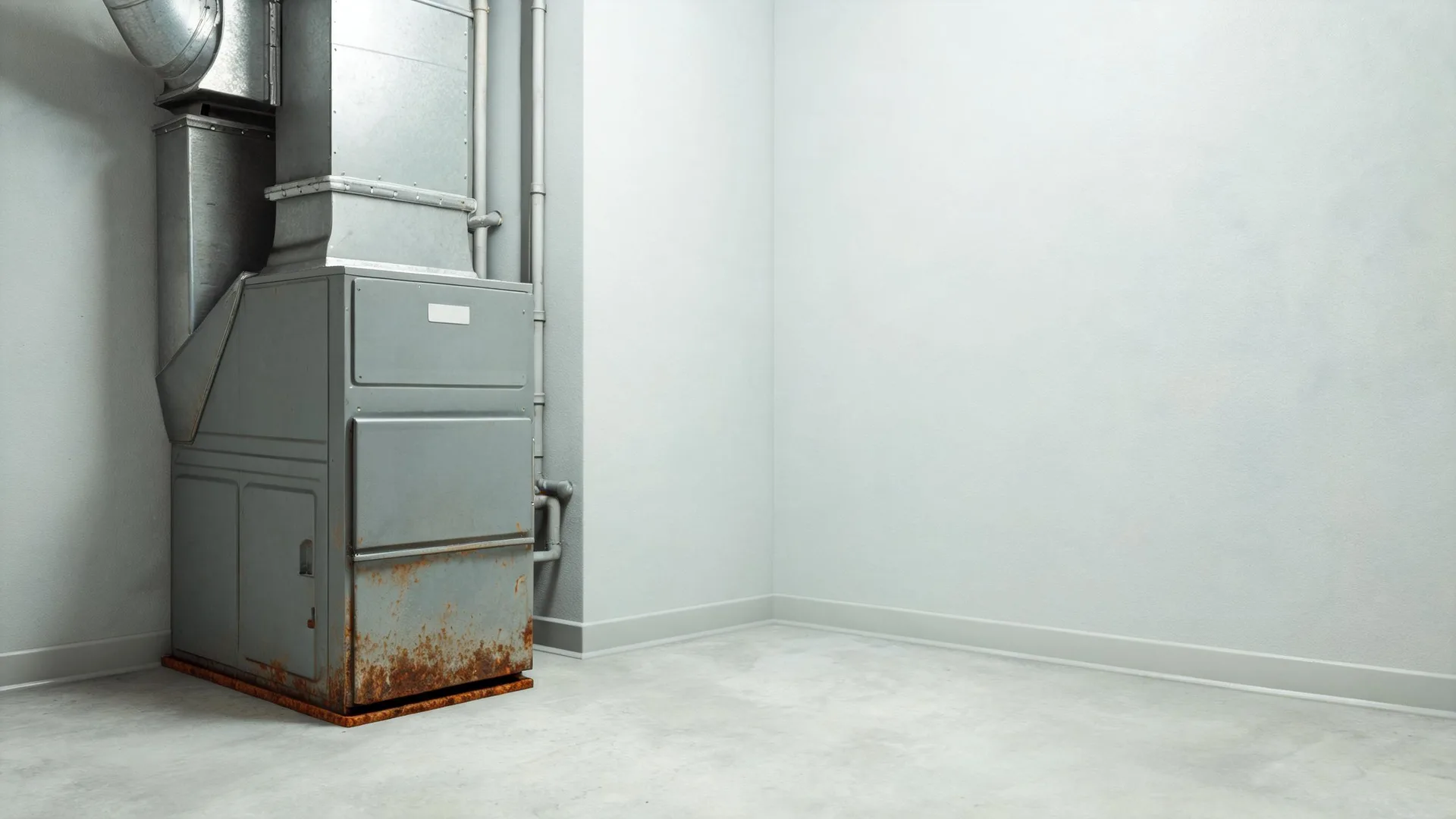
A Dirty Flame Sensor Takes the Furnace Down With It

A flame sensor coated with a thin layer of oxidation starts misreading the flame, and the control board shuts the gas off as a safety check even though the burner lit fine. Keep running the furnace through that cycle and the sensor fails faster, going from an occasional lockout to a furnace that won't stay lit at all. Caught early, it's a sensor that needs cleaning. Caught late, it's a sensor that needs replacing.

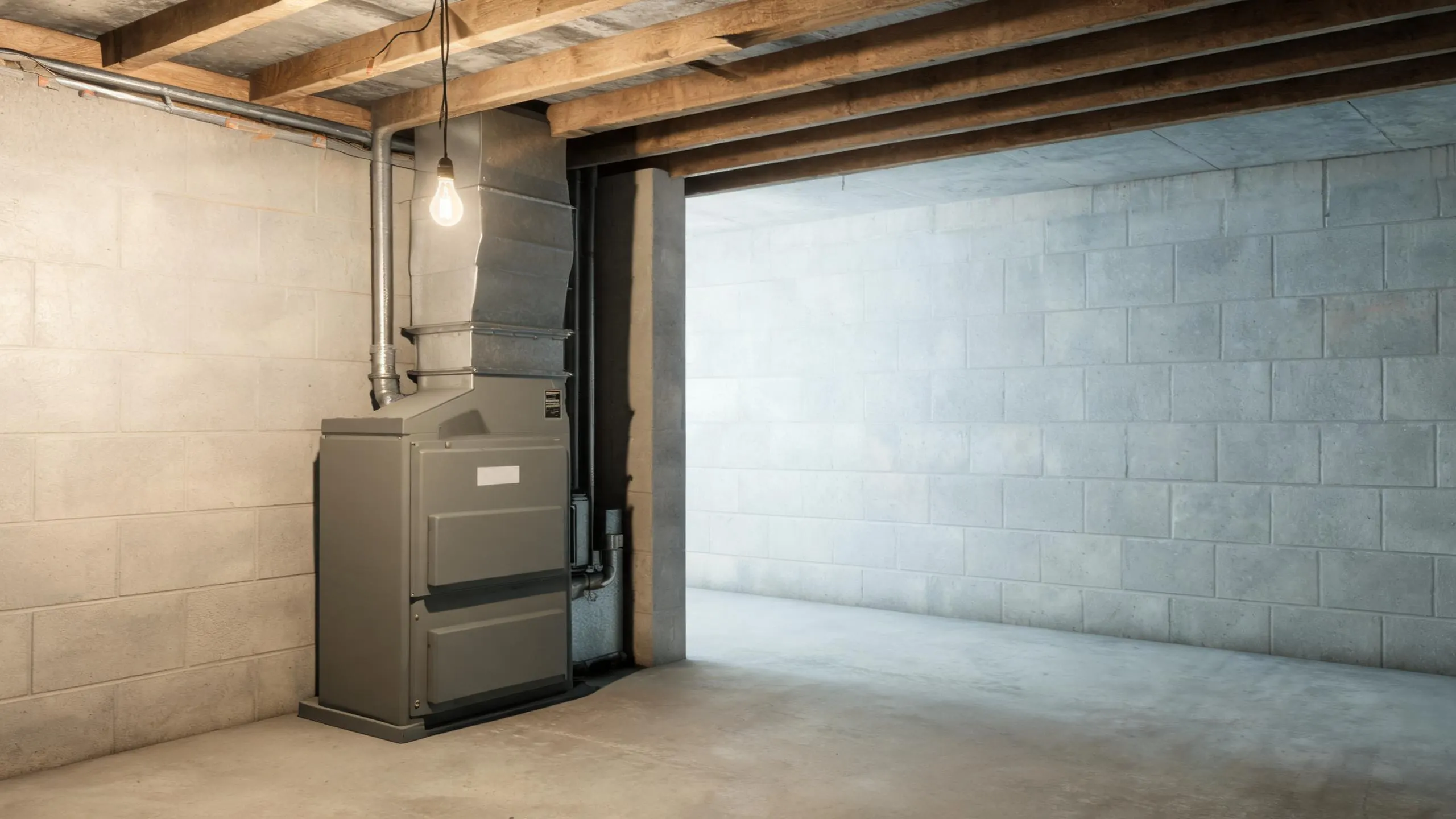
An unfinished basement featuring a grey forced-air furnace with metal ductwork, concrete block walls, exposed wooden joists, and a single hanging bare bulb.

A new furnace would cut about $110 a year off heating for a typical La Plata County home.

  • A new high-efficiency furnace$470 a year
  • An older furnace$580 a year

Estimates for a typical La Plata County home, compared with an older unit built to the previous federal minimum, from EIA household energy data, Colorado fuel prices and NOAA climate normals. Your home will differ.

Repair makes sense when one part has failed and the heat exchanger is sound.

Replacement makes sense when the heat exchanger is cracked or the furnace keeps needing parts.

A repair makes sense when one part fails and the rest of the furnace is sound. A new control board or a new blower motor on a furnace that's otherwise kept up is money well spent, because everything around that part still has years left in it. Replacement starts to make more sense when the failures stack up, a different part every season, because that usually means the parts near the one that just quit are wearing out too, not just the one you're looking at. A cracked heat exchanger is its own case. It doesn't get patched, and it doesn't wait for a convenient time to get worse. Past that, the question is simple: ask the contractor what failed and why, and whether it's the kind of part that fails once or the kind that's a sign of what's coming next.