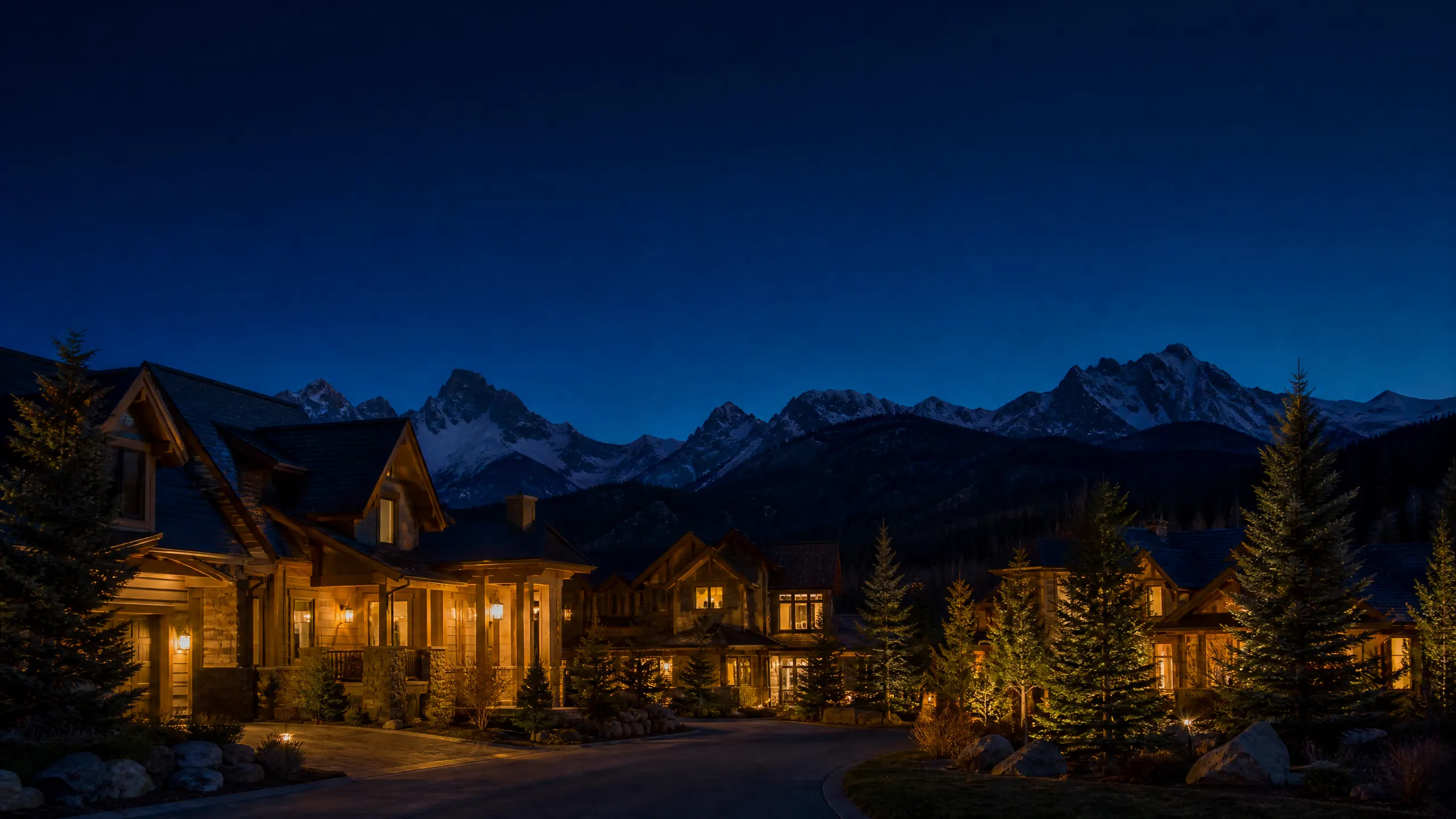
Illuminated timber-and-stone luxury homes photographed at twilight with snow-capped mountains visible in the background.

Furnace Maintenance in Durango, CO

Tell us about the job

Takes about a minute. No obligation.

Step 1 of 3: Equipment

Ten months of runtime

A furnace in La Plata County runs from September through June. That's most of the year asking the igniter, the blower motor and the heat exchanger to cycle on and off, over and over, while a furnace somewhere milder gets half that work.

Storms add their own strain

Winter storms hit this county 128 times between 2015 and 2024. Every one of them means the furnace runs longer and harder to keep up, and that kind of demand wears out a weak part faster than steady use ever would.

Furnace season in La Plata County starts in September.

Get the furnace checked in August, before it has to run.

Half the furnaces here are younger than this county's median home, and that's worth protecting

Half the homes here were built by 1993
Heat runs September through June
Winter nights average 16°F
Built for a county that runs on gasAlmost half the homes here heat with gas, and gas furnaces need more than a filter change.

A newer furnace still needs the same yearly attention. Half the homes in this county were built in 1993 or later, so a lot of the furnaces inside them have years of working life ahead if they're kept up. A yearly check is what protects that. A technician can catch a cracked heat exchanger or a worn igniter before it fails on a cold morning, and cleaning the burners keeps the system running the way it did when it was installed. Skipping that check doesn't show up right away. It shows up a few winters later, when a part that should have lasted gives out early.

Check it now, before it has to run

A furnace that runs ten months a year doesn't get much of a break to show you what's wearing thin. A tune-up before September catches a worn igniter or a weak blower motor while it's still a quick fix, not a cold morning emergency.

Find a contractor
A man in a cap, gray shirt and brown work pants, seen from behind, carries a canvas tool bag up steps toward a dark navy front door beside a potted shrub.
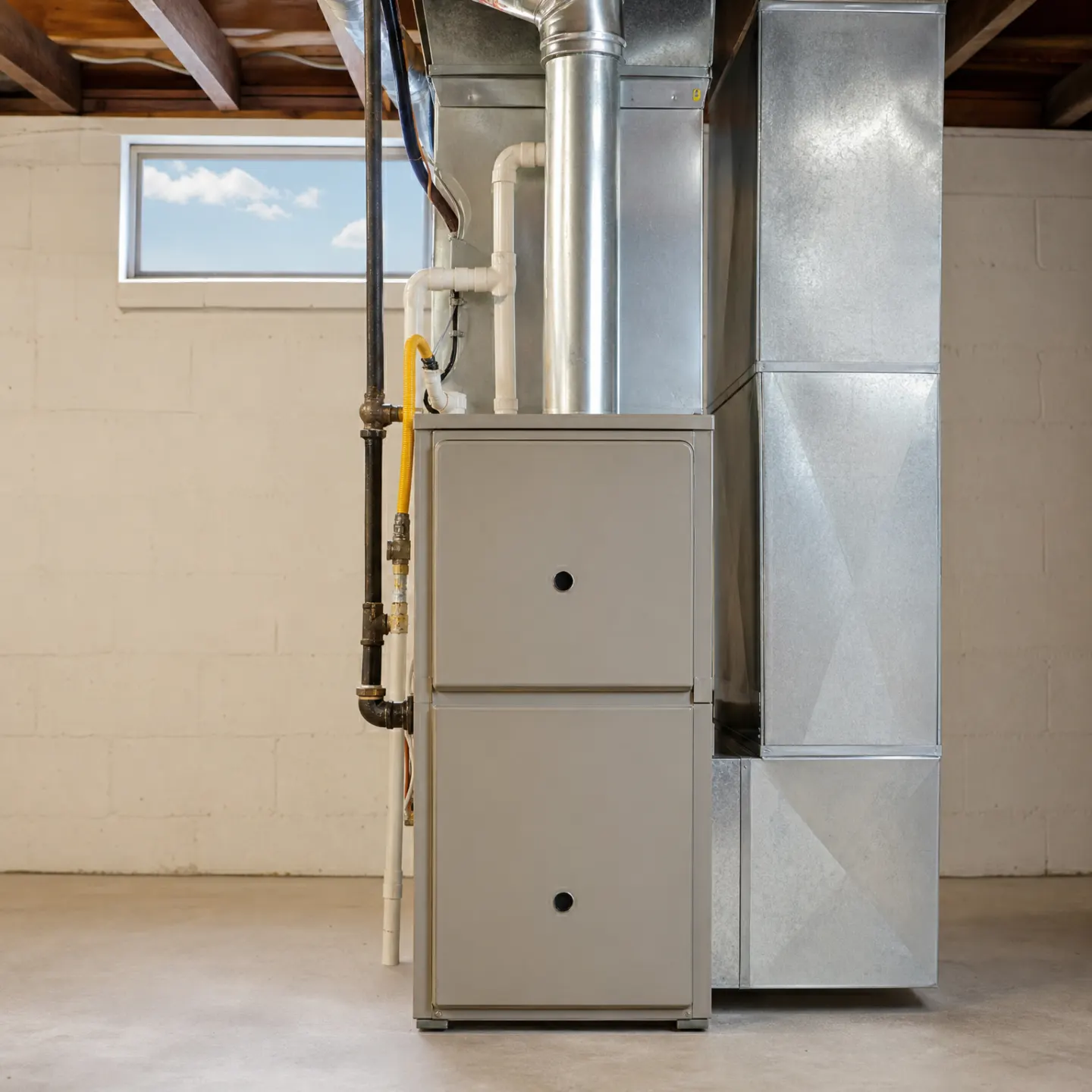
A gas furnace with attached ductwork, gas piping, and condensate lines installed in a concrete-block basement.

What the furnace is already telling you

A furnace usually tells you something is wrong before it quits. The burners might burn yellow instead of blue, which means they're not getting enough air and are leaving soot behind. The blower might kick on and run longer than it used to, or cycle on and off more often than it should. You might notice a corner of the house that never gets quite warm enough anymore. Sometimes there's a burning dust smell the first few times it fires up that doesn't go away. A pilot or igniter that struggles to catch, a furnace that's noisier than it was last year, a flame that flickers instead of holding steady. None of these mean the furnace is done. They mean something inside it, a clogged burner, a failing igniter, a blower motor losing strength, is working harder than it should to do the same job. Caught early, most of that is a straightforward fix. Left alone, it's what a cracked heat exchanger or a burned-out motor looks like a year or two later.

The filter is doing more than it looks like

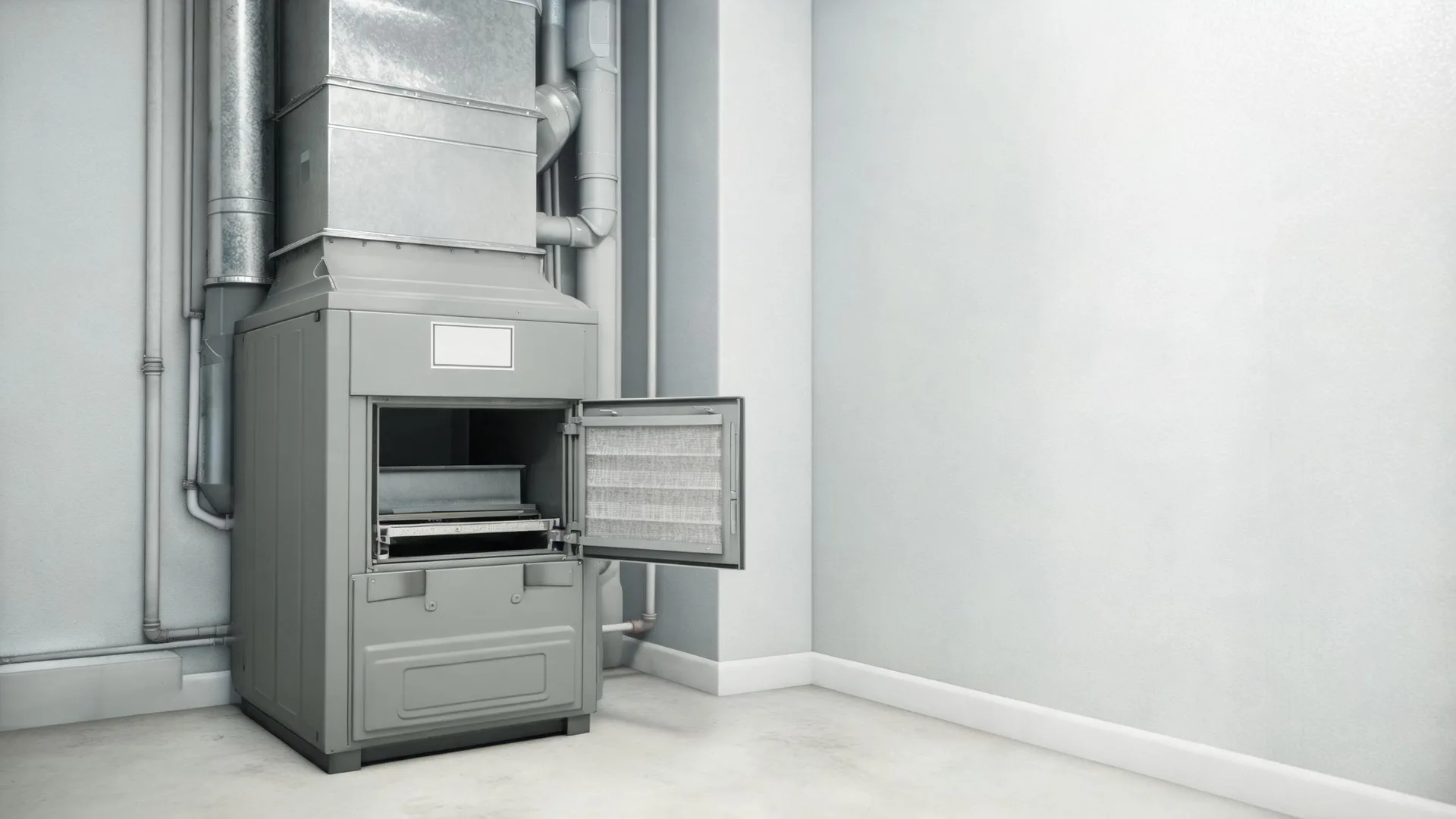
A dirty filter chokes off airflow across the heat exchanger. The blower has to push harder to move the same amount of air, and the exchanger runs hotter than it was built to. Over time that heat cycle stresses the metal and can lead to cracking. A clean filter is the cheapest insurance a furnace has.

The drain and coil belong to the cooling side, but neglect doesn't stay there

A furnace sharing a cabinet with an evaporator coil depends on that coil staying clean and its drain running free. A clogged drain backs up condensate into the cabinet, and that water finds its way to the furnace's controls and wiring below. A tech checking the furnace checks this too, because the two systems share more than just ductwork.

Skip enough years and a furnace doesn't fail all at once. The igniter wears down a little more each winter until one morning it just won't catch. Dust and oil settle on the burners and change the way the flame sits, so instead of burning clean it starts leaving soot behind. That soot works its way into the heat exchanger, and a heat exchanger that runs dirty runs hotter than it should. Hotter metal flexes more each time it cycles, and that flexing is what eventually opens a crack. None of that shows up as a sudden problem. It shows up as a furnace that struggles a little more each year until the year it doesn't start.

A proper tune-up starts with the burners. A technician pulls them for a real cleaning, not just a glance, because buildup there is what turns a clean blue flame yellow and sends soot into the heat exchanger. The flame sensor gets cleaned too, since a coated sensor is one of the most common reasons a furnace shuts itself off mid-cycle. The igniter gets tested under load, not just looked at, because an igniter can look fine sitting still and still fail to hold up once it's drawing power. The heat exchanger gets inspected for cracks, which matters more than almost anything else on the list since a cracked exchanger can let combustion gas into the air the blower moves through the house. The blower motor and wheel get checked and cleaned, the gas pressure gets measured and adjusted if it's drifted off spec, and every electrical connection gets tightened, because a loose connection is what makes a furnace cycle strangely or stop calling for heat at all. None of this is guesswork. Each step is checking a part that's known to wear, in the order it tends to wear, before it turns into a repair instead of a service.