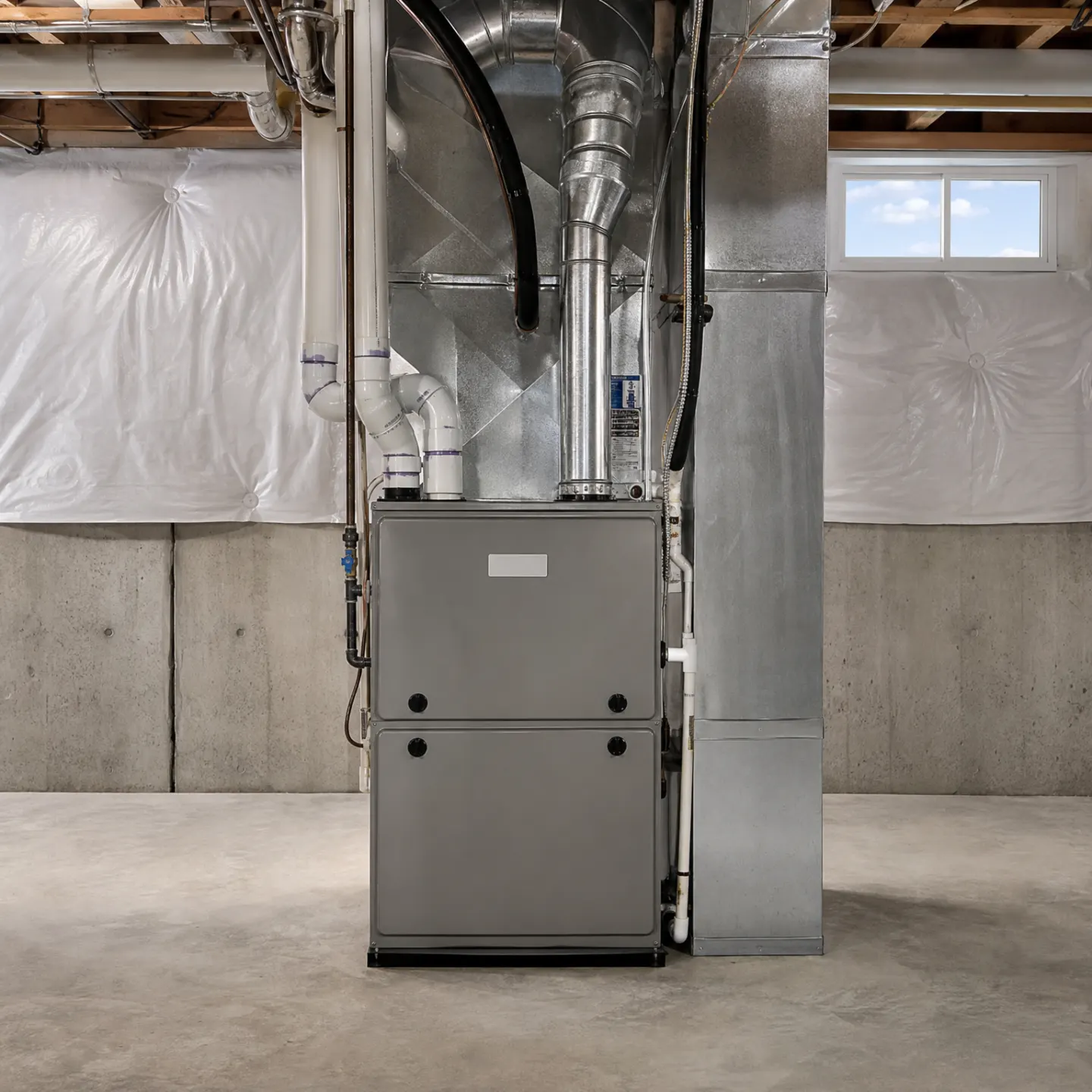
A gray forced-air furnace with ductwork stands in an unfinished concrete basement surrounded by storage items and clutter.

Furnace Maintenance in Alamosa, CO

Tell us about the job

Takes about a minute. No obligation.

Step 1 of 3: Equipment

Nine months of runtime

A furnace in Alamosa County runs from September through May. That's most of the year the burner and blower are cycling, not just a few cold snaps. With that much runtime, the igniter, blower motor and other parts rack up hours fast.

Storms add strain

Winter storms hit this county 96 times between 2015 and 2024. Every one of those means the furnace runs longer and harder to keep up. A worn part that might hold on in a milder place gets found out here, often in the middle of the coldest stretch.

Nearly half the homes in Alamosa County heat with gas furnaces.

A tune-up here has to check the burner and venting, not just swap a filter.

A newer furnace still needs the yearly check that keeps it that way

Half the homes here were built by 1982
Heat runs September through May
Winter nights average 8°F
Heat starts in September hereBook the tune-up in August, before the burner starts its nine-month run.

A furnace usually gives some warning before it leaves you without heat. Listen for a boom at startup, which means gas is building up before it lights instead of catching right away. A burner that cycles on and off more than it used to is working harder to hold the house at temperature, often because airflow is restricted somewhere. Watch the flame through the sight glass. It should burn steady and blue, not yellow or flickering, since a yellow flame points to incomplete combustion. A faint burning smell the first time it fires each season is normal dust burning off, but a smell that lingers past the first cycle is not. If the blower runs but the air feels weaker than it used to, the wheel is probably collecting dust it hasn't shed. Any of these is worth a look before the coldest week of the year decides for you.

Get the check done before the burner has to run

A tune-up before September catches a worn igniter or a blower on its way out while it's still a quick fix. Wait for the first cold snap and you find out the hard way, with a houseful of cold air and a wait for a tech.

Find a contractor
A man in a cap, gray T-shirt and tan work pants carries a canvas tool bag up porch steps toward a dark blue front door of a gray clapboard house, with a potted plant at left.
A gray residential gas furnace installed in an unfinished basement, connected to sheet-metal ductwork and PVC pipes.

Three parts most people never see

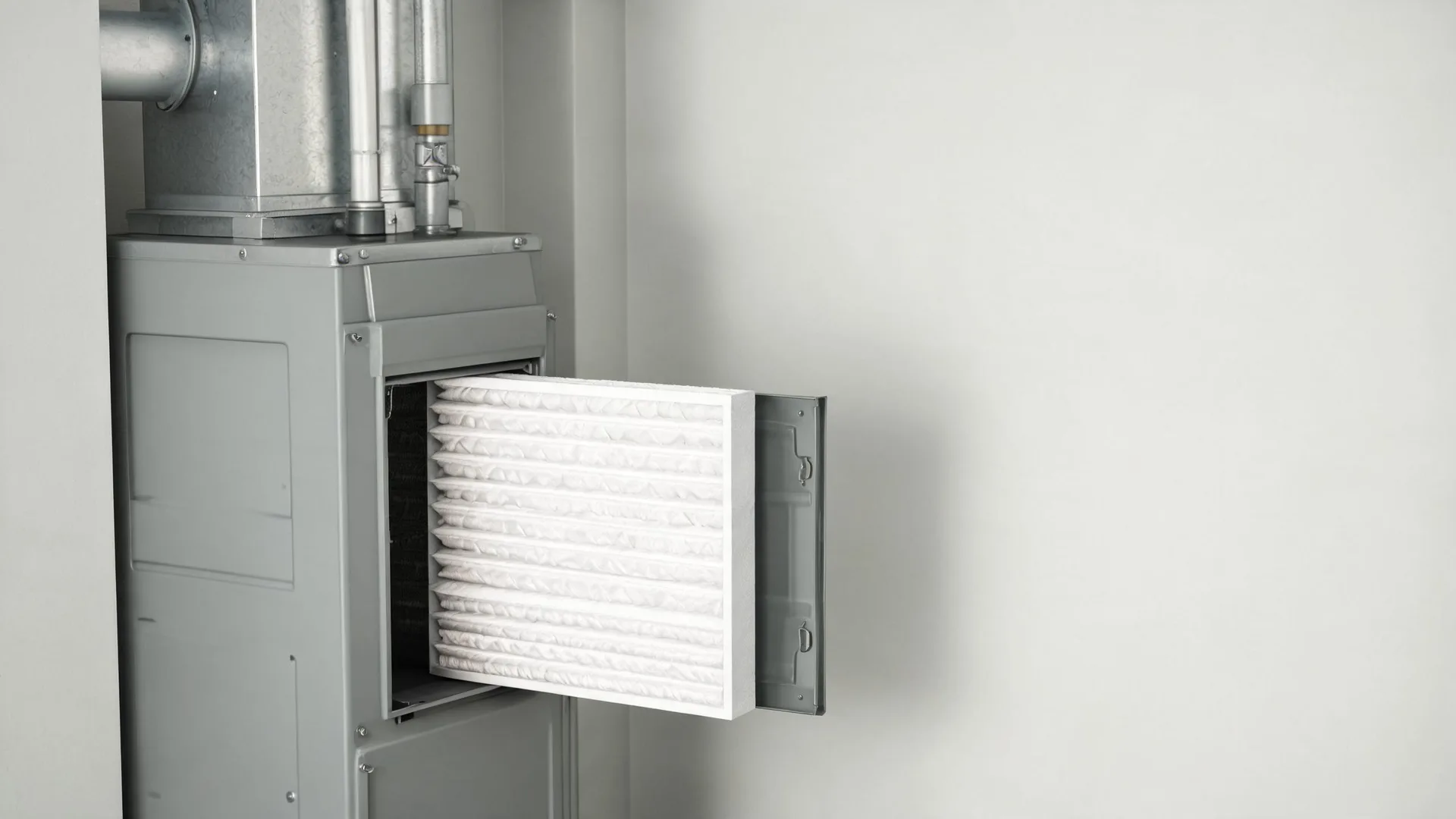
A furnace burns fuel to make heat, but the filter, the coils and the drain decide whether that heat gets where it's supposed to go. A dirty filter chokes the airflow across the heat exchanger, so the burner cycles longer to push the same warmth through the house. Dust that gets past the filter settles on the blower wheel, and a blower caked with dust moves less air even though the motor works just as hard. On a high efficiency furnace, the secondary heat exchanger drains condensate as it runs. If that drain line clogs, the furnace can shut itself down on a safety switch rather than keep running with water backing up. None of this announces itself. A furnace with a clogged filter or a dirty blower wheel still lights, still blows warm air, and still feels fine until the day it can't keep up. A tune-up catches the filter before it's restricting airflow, checks the blower wheel for buildup and runs the condensate line clear, so the furnace moves the heat it makes instead of straining to push it through.

A quick visit checks that it runs

A fast tune-up lights the burner, watches it come on, and calls it done. That tells you the furnace works today. It doesn't tell you whether the flame sensor is starting to go, whether the heat exchanger has a hairline crack, or whether the blower wheel is already losing airflow to a season of dust.

A thorough one checks why it'll keep running

A real tune-up pulls the burner assembly to look at the flame itself, not just whether it lights. It tests the flue draft, checks amp draw on the blower motor against what that motor is rated for, and inspects the heat exchanger for cracks a flashlight alone won't show. That's what catches a part failing before it fails.

A furnace that never gets a tune-up doesn't fail all at once. The igniter wears a little more each season until it cracks and stops glowing hot enough to light the burner. Dust builds slowly on the blower wheel until the motor is pushing a fraction of the air it used to, even though it sounds no different. Small problems like these don't go away on their own, and they don't stay small. A cracked igniter leaves you with no heat on the coldest morning of the year, not some convenient afternoon. A failing flame sensor will shut the burner down over and over until it's replaced. Skipping the yearly check doesn't mean nothing happens. It means the furnace is wearing down where nobody's looking, and it picks its own time to let you know.

A proper tune-up starts before the burner ever lights. The technician pulls the filter and checks the return air for anything blocking flow, then opens the cabinet to look at the blower wheel and motor mounts. The burner assembly comes out for a real look at the flame, not just a glance through the sight glass. The flame should burn steady and blue, not yellow or lifting off the burner ports. The igniter gets checked for hairline cracks, since that's how they fail, not all at once but a little weaker each time they heat up. The flame sensor gets cleaned, because a thin layer of oxidation on it is enough to make the furnace shut down mid-cycle. Then the heat exchanger gets inspected with a light and a mirror, looking for the kind of crack that lets combustion gas mix with the air moving through the house. Last comes the venting, making sure the flue draws properly and nothing is blocking exhaust from leaving the way it should.