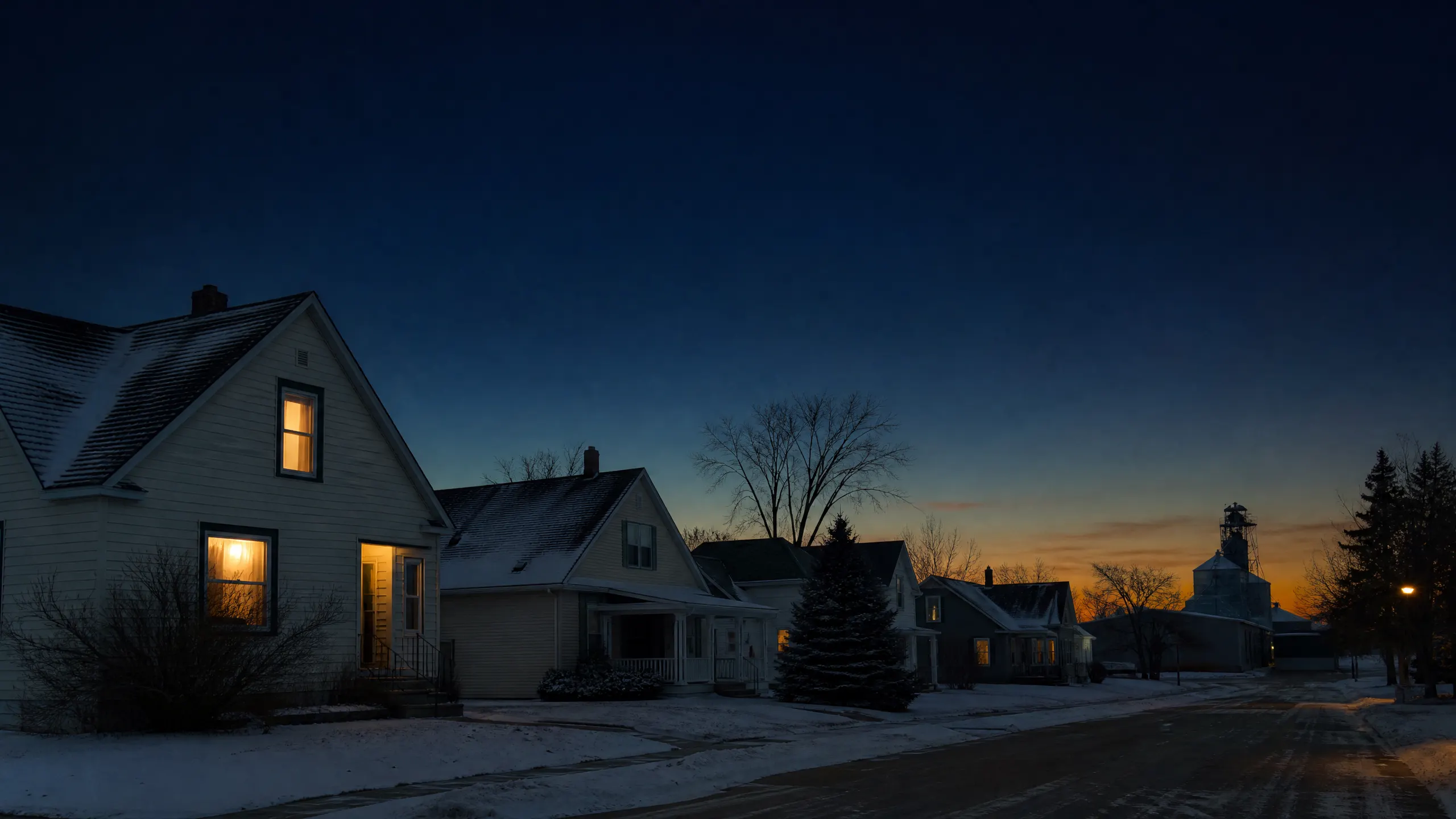
A snow-covered small-town street at dusk, with lit white clapboard houses, bare trees, and a grain elevator silhouetted against an orange and blue twilight sky.

Furnace Maintenance in Yuma, CO

Tell us about the job

Takes about a minute. No obligation.

Step 1 of 3: Equipment

A longer burner cycle than usual

A furnace that used to shut off and stay off for a while now kicks back on sooner, or runs longer each time before it satisfies the thermostat. That usually points to a dirty burner, a clogged filter, or a heat exchanger losing efficiency. Left alone, the furnace works harder for the same heat and the strain adds up.


A smell that wasn't there before

A burning dust smell at the start of a cycle is normal and fades fast. A smell that lingers, or has a sharp or metallic edge to it, is not. That kind of smell can mean a cracked heat exchanger or a wiring problem, and it's worth having a tech look before the furnace runs again.

Half the homes in Yuma County were built in 1968 or earlier.

A furnace in a house that old has had plenty of years to develop wear that only shows up at the next tune-up.

October starts the heat here, so get the furnace checked in September

Heat runs October through May
Winter nights average 18°F
27 winter storms from 2015 to 2024

If your furnace came with a house built in 1968 or earlier, nobody on site knows its full history until they open the panel up. A yearly check is what catches a hairline crack in the heat exchanger or a wiring splice that's starting to go, before either one turns into a bigger repair or a reason to replace the unit. Older furnaces also tend to carry more corrosion around the burner assembly, so a tech cleaning that area once a year keeps it from choking the flame over time. None of this requires guessing at what's behind the walls. It just means not skipping the one visit a year that would otherwise catch it.

Most furnaces here run on gas, and gas means more to check

Gas heats most homes in Yuma County, and gas furnaces need more than a filter change. The burner, the vent and the safety controls all need a look, since a problem in any of them can mean carbon monoxide instead of heat. Get that checked before the furnace runs every day again.

Find a contractor
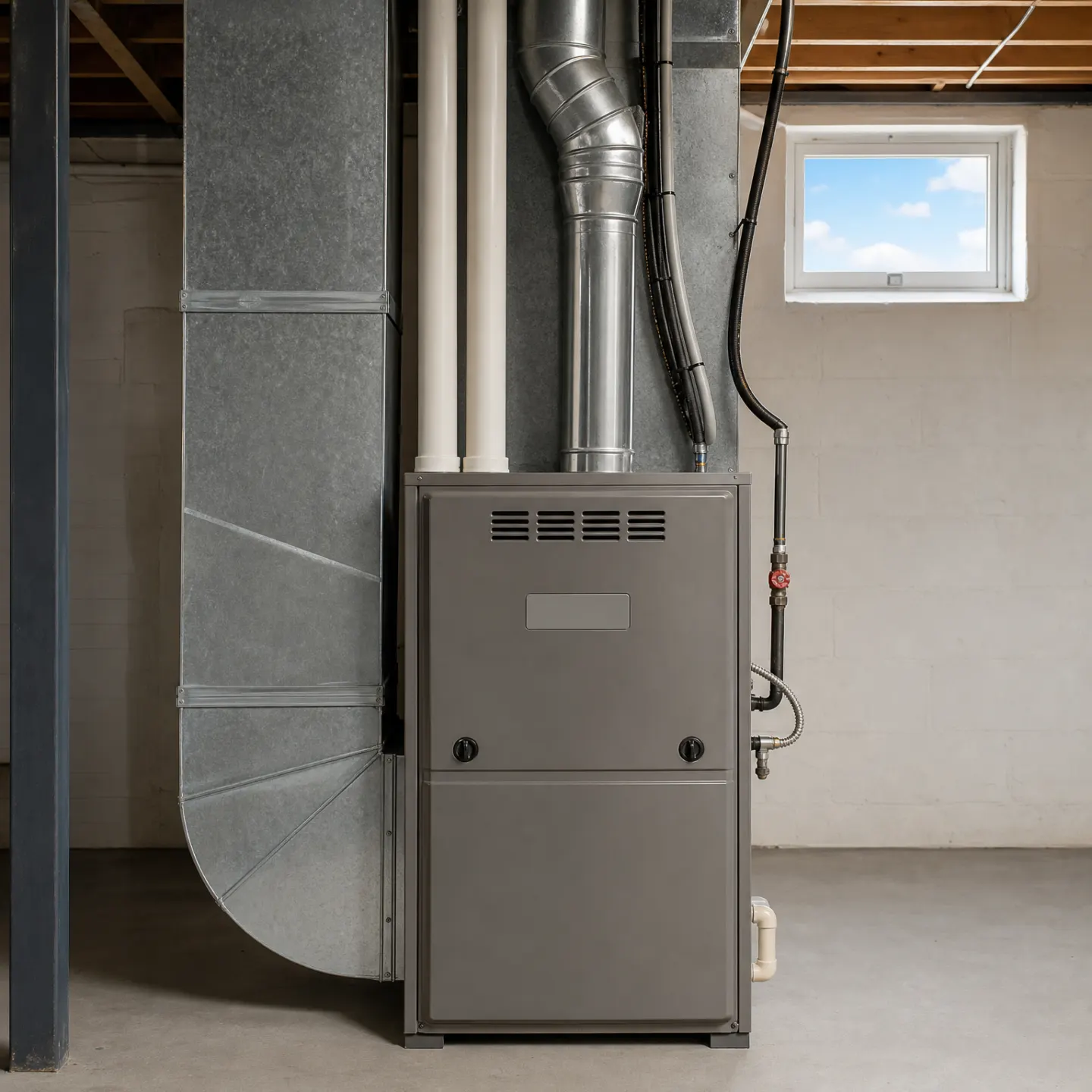
A gray residential gas furnace installed in an unfinished basement, surrounded by ductwork, a metal flue pipe, and a gas supply line.

A real tune-up takes the burner apart. A fast one just glances at it

A quick visit gets the filter swapped and the thermostat checked, and that's about it. A thorough one has the tech pull the burner assembly out to clean it, check the flame sensor, and look at the heat exchanger with a light or a camera for cracks. They'll check gas pressure, test the limit switch, and look at the venting to make sure exhaust is actually leaving the house. Amp draw on the blower motor tells them if it's wearing out before it quits outright. None of that shows up on a quick checklist, because it takes time to do. If the visit is over in a few minutes, most of that list got skipped.

Change the filter

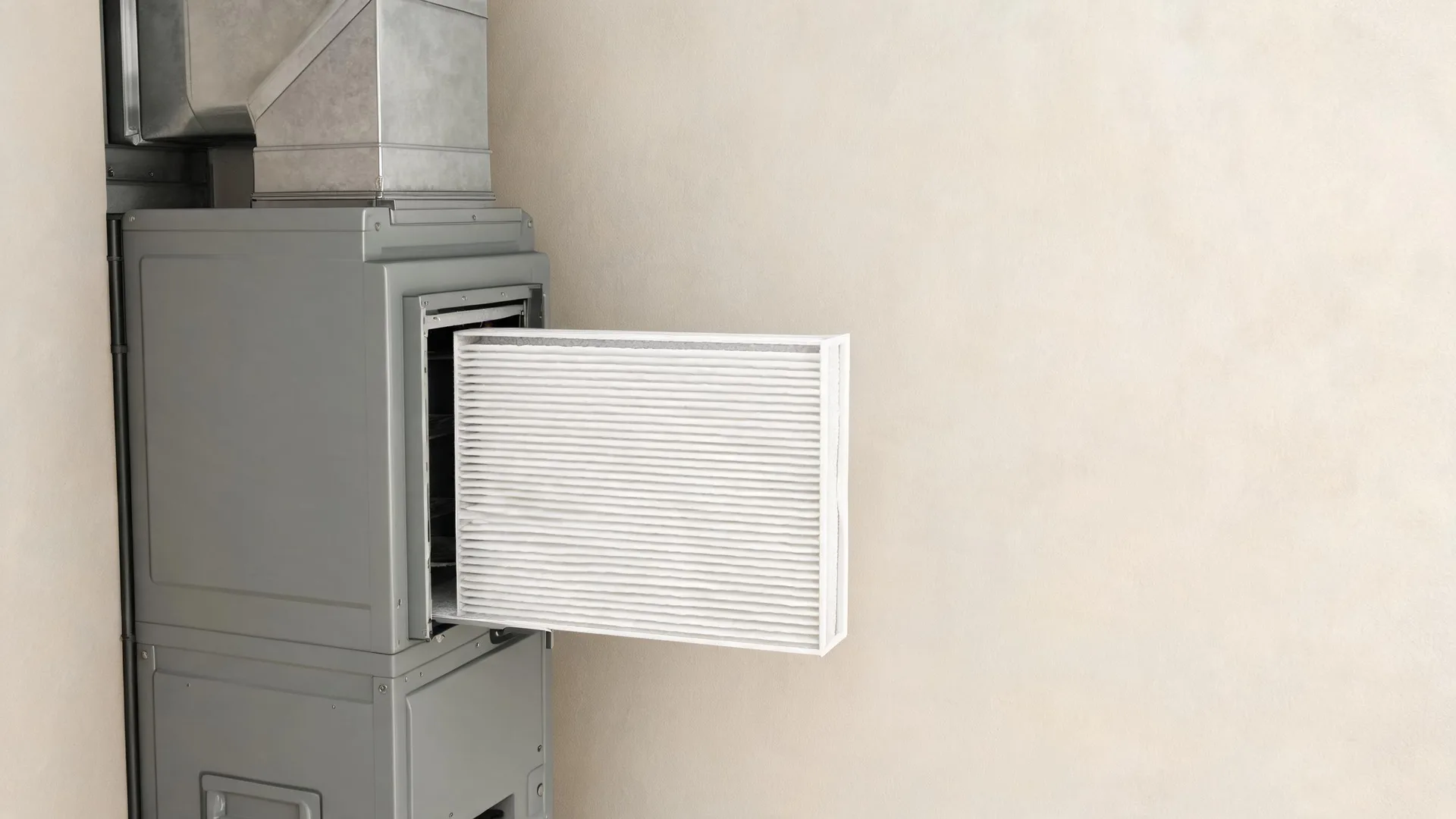
A dirty filter is the one thing you can fix yourself, and it's the thing most likely to be wrong. A filter clogged with dust makes the furnace pull harder to move air, which strains the blower motor and can make the burner cycle longer than it should. Check it by holding it up to a light. If you can't see light through it, put a new one in.

Know what to leave alone

Past the filter, open the panel only to look, not to touch. The burner assembly, the flame sensor and the wiring are set up a specific way, and moving something to clean it can throw off the gas pressure or the ignition. If the burner flame looks mostly blue with a little yellow at the tips, that's normal. A flame that's gone mostly yellow or looks like it's lifting off the burner is a reason to call, not a reason to reach in.

A furnace doesn't have a drain or coils the way the air conditioner does, so the filter carries most of the weight here. Air comes back through that filter before it ever reaches the heat exchanger, and anything the filter doesn't catch settles on the burner and the flame sensor instead. That's dust building up where a flame needs to burn clean and a sensor needs to read it accurately. A flame sensor coated in residue stops sensing the flame at all, and the furnace shuts itself off as a safety response, not because anything else is wrong. The furnace doesn't need coils cleaned or a pan drained to keep running well. It needs clear airflow in, and a clean burner for that air to pass over.

A tune-up starts before the furnace even runs. The tech pulls the burner assembly and cleans it, because a coating of dust or corrosion changes how the flame burns. They'll check the flame sensor the same visit, since a dirty sensor is the most common reason a furnace shuts off mid-cycle. Gas pressure gets tested too low and the burner struggles to heat the air, too high and it can scorch the heat exchanger over time. The limit switch gets checked, since that's what shuts the burner off if the furnace overheats. Venting gets looked at last, to make sure exhaust is actually leaving the house and not backing up somewhere it shouldn't.