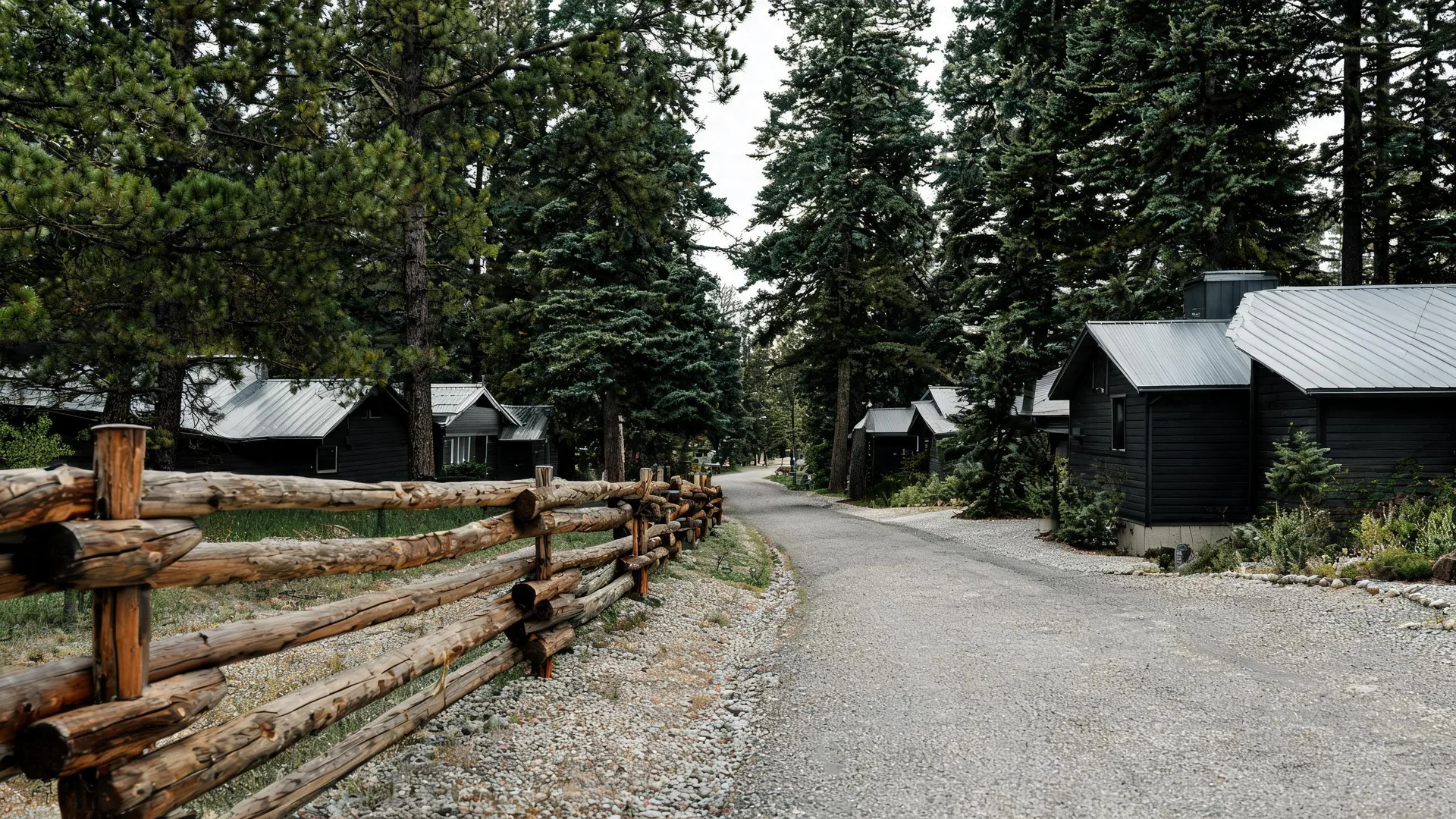


A gravel road curves between dark wood cabins with metal roofs and a split-rail log fence, surrounded by tall conifer trees under an overcast sky.

Furnace Maintenance in Cortez, CO

Tell us about the job

Takes about a minute. No obligation.

Step 1 of 3: Equipment

Furnaces here run from October through May, about eight months of the year. Overnight lows average 19°F in December and January, so when the furnace is on, it's working to close a big gap, not just take the edge off. Cortez also sits in weather that brings heavy snow, ice or a blizzard several times most winters, the kind of cold snap that pushes a system to run longer and more often. A furnace under that kind of load wears parts sooner than one that only kicks on a few months a year. The igniter, the blower motor, the flame sensor, all of it logs more hours here than in a milder climate. Worth having it looked at before the cold settles in for good.

Half the homes in Montezuma County were built in 1986 or later.

A furnace that age still has years in it, and a yearly check is what gets it there.

Gas heats most homes in Cortez, which means burner and venting, not just a filter

40.8% of homes heat with gas
Heat runs October through May
Winter nights average 19°F

October is when furnaces here go from idle to working every day, right at the start of an eight month run. September is the month to get it checked, before that first cold stretch hits. A furnace that starts the season clean lights faster and holds its flame better once it's running daily. One that starts with a dirty flame sensor or a weak igniter tends to show it early, often in the first few cold weeks, not months down the line. Booking the check in September means whatever needs fixing gets fixed before the furnace is working for its living.

Get the furnace looked at before it has to carry the season

Eight months of heat, nights near 19°F, winters that bring snow and ice again and again. That's the load this furnace carries every year. Have it checked before it's running every day.

Find a contractor
A man in a gray shirt and tan work pants, seen from behind, climbs porch steps toward a dark blue front door while carrying a canvas tool bag, with a potted shrub to the right.
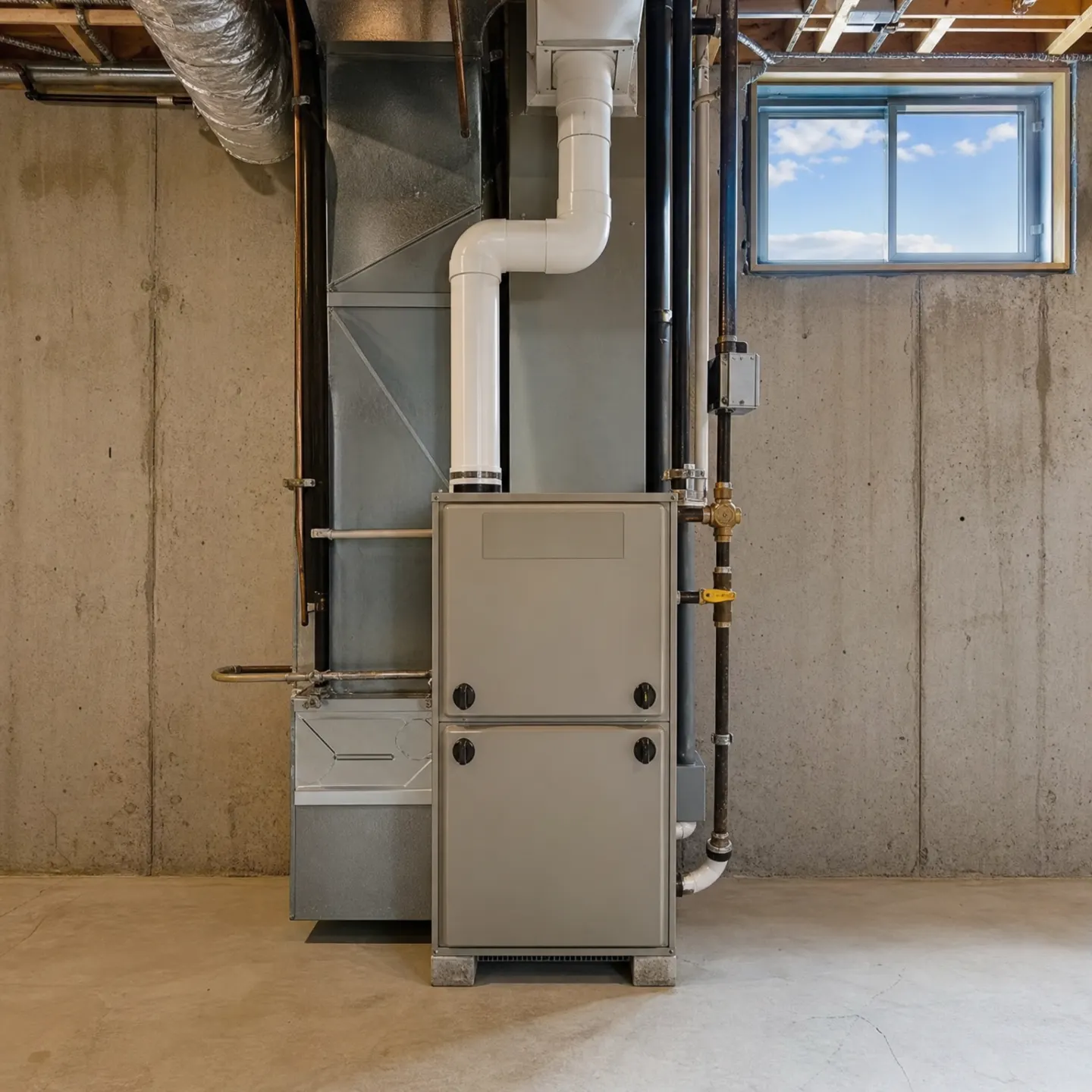
A gray gas furnace with attached ductwork and piping installed in an unfinished concrete basement.

What you can check yourself, and what to leave alone

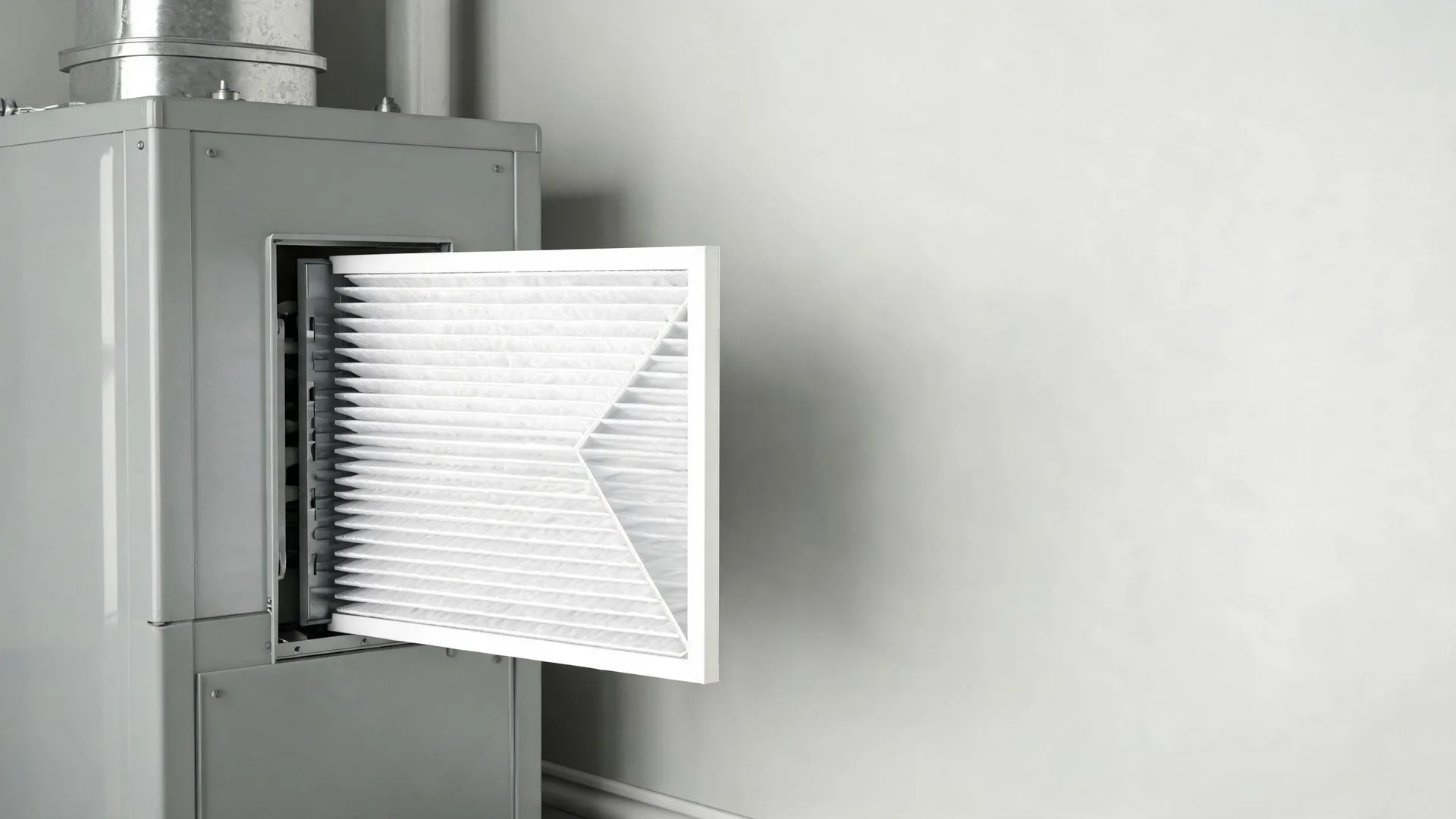
The filter is the one thing worth checking without taking anything apart. Pull it monthly through the season and hold it up to a light. If you can't see through it, swap it. A clogged filter starves the burner of air. It also makes the blower work harder to push heat through the house, and that strain lands on the motor over time. Keep the area around the unit clear too. Nothing stacked against it, no boxes blocking the return air grille. While you're near the thermostat, listen for anything new. A rattle at startup. A burner that takes a few tries to catch. A smell of dust burning off that doesn't fade after a few minutes. None of that needs a tool to notice, just attention. What you shouldn't touch is the burner assembly, the flame sensor or anything behind the access panel. That's a yearly job for someone who can test the flame and the draft properly, not a between-visits chore.

A quick visit checks that it runs. A thorough one checks that it runs safely

Anyone can turn the furnace on and listen for it to fire. A thorough tune-up goes further. It includes a combustion test, a check of the flue for a solid draft, and a reading of the flame itself. A burner can light every time and still be burning dirty or drafting wrong. That kind of problem only shows up when someone actually tests for it.
Ask what gets pulled apart, not just checked

A short visit looks at the furnace from the outside. The filter gets swapped, the thermostat gets glanced at, maybe someone looks at the burner through the viewport. A full one opens the cabinet. The burner assembly comes out, and the flame sensor gets cleaned by hand instead of just looked at. If nothing came apart during the visit, not much got cleaned.

Skip the yearly check and the furnace doesn't fail right away. It just drifts. Dust builds on the flame sensor until it stops reading the flame reliably, and the furnace starts shutting off a few minutes into the cycle, then again when it restarts. The burner can drift out of its proper mix too, burning dirtier than it should, and nothing about that is loud or obvious. A furnace running that way can still heat the house. It just does it less safely, and the flue isn't clearing exhaust the way it would with a clean burn. Parts also fail harder when they fail dirty. A blower motor coated in dust runs hotter than a clean one, and heat is what wears a motor down. None of this shows up on the thermostat. It shows up as a cold start, or a short cycle, or a burner that finally needs more than a cleaning.

A proper tune-up starts before the burner ever lights. The tech checks the intake and exhaust vents for blockage, since a blocked flue backs exhaust up into the house instead of pushing it outside. Gas pressure gets measured and adjusted if it's drifted off spec, because too much or too little changes how clean the burner runs. The heat exchanger gets inspected for cracks, which matter more than almost anything else in the cabinet since a cracked exchanger can let exhaust mix into the air moving through the house. The igniter gets tested under load, not just looked at, since some fail only when they're hot. Belts aren't part of this. Most furnaces drive the blower directly off the motor, so what gets checked there is the motor itself, its amp draw and whether it's running within range. The last step is a full cycle test, watching the furnace start cold, run, and shut off the way it's supposed to.