A snow-covered residential street at twilight with illuminated houses, bare trees, and an orange horizon glow beneath a deep blue sky.

Heat Pump Installation in Lamar, CO

Tell us about the job

Takes about a minute. No obligation.

Step 1 of 3: Equipment

Weather here takes a toll on outdoor equipment

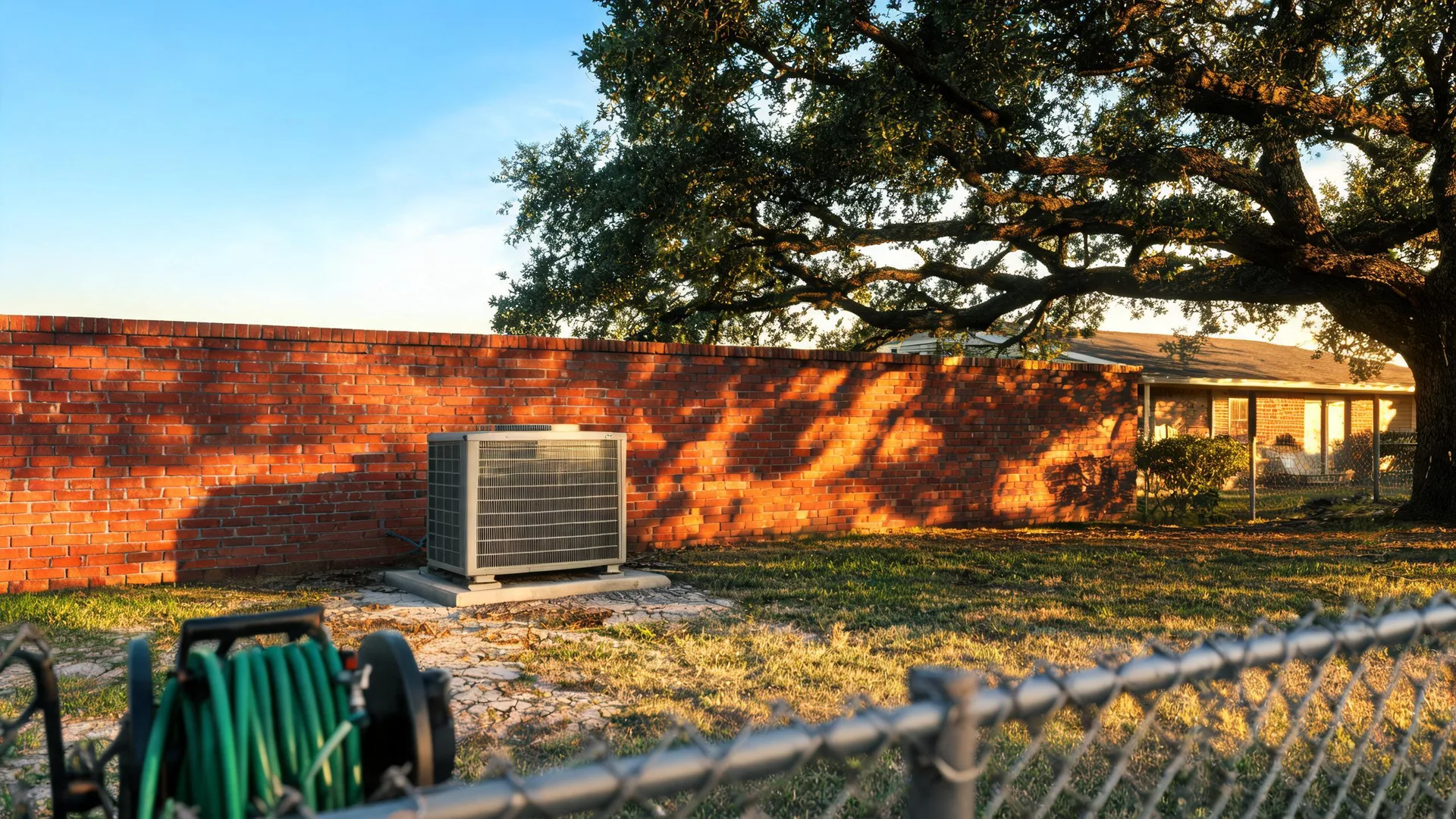
Prowers County logged 271 severe weather events between 2015 and 2024, including 132 damaging wind events, 115 hail events and 8 tornadoes. A heat pump's outdoor unit sits outside year round, so it takes whatever comes through.

Power outages happen here more than most places

13% of Colorado households went at least a day without power in 2024. A heat pump needs electricity to run, for heat as well as cooling, so an outage here can mean no heat until the power comes back.

7 months
October through April, your system heats
4 months
June through September, it cools
19°F
the average winter night it heats against
91°F
the average summer afternoon it cools against
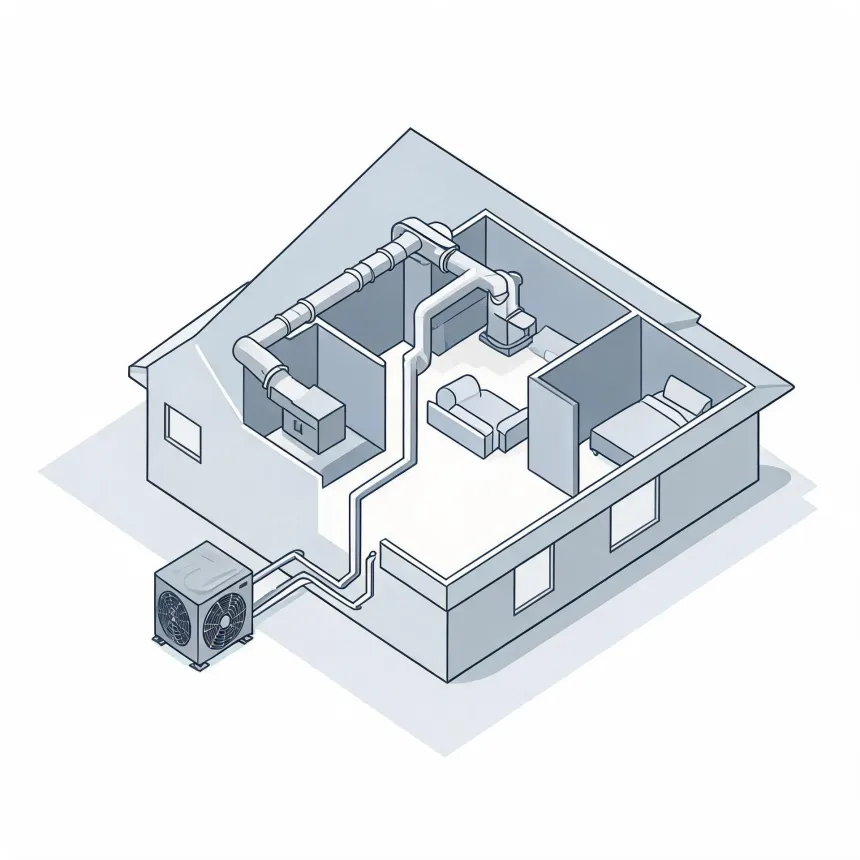
Isometric line illustration of a cutaway house showing interior rooms with furniture, ceiling ductwork, and an outdoor condenser unit connected by lines along the exterior wall.
Your system heats October through April and cools June through September.

NOAA nClimDiv, 1991–2020 normals

Electricity here runs 17.41 cents per kilowatt-hour, higher than most of the country.

A heat pump that's sized and installed right earns back that cost on every bill it runs.

Low humidity doesn't save you here. Wind, hail and a high electric rate still do the work

Power here costs 17.41 cents per kilowatt-hour
132 damaging wind events from 2015 to 2024
115 hail events from 2015 to 2024
Most homes here already run on gas74% of homes in Prowers County heat with gas, so a heat pump usually goes in alongside the furnace, not in place of it.

Half the homes in Prowers County were built in 1971 or earlier. If your house is one of them, the ductwork and electrical panel were likely sized for whatever heated the place originally, not for a heat pump. A heat pump moves more air than a gas furnace and draws more electrical load, so the install has to check what's already there before anything goes in. A panel built for a different era of appliances may not have the capacity a heat pump needs without an upgrade. None of that shows up until someone actually looks at your ducts and your panel, not just the age of the house.

Plan for the outage before you need it

Ask where the outdoor unit will sit and what will shield it from wind and hail. Ask what happens to your heat and hot water if the power goes out, and whether a backup option makes sense for this install. Get that settled while the system is being planned, not after a storm.

Find a contractor
A man in a dark cap, gray long-sleeve shirt and brown work pants climbs porch steps toward a navy front door, carrying a canvas tool tote with tools in its pockets, beside a potted evergreen shrub in a blue planter.
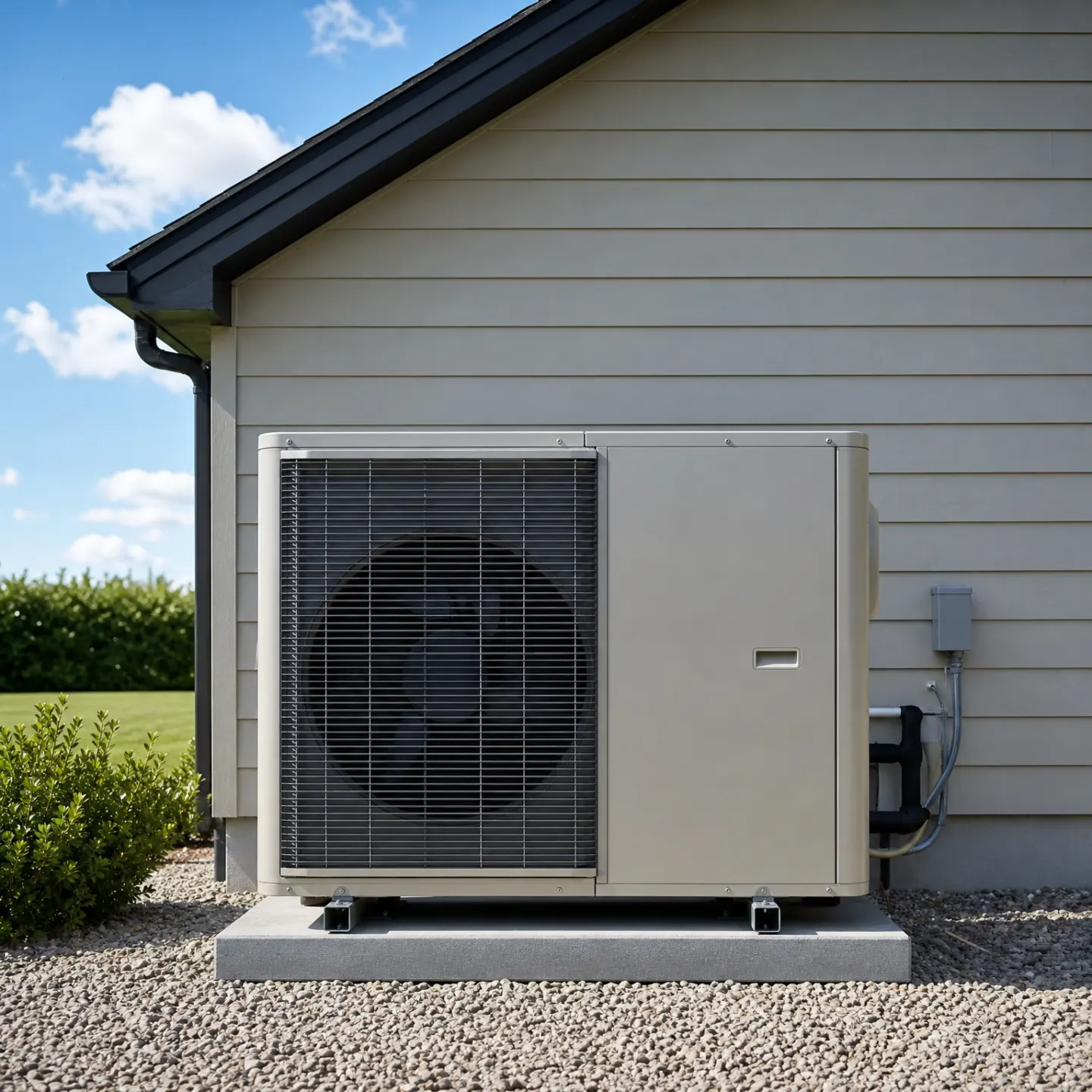
A residential heat pump outdoor unit mounted on a concrete pad next to a house with gray vinyl siding.

September, before the cold sets in

Heat here runs October through April, seven months of the year, with overnight lows averaging 19°F in December and January. A heat pump installed in September goes in on a normal schedule, with time to size it right and check the ducts and panel beforehand. One installed after the first cold snap goes in under pressure, on whatever timeline is left. The unit in this time-lapse runs through all of it, day and night, the short mild stretch and the long cold one.

Sizing comes from a load calculation, not the old system's number

A contractor measures the house room by room, the windows, the insulation, the ceiling height, and works out how much heat it actually loses and gains. That number, not the size of the furnace or AC already in place, is what decides the heat pump's capacity. Copying the old equipment's size just repeats whatever mistake was baked into it the first time.

The wrong size fails in two different ways

Too big, and the heat pump short cycles, switching on and off before it ever settles into a steady run, which wears the compressor and leaves the air clammy instead of comfortable. Too small, and it runs flat out without keeping up on the coldest or hottest days, leaning hard on backup heat and pushing the electric bill up for a system that still can't hold the temperature you set.

The price of a heat pump installation comes down to what the job actually requires, not just the equipment sitting in the truck. A load calculation takes time to do right, and it determines what size unit goes in, which affects both the equipment cost and the labor. If the ductwork needs modification to handle the airflow a heat pump moves, that's additional work beyond the unit itself. An electrical panel that needs upgrading to carry the new load adds another layer before installation even starts. Where the outdoor unit goes, how the refrigerant lines run, and whether backup heat gets tied in all take labor hours that vary from one house to the next. Two homes can need the same size heat pump and still cost differently to install, because the walls, the wiring and the ducts behind them aren't the same.

Prowers County falls in climate zone 4B, which asks real work of both heating and cooling here. Any split-system heat pump installed now has to meet the federal minimum for that zone: at least 14.3 Btu of cooling delivered for every watt-hour it draws over the summer, and at least 7.5 Btu of heat for every watt-hour over the winter. That's not a target a contractor aims for. It's the floor for what's allowed to go in. Equipment built before January 2023 may fall short of it, which narrows what qualifies for this install down to current models.