An unfinished basement containing a gas furnace with ductwork in the foreground and miscellaneous stored items along the far concrete wall.

Furnace Repair in Lamar, CO

Tell us about the job

Takes about a minute. No obligation.

Step 1 of 3: Equipment

September is the month to catch a weak furnace

Furnaces in Lamar sit idle from spring until October. Whatever was already weak, a cracked igniter or a failing limit switch, tends to show itself as soon as the furnace has to run for hours instead of minutes.

A breakdown in October is usually old trouble, not new

If your furnace is struggling in the first weeks of the season, the cause was likely there all along. A tech tracing it back to the real part now means it won't fail again partway through the seven months ahead.

7 months
October through April, your furnace is on duty
19°F
the average winter night it heats against
74%
of homes here heat with gas, so most furnaces here burn gas
16 winter storms
in ten years, the nights a failure hurts most
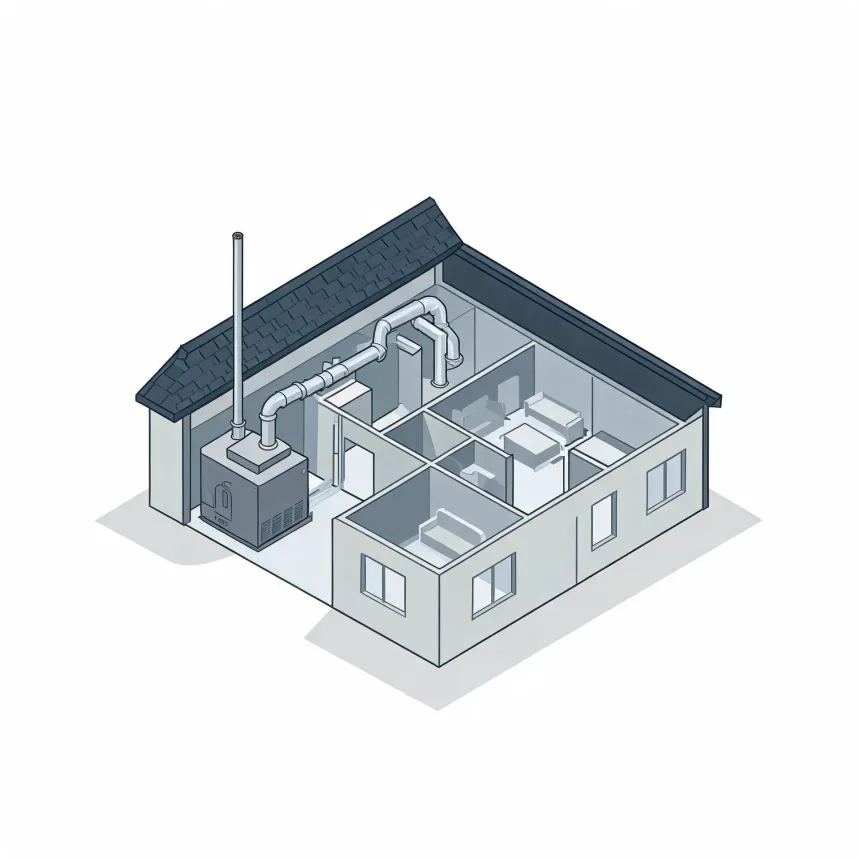
Isometric grayscale illustration of a cutaway single-story house showing interior rooms with furniture, plus an exterior furnace unit with a tall flue pipe and ducting running into the attic space.
Your furnace works hardest from November through March.

NOAA nClimDiv, 1991–2020 normals

A furnace that short cycles, turning on and off every few minutes instead of running a full stretch, is telling you something is already wrong.

Short cycling strains the heat exchanger and the blower motor, so what starts as a nuisance becomes the reason the furnace quits outright.

Half the furnaces in Lamar are as old as the house

Half the homes here were built by 1971
Heat runs October through April
Winter nights average 19°F
Prowers County weather isn't what wears out a furnace132 wind events and 115 hail events in ten years, and none of them touch what's inside your furnace cabinet.

Half the houses in Lamar were built in 1971 or earlier. If yours is one of them and the furnace has never been replaced, ask the tech straight what shape the rest of the unit is in before any repair gets started. A cracked heat exchanger or a blower motor near the end of its run changes the question from how to fix this to whether fixing it makes sense at all. That's worth knowing before parts get ordered, not after.

Get it looked at early

Problems tend to show up in the first weeks of the season, when the load hits a part that was already weak.

Find a contractor
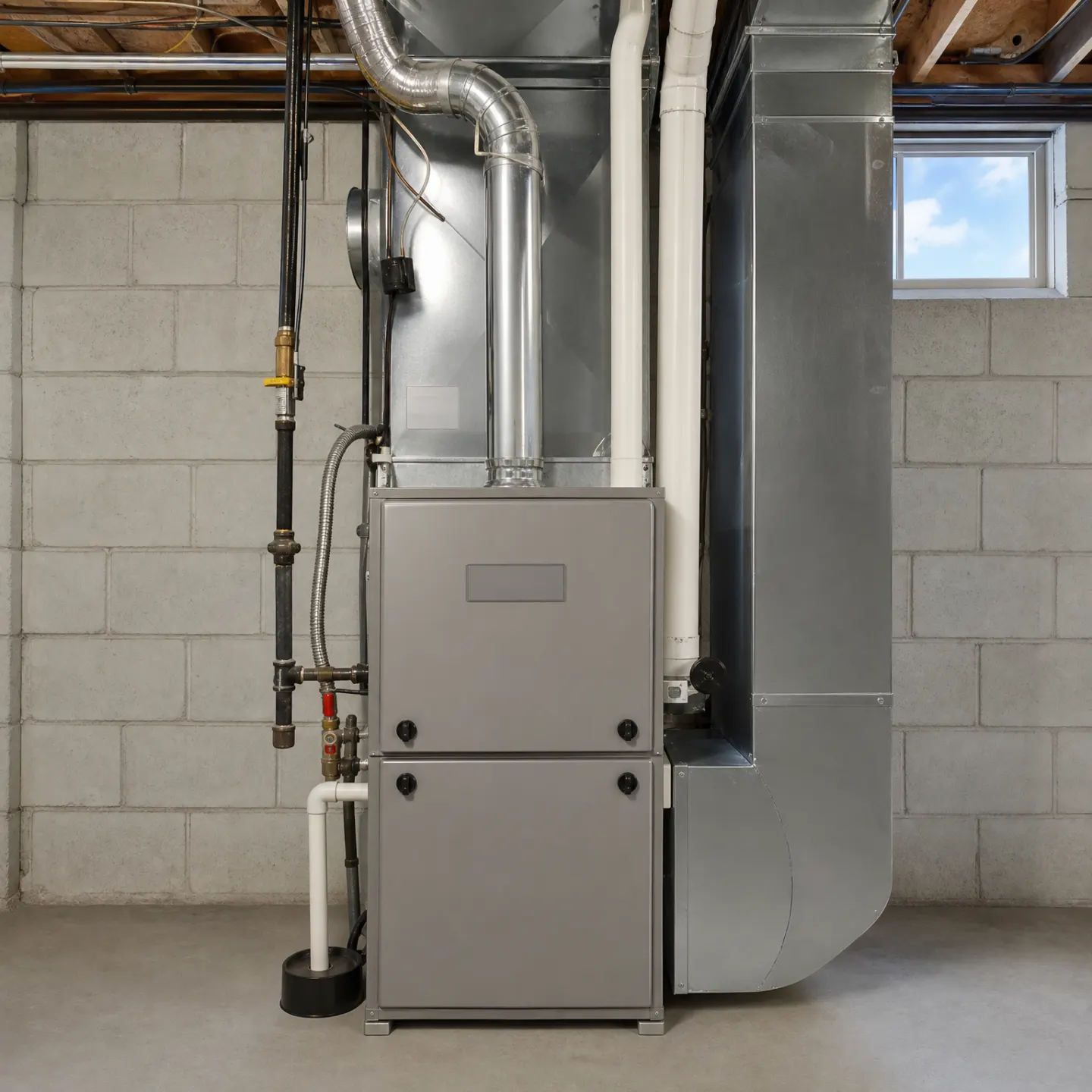
A gray high-efficiency gas furnace installed in an unfinished basement, surrounded by gas lines, a condensate drain, and sheet-metal ductwork.

Furnaces don't fail without a reason

A furnace fails for a handful of reasons, and most of them trace back to the same few parts. The igniter cracks with age and stops glowing hot enough to light the gas. The flame sensor coats with a film and can't tell the control board a flame is there, so the system shuts down as a safety measure. The blower motor wears out its bearings from years of spinning and starts running loud, then not at all. A limit switch trips when airflow is restricted, which is usually a dirty filter making the furnace think it's overheating. Pressure switches fail, draft inducers seize, and capacitors weaken until a motor can't start on its own. None of these are random. Each one is a part doing its job for years until it can't anymore.

Check the filter before anything else

A filter clogged with dust blocks airflow, and a furnace reads that as overheating. That trips the limit switch and shuts the burners off mid-cycle. Pull the filter and hold it up to a light. If you can't see light through it, that alone could be the whole problem.

Check the thermostat and the switch on the furnace itself

Make sure the thermostat is set to heat and the temperature is actually above room temperature, not just close to it. Then check the power switch on the furnace or its nearby outlet, it looks like a light switch and gets bumped or turned off during other work. Also check that the gas valve to the furnace is open.

A gray forced-air furnace with sheet-metal ductwork stands in an unfinished basement with exposed wooden joists, concrete walls, and a hanging incandescent bulb.

A new furnace would cut about $80 a year off heating for a typical Prowers County home.

  • A new high-efficiency furnace$330 a year
  • An older furnace$410 a year

Estimates for a typical Prowers County home, compared with an older unit built to the previous federal minimum, from EIA household energy data, Colorado fuel prices and NOAA climate normals. Your home will differ.

Repair makes sense when one part has failed and the heat exchanger is sound.

Replacement makes sense when the heat exchanger is cracked or the furnace keeps needing parts.

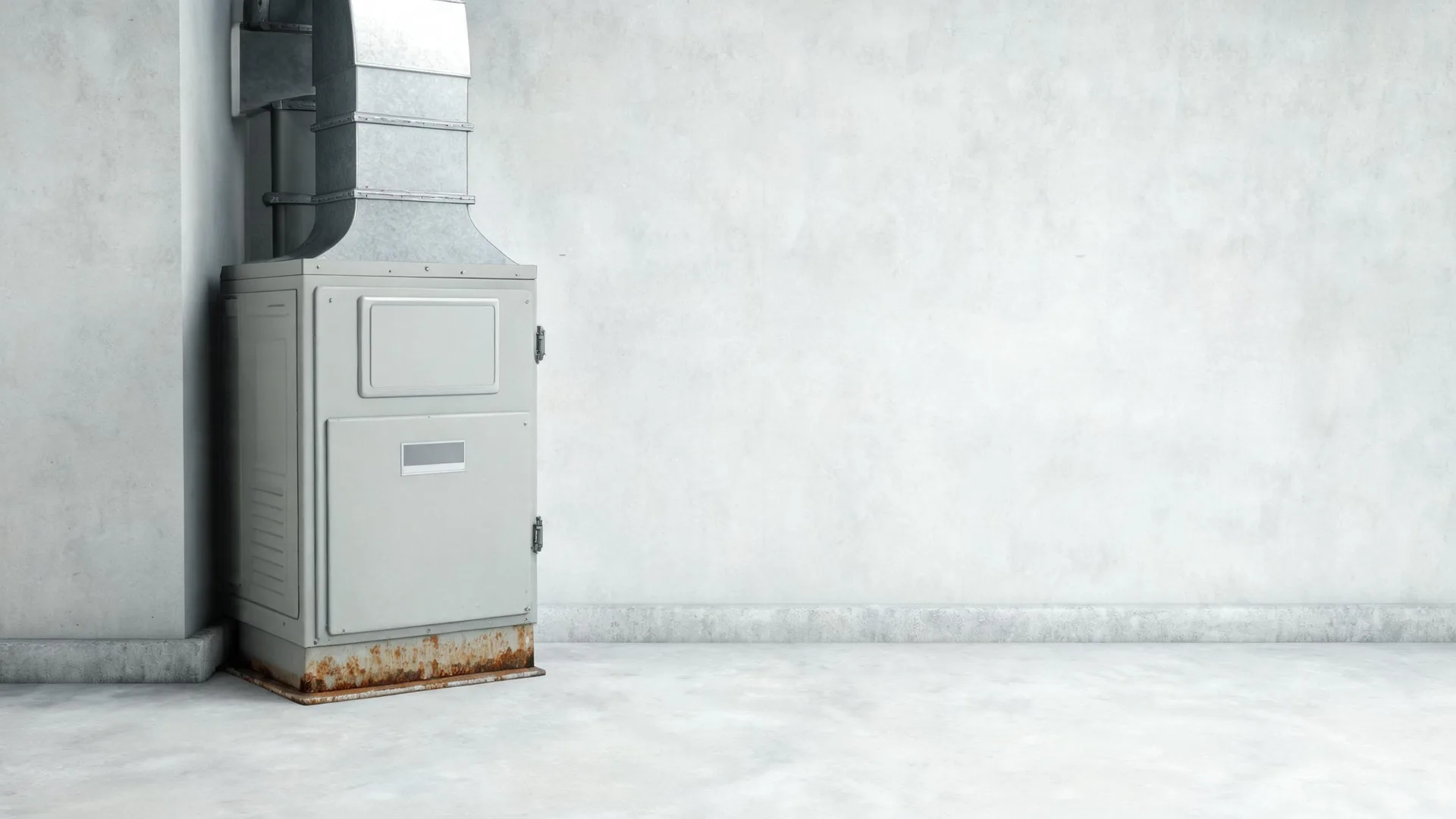
When a tech tells you a part is worth replacing on its own, it's usually because the rest of the furnace checked out fine and that one part is the only thing standing between you and a working system. That's a different situation from a furnace where one repair turns up a second problem, and the second turns up a third. Age itself doesn't doom a furnace, but a cabinet that's already rusting or a heat exchanger with hairline cracks means the next failure is never far off, even after this one gets fixed. A good tech will tell you which situation you're in before they start, not after the parts are bought. If they can't give you a straight answer about what else is wearing out, ask them to look closer before you decide anything.