Electricity here runs 14.92 cents a kilowatt-hour
Colorado households paid 14.92 cents per kilowatt-hour in 2024. A heat pump runs on electricity for both heating and cooling, so that rate applies every month you use it, not just in summer.
Takes about a minute. No obligation.
Colorado households paid 14.92 cents per kilowatt-hour in 2024. A heat pump runs on electricity for both heating and cooling, so that rate applies every month you use it, not just in summer.
At that rate, a heat pump that moves heat efficiently uses less power to hold the same temperature than one that struggles. The difference shows up on every bill the system is running, all year.
NOAA nClimDiv, 1991–2020 normals
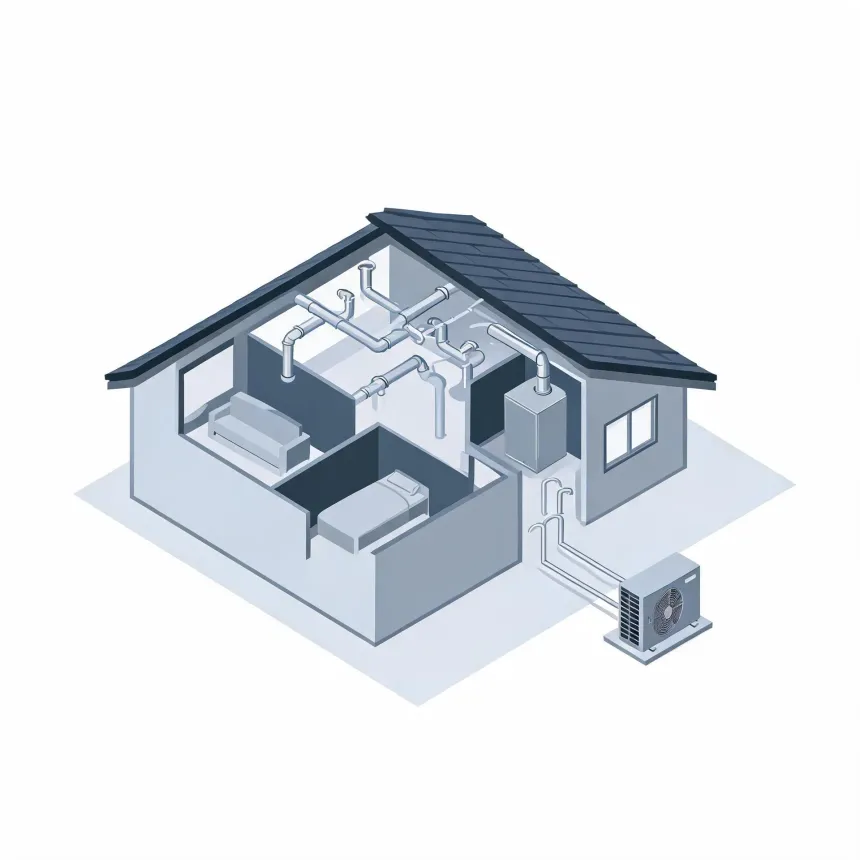
Heat runs here from October through May.
Install before September and the switch happens on your timeline, not during the first cold snap.




Montezuma County sits in climate zone 5B, a cool zone where heating is the bigger job. Any split-system heat pump installed here has to meet the federal minimum for units made after January 2023. That floor is 14.3 SEER2 for cooling and 7.5 HSPF2 for heating. It narrows what a contractor can offer you, though systems rated higher than the minimum are on the table too. A federal tax credit is available on top of whatever the equipment costs, separate from the efficiency rating itself.
A heat pump priced lower up front can still cost more to run at 14.92 cents a kilowatt-hour. Ask the contractor for the efficiency rating on each system quoted, not just the price, since that rating is what the bill comes back to every month you run it.
Find a contractor
A heat pump has to be sized to the house, not picked off a shelf. A unit too big short cycles, running in quick bursts that cool or heat the room fast but shut off before it pulls moisture out of the air or warms the walls and furniture, not just the air. One too small runs constantly and still can't keep up on the coldest nights. Either way the compressor wears against a mismatch instead of the actual job. Sizing comes from a load calculation, a room by room look at square footage, window area, insulation, and air leakage, not a guess based on the old equipment or a rule of thumb per square foot. A contractor who sizes it right is also sizing the ductwork to match, since the right size unit pushing air through ducts that are too small or too leaky still won't heat or cool evenly.
If a furnace or AC is being replaced, it gets disconnected and hauled off as part of the job, not left behind for someone else to deal with later. A gas furnace needs the gas line capped properly, not just shut off. An old AC unit still holds refrigerant, and that has to be recovered rather than vented, so pulling it out is its own step, not an afterthought to setting the new unit.
A heat pump moves air differently than a furnace does, often at lower temperatures over longer stretches, so ducts sized for a furnace don't always suit it. If the existing ducts stay, they get tested and sealed before the new system runs through them. If they don't hold up to that, replacing them is part of getting the heat pump to actually perform the way its rating suggests it will.
The rating on the label tells you how much heat a unit moves for the electricity it uses, not how warm it can get a room. A higher rating means the compressor does more work per unit of power, so it costs less to hold the house at temperature. That rating comes from a lab test under set conditions, so it describes the equipment, not the exact bill you'll see once it's running in a real house with real ductwork. Systems carrying the same rating can still behave differently once installed, because sizing and duct condition change how hard the compressor has to work to do the job. The rating is a fair way to compare equipment side by side. It isn't a promise about what any one install will cost to run.
Equipment is only part of what you're paying for. A heat pump install means running new refrigerant lines, setting an outdoor unit on a pad, connecting it to the air handler or ductwork inside, and wiring it to its own circuit. If the ductwork already in the house is undersized, leaky, or routed wrong for how a heat pump moves air, that gets fixed or replaced as part of the job, and that work varies more than the equipment does. Electrical panels don't always have room for a new circuit either, and if yours doesn't, that's added work before the unit ever gets set. None of this shows up on the spec sheet. It shows up in how much the contractor has to do to your house before the new system can run.