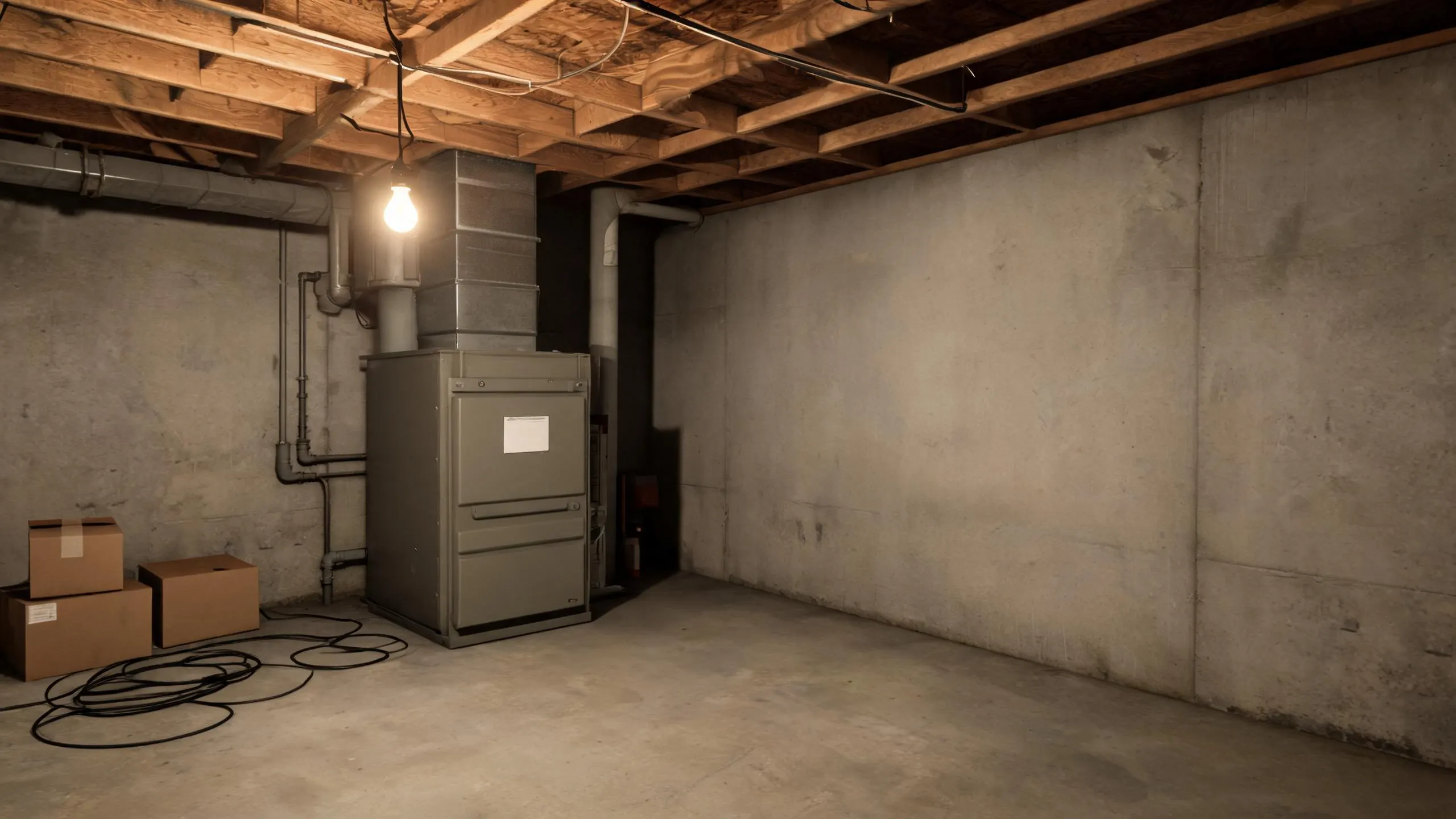

An unfinished basement containing a metal furnace with ductwork, exposed wooden joists on the ceiling, cardboard boxes, a coiled cable, and a single hanging incandescent bulb.

Furnace Maintenance in Craig, CO

Tell us about the job

Takes about a minute. No obligation.

Step 1 of 3: Equipment

A furnace in Moffat County runs from September through May. That's nine months of the year it has to work, not just a few cold snaps. Winter storms, heavy snow, ice, blizzards, have hit the county 191 times between 2015 and 2024, and each one means the furnace running flat out to keep up. A machine that runs that many months, that hard, wears down faster than one that gets most of the year off. The igniter, the blower motor, the heat exchanger, all of them log more hours here than they would somewhere with a short winter. That kind of wear tends to show up as a real problem earlier than you'd think.

Furnaces here start running in September, the first month of the nine-month heating season.

Book the tune-up in August, before the season starts, not after.

277 severe weather events in a decade add up to a lot of wear on the parts of your system sitting outside

277 severe weather events from 2015 to 2024
13% of homes statewide lost power a day or more in 2024
82 damaging wind events from 2015 to 2024

Most homes in Moffat County heat with gas, at 61.9 percent, more than electricity and propane combined. That means a gas furnace, with a burner, a flue, and a set of safety controls that have to work together every time it fires. A tune-up on one of these isn't just swapping the filter. The technician checks the burner flame, tests the venting to make sure exhaust is actually leaving the house, and verifies the safety switches that shut the furnace down if something's wrong. A furnace that runs all winter here needs those checks more than one that barely gets used.

Get the wear checked before the season puts it to work

A furnace that runs nine months straight doesn't get much time to idle. A tune-up before September catches a worn igniter or blower motor while they're still working, instead of finding out during a storm.

Find a contractor
A man in a cap, dark jacket and tan work pants walks up concrete steps toward a dark blue front door, carrying a canvas tool bag at his side.
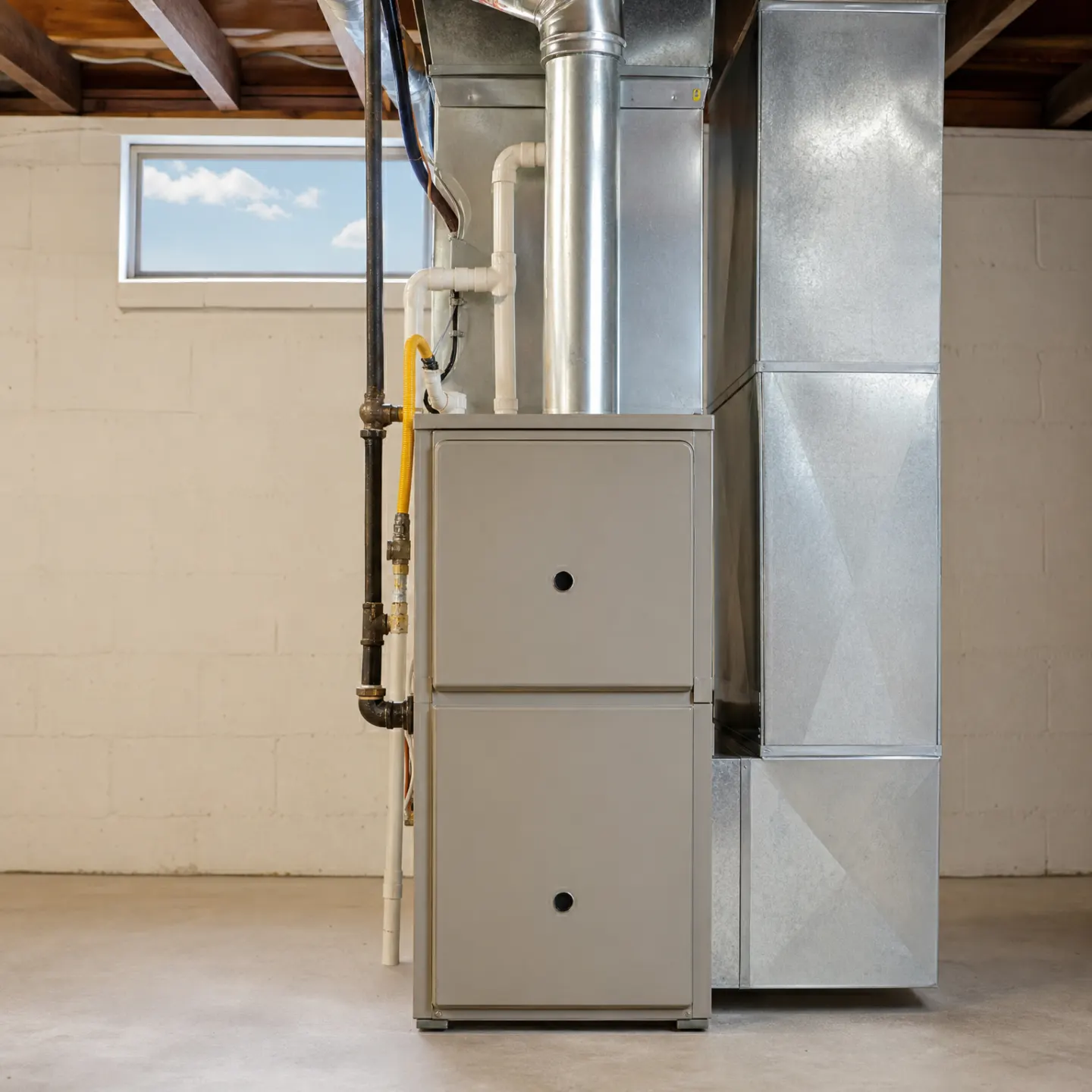
A gas furnace with attached ductwork, gas piping, and condensate lines installed in a concrete-block basement.

The filter does more work than people think

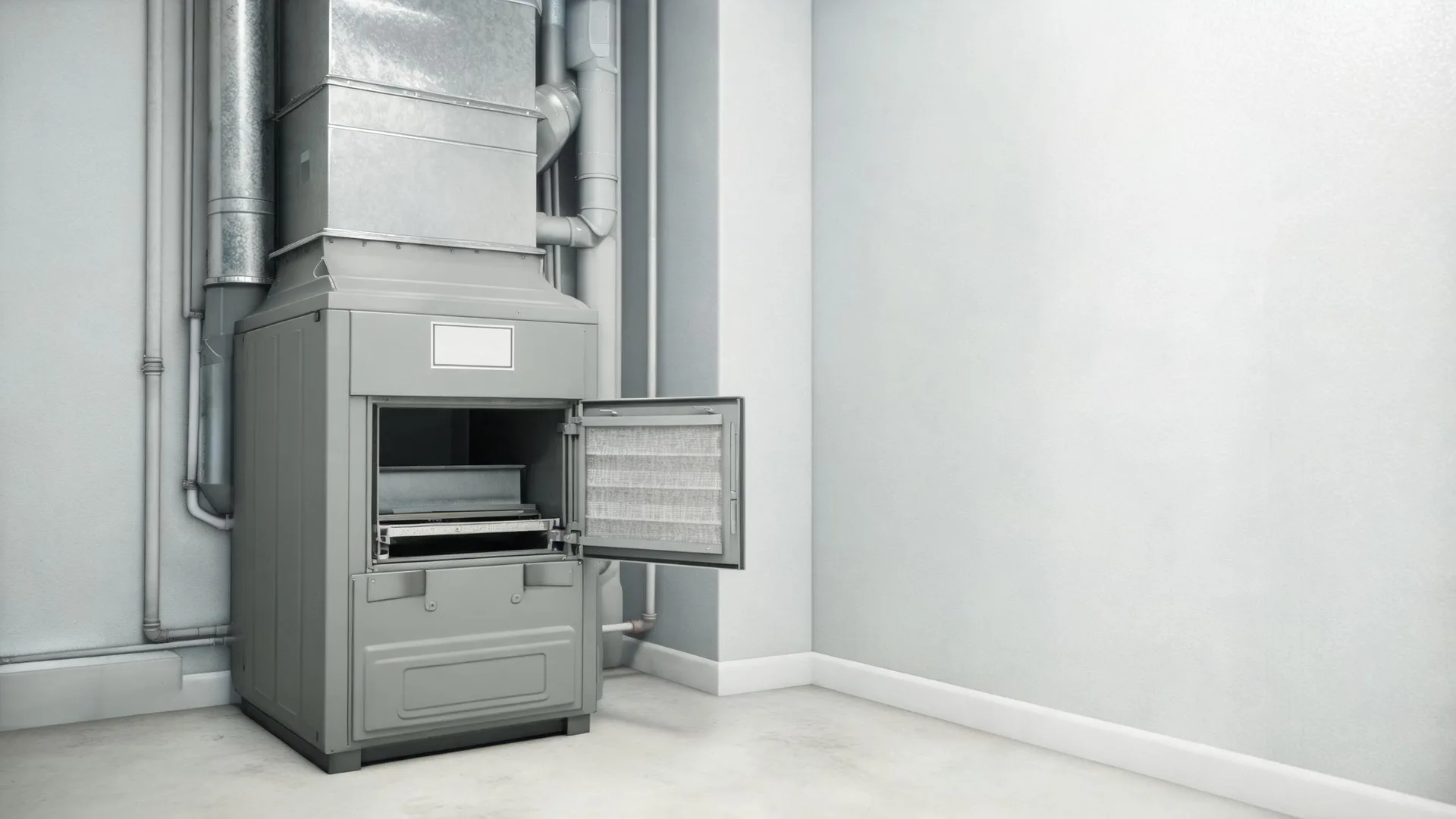
A furnace doesn't burn dirty air, it burns gas. But the air in the house still passes through the blower compartment on its way around the ductwork, and a clogged filter chokes that path. The blower has to pull harder to move the same amount of air, and that strain lands on the motor bearings over time. A heat exchanger with restricted airflow across it also runs hotter than it should, which shortens its life. Furnaces don't have coils or a condensate drain the way the air conditioner does, that's the cooling side of the system. But if this furnace shares a cabinet or a drain line with an AC coil, a clogged drain can back up and spill water into the furnace cabinet below it, which gets at the control board and the burners. Checking the filter and the shared drain line costs a tune-up almost no time. Skipping it is how a blower motor ends up working harder every day it runs.

The flame tells a story the thermostat can't

A burner flame should burn steady and blue, with maybe a tip of yellow. Let it drift to mostly yellow or let it flicker and lift off the burner, and something's off with the gas mixture or the burner ports are dirty. A homeowner never sees this flame. It's inside the burner compartment, behind a panel nobody opens between tune-ups. Left alone, a bad flame pattern means incomplete combustion, which leaves soot inside the heat exchanger and can point to a cracked exchanger down the line.
Amp draw catches a motor before it quits

A blower motor pulls a certain amount of current when it's healthy. As the bearings wear or the windings degrade, that draw creeps up, long before the motor seizes or trips a breaker. A technician checks this with a meter during a tune-up, and it's the kind of thing that gives real warning. Without that check, the first sign of trouble is usually the furnace not running at all.

The furnace itself sits inside the house, but the vent cap and combustion air intake are outside, usually on an exterior wall or the roof. Moffat County logged 82 damaging wind events and 191 winter storms between 2015 and 2024, and either one can push snow, ice or debris into an intake or vent without anyone noticing from inside. A blocked vent changes how exhaust leaves the house, which is exactly what the furnace's safety switches are built to catch. A tune-up before the snow starts is the time to clear that debris and check the venting while it's still easy to get to. Finding out during a storm means finding out the hard way.

A full tune-up starts with the heat exchanger, since that's the part separating the flame from the air going into the house. A technician looks for cracks, rust or soot staining that would let combustion gas mix with household air. From there it's the burners themselves, cleaned so the flame pattern stays even, and the igniter, checked for a weak or cracked element before it fails outright. The blower wheel gets inspected for dust buildup, which throws it off balance and strains the motor over time. Belts aren't part of this on most furnaces anymore, the blower motor drives the wheel directly, so what wears is the motor itself, not a belt. Gas pressure gets tested and adjusted at the valve, since too much or too little changes how clean the burners run. Last comes the thermostat and the limit switches, confirmed to actually shut the furnace down when they're supposed to. None of this takes long when a furnace is healthy. It takes a lot longer to find out which part failed after it already has.